
| ☀️ Light | Full sun |
|---|---|
| 💧 Water | Moderate (lightly moist) |
| 🪴 Soil | Well-drained loam, slightly acidic (about pH 5.5 to 6.5) |
| 🌡️ Temp | 10°C – 30°C |
| 🐾 Safety | Cats: not verified · Dogs: not verified |
| 📏 Mature size | 45 cm |
Where It Grows & Climate Tolerance
Pet & Companion Animal Toxicity (French Bean (Green Bean))
Not yet verified: Toxicity status for cats, dogs, and horses has not yet been confirmed against veterinary poison-control records. Keep out of reach of pets or consult your veterinarian.
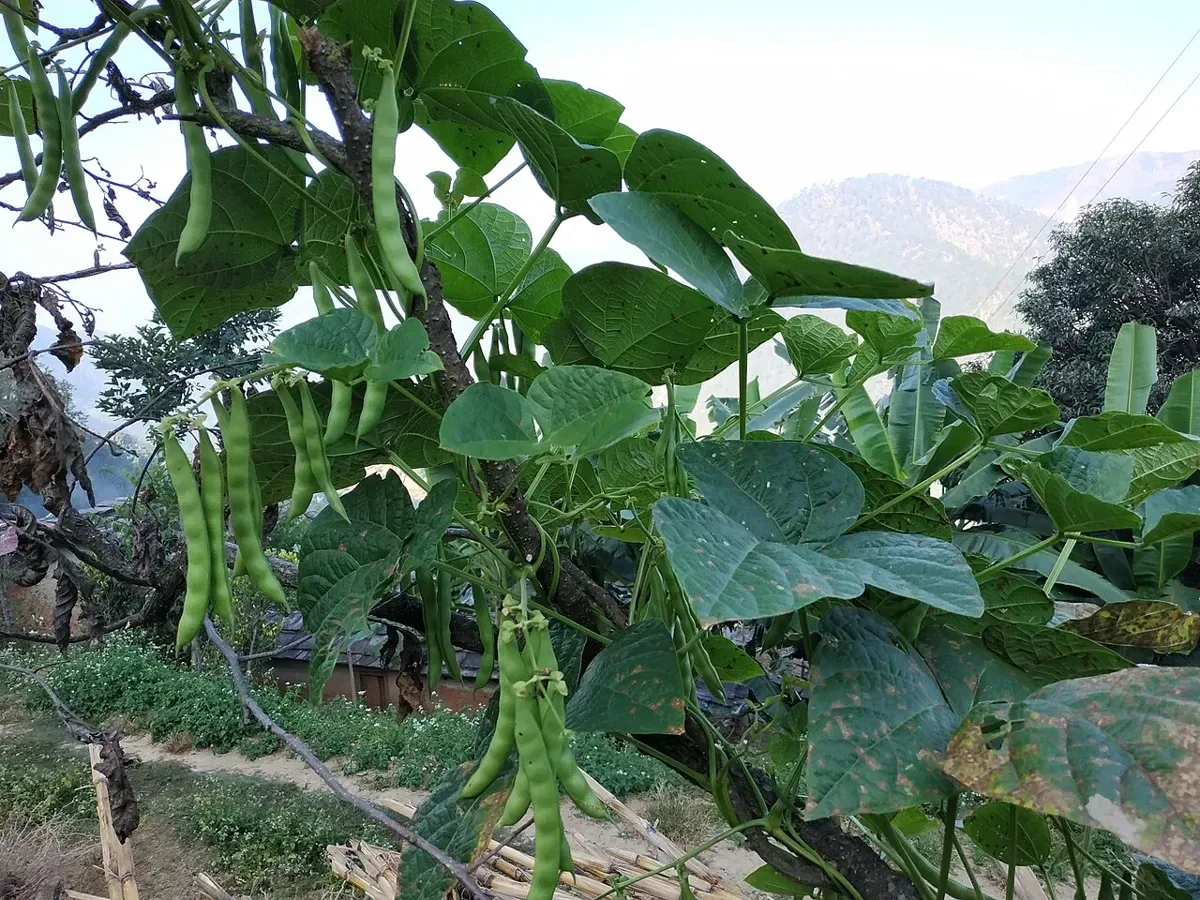
French bean (Phaseolus vulgaris) is a fast, warm-season legume grown for its tender green pods. Bush types stay about 45 cm tall and suit pots; pole types climb two metres or more on a support. Pods are ready about two months after sowing, and the plant adds nitrogen to the soil.
Care instructions
Care Guide & Maintenance Routine
Sow seed directly in warm soil in full sun once there is no risk of frost. Give pole types a trellis or wigwam. Keep the soil evenly moist during flowering, pick pods while they are slim and snap cleanly, and pick every few days to keep plants cropping.
Light & Sunlight
NC State Extension and the University of Saskatchewan both recommend full sun. Beans tolerate a little shade but crop less.
Watering Schedule
The University of Saskatchewan suggests about 2.5 cm of water a week for actively growing beans. Dry soil at flowering makes flowers drop, and waterlogging at any stage harms the crop, as an ICAR Indian Horticulture article notes.
Potting Mix & Drainage
Well-drained loam, slightly acidic (about pH 5.5 to 6.5)
Temperature & Humidity
The ICAR Indian Horticulture article gives about 20 to 25°C as ideal, says growth stops below 10°C and that the crop is highly susceptible to frost. Above 30°C buds and flowers drop. The University of Saskatchewan says seed germinates in 8 to 12 days in soil of 15°C or warmer and may rot in colder soil. Height shown is for bush types; pole types reach 2 to 3 m.
About French beans
French bean (Phaseolus vulgaris) is the common bean, also called green bean, snap bean or string bean. NC State Extension notes it is native to tropical America. The same species gives the green pods sold as French beans and, in grain varieties, the dried seeds known as kidney beans or rajma.
Plants are annual with leaves in threes, small pea-like flowers in white, pink or lilac, and pods that may be green, yellow or purple. Like other legumes, beans carry Rhizobium bacteria in root nodules that fix nitrogen from the air.
Bush and pole types
- Bush beans grow into compact plants about 45 cm tall. They crop within about two months, over a few weeks, and suit containers and small beds.
- Pole or climbing beans twine up a support to 2 to 3 m. They take a little longer to start but keep cropping for many weeks and give more beans per square metre.
- Filet beans are bush types picked very thin, about the width of a pencil.
Pod colour does not change the flavour much. Purple pods turn green when cooked; yellow wax beans stay yellow.
Buying seed
Bean seed is large and easy to handle. Buy fresh seed each year or two; old seed germinates poorly. Choose varieties described as stringless if you dislike tough pod seams, and look for rust or virus resistance where those diseases are common. Plant breeders also list whether a variety is day-neutral, which means it flowers regardless of day length.
Where to grow
Choose an open spot in full sun with shelter from strong wind, which damages climbing plants and knocks off flowers. Pole beans cast shade, so place them on the side of the bed where they will not shade lower crops. Beans dislike wet feet; raised beds or ridges help on heavy soil.
Soil
A loose, well-drained loam with compost suits beans best. Very acid or salty soils reduce cropping; the ICAR Indian Horticulture article on French bean notes the plant is sensitive to salinity. Avoid fresh manure and high-nitrogen fertiliser, which give leafy plants with few pods.
Sowing
Beans are sown where they will grow. Push seeds 2.5 to 5 cm deep, about 10 cm apart for bush types in rows 30 to 45 cm apart. For pole types, sow two seeds at the base of each cane and thin to the stronger one. Water once after sowing and then wait; constant wetness in cool soil rots the seed. Sowing a short row every two weeks spreads the harvest.
Supports for climbing types
The RHS describes two common frames. A wigwam uses four or five canes spaced about 15 cm apart at the base and tied at the top. An A-frame uses two rows of canes about 2.5 m tall, spaced 15 cm apart in the row with the rows at least 45 cm apart, sloped together and tied to a horizontal cane. Netting on a fence also works. Put the support in before sowing so you do not damage roots later.
Watering through the crop
Seedlings
Keep the soil just moist. Seedlings rot in waterlogged soil.
Flowering and podding
This is when water matters most. Dry soil at flowering makes flowers and young pods drop. Water deeply, about once or twice a week depending on weather, and mulch to keep the surface cool.
End of the crop
As picking slows, reduce watering. Cut the plants at soil level and leave the roots to rot in place; the nodules release nitrogen for the next crop.
Feeding
Compost at sowing is usually enough. Where a bed has never grown beans, a Rhizobium inoculant on the seed helps nodules form. A light balanced feed at label rate can help plants in containers once flowering starts.
Harvesting
Pick pods while they are slim, smooth and snap cleanly, before the seeds bulge. NC State notes that picking young keeps plants producing. Hold the stem with one hand and pull the pod with the other so you do not tear the plant. Check every two or three days in warm weather; a missed pod turns tough within days.
Troubleshooting
Seeds do not come up
Cold, wet soil is the usual cause. Wait for warmer soil and use fresh seed.
Plenty of leaves, few pods
Too much nitrogen, too much shade, or heat at flowering. Cut back on feeding and check the light.
Spots or rusty patches on leaves
Several fungal and bacterial diseases look alike. Remove badly affected leaves, avoid wetting foliage and ask a local extension office before treating.
Sticky leaves and small insects
Often aphids or whitefly. Hose them off and check the undersides of leaves weekly.
Safety and pets
Green pods are a common cooked vegetable. NC State Extension lists bean seeds as poisonous because raw beans contain a lectin, phytohaemagglutinin, which cooking destroys. Always cook beans and dried rajma thoroughly. No ASPCA entry was found for French bean, so pet safety is marked as not verified.
Common mistakes
- Sowing into cold, wet soil.
- Feeding heavily with nitrogen.
- Letting pods grow large and stringy.
- Putting up supports after the plants are already climbing.
- Letting the soil dry out at flowering.
Beans grow well after tomato in a rotation and share the warm season with cucumber and okra. For other legumes, see cowpea, cluster bean and garden peas.
India and Canada in brief
The two markets sow at opposite ends of the year because the plant needs mild, frost-free weather without extreme heat. Each section below gives varieties, sowing windows and local problems.
Seasonal rhythm
Seasonal Calendar
A month-by-month calendar for French Bean (Green Bean) in Global is coming soon. See the light, water and temperature notes above.
Diagnostics
Common Problems & Troubleshooting
Seed rotting in cold, wet soil; flowers dropping in heat or drought; stringy, tough pods when picking is left too late; yellowing leaves in waterlogged soil; poor germination from old seed.
Pests & seasonal watch: Aphids, whitefly, thrips and pod borers are common. Bean rust, anthracnose and leaf spots appear in wet weather. Slugs and cutworms damage seedlings.
Care encyclopedia · 1 guide
Guides & Articles for French Bean (Green Bean)
Q&A
Frequently Asked Questions
What is the difference between bush and pole beans?
Bush types grow about 45 cm tall, need little or no support and crop over a few weeks. Pole types climb 2 to 3 m on a trellis or wigwam and crop for longer. NC State notes bush types suit containers.
When should I sow French beans?
When the soil is warm and frost has passed. The University of Saskatchewan says seed germinates in soil of 15°C or warmer and may rot in colder soil. In hot regions, sow in the cooler part of the year.
How long until I can pick beans?
Most bush varieties start cropping about 50 to 70 days after sowing. ICAR-IIHR gives a duration of about 70 days for Arka Komal and Arka Suvidha.
Why are the flowers falling off?
Heat above about 30°C, dry soil at flowering or heavy rain can all cause flower drop, according to an ICAR Indian Horticulture article. Water evenly and mulch the soil.
Do French beans need fertiliser?
Very little. Beans fix nitrogen with root bacteria, so compost at sowing is usually enough. Too much nitrogen gives leafy plants with few pods.
Are rajma and French beans the same plant?
Yes. Rajma is the dried seed of Phaseolus vulgaris varieties grown for grain, while French beans are the same species picked as green pods.
Can I grow French beans in a pot?
Yes. Bush types do well in a container at least 25 cm deep. Three or four plants in a 30 cm pot give several small pickings.
Are raw beans safe for pets?
NC State lists the seeds as poisonous because raw beans contain a lectin that cooking destroys. No ASPCA entry was found, so pet safety is marked as not verified. Keep raw dry beans away from pets.
How do I save bean seed?
Leave a few pods of an open-pollinated variety on the plant until they turn dry and papery. Shell the seeds, dry them for another week indoors and store them in a sealed jar.
Similar Botanical Matches
Keep exploring
Related plants
Grower field notes
Reader Field Notes in Global
Share how this plant performs in your local Global climate.