
| ☀️ Light | Full sun |
|---|---|
| 💧 Water | Moderate (lightly moist) |
| 🪴 Soil | Deep, well-drained loam; pH about 6.5 to 8.0 |
| 🌡️ Temp | -30°C – 35°C |
| 🐾 Safety | Cats: non-toxic · Dogs: non-toxic |
| 📏 Mature size | 1.5 m |
Where It Grows & Climate Tolerance
Pet & Companion Animal Toxicity (Fennel (Saunf))
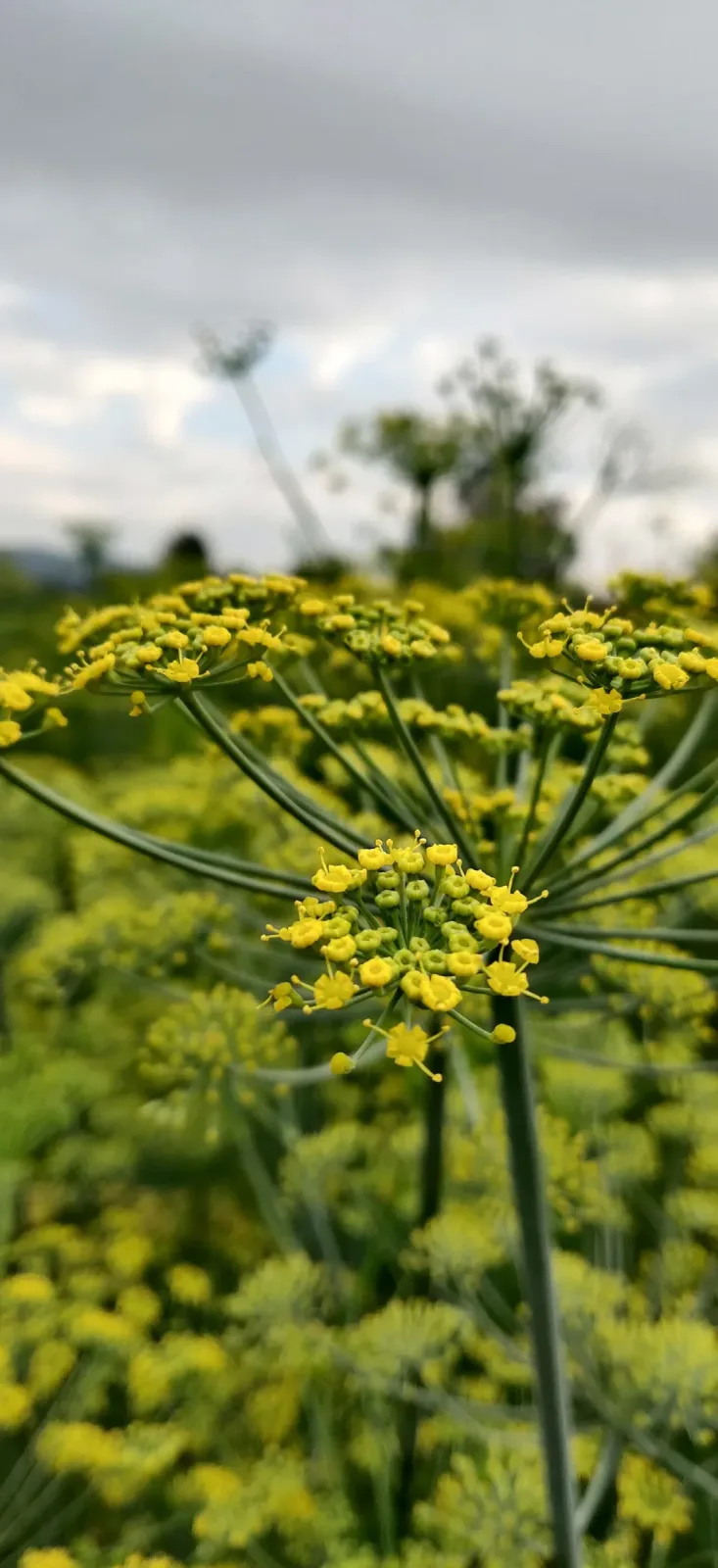
Fennel is a tall, aromatic herb in the carrot family with fine, feathery leaves, flat umbels of yellow flowers and sweet, anise-flavoured seeds. In India it is grown mainly for saunf seed; elsewhere it is also grown for leaves and, in the Florence type, for its swollen leaf base. It is listed as non-toxic to pets.
Care instructions
Care Guide & Maintenance Routine
Sow seed directly in full sun and deep, well-drained soil, since seedlings dislike being moved. Water regularly while young; established plants are fairly drought tolerant. Florence fennel needs steady moisture to avoid bolting. Cut seed heads before they shatter if you do not want self-sown seedlings.
Light & Sunlight
Full sun. NC State, RHS and TNAU all grow fennel in open, sunny positions. Shade gives weak, floppy stems and few seed heads.
Watering Schedule
Keep seedlings moist. RHS notes herb fennel is drought tolerant once established, while Florence fennel bolts if the soil dries out. TNAU irrigates the seed crop every 7 to 10 days. NC State notes stem and root rot in poorly drained soil.
Potting Mix & Drainage
Deep, well-drained loam; pH about 6.5 to 8.0
Temperature & Humidity
NC State and Wisconsin Horticulture rate herb fennel hardy in zones 4a to 9b; Wisconsin notes Florence fennel is hardy only to zone 5a. TNAU notes the seed crop needs a mild, frost-free climate, and the Spices Board notes dry, cold weather favours seed production. Frost at flowering damages the seed crop.
About fennel
Fennel, Foeniculum vulgare, is an aromatic herb in the carrot family, Apiaceae, related to dill, coriander, cumin and parsley. It is a hardy perennial in cool climates and is often grown as an annual or biennial. NC State gives a height of 1 to 1.5 m, and Wisconsin Horticulture notes plants can reach about 1.8 m. RHS describes herb fennel as reaching up to 2 m.
Plants have hollow, ribbed stems, finely divided, thread-like leaves, and flat umbels of tiny yellow flowers in summer. The ridged, oval seeds have a sweet anise flavour. Every part of the plant is aromatic.
Types
- Herb or sweet fennel: grown for leaves and seed; the type grown for saunf.
- Bronze fennel: RHS lists 'Purpureum', with smoky bronze-purple leaves, used as an ornamental and herb.
- Florence fennel: var. azoricum, a shorter annual grown for the swollen, bulb-like leaf base, eaten raw or cooked. Wisconsin Horticulture notes it is hardy only to zone 5a.
Light and soil
Full sun and deep, well-drained soil suit fennel best. The long taproot makes it tolerant of dry spells once established, but heavy, waterlogged soil causes stem and root rot, which NC State lists among its problems. Dig deeply before sowing and remove stones.
Sowing
Fennel resents transplanting, so most gardeners sow it directly. RHS sows herb fennel about 1 cm deep and thins plants to 30 cm apart. Seed germinates in one to two weeks in warm soil. For Florence fennel, RHS warns that early sowings tend to bolt, and recommends bolt-resistant cultivars such as 'Dragon'. Seedlings can be raised in modules and planted out young, before the taproot develops.
Watering
Keep seedlings moist. Herb fennel becomes drought tolerant once established, RHS notes. Florence fennel needs steady moisture throughout; dry spells trigger bolting, according to both RHS and Wisconsin Horticulture.
Feeding
RHS notes herb fennel needs no feeding in garden soil. Compost dug in before sowing is enough. Florence fennel benefits from rich soil that holds moisture.
Florence fennel
RHS spaces Florence fennel 30 cm apart, or 10 to 15 cm for baby bulbs, and suggests drawing soil up around the swelling base to blanch it. Harvest when the base is the size of a tennis ball or larger, cutting just above soil level; the stump may resprout small shoots.
Harvesting leaves and seed
Cut leaves as needed once plants are established. For seed, ICAR's North Gujarat report advises picking umbels when the seed is fully developed but still green, drying them in the sun for one to two days, then in the shade for 8 to 10 days, because strong sun dulls the seed colour. TNAU harvests umbels four or five times at 10 to 15 day intervals as they ripen.
Self-seeding
NC State notes fennel self-seeds readily and has naturalised in many places, and recommends removing spent flowers. Wisconsin Horticulture warns it may become invasive in mild climates. RHS notes it can become a nuisance. Cut seed heads before they shatter, and do not let plants escape into natural areas.
Wildlife
The flat flower heads attract many small pollinators and predatory insects, including hoverflies and parasitic wasps. NC State lists fennel as a larval host plant for swallowtail butterflies. RHS suggests leaving dead stems standing over winter as shelter for insects.
Pests and diseases
- Aphids: often on flower heads; RHS notes they are usually harmless.
- Slugs: on seedlings and young Florence fennel.
- Stem and root rot: in poorly drained soil, as NC State notes.
- Swallowtail caterpillars: eat leaves but rarely kill plants.
Using fennel in the kitchen
Every part of the plant is used. Fine leaves are chopped into salads, dals, fish dishes and dressings. Florence fennel bases are sliced raw into salads, roasted or braised. Seeds are used whole or ground in spice blends, breads, pickles and teas, and are commonly chewed after meals as a breath freshener. Pollen collected from the flowers is a specialty seasoning. Leaves are best used fresh, because they lose flavour quickly when dried.
Growing fennel for leaves
For a steady supply of leaves, sow small batches every few weeks during the growing season and cut plants before they flower. Pinching out the flower stems keeps the plant leafy for longer, though herb fennel eventually bolts in long days. A single established clump of herb fennel provides more leaf than most households can use.
Common mistakes
- Transplanting large seedlings, which damages the taproot and causes bolting.
- Letting Florence fennel dry out.
- Sowing Florence fennel too early in the season.
- Letting seed heads shatter, which fills the garden with seedlings.
- Planting in heavy, wet soil.
Fennel and dill
Fennel and dill are close relatives and can cross-pollinate if they flower together, so seed savers keep them apart. This makes no difference to leaves eaten from either plant.
Containers
RHS advises a container at least 30 cm wide and deep for herb fennel. Use a loam-based, free-draining mix and water when the surface dries. Bronze fennel makes an attractive pot plant on its own.
Pets
ASPCA lists fennel as non-toxic to dogs, cats and horses.
Companions
Fennel grows alongside other carrot-family herbs such as dill, coriander and parsley, and kitchen crops like fenugreek, carrots and chives. Give it space at the edge of a bed, since its height can shade smaller herbs.
Sowing seasons differ between markets; see the country sections.
Seasonal rhythm
Seasonal Calendar
A month-by-month calendar for Fennel (Saunf) in Global is coming soon. See the light, water and temperature notes above.
Diagnostics
Common Problems & Troubleshooting
Bolting in Florence fennel during dry spells or after early sowing; root rot in wet soil; aphids on flower heads; slugs on seedlings; self-sown seedlings becoming weedy; disease on flower heads in cloudy weather.
Pests & seasonal watch: NC State lists aphids, slugs and stem and root rot in poorly drained soil. RHS notes aphids are usually harmless. Swallowtail butterfly caterpillars feed on the leaves; NC State lists fennel as a larval host plant.
Q&A
Frequently Asked Questions
Is fennel safe for pets?
Yes. ASPCA lists fennel as non-toxic to dogs, cats and horses.
What is the difference between herb fennel and Florence fennel?
Herb fennel is a perennial grown for leaves and seed. Florence fennel, var. azoricum, is grown as an annual for its swollen leaf base. Wisconsin Horticulture notes Florence fennel is hardy only to zone 5a.
Why is my Florence fennel bolting?
RHS notes it bolts easily in dry conditions or from early sowings. Keep it moist and choose bolt-resistant cultivars.
Can I grow fennel in a pot?
Yes. RHS advises a container at least 30 cm wide and deep.
Should fennel be planted near dill?
Many gardeners keep them apart because the two can cross-pollinate, giving seed of mixed character. This matters mainly if you save seed.
When is fennel seed ready to harvest?
ICAR advises picking umbels when seed is fully developed but still green, then drying them briefly in sun and mostly in shade to keep the colour.
Does fennel self-seed?
Yes. NC State notes it self-seeds and has naturalised in places; Wisconsin Horticulture warns it may become invasive in mild climates. Cut seed heads before they drop.
Why are caterpillars eating my fennel?
Swallowtail butterfly larvae feed on fennel. NC State lists it as a larval host plant. Many gardeners grow extra plants to share.
Is fennel hardy?
Herb fennel is hardy in zones 4a to 9b according to NC State and Wisconsin Horticulture.
Similar Botanical Matches
Keep exploring
Related plants
Grower field notes
Reader Field Notes in Global
Share how this plant performs in your local Global climate.