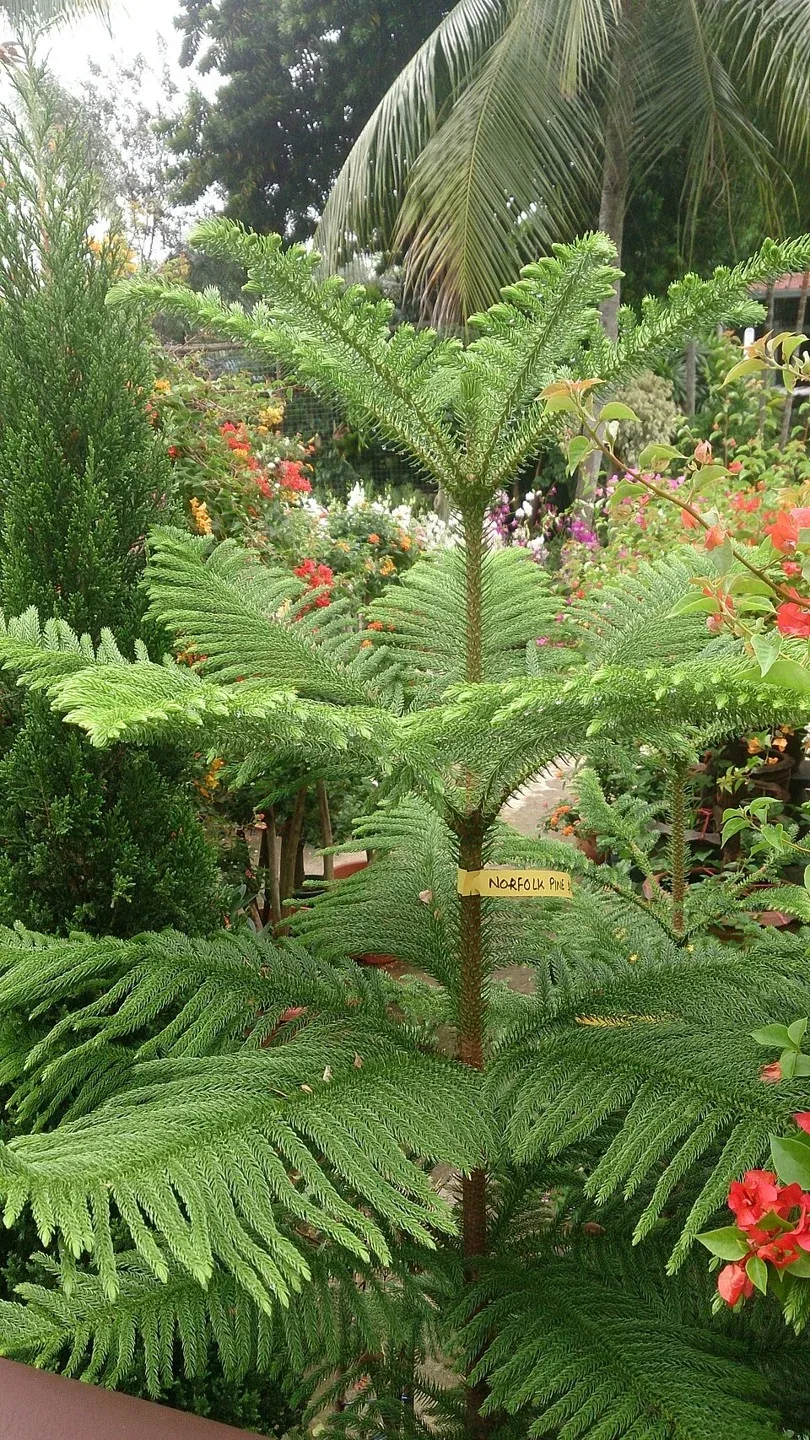
| ☀️ Light | Bright indirect light |
|---|---|
| 💧 Water | Moderate (lightly moist) |
| 🪴 Soil | Porous, slightly acidic potting mix with free drainage |
| 🐾 Safety | Cats: non-toxic · Dogs: non-toxic |
Where It Grows & Climate Tolerance
Pet & Companion Animal Toxicity (Norfolk Island Pine)
Grow Norfolk Island pine in a bright Indian home or sheltered pot. Adjust watering through dry heat and the monsoon.
Care instructions
Care Guide & Maintenance Routine
Place a Norfolk Island pine where it gets bright filtered light without the heat of late-afternoon glass. In a coastal apartment, a covered balcony can work if the container drains quickly. In dry inland rooms, keep the branches clear of fan or AC flow.
Light & Sunlight
Choose a bright room. Gentle direct light can suit an acclimated plant. Turn the pot in small increments for even growth and move it back from hot glass if foliage bleaches.
Watering Schedule
Water thoroughly after the surface starts to dry and drain the saucer. In cool or dim conditions the root ball dries more slowly. Avoid allowing it to remain sodden or bone dry.
Potting Mix & Drainage
Porous, slightly acidic potting mix with free drainage
Temperature & Humidity
A cooler bright room can suit this subtropical tree. Keep the plant frost-free and away from hot indoor vents and abrupt temperature swings.
Hot balcony edges
Morning sun is easier to manage in hot months. Turn the pot gradually so each side receives light. Leave space between the tree and hot glass or a wall that reflects afternoon heat.
Monsoon care
Tip water out of the outer pot and check below the surface before watering again. A cachepot can hide a wet root ball after a week of rain. When the weather cools in the north, move potted trees out of exposed winter draughts.
Pet safety
The ASPCA entry for Araucaria heterophylla lists it as non-toxic to cats and dogs. Nursery names such as Australian pine can refer to other species, so confirm the botanical name.
Photo by Mokkie via Wikimedia Commons. CC BY-SA 4.0. Resized and converted to WebP under the same license.

Seasonal rhythm
Seasonal Calendar
| Month | Care Tasks | Seasonal Focus |
|---|---|---|
| Jan | protect | Keep away from cold balcony air in the north. |
| Feb | Check moisture below the surface before watering. | |
| Mar | repot | Repot into fresh porous mix if the root ball has filled the pot. |
| Apr | Move the plant a little back from hot afternoon glass. | |
| May | Check container moisture more often in dry heat. | |
| Jun | Clear the drains before the heaviest rains. | |
| Jul | protect | Empty the cachepot after watering or downpours. |
| Aug | Increase airflow if branches stay damp for long periods. | |
| Sep | Check lower tiers as days become drier. | |
| Oct | Turn the pot gradually to keep the shape balanced. | |
| Nov | protect | Choose the brightest protected winter position. |
| Dec | Keep branches clear of room heaters and cold draughts. |
Diagnostics
Common Problems & Troubleshooting
Dry air, uneven moisture or low light can brown tips or cause lower tiers to decline. Lost branches seldom fill back in. Preserve the leader to keep the plant's tiered shape.
Care encyclopedia · 1 guide
Guides & Articles for Norfolk Island Pine
Q&A
Frequently Asked Questions
Why are the tips of my Norfolk Island pine turning brown?
Check for dry indoor air, irregular watering and inadequate light. The surface can look dry while the lower mix is still wet, so check below it before watering.
Can a Norfolk Island pine grow outdoors?
It can become a large tree in mild, frost-free climates. In cold climates grow it as a container plant and shelter it before frost.
Similar Botanical Matches
Grower field notes
Reader Field Notes in India
Share how this plant performs in your local India climate.