
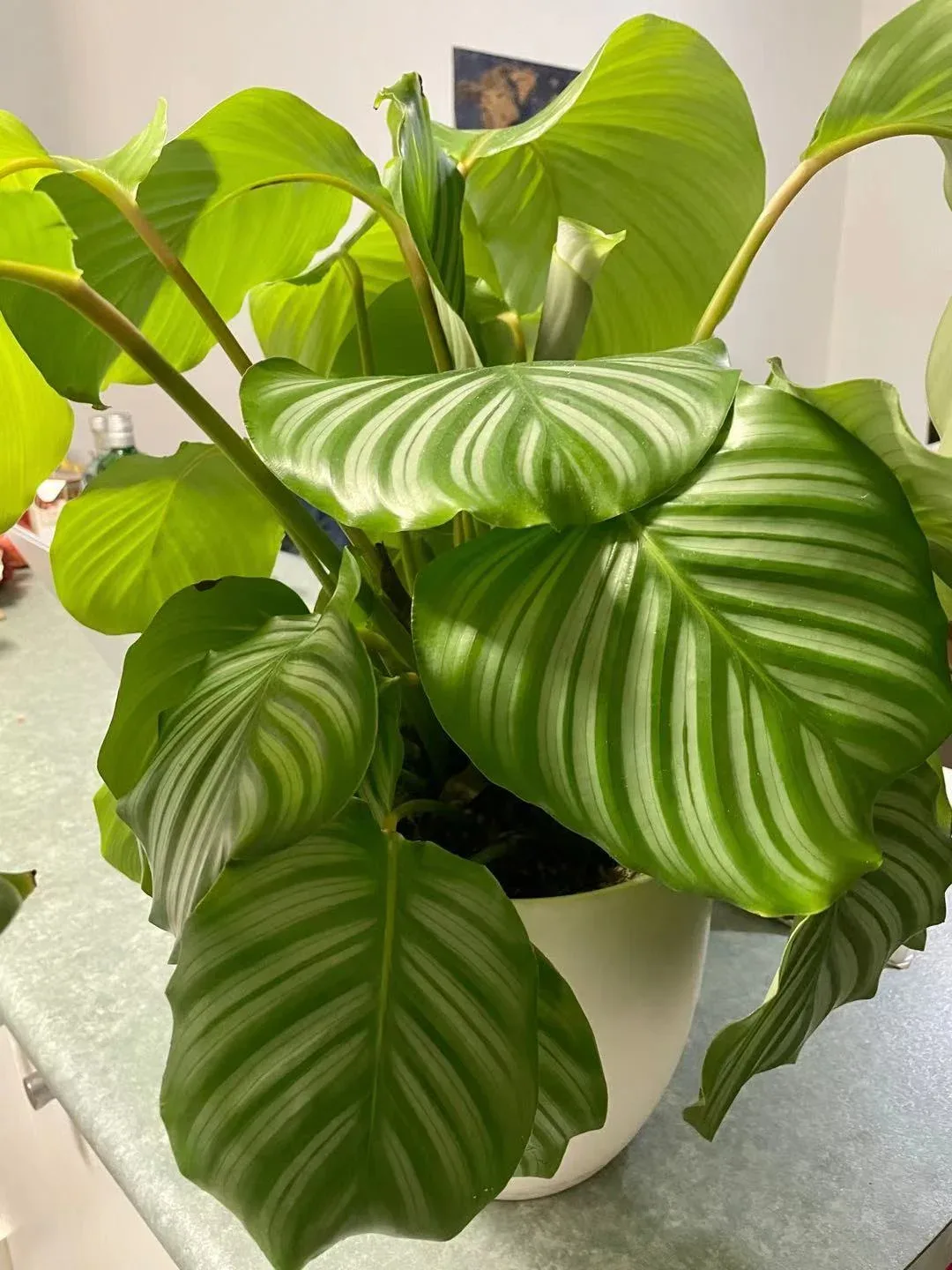
| ☀️ Light | Bright indirect light |
|---|---|
| 💧 Water | High (consistently moist) |
| 🪴 Soil | Moisture-retentive, well-draining, slightly acidic potting mix |
| 🌡️ Temp | 18°C – 24°C |
| 🐾 Safety | Cats: non-toxic · Dogs: non-toxic (ASPCA Animal Poison Control) |
| 📏 Mature size | 90 cm |
Where It Grows & Climate Tolerance
Pet & Companion Animal Toxicity (Calathea Orbifolia)
A pet-safe prayer plant with large round, silver-striped leaves that needs filtered light, steady moisture and high humidity.
Care instructions
Care Guide & Maintenance Routine
Bright indirect light; keep mix consistently moist, not soggy; high humidity; protect from direct sun. Non-toxic to cats and dogs.
Light & Sunlight
Bright indirect light or light shade. Direct afternoon sun can scorch the leaves.
Watering Schedule
Water when the surface begins to dry; keep the mix evenly moist, never soggy. Drain excess water.
Potting Mix & Drainage
Moisture-retentive, well-draining, slightly acidic potting mix
Temperature & Humidity
Best around 18–24°C; avoid cold drafts and sudden temperature changes.
Calathea orbifolia, now botanically called Goeppertia orbifolia, is a tropical foliage plant from Brazil. Its broad, rounded leaves have pale silver-green stripes. It is grown indoors for the leaves; flowering in a home is uncommon.
Give it bright indirect light or partial shade. Keep the potting mix evenly moist but never waterlogged, and use a pot with drainage. High humidity and stable warmth help prevent dry brown leaf edges. If your tap water causes browning, try rainwater or filtered water. Protect the leaves from direct afternoon sun and cold air.
Pet safety: The ASPCA lists Calathea species as non-toxic to cats and dogs. Eating any plant can still upset a pet’s stomach.
Care references: NC State Extension and ASPCA.
Seasonal rhythm
Seasonal Calendar
A month-by-month calendar for Calathea Orbifolia in India is coming soon. See the light, water and temperature notes above.
Diagnostics
Common Problems & Troubleshooting
Brown tips can follow dry air or unsuitable tap water; curling leaves can signal low moisture. Soggy mix can cause root rot.
Pests & seasonal watch: Watch for spider mites, mealybugs, aphids and scale, especially on leaf undersides.
Q&A
Frequently Asked Questions
Is Calathea Orbifolia safe for cats and dogs?
The ASPCA lists Calathea species as non-toxic to cats and dogs. Keep pets from chewing it, since any plant material may still upset the stomach.
Why are my Calathea Orbifolia leaf edges brown?
Dry air or mineral-rich tap water can cause brown tips. Raise humidity, keep the mix evenly moist, and try rainwater or filtered water if browning continues.
Similar Botanical Matches
Keep exploring
Related plants
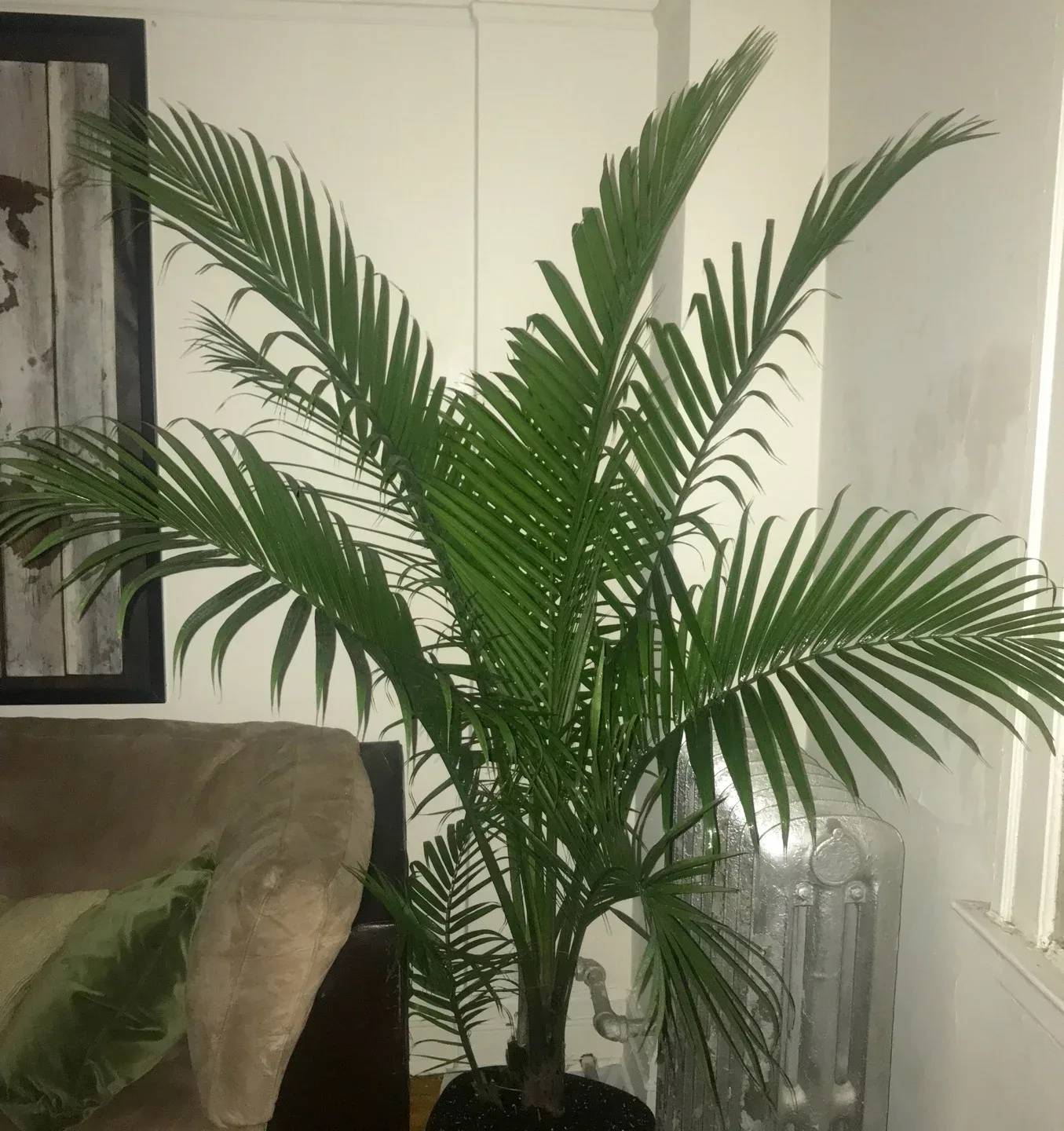
Grower field notes
Reader Field Notes in India
Share how this plant performs in your local India climate.