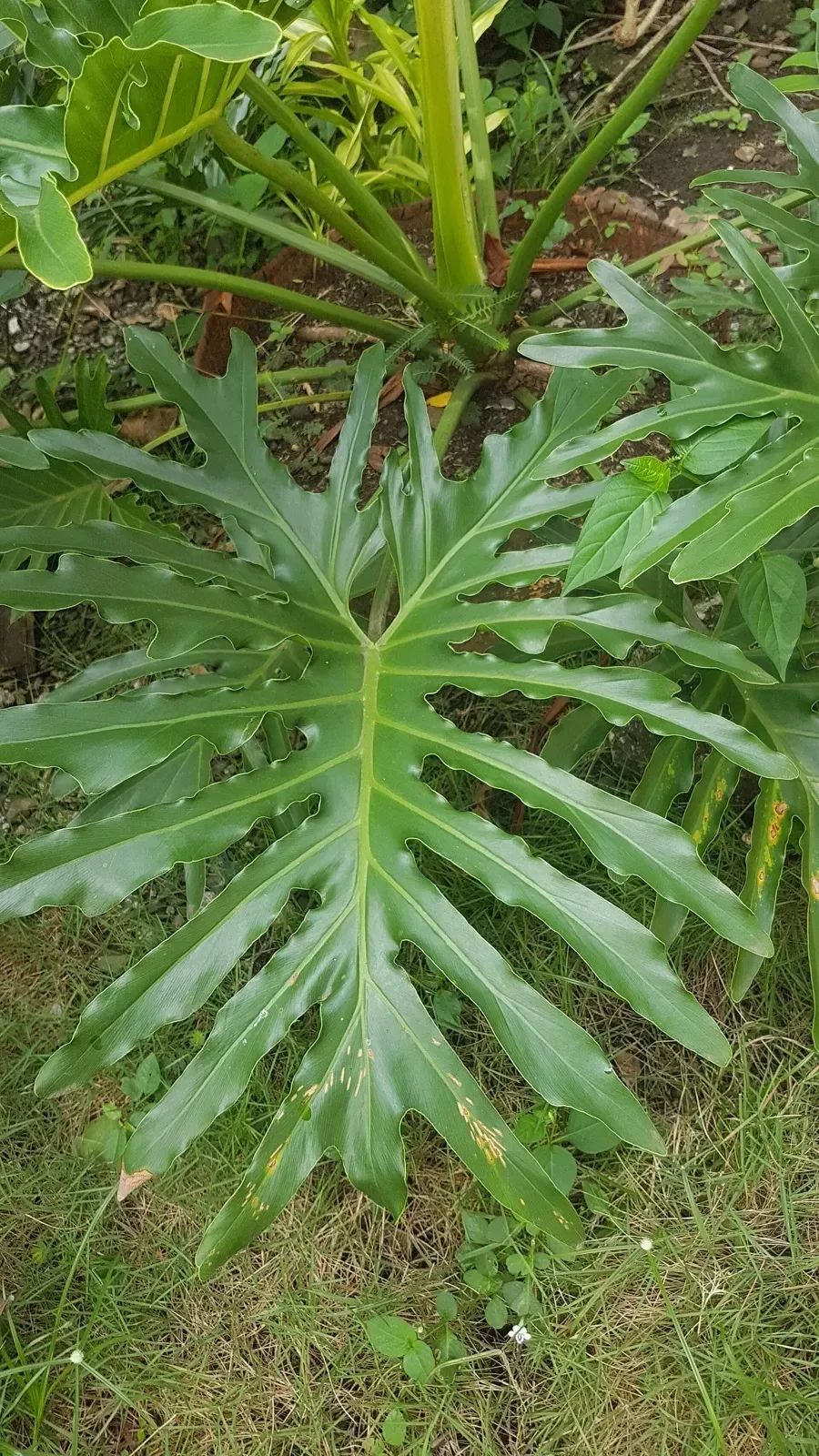
| ☀️ Light | Bright indirect light |
|---|---|
| 💧 Water | Moderate (lightly moist) |
| 🪴 Soil | Rich, well-drained potting mix |
| 🌡️ Temp | 15°C – 29°C |
| 🐾 Safety | Cats: toxic · Dogs: toxic |
| 📏 Mature size | 3.0 m |
Where It Grows & Climate Tolerance
Pet & Companion Animal Toxicity (Tree Philodendron (Lacy Tree Philodendron, Selloum))
A big, non-climbing philodendron with deeply cut leaves and a short trunk in time. Needs a bright room and plenty of floor space.
Care instructions
Care Guide & Maintenance Routine
Bright indirect light, with a grow light in dark winters. Water when the top few centimetres are dry; less in winter. Keep above 15°C. Feed April to September. Can reach 1.2 to 3 m. Toxic to pets.
Light & Sunlight
Low light gives fewer lobes and stretched stalks (NC State). Keep out of hot afternoon sun through glass.
Watering Schedule
Water when the top of the mix is dry, then drain. Overwatering also reduces lobing (NC State). Big pots dry slowly in winter; check by touch, no fixed schedule.
Potting Mix & Drainage
Rich, well-drained potting mix
Temperature & Humidity
RHS genus guide says keep above 15°C; NC State notes it is grown indoors where temperatures drop below about 16°C. Upper figure is an editorial comfort guide.
Tree philodendron is the big one. Its glossy leaves are deeply cut into wavy lobes, held on long stalks, and over the years the plant builds a thick, scarred trunk that leans and sprawls. Garden centres sell it as selloum, split-leaf philodendron, lacy tree philodendron or horsehead philodendron, and plenty of people take it home thinking it is a monstera. In a Canadian home it is a striking floor plant for a bright room, but it needs space, steady light and careful winter watering. This page explains what it is, how big it really gets indoors, and how to keep it healthy through every season.

Tree philodendron at a glance
| What you need to know | Short answer |
|---|---|
| Name | Philodendron bipinnatifidum Schott ex Endl.; arum family (Araceae) |
| Also sold as | Selloum, Philodendron selloum, split-leaf philodendron, lacy tree philodendron, horsehead philodendron, Thaumatophyllum bipinnatifidum |
| Habit | Self-heading; builds a short trunk and leans or creeps with age |
| Size | About 1.2 to 3 m tall and 1.8 to 3 m wide (NC State); leaves can reach about 1 m long (RHS) |
| Light | Bright light, no hot direct sun through glass |
| Water | When the top few centimetres are dry; never leave it standing in water; less in winter |
| Warmth | Keep above about 15°C |
| Difficulty | Beginner, if you have the room |
| Pets | Not pet safe |
Identification and naming
How to recognise a tree philodendron
NC State Extension gives these quick ID points:
- Leaves are very large, glossy and heart-shaped in outline, but deeply lobed.
- Leaf stalks are long and smooth.
- The stem is short and stout, with large sheathing structures around new leaves.
- Older stems carry distinctive leaf scars and send out thick aerial roots.
Young plants in small pots have simpler leaves with only shallow cuts. The deep, wavy lobes come as the plant matures. NC State also notes that low light and overwatering make leaves smaller, with fewer lobes or none.
Selloum, split-leaf, lacy tree philodendron: same plant?
Mostly, yes. The accepted botanical name is Philodendron bipinnatifidum. Kew's checklist treats Philodendron selloum and Thaumatophyllum bipinnatifidum as synonyms of it. So a label that says selloum is the same plant.
Common names are looser. NC State Extension uses "tree philodendron". ASPCA lists "lacy tree philodendron", "selloum" and "horsehead philodendron" together on one page. "Split-leaf philodendron" is the messy one: shops use it for this plant, but also for Monstera deliciosa, which is not a philodendron at all.
The Thaumatophyllum name comes from a 2018 study that moved this plant and a few relatives, including xanadu, into their own genus. Kew currently keeps them in Philodendron, so you will see both names in books and on labels.
Is a tree philodendron the same as a monstera?
No. NC State Extension says plainly that the plant called split-leaf philodendron, Monstera deliciosa, is not a philodendron. They are cousins in the same arum family, and both have big cut leaves, but you can tell them apart:
- Monstera leaves have holes inside the leaf as well as splits from the edge. NC State's ID note for monstera mentions "internal holes".
- Tree philodendron leaves are cut from the edge into wavy lobes, without holes in the middle.
- Monstera is a climbing vine that needs a sturdy support. Tree philodendron stands on its own trunk.
Our Monstera deliciosa profile covers the monstera side.
Tree philodendron vs xanadu
Philodendron xanadu is the compact relative. NC State gives xanadu about 0.9 to 1.5 m tall and wide, against 1.2 to 3 m tall and 1.8 to 3 m wide for tree philodendron. Xanadu stays a low clump and never builds a real trunk. If your room is small, xanadu is the safer buy.

How big does a tree philodendron get indoors?
NC State's figure of 1.2 to 3 m tall and 1.8 to 3 m wide is for the plant in general, and it warns that tree philodendron may become too large for smaller homes. Indoors in Canada, a few things keep it smaller: a pot limits the roots, winter light is weak, and the growing season is short. Even so, plan for a plant that can easily reach 1.5 m across in a few years, with leaves that stick out a long way from the pot.
Good spots: a corner of a bright living room, beside a large south or west window, or in a sunroom that stays warm in winter. Poor spots: hallways, beside a sofa where people brush past, or near an entry door.
Buying a tree philodendron in Canada
- Choose a plant with firm, upright stalks and no yellow leaves at the base.
- Check the trunk at the soil line. It should be firm, not soft or dark.
- Lift the pot if you can. A heavy, soggy pot is a warning sign for root rot.
- Look under leaves and around the stalk bases for scale, mealybugs and spider mites.
Big leaves crease and tear easily in wind and cold. In winter, wrap the plant completely and keep the car warm. RHS reminds buyers to keep tropical plants warm on the way home in cold weather.
Light in a Canadian home
NC State Extension says tree philodendron prefers high light but tolerates low light, and also warns that full sun can scorch the leaves. RHS advises bright but indirect light for philodendrons and keeping them out of direct summer sun.
- South window: best from October to March, set a little back from the glass.
- West window: good, with a sheer curtain on summer afternoons.
- East window: good all year.
- North window: it survives, but leaves get smaller and less lobed.
Turn the pot every week or two so it does not lean toward the window. In winter, a tall LED lamp aimed at the plant helps. University of Minnesota Extension suggests about 12 to 14 hours of light a day for foliage plants.
Soil mix, pots and repotting
NC State Extension says tree philodendron likes moist, well-drained soil high in organic matter. RHS suggests a loose, free-draining, slightly acidic mix for philodendrons. A good indoor mix:
- 2 parts indoor potting mix
- 1 part orchid bark
- 1 part perlite
Use a heavy, wide pot with a drainage hole. The plant gets top heavy, and a light pot will tip. Repot in spring when roots circle the pot or poke out of the drainage hole, moving up only a few centimetres in width. A very large pot stays wet too long in winter.
The thick aerial roots that grow from the trunk can be guided into the pot, where they take up water and nutrients. If they get in the way, you can trim a few, but do not cut them all off.
Watering by season
NC State Extension notes root rot can occur in overly damp soil, but also that the plant does not tolerate drought. Aim for the middle: water when the top few centimetres of mix are dry, then water slowly until it drains, and empty the saucer.
Spring and summer
Big leaves lose a lot of water. Check once or twice a week in warm weather.
Autumn
Growth slows. A large pot can stay wet at the bottom for a long time once nights cool. Check the lower half with a wooden skewer.
Winter
Water much less often, and only when the mix is dry well below the surface. Use room-temperature water. Cold, wet mix in January is the main cause of root rot indoors.
Flushing salts
NC State Extension says tree philodendron does not tolerate salt buildup, and suggests flushing the soil regularly or using distilled water. In practice: every couple of months in the growing season, water slowly until plenty runs out the bottom, then let it drain fully. RHS also suggests rainwater or filtered water where tap water is hard.
Humidity and temperature
NC State Extension says tree philodendron prefers moderate humidity, and that outdoor container plants should come inside when temperatures drop below about 15°C (60°F). RHS gives at least 15°C for philodendrons and advises keeping them away from hot radiators and cold draughts.
- Keep it away from heat registers and wood stoves.
- Keep leaves off cold window glass on winter nights.
- Keep it out of the blast from entry and patio doors.
- In a very dry home, run a humidifier nearby or group plants.
Fertilizer
Feed from April to September, as RHS suggests for philodendrons, with a balanced liquid houseplant fertilizer at half strength once a month. Because this plant dislikes salt buildup, it is better to under-feed than over-feed. Stop in October.
Pruning and grooming
Tree philodendron does not branch like a shrub, so you cannot really prune it smaller. Grooming keeps it tidy:
- Remove old yellow leaves at the base by cutting the stalk close to the trunk. The trunk keeps a scar, which is normal.
- Wipe dust off the leaves every few weeks so they catch more light.
- Never cut the top growing point. New leaves come from there.
- Wear gloves. NC State notes the sap can cause skin irritation.
If an old plant has become a long, leaning trunk, ask at a good garden centre about air layering or taking the top as a cutting. It is possible, but slow, and best done in late spring.
Propagation
Iowa State University Extension says non-trailing philodendrons can be propagated from offsets or stem sections. For tree philodendron:
- Offsets: older plants sometimes make side shoots at the base. Separate one with its own roots when you repot in spring.
- Stem sections: a section with at least two nodes can be rooted in water or perlite. Pieces with aerial roots root more reliably, and rooting hormone speeds it up.
Most home growers simply buy a young plant. More detail is in our philodendron propagation guide.
Why are the lower leaves yellowing?
A tree philodendron drops its oldest, lowest leaves as it grows. One yellow leaf at the bottom every so often is normal. More than that usually means:
- Too much water, especially in winter. Let the mix dry deeper.
- Root rot. If the trunk base is soft and the mix smells sour, check the roots.
- Too little light. The plant sheds lower leaves it cannot support.
- Salt buildup. Brown edges plus yellowing can follow heavy feeding; flush the pot.
- Drought. NC State notes it does not tolerate drought. A big plant that dried out completely may drop leaves.

Problem troubleshooter
| What you see | Likely cause | What to do first |
|---|---|---|
| Smaller leaves with few or no lobes | Low light or overwatering (NC State) | More light; let the mix dry further between waterings. |
| Several yellow lower leaves, wet mix | Overwatering, root rot | Check roots; water less often. |
| Brown, scorched patches | Hot sun through glass | Move back or filter the light. |
| Brown leaf edges | Salt buildup, dry air, heat register | Flush the pot; move from heat; feed less. |
| Plant leaning hard to one side | One-sided light | Turn regularly; add a light on the dark side. |
| Fine webbing, speckles | Spider mites | Shower the leaves; use a houseplant-labelled soap. |
| Brown bumps on stalks | Scale | Scrape off; use a labelled product. |
| White fluff at stalk bases | Mealybugs | Dab with rubbing alcohol on a swab, then a labelled product. |
| Silvery streaks, black specks | Thrips | Isolate; rinse; use a labelled product. |
NC State Extension lists aphids, mealybugs, scale, banded greenhouse thrips and spider mites as occasional problems. Use products labelled for indoor plants in Canada and follow the label. See also our plant problems page.
Month-by-month care calendar for Canada
| Month | What to do |
|---|---|
| January | Brightest spot. Water only when the mix is dry well down. No feeding. |
| February | Wipe the leaves. Check for scale and mites. Keep leaves off cold glass. |
| March | New leaves start. Water a little more often. |
| April | Start half-strength feeding. Repot if needed. |
| May | Flush the pot with plenty of water. Turn the pot regularly. |
| June | Optional: move to a shaded patio once nights stay above about 15°C. |
| July | Check water often in heat. Protect from afternoon sun. |
| August | Flush the pot again. Last month for easy repotting. |
| September | Last feed. Bring it in early, before nights drop below about 15°C. Check for pests. |
| October | Stop feeding. Move to the brightest indoor spot. |
| November | Water less. Add a lamp if the room is dim. |
| December | Keep away from drafty doors and heat registers. |
Safety for pets, children and skin
Tree philodendron is not pet safe. ASPCA lists the horsehead philodendron, which it says is also called lacy tree philodendron and selloum, as toxic to dogs and cats because of insoluble calcium oxalates. Signs include mouth irritation, drooling, vomiting and trouble swallowing. NC State Extension lists it as a problem for cats, dogs and children, and says the sap can cause skin irritation. Note that ASPCA files this plant under a different botanical name, Philodendron bipennifolium. We quote ASPCA for toxicity only, not for the name.
- Big floor plants are easy for pets to chew. Pick a spot they do not hang around.
- Wear gloves when grooming or repotting.
- If a pet chews it, call your vet. The ASPCA Animal Poison Control line is (888) 426-4435 (a fee may apply). For a child, call your provincial poison centre.
See our pet-safe plants list for alternatives.
Common mistakes
- Buying a small one without planning for its adult size.
- Watering a large pot by the calendar in winter.
- Never flushing the pot, then fighting brown edges.
- Cutting off the top to make it shorter.
- Putting it by a door that opens onto winter air.
- Calling it a monstera and wondering why it never gets holes.

Watch: tree philodendron care
A short care video from Apartment Therapy's plant doctor. In Canada, give it your brightest winter spot and water less from November to March.
Related plants and guides
- Philodendron types and care for Canadian homes
- Philodendron xanadu, the compact self-heading relative
- Monstera deliciosa, the plant often confused with it
- Monstera adansonii
- Philodendron care in Canadian winters
- Bird of paradise, another large floor plant
Sources
- NC State Extension Plant Toolbox: Philodendron bipinnatifidum (tree philodendron: size, ID, care, pests, toxicity). Accessed 10 Nov 2026.
- International Plant Names Index: Philodendron bipinnatifidum. Accessed 10 Nov 2026.
- Kew World Checklist of Vascular Plants (via GBIF) (synonyms P. selloum, Thaumatophyllum bipinnatifidum). Accessed 10 Nov 2026.
- Sakuragui et al. 2018, PhytoKeys 98 (Thaumatophyllum). Accessed 10 Nov 2026.
- RHS: How to grow philodendrons. Accessed 10 Nov 2026.
- NC State Extension Plant Toolbox: Monstera deliciosa (not a philodendron; internal holes). Accessed 10 Nov 2026.
- ASPCA: Horsehead Philodendron. Accessed 10 Nov 2026.
- Iowa State University Extension: How do I propagate philodendron? Accessed 10 Nov 2026.
- University of Minnesota Extension: Lighting for indoor plants. Accessed 10 Nov 2026.
Seasonal rhythm
Seasonal Calendar
A month-by-month calendar for Tree Philodendron (Lacy Tree Philodendron, Selloum) in Canada is coming soon. See the light, water and temperature notes above.
Diagnostics
Common Problems & Troubleshooting
Few lobes and long stalks: low light or overwatering. Brown edges: dry air or salts. Leaning: turn the pot.
Pests & seasonal watch: Thrips (NC State), mealybugs, scale and spider mites. Use products labelled for indoor plants in Canada.
Q&A
Frequently Asked Questions
Is a tree philodendron the same as a monstera?
No. NC State Extension says Monstera deliciosa, often called split-leaf philodendron, is not a philodendron. Monstera leaves have holes inside the leaf as well as splits, and it climbs. Tree philodendron (Philodendron bipinnatifidum) has deeply lobed leaves without internal holes and stands on its own short trunk.
Is selloum the same as tree philodendron?
Yes. Philodendron selloum is a synonym of Philodendron bipinnatifidum in Kew's checklist, and Thaumatophyllum bipinnatifidum is another synonym. NC State calls the plant tree philodendron, and ASPCA lists lacy tree philodendron, selloum and horsehead philodendron together.
How big does a tree philodendron get indoors?
Bigger than most people expect. NC State gives about 1.2 to 3 m tall and 1.8 to 3 m wide, and warns it may become too large for smaller homes. RHS says leaves can reach about 1 m long. A pot and Canadian winters slow it down, but plan for a plant at least 1.5 m across.
Why are my tree philodendron's lower leaves yellowing?
One old lower leaf yellowing now and then is normal. Several at once usually means too much water, especially in winter, or root rot. Low light, salt buildup from feeding, and letting a big plant dry out completely can also cause it. NC State notes it does not tolerate drought or salt buildup.
Is tree philodendron toxic to pets?
Yes. ASPCA lists the horsehead philodendron, also called lacy tree philodendron and selloum, as toxic to dogs and cats because of insoluble calcium oxalates. NC State lists it as a problem for cats, dogs and children, and says the sap can irritate skin.
Why are my tree philodendron leaves not split?
Young plants have simpler leaves, and the deep lobes come as the plant matures. NC State also notes that low light and overwatering cause smaller leaves with fewer or no lobes. Give it more light and let the mix dry a little more between waterings.
How much light does a tree philodendron need?
NC State says it prefers high light but tolerates low light, and that full sun can scorch the leaves. Indoors in Canada, put it near a south or west window in winter, a little back from the glass, and filter hot summer sun. Turn the pot regularly.
Should I cut off the aerial roots?
No, not all of them. NC State notes these roots can take up water and nutrients and help support the plant. Guide them back into the pot where you can. Trimming a few that are in the way will not harm the plant.
How do I stop salt buildup in a tree philodendron pot?
NC State says it does not tolerate salt buildup and suggests flushing the soil regularly or using distilled water. Every couple of months in the growing season, water slowly until plenty drains out the bottom. Feed lightly and stop feeding in winter.
Can tree philodendron go outside in summer in Canada?
Yes, in a shaded spot once nights stay above about 15°C. NC State says container plants should move indoors when temperatures dip below about 15°C (60°F). Bring it in early in September, before nights cool, and check it for pests first.
Can I make my tree philodendron smaller?
Not really by pruning. It does not branch like a shrub, and cutting the top removes its only growing point. Grooming off old lower leaves keeps it tidy. If it has outgrown your space, offsets or a stem cutting can start a smaller plant.
Similar Botanical Matches
Grower field notes
Reader Field Notes in Canada
Share how this plant performs in your local Canada climate.