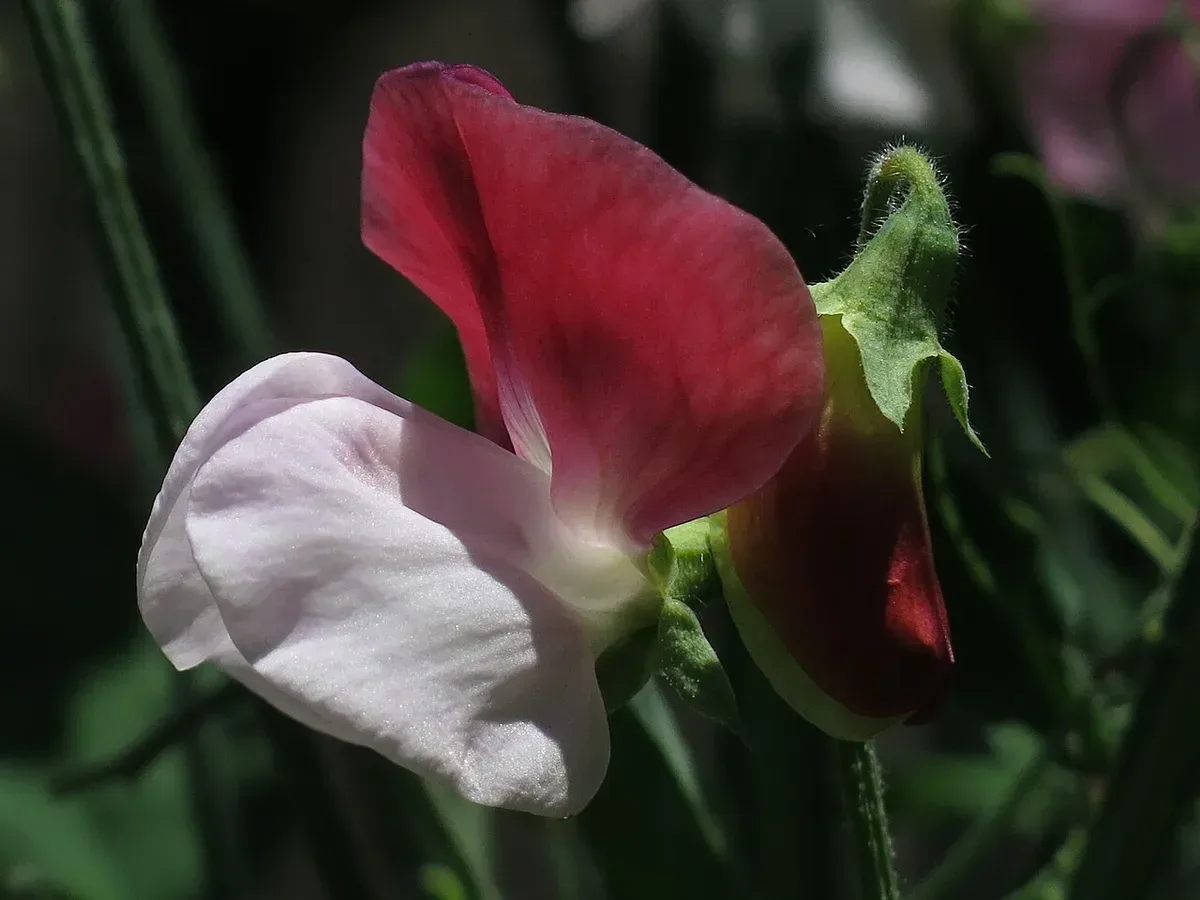
| ☀️ Light | Full sun |
|---|---|
| 💧 Water | Moderate (lightly moist) |
| 🪴 Soil | Deep, fertile, well-drained sandy loam with plenty of organic matter |
| 🌡️ Temp | -5°C – 30°C |
| 🐾 Safety | Cats: toxic · Dogs: toxic |
| 📏 Mature size | 2.0 m |
Where It Grows & Climate Tolerance
Pet & Companion Animal Toxicity (How to Grow Sweet Peas in Canada)
Sweet peas suit Canada's cool springs and early summers. Sow as early as the soil can be worked or start them indoors, give them something to climb, and enjoy scented flowers from June until midsummer heat.
Care instructions
Care Guide & Maintenance Routine
Start seed indoors in deep pots in March, or sow outside as soon as the soil thaws and drains. Seedlings tolerate light frost. Plant against netting in full sun, mulch to keep roots cool, water deeply and pick every few days. Flowering ends in hot spells.
Light & Sunlight
NC State Extension lists full sun, and PAU warns that seedlings grow weak and leggy in shade. The RHS also accepts partial shade. A spot with sun all morning is the minimum.
Watering Schedule
NC State advises keeping soil evenly moist and mulching. PAU warns that excessive watering before and after flowering rots roots and stems. Water deeply but let the surface dry a little between waterings.
Potting Mix & Drainage
Deep, fertile, well-drained sandy loam with plenty of organic matter
Temperature & Humidity
Seedlings tolerate light frost; the RHS rates the species H3 (hardy to about -5 to 1°C). Plant out two to four weeks before average last frost, which ranges from 26 March in Vancouver to 1 June in St. John's (ECCC normals). Heat above about 30°C ends flowering.
Sweet peas in Canadian gardens
Sweet peas love cool weather, and much of Canada has exactly the long, mild spring and early summer they want. In Quebec they are called pois de senteur. The coastal climates of BC, Nova Scotia, PEI and Newfoundland, and the cool summer nights of Calgary and Edmonton, often give longer seasons than hot, humid southern Ontario.
Starting early
Seed can go outside as soon as the ground is workable in spring, since seedlings handle light frost. Many gardeners get a head start by sowing indoors in March in deep pots or toilet-roll tubes, then planting out in April or May. Soak seed first to soften the hard coat.
Frost dates
Seedlings can usually go out two to four weeks before the average last frost (ECCC 1991-2020 normals via GrowersGuide.ca), with cover ready for a hard freeze:
- Vancouver 26 March, Victoria 14 April: sow outdoors from late February to March.
- Toronto 4 May, Montréal 29 April, Ottawa 7 May: plant out in mid-April.
- Halifax 8 May, Charlottetown 18 May, St. John's 1 June: plant out late April to mid-May.
- Edmonton 22 May, Calgary 26 May, Winnipeg 24 May, Regina 28 May: plant out in early May.
Supports and site
Use 2 m netting on a fence, a cattle-panel arch or a wigwam of bamboo canes. Full sun and a cool root run give the best results; a mulch of straw or shredded leaves helps a lot in July.
Heat waves
When Toronto or Winnipeg hits a run of 30°C days, buds drop and vines turn yellow. Water deeply in the morning and keep picking. Choose heat-tolerant varieties if you garden in southern Ontario or the Okanagan.
Hardiness zones
Because sweet pea is an annual, NRCan zones (3a in Saskatoon to 9a in Victoria) matter less than summer heat and frost dates. Zone 9a gardeners in Vancouver and Victoria can even sow in fall for very early flowers.
Cut flowers
Cut stems when the top bud is still closed, every two or three days. Vases fill the house with scent; this is the main payoff.
Questions from Canadian readers
- Can I plant them next to my garden peas? NC State advises against it, since sweet pea seeds are poisonous and easy to confuse with edible peas.
- Pets? Treat as unsafe. Keep dogs from chewing the pods.
Fall sowing on the coast
Gardeners on Saltspring Island and around Nanaimo sometimes sow in October under a cloche for flowers in May. Elsewhere in Canada, spring sowing is safer.
Seed sources
Seed racks in Canadian hardware stores carry the common mixes; specialist seed houses list named Spencer and heirloom varieties. Order by January, since popular colours sell out.
Seasonal rhythm
Seasonal Calendar
| Month | Care Tasks | Seasonal Focus |
|---|---|---|
| Jan | sow | Coastal BC: soak and sow seed indoors. Elsewhere: order seed and gather deep pots. |
| Feb | sow | Vancouver and Victoria: sow outdoors in mild spells. Plan supports. |
| Mar | sow | Start seed indoors in deep pots in Ontario, Quebec, the Maritimes and the Prairies. |
| Apr | plant | Plant hardened seedlings out in southern Ontario and Quebec; cover on hard-frost nights. |
| May | sow, plant | Prairie and Atlantic planting. Direct sow where soil has thawed and drained. |
| Jun | harvest | First flowers on the coast and in Ontario. Tie in shoots; mulch roots. |
| Jul | harvest | Peak bloom on the Prairies and in Atlantic Canada. Pick every two or three days. |
| Aug | harvest, protect | Heat waves end flowering in southern Ontario. Water deeply; remove mildewed leaves. |
| Sep | harvest | Cool-summer regions still flowering. Collect pods from late flowers if saving seed. |
| Oct | sow | Vancouver and Victoria: try a fall sowing in a sheltered spot. Clear old vines elsewhere. |
| Nov | protect | Store seed dry and labelled as not edible. Rotate next year's bed. |
| Dec | protect | Plan next year's varieties. Coastal fall sowings rest under mulch. |
Diagnostics
Common Problems & Troubleshooting
Buds dropping in heat; powdery mildew on older leaves; root rot from heavy, wet soil; poor flowering when pods are left on; seedlings eaten by slugs, snails or birds.
Pests & seasonal watch: Slugs and snails on seedlings in wet coastal springs. Aphids on tips. Powdery mildew from late July, especially in Ontario and Quebec heat.
- Yellow leaves — Leaves fade from green to yellow, often starting at the bottom.
- Root rot — Roots turn brown and mushy in soil that stays wet.
- Leggy — Long weak stems with big gaps between small leaves, leaning to the window.
- Aphids — Clusters of small soft insects on new tips, often sticky.
- White powder — A white powdery film on leaves, usually in still, humid air with dry soil at the roots.
- Overwatering — Soil stays wet, leaves yellow or droop, and the pot feels heavy.
Similar Botanical Matches
Grower field notes
Reader Field Notes in Canada
Share how this plant performs in your local Canada climate.