| ☀️ Light | Full sun |
|---|---|
| 💧 Water | High (consistently moist) |
| 🪴 Soil | Moist, reasonably drained soil. |
| 🐾 Safety | Cats: toxic · Dogs: toxic (ASPCA Animal Poison Control) |
Where It Grows & Climate Tolerance
Pet & Companion Animal Toxicity (Swamp Milkweed)
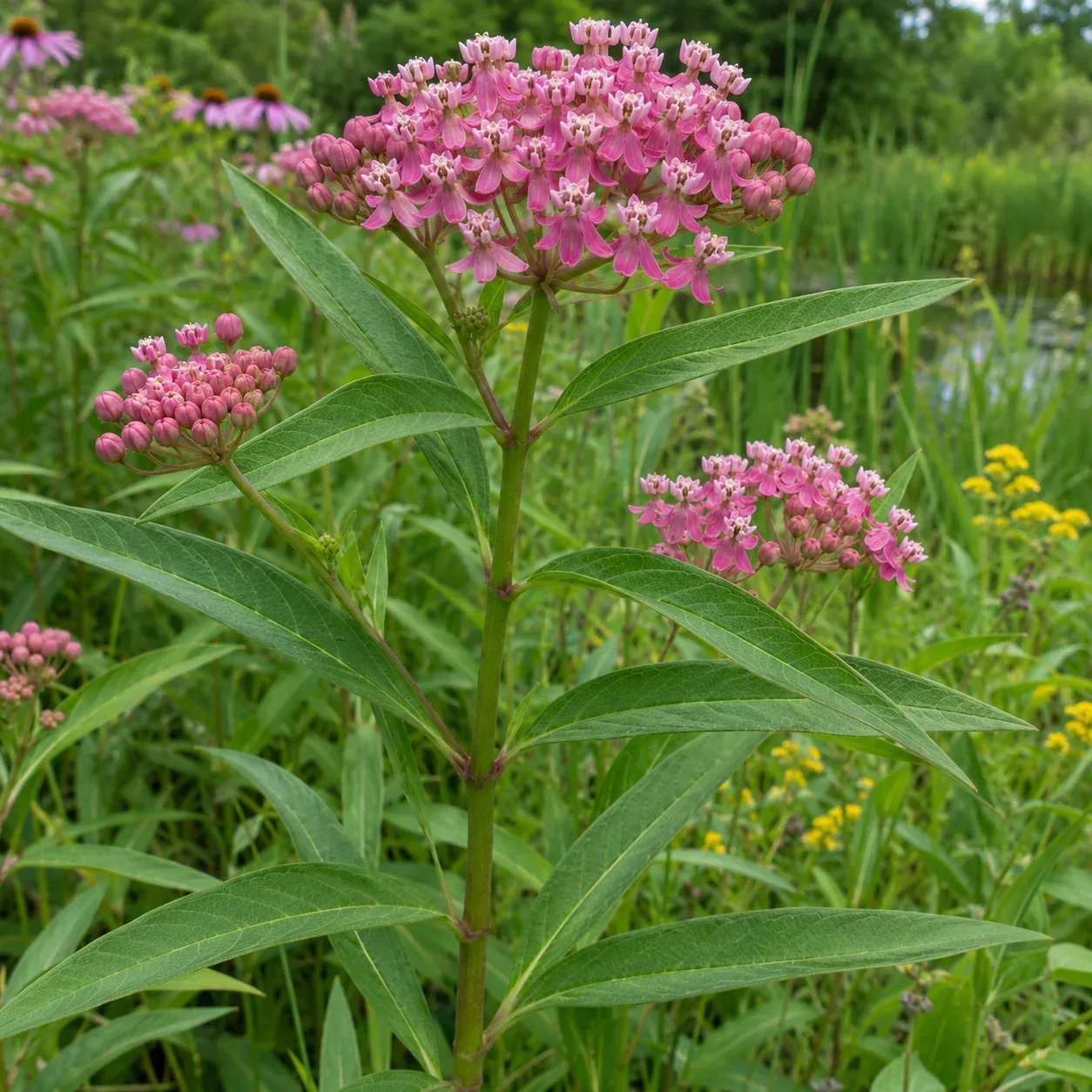
A pink-flowered native milkweed for sunny, moist sites that can support monarch butterflies where the species occurs.
Care instructions
Care Guide & Maintenance Routine
Full sun; Medium to high, especially during establishment; Moist, reasonably drained soil. Check local timing and cultivar suitability.
Light & Sunlight
Full sun. Check local heat and site exposure.
Watering Schedule
Medium to high, especially during establishment. Adjust to rainfall and drainage.
Potting Mix & Drainage
Moist, reasonably drained soil.
Temperature & Humidity
Use local frost dates and cultivar suitability; a single Canada-wide temperature range is unreliable.
A pink-flowered native milkweed for sunny, moist sites that can support monarch butterflies where the species occurs.
Care
Use locally appropriate, responsibly sourced plants. Place in a sunny rain-garden edge or other site that stays moist; avoid assuming it needs permanently submerged soil. Give plants room for their mature clump and avoid crowding. Water during establishment and dry periods. Leave some stems and leaf litter over winter where garden conditions allow, then tidy selectively in spring. Distinguish it from common milkweed, which has a different growth and spreading habit. Milkweed sap can irritate; do not present the plant as edible or pet safe. Avoid pesticides on flowering plants and check local guidance for any treatment.
Seasonal care
Spring—plant or divide locally sourced stock, water in. Summer—maintain moisture, observe pollinators. Autumn—allow seed pods where appropriate and avoid unwanted spread. Winter—leave habitat structure where safe, then tidy in spring.
Source: https://www.ontario.ca/page/pollinator-health https://www.ontario.ca/page/dukes-skipper
Seasonal rhythm
Seasonal Calendar
A month-by-month calendar for Swamp Milkweed in Canada is coming soon. See the light, water and temperature notes above.
Diagnostics
Common Problems & Troubleshooting
Poor growth: check light, drainage and moisture. Disease or damage: identify the cause before treatment.
Pests & seasonal watch: Inspect regularly, identify problems before treatment and follow local guidance.
Care encyclopedia · 1 guide
Guides & Articles for Swamp Milkweed
Q&A
Frequently Asked Questions
Is swamp milkweed the same as common milkweed?
No; they are separate species with different site preferences.
Does it need full sun?
Best flowering occurs with ample sun.
Is it safe to eat?
No; do not consume it.
Similar Botanical Matches
Grower field notes
Reader Field Notes in Canada
Share how this plant performs in your local Canada climate.