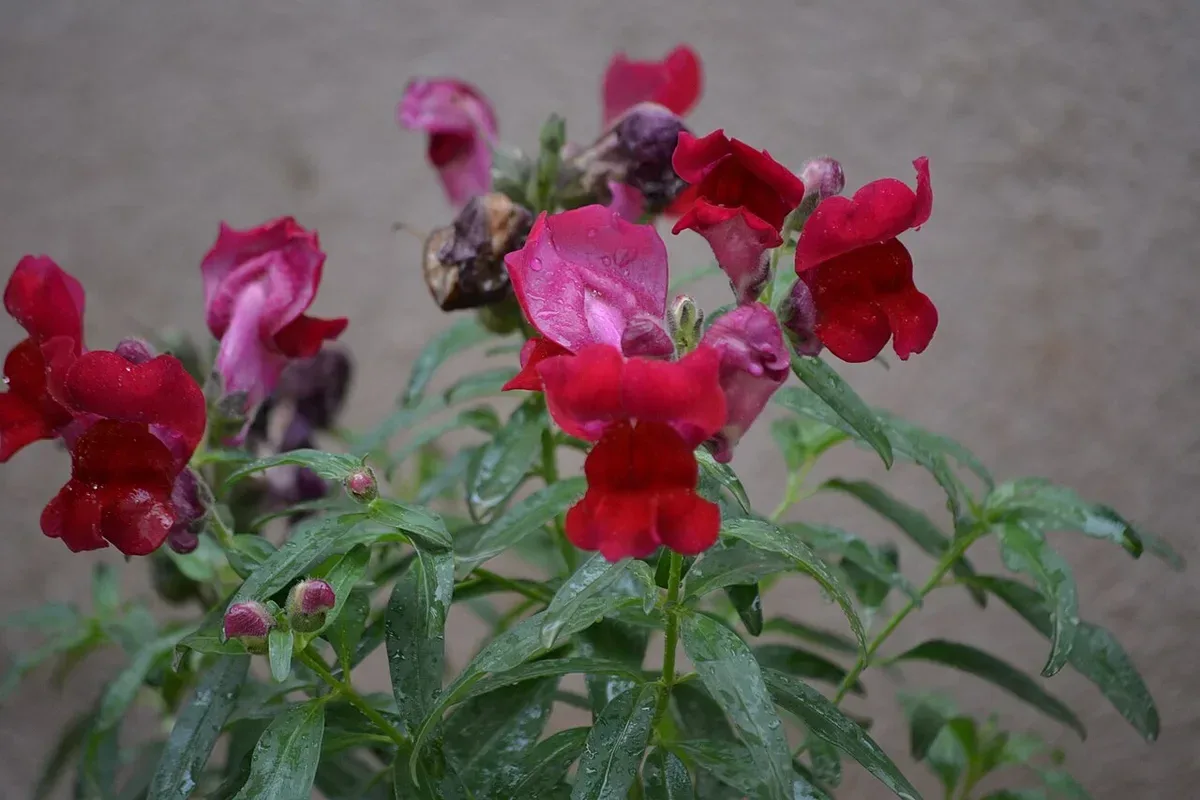
| ☀️ Light | Full sun |
|---|---|
| 💧 Water | Moderate (lightly moist) |
| 🪴 Soil | Fertile, well-drained loam rich in organic matter; pH about 6.0 to 6.5 |
| 🌡️ Temp | -5°C – 30°C |
| 🐾 Safety | Cats: non-toxic · Dogs: non-toxic |
| 📏 Mature size | 60 cm |
Where It Grows & Climate Tolerance
Pet & Companion Animal Toxicity (How to Grow Snapdragons in Canada)
Snapdragons are one of the best annuals for Canada's cool springs and falls. They can go out a little earlier than most bedding plants, flower from June, and keep going after the first light frosts.
Care instructions
Care Guide & Maintenance Routine
Start seed indoors in late winter or buy packs in May. Harden off and plant around your last frost date in full sun. Pinch, stake tall types and deadhead. A midsummer cut-back revives plants that stall in heat. In Zones 7 to 9 they sometimes overwinter.
Light & Sunlight
NC State Extension lists full sun to partial shade; PAU says it grows best in full sun. Plants in too much shade stretch and flower less. In hot spells, light afternoon shade lengthens flowering.
Watering Schedule
NC State notes low drought tolerance and advises avoiding overhead watering. PAU says the plant prefers some dryness around the roots and rots when overwatered. Water at the base when the top centimetre is dry.
Potting Mix & Drainage
Fertile, well-drained loam rich in organic matter; pH about 6.0 to 6.5
Temperature & Humidity
Hardened plants handle light frost in spring and fall. The RHS rates the species H2: tolerates cold but not being frozen solid. Average last frost runs from 26 March in Vancouver to 1 June in St. John's; first fall frost from about 10 September in Calgary to early November on the BC coast (ECCC normals).
Snapdragons in Canadian gardens
Snapdragons like it cool, which suits most of Canada. In Quebec they are sold as muflier. While petunias and impatiens wait for warm nights, hardened snapdragon packs can go into beds and window boxes around the last frost date, and they keep flowering into October after light frosts have finished tender annuals.
Starting seed
The seed is tiny and needs light, so press it onto the surface of moist seed mix and do not bury it. Start in February or March under an LED shop light kept a few centimetres above the trays. Pinch seedlings once they have three or four pairs of leaves.
Planting out
Harden seedlings off for a week on a sheltered porch, then plant around the average last frost (ECCC 1991-2020 normals via GrowersGuide.ca):
- Vancouver 26 March, Victoria 14 April: April to early May.
- Montréal 29 April, Toronto 4 May, Ottawa 7 May, Québec City 11 May: mid-May.
- Halifax 8 May, Fredericton 16 May, Charlottetown 18 May: late May.
- Edmonton and Saskatoon 22 May, Calgary 26 May, Regina 28 May, St. John's 1 June: late May to early June.
Hot spells
In a humid July heat wave in southern Ontario or Quebec, flowering slows. Cut plants back by a third, water deeply and they will rebloom when nights cool in August.
Fall colour and overwintering
Snapdragons take light frost, so they often carry colour past Thanksgiving in Toronto and Halifax. In NRCan Zones 7a to 9a, such as Toronto, Kelowna, Vancouver and Victoria, plants sometimes survive a mild winter and flower early the next year. Inland and on the Prairies (Zones 3 and 4), treat them as annuals. Self-sown seedlings sometimes appear in gravel paths.
Cut flowers
Tall series are a favourite for cutting gardens and farmers' market bouquets. Cut when the lowest third of the spike is open.
Rust and other trouble
Rust shows as brown pustules under leaves, especially in wet BC coastal and Atlantic summers. Do not plant snapdragons in the same bed every year, remove spotted leaves and water at the base.
Questions from Canadian readers
- Can I plant before the Victoria Day weekend? Hardened snapdragons usually cope with light frost, so yes in most of southern Canada. Cover them if a hard frost is forecast.
- Pets? NC State tags snapdragon as non-toxic for cats and dogs.
Self-sown seedlings
In mild Vancouver Island or Niagara gardens, seedlings sometimes pop up in gravel the next spring. Colours may differ from the parent plants.
Fall colour
Plants cut back in August often send up a second flush that carries on into October in Ontario and the Maritimes.
Deer and rabbits
Rabbits nibble young snapdragon seedlings in suburban Calgary and Ottawa gardens. A low ring of chicken wire around new plants for the first few weeks helps.
Seasonal rhythm
Seasonal Calendar
| Month | Care Tasks | Seasonal Focus |
|---|---|---|
| Jan | protect | Plan the cutting garden and order seed. Coastal BC: overwintered plants may show new growth. |
| Feb | sow | Start seed indoors under lights in Ontario, Quebec and the Prairies; press seed onto the surface. |
| Mar | sow, prune | Finish indoor sowing. Pinch seedlings with three or four leaf pairs. |
| Apr | plant | Victoria and Vancouver: plant out hardened seedlings. Elsewhere: harden off on warm days. |
| May | plant | Plant out around last frost in Ontario, Quebec and Atlantic Canada; Prairies late in the month. |
| Jun | prune | First spikes. Stake tall types; deadhead to side shoots. |
| Jul | prune, feed | Cut back stalled plants during heat waves; feed and water deeply. |
| Aug | prune | Rebloom as nights cool. Cut spikes for bouquets. |
| Sep | protect | Prairie frost: cover plants on cold nights to extend bloom. |
| Oct | prune | Thanksgiving colour in Ontario and the Maritimes. Collect seed pods if wanted. |
| Nov | protect | Coastal BC: mulch plants you want to overwinter. Pull spent plants elsewhere. |
| Dec | protect | Beds rest. Clean and store seed trays. |
Diagnostics
Common Problems & Troubleshooting
Rust pustules under leaves; leaf spot and grey mould in damp weather; root rot from overwatering; floppy tall stems without support; flowering stops in heat; caterpillars boring into buds.
Pests & seasonal watch: Rust in wet summers on the BC coast and in Atlantic Canada. Aphids on young shoots. Grey mould on spent flowers in cool, damp weather.
- Drooping — Stems and leaves hang limp even though the plant was recently fine.
- Root rot — Roots turn brown and mushy in soil that stays wet.
- Aphids — Clusters of small soft insects on new tips, often sticky.
- White powder — A white powdery film on leaves, usually in still, humid air with dry soil at the roots.
- Leaf spot — Brown or tan spots with a yellow halo, sometimes with tiny dots in the centre.
- Grey mould — Fuzzy grey mould on faded flowers, damaged leaves or soft stems.
- Overwatering — Soil stays wet, leaves yellow or droop, and the pot feels heavy.
- No flowers — A flowering houseplant stays leafy and will not bloom.
Similar Botanical Matches
Grower field notes
Reader Field Notes in Canada
Share how this plant performs in your local Canada climate.