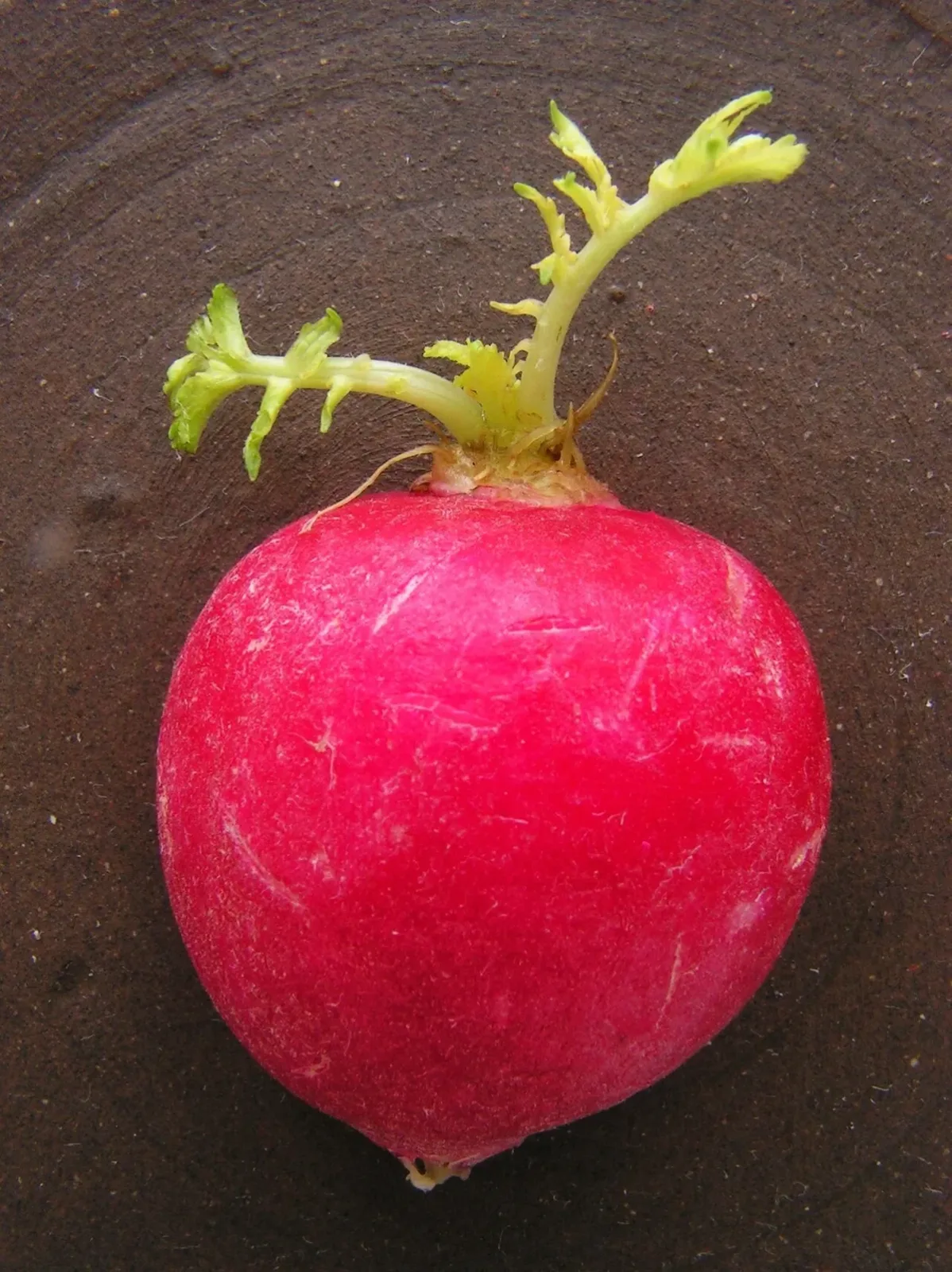
| ☀️ Light | Full sun |
|---|---|
| 💧 Water | Moderate (lightly moist) |
| 🪴 Soil | Light, friable, stone-free sandy loam rich in humus; pH about 6 to 7 |
| 🌡️ Temp | 5°C – 25°C |
| 🐾 Safety | Cats: not verified · Dogs: not verified |
| 📏 Mature size | 30 cm |
Where It Grows & Climate Tolerance
Pet & Companion Animal Toxicity (How to Grow Radishes in Canada)
From Victoria allotments in March to Regina backyards in May, radishes are the first harvest of a Canadian spring. Skip the July heat, then sow again after the August long weekend for crisp fall roots and daikon.
Care instructions
Care Guide & Maintenance Routine
Direct seed in early spring and every two to three weeks after (USask), from March on the BC coast to late April or May on the Prairies. Avoid sowing from July to mid-August. Sow again in late August. Fit row covers right after sowing against flea beetles and root maggots.
Light & Sunlight
The RHS recommends full sun. NC State lists full sun to partial shade. In warm weather, light afternoon shade helps keep plants from bolting.
Watering Schedule
NC State says consistent moisture is needed for good flavour. Uneven watering, with dry spells followed by heavy watering, causes split or woody roots. Water lightly and often on light soils.
Potting Mix & Drainage
Light, friable, stone-free sandy loam rich in humus; pH about 6 to 7
Temperature & Humidity
Hardy to light frost; sow as soon as the soil can be worked. Avoid sowing from July to mid-August (USask) because heat and long days cause bolting. First fall frost averages mid-September on the Prairies and October in Ontario, Quebec and the Atlantic provinces (ECCC normals via GrowersGuide.ca).
Radishes across a Canadian season
Radishes are the quick win of the Canadian garden: the first thing up in spring and one of the last things picked in fall. In Quebec, packets say radis. Red globe types are ready fastest; long white daikon and winter radishes such as black Spanish need the cool, shortening days of fall.
Buying seed
Seed is sold in hardware, grocery and farm-supply stores from January, and Canadian seed companies such as West Coast Seeds, Veseys and Stokes ship nationwide. Seed handles cold shipping fine. Because radishes are always direct seeded, you will rarely see transplants.
Spring sowing, region by region
Radishes do not wait for frost-free dates; they go in when a handful of soil crumbles instead of clumping. Succession rows a couple of weeks apart (USask) keep a steady supply for Saturday-morning farmers' market style bunches at home.
- BC coast: March sowings work in Vancouver and Victoria, where last frost averages about 26 March and 14 April.
- Ontario and Quebec: April, as soon as the soil thaws; last frost averages about 4 May in Toronto and 29 April in Montréal, and radishes do not need to wait for it.
- Prairies: late April or May once the ground can be worked, even though last frost averages around 22 May in Edmonton and 26 May in Calgary.
- Atlantic Canada: April to May in Halifax and Fredericton; in St. John's, where last frost averages about 1 June, May sowings are typical.
The July gap
Long Canadian summer evenings plus heat push radishes to flower, so USask suggests skipping sowings between July and mid-August. Fill that strip with bush beans, then turn it back to radishes after the August long weekend.
Fall crops
Sow again in late August. Cool nights give crisp, mild roots. On the Prairies, first fall frost averages 10 September in Calgary and 15 September in Saskatoon, but radishes shrug off light frost, so quick red types still make it. In BC, Ontario and the Maritimes, fall sowings go further, and daikon can be ready by October.
Zones and soil temperature
NRCan's 1991-2020 map puts Winnipeg in Zone 3b and Toronto in 7a. Zones matter little for radishes, which are harvested within weeks, but colder zones mean a later thaw, so the first sowing date shifts with the zone.
Flea beetles and root maggots
- Flea beetles: tiny black beetles that jump when disturbed and leave shot holes in leaves. USask notes radish is related to canola, so Prairie pressure is heavy.
- Root maggots: rusty-brown galleries chewed through the root, common in Manitoba and Alberta gardens near cabbage-family crops.
- Slugs: ragged leaves and slime trails on wet coastal nights.
Radishes make good row markers between slower crops such as carrots.
Questions
- All tops and no bulb on a Winnipeg balcony? Crowding, shade from the next building, or a July heat spell.
- Can I grow them indoors in winter? Small red types grow under bright lights in a cool basement.
Seasonal rhythm
Seasonal Calendar
| Month | Care Tasks | Seasonal Focus |
|---|---|---|
| Jan | sow | Seed catalogue season. Order quick red radishes for spring and daikon for fall. |
| Feb | protect | Buy row cover fabric and sketch succession rows. |
| Mar | sow | Coastal BC: first sowings as soon as the soil crumbles. Elsewhere: ground still frozen. |
| Apr | sow | Southern Ontario, Quebec, Maritimes: sow as soon as the ground thaws. Vancouver: resow every two to three weeks. |
| May | sow, harvest, protect | Prairies: sow, then cover immediately against flea beetles. Ontario, Quebec, BC: first radishes pulled. |
| Jun | sow, harvest | Final spring rows early in the month. Pull roots before they turn pithy. |
| Jul | protect | No sowing (USask: avoid July to mid-August). Pull any plants that bolt. |
| Aug | sow | Late August: fall sowings everywhere; daikon and winter radish in BC, Ontario and the Atlantic. |
| Sep | sow, harvest | Pull fall radishes. Prairie frost by mid-month barely bothers them. Ontario and BC: one more quick row early. |
| Oct | harvest | Thanksgiving harvest of daikon and winter radish; keep them in the crisper. |
| Nov | harvest, protect | Coastal BC: harvest under cover. Elsewhere: lift every root before the ground freezes. |
| Dec | protect | Next year, rotate radishes away from cabbage, kale and turnip beds. |
Diagnostics
Common Problems & Troubleshooting
Roots not swelling (crowding, shade or too much nitrogen); split roots from uneven watering; pithy, woody, very hot roots from heat, age or bolting; forked roots in stony or compact soil; shot-hole leaves from flea beetles.
Pests & seasonal watch: Flea beetles are the main pest, especially on the Prairies near canola fields. Root maggots tunnel into roots in many regions. Slugs on the BC coast and in the Maritimes. Row covers fitted right after sowing are the main defence.
- Yellow leaves — Leaves fade from green to yellow, often starting at the bottom.
- Drooping — Stems and leaves hang limp even though the plant was recently fine.
- Aphids — Clusters of small soft insects on new tips, often sticky.
- White powder — A white powdery film on leaves, usually in still, humid air with dry soil at the roots.
- Leaf spot — Brown or tan spots with a yellow halo, sometimes with tiny dots in the centre.
- Underwatering — Soil is bone dry and leaves are crispy, curled or dull.
- Nutrient shortage — Overall pale growth, or yellowing between veins, on a plant that is otherwise watered well.
- Tired mix — Water races down the inside of the pot and the root ball stays dry, or the mix is a hard brick.
Similar Botanical Matches
Grower field notes
Reader Field Notes in Canada
Share how this plant performs in your local Canada climate.