
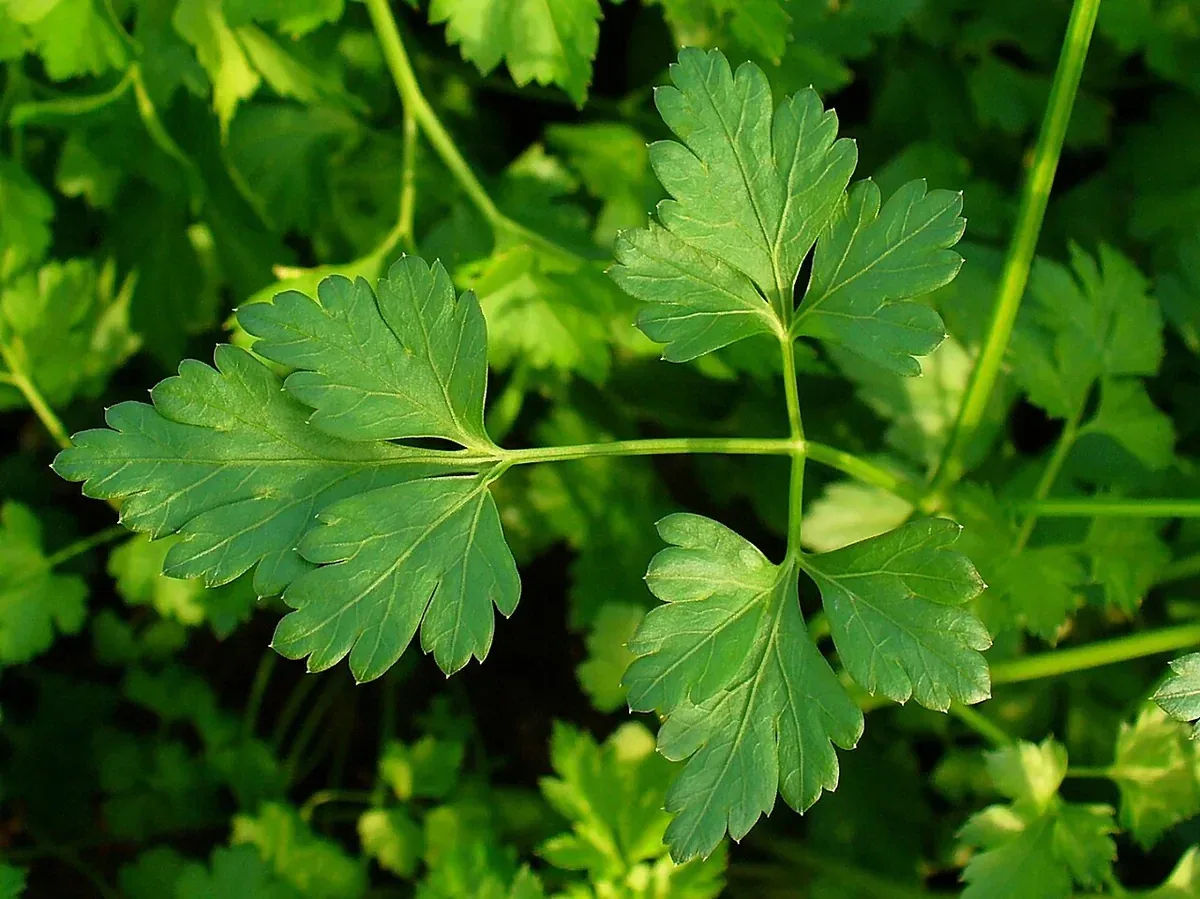
| ☀️ Light | Full sun |
|---|---|
| 💧 Water | Moderate (lightly moist) |
| 🪴 Soil | Fertile, moisture-retentive, well-drained loam or quality potting mix |
| 🌡️ Temp | -5°C – 25°C |
| 🐾 Safety | Cats: toxic · Dogs: toxic |
| 📏 Mature size | 30 cm |
Where It Grows & Climate Tolerance
Pet & Companion Animal Toxicity (How to Grow Parsley in Canada)
Parsley is one of the easiest herbs to grow across Canada. Start seed indoors in late winter, plant out after the last frost, and keep cutting into October, with a potted plant on the windowsill for winter.
Care instructions
Care Guide & Maintenance Routine
Sow indoors 8 to 10 weeks before local last frost, or buy transplants in May. Plant out after frost into sun or part shade. Pick outer stems all summer. It shrugs off light frosts, so fall harvests continue until hard freezes; dig a pot for a bright kitchen window or grow light.
Light & Sunlight
NC State Extension lists full sun or light shade, and the RHS says sun or partial shade. In hot climates, afternoon shade keeps it from wilting. Indoors it needs a bright, sunny window or grow light.
Watering Schedule
NC State says parsley prefers consistently moist, well-drained soil. Do not let pots dry out, but avoid waterlogged soil, which rots the taproot.
Potting Mix & Drainage
Fertile, moisture-retentive, well-drained loam or quality potting mix
Temperature & Humidity
Hardy to light frost; NC State suggests moving it indoors before temperatures fall to about -7 to -2°C. Average last spring frost runs from 26 March in Vancouver to 28 May in Regina and 1 June in St. John's (ECCC normals via GrowersGuide.ca).
Parsley through the Canadian year
Parsley handles cool Canadian springs and falls well, and it carries on through light frosts that end the basil. In French-speaking Quebec and New Brunswick you will see it labelled persil. Most gardeners grow it as an annual, starting fresh each spring, though on the BC coast it often lives through winter and flowers in its second summer.
Buying seed and plants
Canadian seed companies such as West Coast Seeds in BC, Veseys on Prince Edward Island and William Dam in Ontario mail seed across the country, and racks appear in Canadian Tire, Home Hardware and grocery stores from January. Transplants show up in garden centres in May. Mail-order seed handles cold fine; it is potted herbs bought in February that suffer if left in a cold car.
Starting indoors
Count back 8 to 10 weeks from your average last frost. Soak seed overnight in warm water, sow in cell trays, and keep them on top of the fridge or a heat mat until shoots appear, which can take weeks. Then move them under an LED shop light on a timer, a few centimetres above the leaves, so seedlings do not stretch on a dim February windowsill.
Planting out, by region
Average last frost dates (ECCC 1991-2020 normals via GrowersGuide.ca):
- BC coast: Vancouver about 26 March, Victoria about 14 April. Direct sowing works from April.
- Ontario and Quebec: Montréal around 29 April, Toronto 4 May, Ottawa 7 May and Québec City 11 May, so seed goes in from late February to mid-March.
- Prairies: roughly 22 May for Edmonton and Saskatoon, 24 May for Winnipeg, 26 May for Calgary and 28 May for Regina. Harden seedlings off on the deck for a week first.
- Atlantic Canada: Halifax about 8 May, Fredericton 16 May, Charlottetown 18 May, St. John's about 1 June.
Hardiness notes
NRCan's 1991-2020 map puts Vancouver and Victoria in Zone 9a, where plants often survive winter outside. In Zone 5a Ottawa or Zone 3a Saskatoon, treat it as an annual and bring a pot inside.
Winter on the windowsill
Dig a young plant in September or sow a fresh pot. A south window or grow light is needed from November to February. Furnace air dries small pots fast, so check them every couple of days; low humidity also invites aphids.
Caterpillars and spots
- Black swallowtail caterpillars: green with black bands and yellow dots, common in Ontario and the Maritimes. Many gardeners plant extra so there is enough to share with the butterflies.
- Aphids: clusters on new growth, worse on indoor pots in winter.
- Septoria leaf spot: small brown spots with dark edges in wet BC and Atlantic summers.
Questions Canadian readers ask
- Will it come back next year? Only in mild coastal BC; elsewhere, sow again.
- Pets? ASPCA lists parsley as toxic to cats, dogs and horses.
Seasonal rhythm
Seasonal Calendar
| Month | Care Tasks | Seasonal Focus |
|---|---|---|
| Jan | Sow | Victoria and Vancouver: start seed indoors mid-month. Elsewhere: windowsill pots, water when dry. |
| Feb | Sow | Seed racks fill up in Canadian Tire and grocery stores. Southern Ontario and Quebec: soak seed, ready the trays. |
| Mar | Sow | Ontario, Quebec, the Maritimes and the Prairies: sow indoors 8 to 10 weeks before last frost. Expect slow sprouting. |
| Apr | Sow, Plant out | Coastal BC: plant out and direct sow. Elsewhere: seedlings under shop lights or in the sunniest window. |
| May | Plant out | Victoria Day weekend in Ontario, Quebec and the Maritimes: harden off and plant out. Prairies: late in the month. |
| Jun | Plant out, Harvest | Prairies and St. John's: plant out early in the month. BC and Ontario: first cuttings for the kitchen. |
| Jul | Fertilize, Harvest | Snip outer stems often. One mid-season feed. Water through dry spells. |
| Aug | Sow, Harvest | Last direct sowing for fall harvests on the coast. Prairies: cut heavily before frost. |
| Sep | Repot, Harvest | Prairie frost by mid-month: dig a plant into a pot for the kitchen. Elsewhere: keep picking. |
| Oct | Harvest | Thanksgiving stuffing from the garden in Ontario, Quebec and the Atlantic; it shrugs off light frost. Dry or freeze extras. |
| Nov | Harvest, Protect from frost/heat | Coastal BC: picking continues; mulch plants left outside. Elsewhere: indoor pots only. |
| Dec | Fertilize | Windowsill or grow-light pots; feed lightly. BC coast plants rest outdoors. |
Diagnostics
Common Problems & Troubleshooting
Seed that seems not to germinate (usually just slow); yellow outer leaves from age or waterlogging; wilting in heat; bolting to flower in its second year or after stress; brown leaf spots from septoria.
Pests & seasonal watch: Aphids are the most common pest (Wisconsin). Black swallowtail caterpillars feed on it in Ontario, Quebec and the Maritimes. Septoria leaf spot in wet summers, especially on the BC coast and in the Atlantic provinces.
- Yellow leaves — Leaves fade from green to yellow, often starting at the bottom.
- Drooping — Stems and leaves hang limp even though the plant was recently fine.
- Root rot — Roots turn brown and mushy in soil that stays wet.
- Aphids — Clusters of small soft insects on new tips, often sticky.
- White powder — A white powdery film on leaves, usually in still, humid air with dry soil at the roots.
- Leaf spot — Brown or tan spots with a yellow halo, sometimes with tiny dots in the centre.
- Underwatering — Soil is bone dry and leaves are crispy, curled or dull.
- Nutrient shortage — Overall pale growth, or yellowing between veins, on a plant that is otherwise watered well.
Care encyclopedia · 1 guide
Guides & Articles for How to Grow Parsley in Canada
Q&A
Frequently Asked Questions
Why is my parsley seed not germinating?
It is usually just slow. The RHS says germination often takes a month or more. Soak seed overnight and keep the soil evenly moist.
Is curly or flat-leaf parsley better?
Flat-leaf has a stronger, sweeter flavour because it contains more essential oil, according to Wisconsin Horticulture. Curly parsley is popular as a garnish and in borders.
How do I harvest parsley without killing it?
Cut whole outer stems at the base and leave the inner stems to grow. Start once the plant is about 20 cm tall.
Why is my parsley flowering?
Parsley is a biennial and flowers in its second year, or sooner after heat or stress. Leaves lose flavour once it flowers, so sow fresh plants.
Can parsley grow indoors?
Yes, in a bright, sunny window or under a grow light. Water well and feed more often than outdoor plants.
Is parsley safe for dogs and cats?
ASPCA lists parsley as toxic to dogs, cats and horses because it can cause photosensitivity. NC State says large amounts are needed for this effect.
How big a pot does parsley need?
The RHS suggests at least 25 cm wide and deep, since parsley has a long taproot.
Can I grow parsley from a supermarket pot?
Yes. Split the crowded clump into a few small sections and pot each one separately so they have room to grow.
Does parsley survive frost?
It handles light frost well. NC State suggests bringing it indoors before temperatures fall into the 20s°F, about -7 to -2°C.
Similar Botanical Matches
Keep exploring
Related plants
Grower field notes
Reader Field Notes in Canada
Share how this plant performs in your local Canada climate.