
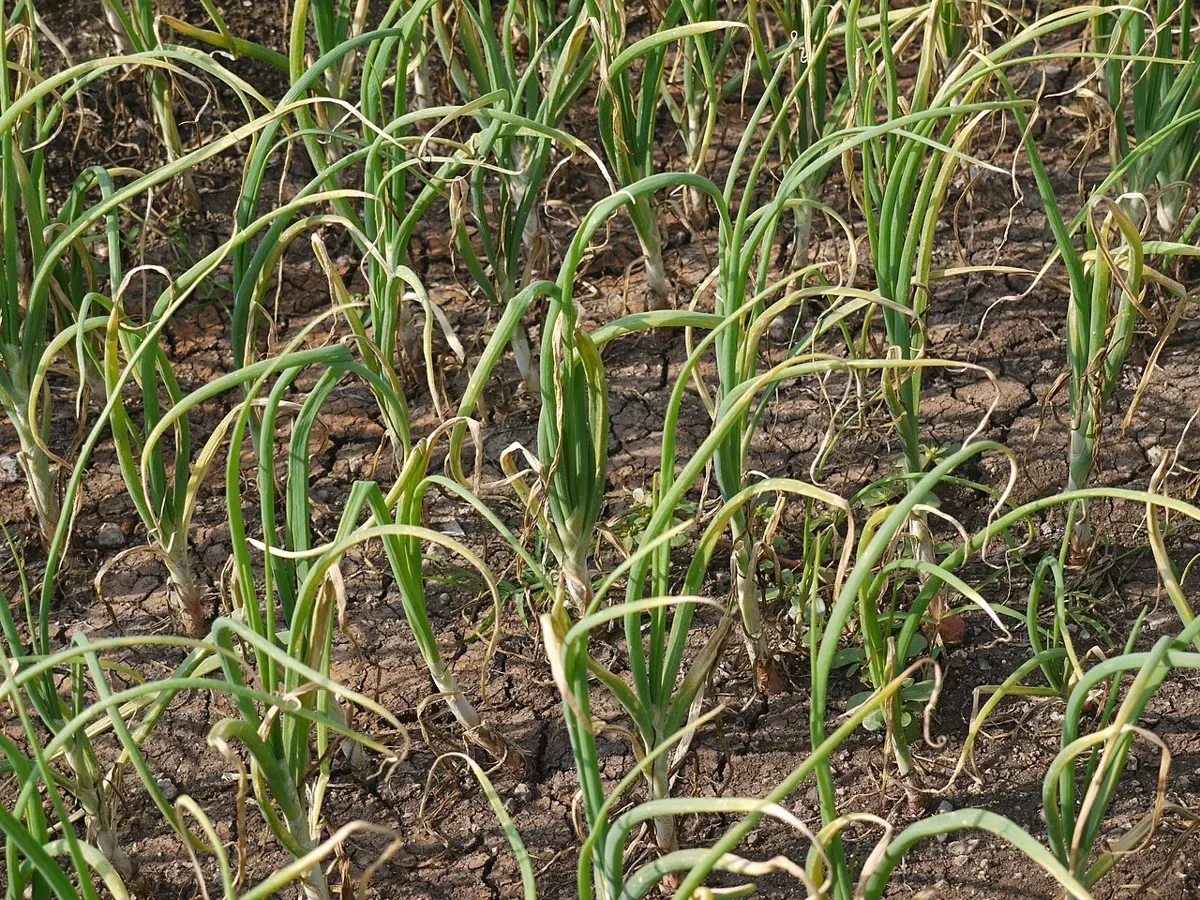
| ☀️ Light | Full sun |
|---|---|
| 💧 Water | Moderate (lightly moist) |
| 🪴 Soil | Fertile, loose, well-drained loam rich in organic matter |
| 🌡️ Temp | -5°C – 35°C |
| 🐾 Safety | Cats: toxic · Dogs: toxic |
| 📏 Mature size | 45 cm |
Where It Grows & Climate Tolerance
Pet & Companion Animal Toxicity (How to Grow Onions and Green Onions in Canada)
Onions do well across Canada because long summer days suit long-day varieties. Plant sets or transplants around the last frost, sow green onions every few weeks, and lift bulbs in August or September.
Care instructions
Care Guide & Maintenance Routine
Start sweet and Spanish onions indoors at least 8 weeks before last frost. Plant sets 2.5 cm deep about 7 to 8 cm apart. Give about 2.5 cm of water a week, stop when tops fall, and cure in a warm, dry place for a week before storing.
Light & Sunlight
The RHS recommends a warm, sunny site. Bulb onions need full sun to size up. Spring onions accept a few hours of shade but grow thin in deep shade.
Watering Schedule
Onions have short roots and need steady moisture while leaves are growing. PAU advises stopping irrigation at least a fortnight before harvest so bulbs store longer. Waterlogged soil leads to bulb rot.
Potting Mix & Drainage
Fertile, loose, well-drained loam rich in organic matter
Temperature & Humidity
Sets and hardened transplants tolerate light spring frosts. Average last frost falls in late March on the BC coast and as late as early June in Newfoundland. Bunching onions overwinter in milder zones; bulb onions should be lifted and cured before the first hard fall frost.
Onions in Canadian gardens
Long June and July days are the reason onions grow so well in Canada. Long-day varieties need those days to start bulbing, and the cool spring suits young plants. Green onions fill a pot on a Toronto balcony or a row in a Saskatoon backyard with little effort.
Choosing the right type
Buy long-day or intermediate varieties. The University of Saskatchewan's Gardenline notes that white onions usually need short days and do not mature well on the Prairies or in the far north. It also lists varieties recommended by North Dakota State University, including 'Ailsa Craig', 'Candy', 'Copra', 'Sweet Sandwich' and 'Walla Walla'. Sweet and Spanish onions need a long season and must start indoors.
Indoor start
Gardenline advises sowing transplants indoors at least 8 weeks before your average last spring frost. Trim seedlings to about 10 cm with scissors when they flop, which keeps them sturdy.
Planting dates by city
Sets and transplants go out around the last frost. Average dates from ECCC 1991-2020 normals, compiled by GrowersGuide.ca:
- Vancouver 26 March and Victoria 14 April: plant in April.
- Hamilton 28 April, Montréal 29 April, Toronto 4 May, London 7 May: plant from late April.
- Québec City 11 May, Fredericton 16 May, Charlottetown 18 May, Edmonton 22 May: plant in mid-May.
- Moncton 23 May, Winnipeg 24 May, Regina 28 May: plant in late May.
Setting out sets
Gardenline suggests planting sets 2.5 cm deep, pointed end up, 7 to 8 cm apart, with about 30 cm between rows. Give about 2.5 cm of water a week in dry spells.
Green onions all summer
Sow a short row every three weeks from May to early August. 'Ishikura' and other bunching onions can be left in the ground; mulch them with straw in late fall and they usually regrow in spring.
Zones and fall planting
NRCan's 1991-2020 map runs from Zone 3a in Regina and Saskatoon to 9a in Vancouver and Victoria. On the BC coast, overwintering sets planted in fall crop the following June. NC State's USDA rating of 5a to 10b is calculated differently from NRCan zones and should be read as a rough guide only.
Curing in August
Lift bulbs when most tops have fallen. Gardenline recommends drying them in a warm, dry, sheltered spot for about a week, ideally near 27°C, and then trimming the dry tops to 3 to 4 cm. A garage or covered porch works well in a dry August.
Northern and Prairie gardens
Gardenline notes onions are a good crop for the far north, apart from sweet and Spanish types that need too many days. In Whitehorse, Yellowknife or Thompson, plant sets or bought transplants in late May or early June and choose storage types that mature quickly. Raised beds warm faster in a cold Manitoba or Alberta spring.
Questions from Canadian readers
- Why did my onions flower in June? A cold snap after planting can trigger bolting. Use those bulbs first.
- Dog in the yard? ASPCA lists onion as toxic to dogs, cats and horses.
Seasonal rhythm
Seasonal Calendar
| Month | Care Tasks | Seasonal Focus |
|---|---|---|
| Jan | Protect from frost/heat | Check stored onions in a cool, dry room. Order long-day seed and sets. |
| Feb | Sow | Sow sweet and Spanish onions indoors under lights. |
| Mar | Sow | Sow storage onions indoors. BC coast: sow green onions under cover. |
| Apr | Plant out | Vancouver and Victoria: plant sets and transplants. Trim indoor seedlings. |
| May | Sow, Plant out | Plant sets and transplants across Ontario, Quebec, the Maritimes and the Prairies. Sow green onions. |
| Jun | Sow, Protect from frost/heat | Weed carefully. Water about 2.5 cm a week. Sow more green onions. |
| Jul | Harvest, Protect from frost/heat | Bulbs swell. Snap off flower stalks. Pull green onions. |
| Aug | Harvest | Lift bulbs as tops fall. Cure in a warm, dry, sheltered spot for about a week. |
| Sep | Harvest | Prairies and Maritimes: finish lifting before frost. Trim tops to 3 to 4 cm. |
| Oct | Plant out, Protect from frost/heat | BC coast: plant overwintering sets. Move cured bulbs to cool, dry storage. |
| Nov | Protect from frost/heat | Mulch bunching onions in colder zones. Pot a clump for an indoor sill. |
| Dec | Protect from frost/heat | Check stored bulbs and use any that soften. |
Diagnostics
Common Problems & Troubleshooting
Bolting from cold stress or old sets; thick necks that rot in storage; small bulbs from crowding, weeds or the wrong day-length type; silvery streaked leaves from thrips; soft bulbs after late watering.
Pests & seasonal watch: Onion maggot in Ontario, Quebec and the Prairies, especially in cool, wet springs. Onion thrips in hot, dry July weather. Downy mildew in humid BC coastal summers.
- Yellow leaves — Leaves fade from green to yellow, often starting at the bottom.
- Brown tips — Leaf tips and edges turn dry, brown and papery.
- Root rot — Roots turn brown and mushy in soil that stays wet.
- Thrips — Silvery streaks and twisted new leaves, sometimes with black specks of frass.
- Leaf spot — Brown or tan spots with a yellow halo, sometimes with tiny dots in the centre.
- Overwatering — Soil stays wet, leaves yellow or droop, and the pot feels heavy.
- Nutrient shortage — Overall pale growth, or yellowing between veins, on a plant that is otherwise watered well.
Similar Botanical Matches
Keep exploring
Related plants
Grower field notes
Reader Field Notes in Canada
Share how this plant performs in your local Canada climate.