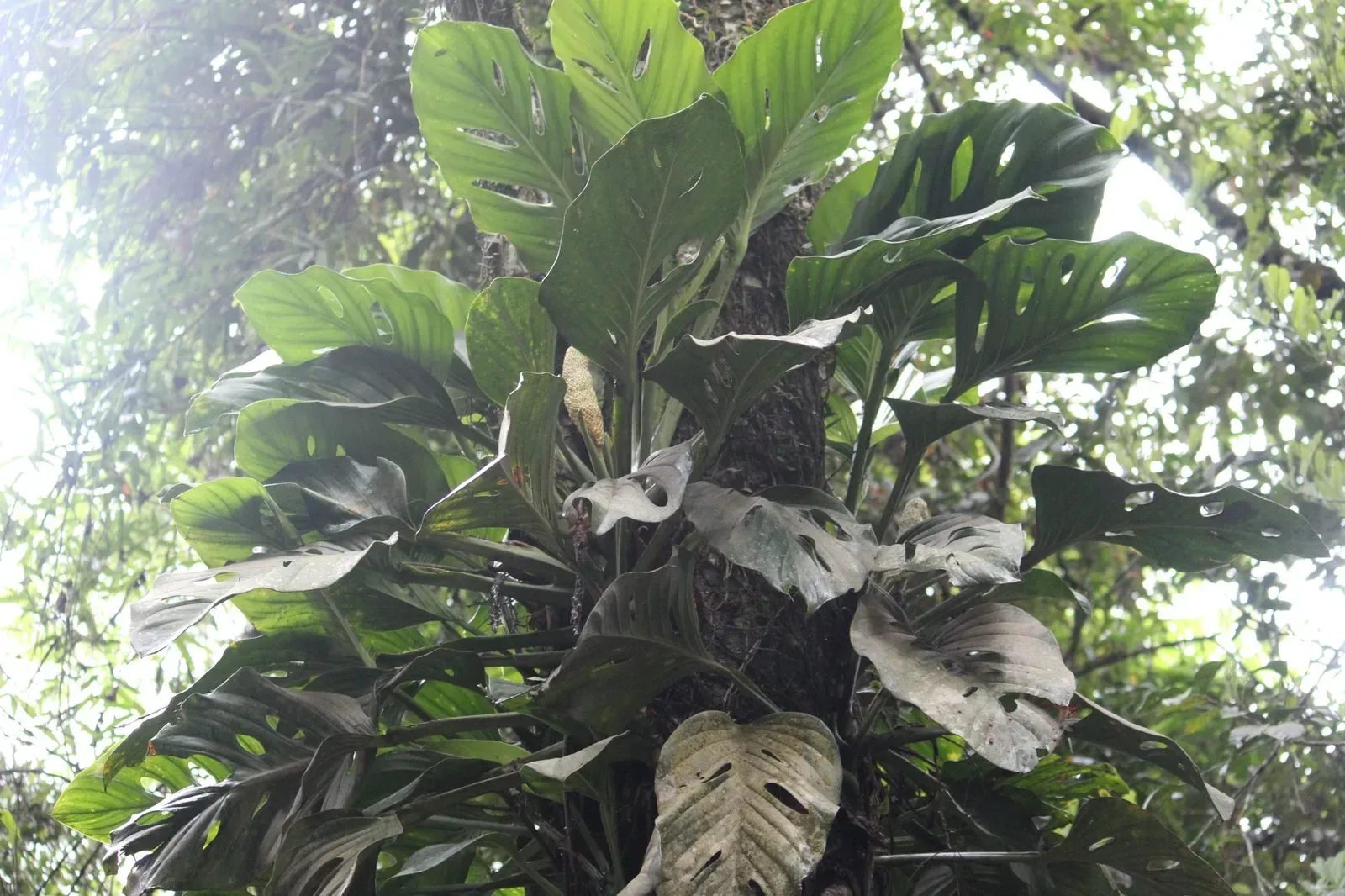
| ☀️ Light | Bright indirect light |
|---|---|
| 💧 Water | Moderate (lightly moist) |
| 🪴 Soil | Chunky aroid mix |
| 🌡️ Temp | 16°C – 28°C |
| 🐾 Safety | Cats: toxic · Dogs: toxic (ASPCA Animal Poison Control) |
| 📏 Mature size | 2.0 m |
Where It Grows & Climate Tolerance
Pet & Companion Animal Toxicity (Monstera Adansonii)
Swiss cheese vine with holey leaves; fast climber for bright Canadian rooms.
Care instructions
Care Guide & Maintenance Routine
Bright indirect light, water when top dry, give a pole or trellis.
Light & Sunlight
Bright indirect for more holes and faster growth.
Watering Schedule
Water when top 2–3 cm dry.
Potting Mix & Drainage
Chunky aroid mix
Temperature & Humidity
Above 15 C.
Monstera adansonii, the Swiss cheese vine, is a fast-growing cousin of the big monstera and fits smaller Canadian spaces.
Bright indirect light gives more holes and fuller growth. Water when the top of a chunky mix is dry. A moss pole or trellis encourages bigger leaves.
Cuttings root in water within weeks — cut just below a node. Higher humidity in winter helps new leaves unfurl without tearing. Keep away from pets.
It can trail from a shelf or climb a pole. Watch for thrips on new leaves. In dim rooms growth slows and leaves stay small, so a bright east or west window is ideal.
Adansonii fits Canadian apartments better than a huge Monstera deliciosa because it climbs or trails without taking half the room. A cheap moss pole or trellis against a bright wall grows larger fenestrated leaves. Cuttings with a node root in water on a kitchen shelf within weeks.
Thrips have been common on aroid shipments — quarantine new plants and check soft new leaves. Bright indirect light makes more holes; dim corners make solid small leaves. Keep away from pets. Humidity helps new leaves open cleanly when the furnace runs. Train early so vines do not tangle into blinds.
Train a few leaders onto a pole and let others trail for a full look. Brown crispy edges in winter point to dry air more than thirst — check the mix before watering more. Node cuttings with an aerial root attached establish fastest. Keep vines off cold glass at night in deep winter.
Seasonal rhythm
Seasonal Calendar
A month-by-month calendar for Monstera Adansonii in Canada is coming soon. See the light, water and temperature notes above.
Diagnostics
Common Problems & Troubleshooting
Small leaves no holes (low light); yellow leaves (overwater); crispy edges (dry air).
Pests & seasonal watch: Thrips and mites.
- Thrips — Silvery streaks and twisted new leaves, sometimes with black specks of frass.
Care encyclopedia · 2 guides
Guides & Articles for Monstera Adansonii
Monstera Adansonii Care Guide for Canada
A practical Canadian guide to monstera adansonii, with seasonal care, common problems, propagation and buying checks.
Read guide →Monstera Yellow Leaves in Winter: A Canadian Home Troubleshooting Guide
Yellow monstera leaves in winter usually come from a big pot staying wet in low light. This guide walks through the checks in order and shows what to change.
Read guide →Q&A
Frequently Asked Questions
Why no holes in leaves?
Usually low light or a young plant.
Is it toxic?
Yes — calcium oxalates; keep from pets.
How to propagate?
Cut below a node and root in water.
Does it need a pole?
It climbs better and grows bigger leaves with support.
Similar Botanical Matches
Grower field notes
Reader Field Notes in Canada
Share how this plant performs in your local Canada climate.