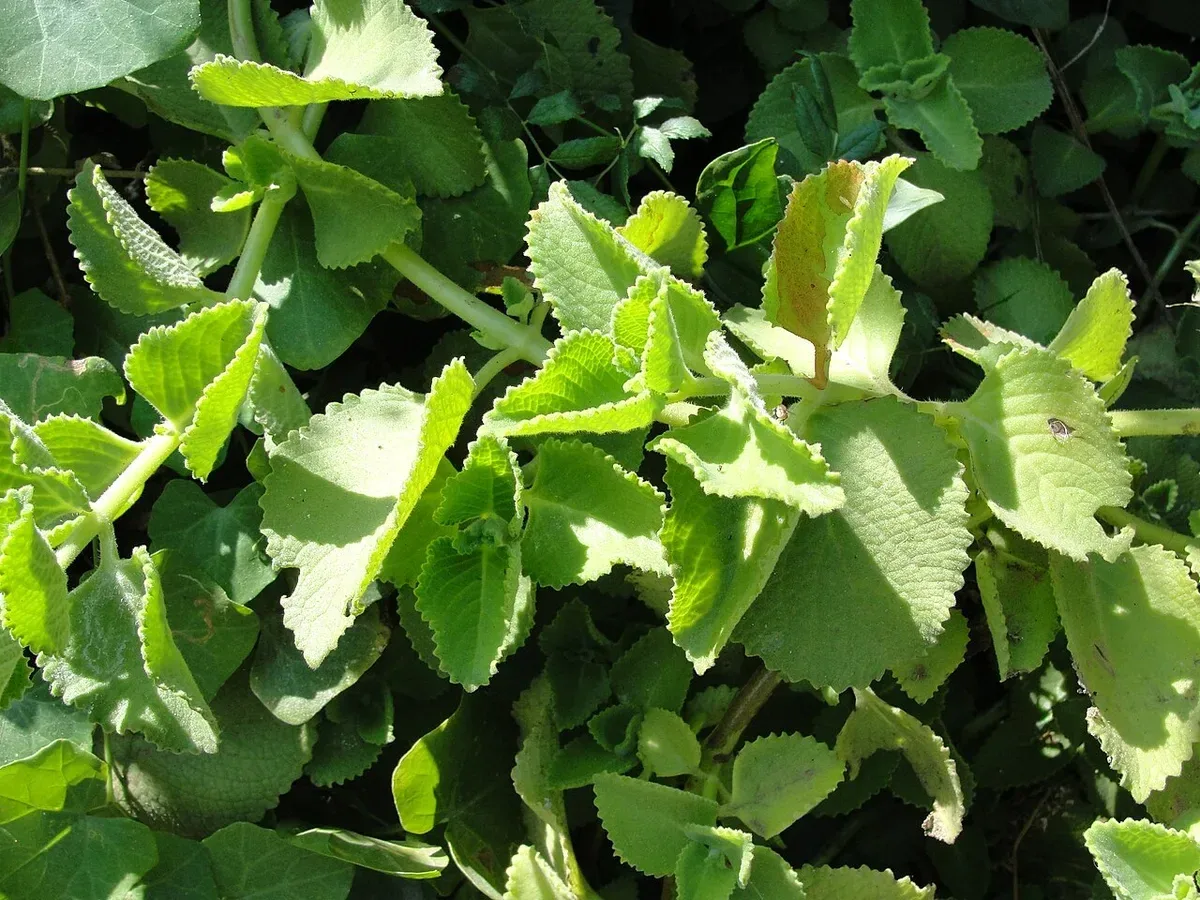
| ☀️ Light | Bright indirect light |
|---|---|
| 💧 Water | Low (allow soil to dry) |
| 🪴 Soil | Free-draining loam or potting mix with compost; near neutral pH |
| 🌡️ Temp | 10°C – 40°C |
| 🐾 Safety | Cats: toxic · Dogs: toxic |
| 📏 Mature size | 60 cm |
Where It Grows & Climate Tolerance
Pet & Companion Animal Toxicity (How to Grow Cuban Oregano (Indian Borage) in Canada)
In Canada, Cuban oregano is a houseplant that enjoys a summer holiday outdoors. NC State rates it hardy only in USDA zones 9a to 11b, so no Canadian garden keeps it through winter; it lives on a bright windowsill from September to late May.
Care instructions
Care Guide & Maintenance Routine
Keep it in a pot. Put it outside once nights stay above 10°C, in bright light with shelter from midday sun. Bring it in before nights cool in September. Indoors, give the sunniest window, water only when the mix is dry and keep it away from cold glass. Take cuttings in late summer as backup.
Light & Sunlight
NC State notes it likes hot, dry sites but needs protection from strong summer sun, which can burn the leaves. A review of the species in PubMed Central (PMC6274163) reports it tolerates both scorching sun and strong shade but grows best in partial shade. Morning sun with afternoon shade, or a bright window, suits it.
Watering Schedule
The PMC6274163 review advises watering sparingly: the fleshy stems and leaves store water, the plant copes with drought, and excess water in the soil makes the roots rot. Let the top few centimetres dry before watering.
Potting Mix & Drainage
Free-draining loam or potting mix with compost; near neutral pH
Temperature & Humidity
Not frost hardy anywhere in Canada. Stressed below 10°C and killed near 0°C. Keep it indoors from September to late May, away from cold windows and drafty doors.
Cuban oregano in Canadian homes
Gardeners from the Caribbean, South Asia and Latin America often bring this herb with them, and it suits Canadian homes well: it likes indoor temperatures, needs little water and roots from a single sprig. Under its many names it is the same plant, Coleus amboinicus.
The summer move outdoors
Wait until nights stay above 10°C. Average last frost dates from ECCC 1991-2020 normals, compiled by GrowersGuide.ca, are 14 April in Victoria, 28 April in Hamilton, 4 May in Toronto, 8 May in Halifax, 22 May in Edmonton and 26 May in Calgary; nights above 10°C usually come two or three weeks later. Move the pot outside gradually over a week to avoid leaf burn.
Where to put it outdoors
A deck or balcony with morning sun and afternoon shade is ideal. On a hot south-facing condo balcony in Toronto or Montréal, the leaves can scorch in July. Keep the pot out of heavy rain if the mix stays wet.
Back inside by September
Nights cool quickly on the Prairies and in northern Ontario, and the plant suffers below 10°C. Bring it in when nights drop toward that, often early September in Calgary, Edmonton and Winnipeg and mid-September in southern Ontario. Check leaf joints for mealybugs first.
Winter light
From November to February, days are short in every province. A south window is best; a small LED grow light for 12 hours a day stops stems stretching. Keep the plant back from frosty glass and away from heat registers.
Apartments and condos
In a Vancouver, Ottawa or Halifax apartment, south- or west-facing glass is usually enough. North-facing units need an LED fixture. Baseboard heaters, radiators and forced-air vents parch the air, so group it with other houseplants on a pebble tray.
Watering through winter
With dim January daylight and cooler rooms, compost stays damp far longer. Check with a finger every fortnight and add water only once the surface feels dry. Soggy roots between Christmas and March kill more Canadian plants than cold does.
Backup cuttings
Root two or three tip cuttings in a jar of water in August. Small plants fit a windowsill better than a big summer plant, and they replace an old one that gets leggy by March.
In the kitchen
Caribbean cooks chop it into sofrito, rice and peas or stewed chicken, and South Asian households fry the leaves in pakoras. A few leaves from a windowsill plant in February bring a summery smell to soups and bean dishes when the garden is under snow.
Finding a plant
Look for it as Cuban oregano at independent garden centres, farmers' markets and Caribbean or Indian grocers in the GTA, Montréal and Vancouver. A friend's sprig in a glass of water roots just as well.
Questions from Canadian readers
- Can I plant it in the garden? For summer only; it dies at the first frost.
- Is it safe for cats? No. ASPCA lists it as toxic to cats and dogs.
Seasonal rhythm
Seasonal Calendar
| Month | Care Tasks | Seasonal Focus |
|---|---|---|
| Jan | protect | Brightest window; water every two to three weeks. |
| Feb | protect | Check leaf joints for mealybugs; rinse leaves for mites. |
| Mar | prune | Cut back leggy stems and root the tips. |
| Apr | feed, repot | Repot into fresh, gritty mix. Start light feeding. |
| May | protect | Harden off on warm days; bring in at night. |
| Jun | plant | Move outdoors once nights stay above 10°C. |
| Jul | prune, harvest | Pick leaves; pinch tips to keep it bushy. |
| Aug | plant, harvest | Root backup cuttings in water. |
| Sep | protect | Inspect for pests and bring indoors before cool nights. |
| Oct | protect | Settle indoors; reduce watering. |
| Nov | protect | Keep away from cold glass and heat vents. |
| Dec | protect | Grow light or south window through the short days. |
Diagnostics
Common Problems & Troubleshooting
Stem rot and collapse in waterlogged soil; leaf burn in hot afternoon sun; leggy, sprawling stems in low light or without pinching; limp, darkened leaves after cold below 10°C; mealybugs in leaf joints.
Pests & seasonal watch: Mealybugs and spider mites on indoor plants during dry furnace months. Whitefly carried in from the patio in fall. Stem rot when the pot stays wet in cool winter rooms.
- Root rot — Roots turn brown and mushy in soil that stays wet.
- Mealybugs — White cottony clumps in leaf joints, often with sticky honeydew.
- Leggy — Long weak stems with big gaps between small leaves, leaning to the window.
- Spider mites — Fine webbing and pale speckled leaves, worse in dry heated rooms.
- Overwatering — Soil stays wet, leaves yellow or droop, and the pot feels heavy.
- Sun scorch — Bleached or crispy patches on the side that faces strong sun.
- Cold damage — Dark, water-soaked or blackened patches after a cold night or an AC blast.
- Stem rot — The stem goes soft, dark or black at soil level and the top collapses.
Similar Botanical Matches
Grower field notes
Reader Field Notes in Canada
Share how this plant performs in your local Canada climate.