
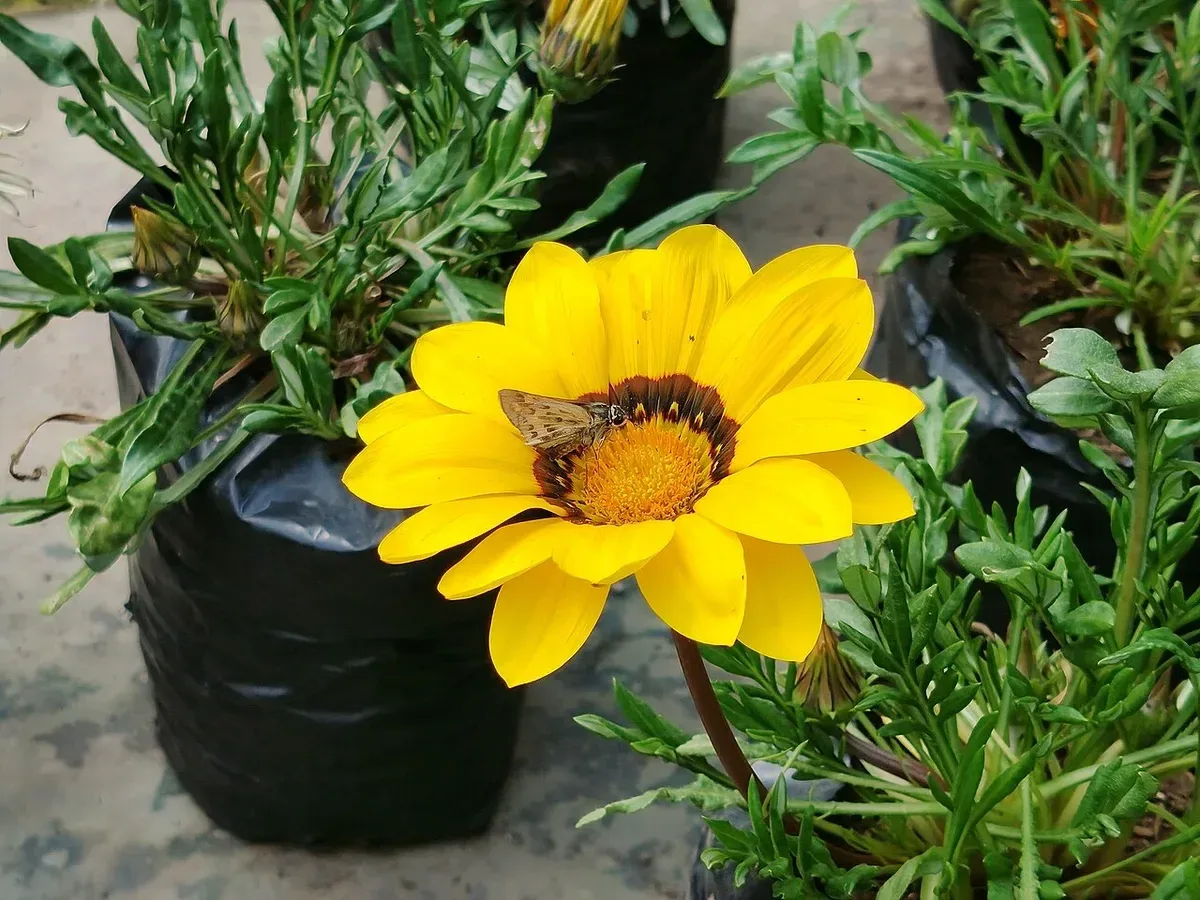
| ☀️ Light | Full sun |
|---|---|
| 💧 Water | Low (allow soil to dry) |
| 🪴 Soil | Sandy to average, well-drained soil; tolerates poor soil |
| 🌡️ Temp | -6°C – 35°C |
| 🐾 Safety | Cats: not verified · Dogs: not verified |
| 📏 Mature size | 25 cm |
Where It Grows & Climate Tolerance
Pet & Companion Animal Toxicity (How to Grow Gazania in Canada)
Not yet verified: Toxicity status for cats, dogs, and horses has not yet been confirmed against veterinary poison-control records. Keep out of reach of pets or consult your veterinarian.
Gazania is a summer bedding plant in Canada. NC State rates it hardy only in USDA zones 9a to 11b, so it is planted after the last frost, flowers from June until the first fall frost, and is either discarded or overwintered as cuttings indoors.
Care instructions
Care Guide & Maintenance Routine
Plant out after the last spring frost in the hottest, sunniest spot, in sandy or gritty soil or a container. Water only when dry. Deadhead every week. Before the first fall frost, root a few cuttings or bring a pot indoors to a bright, cool window.
Light & Sunlight
NC State Extension recommends full sun for the best blooming. The flowers close at night and may not open fully on cloudy days, so shade means few open flowers.
Watering Schedule
NC State advises letting the soil dry between waterings and warns that overwatering causes root rot. Water young plants until established, then only in dry spells. Pots need more frequent checks.
Potting Mix & Drainage
Sandy to average, well-drained soil; tolerates poor soil
Temperature & Humidity
A hard freeze kills it. Transplant after the May frost risk, expect blooms until the first autumn freeze, and watch for rot in cold, waterlogged soil during a rainy June or October.
Gazania in Canadian gardens
Gazanias earn their place in hot, dry corners where other annuals struggle: driveway edges, south-facing walls, rock gardens and balcony boxes that bake in July. Prairie sunshine suits them especially well.
Planting dates
Gazanias are tender, so plant after the last frost. Average dates from ECCC 1991-2020 normals, compiled by GrowersGuide.ca, are 14 April in Victoria, 28 April in Hamilton, 7 May in London, 11 May in Québec City, 17 May in Sudbury, 22 May in Saskatoon, 24 May in Winnipeg and 28 May in Regina.
Starting from seed
Seed needs a head start. Sow indoors under lights 10 to 12 weeks before your frost date, in a sandy mix, and keep seedlings in strong light so they stay short.
Cloudy coasts
On the BC coast and in Nova Scotia and Newfoundland, flowers stay closed on overcast days, as NC State notes. Choose the brightest spot you have, or pick sun-tolerant annuals that stay open in cloud for shadier gardens.
Containers and boxes
A terracotta pot or a balcony box with gritty mix shows gazanias at their best. Let the mix dry between waterings; summer storms can leave pots waterlogged if saucers are left in place.
Overwintering
NC State suggests overwintering containers indoors or rooting stem cuttings. In late August, root 5 to 8 cm side shoots and keep them on a cool, bright windowsill through winter. Plant them out again after frost. A sunroom or enclosed porch that stays above about 5°C also works for a potted plant.
Hot spots that suit it
Gazanias shine where reflected heat defeats impatiens and begonias: the strip beside an asphalt driveway in Mississauga, a south-facing stucco wall in Kelowna, or a gravel yard in Lethbridge. Those spots also drain fast after a thunderstorm.
Buying at the garden centre
Cell packs arrive in May, often already in bloom. Pick short, bushy plants and leave them outside in their packs for a few days to harden before planting. Hanging baskets of trailing types make a quick show on a condo railing.
Zones
Hardiness zone does not matter much for a summer annual. Frost dates and sunshine do: the long, bright days in Alberta and Saskatchewan suit gazanias as well as hot summers in southern Ontario do.
Season length by province
Windsor and Niagara gardeners often get flowers from late May into October. In Edmonton, Saskatoon or Thunder Bay the show runs roughly from mid-June to the first September freeze, so buy plants already budding. Newfoundland gardens get the shortest season of all.
Questions from Canadian readers
- Will it survive winter outside in Vancouver? Occasionally, in a dry, sheltered spot, but wet winters usually rot it. Overwinter cuttings to be safe.
Seasonal rhythm
Seasonal Calendar
| Month | Care Tasks | Seasonal Focus |
|---|---|---|
| Jan | Protect from frost/heat | Deep winter: overwintered cuttings on a cool, bright sill; barely moist. |
| Feb | Sow | Family Day weekend: sow under LED shop lights. |
| Mar | Sow | March break: prick out seedlings into cell packs. |
| Apr | Protect from frost/heat | Mild April afternoons: harden off on the porch. |
| May | Plant out | Victoria Day: plant out along hot driveways and south walls. |
| Jun | Plant out, Prune | Prairies: plant out early June; snip spent blooms. |
| Jul | Harvest | Canada Day to August long weekend: peak show; water only when dry. |
| Aug | Prune | Late August: deadhead and root side shoots. |
| Sep | Protect from frost/heat | Labour Day: pot rooted cuttings; carry a container in before frost. |
| Oct | Protect from frost/heat | Thanksgiving: compost blackened plants. |
| Nov | Protect from frost/heat | Remembrance Day: inspect indoor plants for aphids. |
| Dec | Protect from frost/heat | Holiday season: sparing water for windowsill cuttings. |
Diagnostics
Common Problems & Troubleshooting
Rot and collapse in wet or heavy soil; flowers staying closed in shade or cloudy weather; flowering pause in peak summer heat; powdery mildew in humid spells; aphids and mealybugs on overwintered plants.
Pests & seasonal watch: Aphids and mealybugs on cuttings kept indoors over winter. Root rot in heavy Ontario and Manitoba clay after thunderstorms. Slugs chewing new transplants in Vancouver, Victoria and Nanaimo gardens.
- Root rot — Roots turn brown and mushy in soil that stays wet.
- Mealybugs — White cottony clumps in leaf joints, often with sticky honeydew.
- Leggy — Long weak stems with big gaps between small leaves, leaning to the window.
- Aphids — Clusters of small soft insects on new tips, often sticky.
- White powder — A white powdery film on leaves, usually in still, humid air with dry soil at the roots.
- Overwatering — Soil stays wet, leaves yellow or droop, and the pot feels heavy.
- No flowers — A flowering houseplant stays leafy and will not bloom.
- Stem rot — The stem goes soft, dark or black at soil level and the top collapses.
Similar Botanical Matches
Keep exploring
Related plants
Grower field notes
Reader Field Notes in Canada
Share how this plant performs in your local Canada climate.