
| ☀️ Light | Full sun |
|---|---|
| 💧 Water | Low (allow soil to dry) |
| 🪴 Soil | Sandy to average, well-drained soil; tolerates poor soil |
| 🌡️ Temp | -6°C – 35°C |
| 🐾 Safety | Cats: not verified · Dogs: not verified |
| 📏 Mature size | 25 cm |
Where It Grows & Climate Tolerance
Pet & Companion Animal Toxicity (Gazania (Treasure Flower))
Not yet verified: Toxicity status for cats, dogs, and horses has not yet been confirmed against veterinary poison-control records. Keep out of reach of pets or consult your veterinarian.
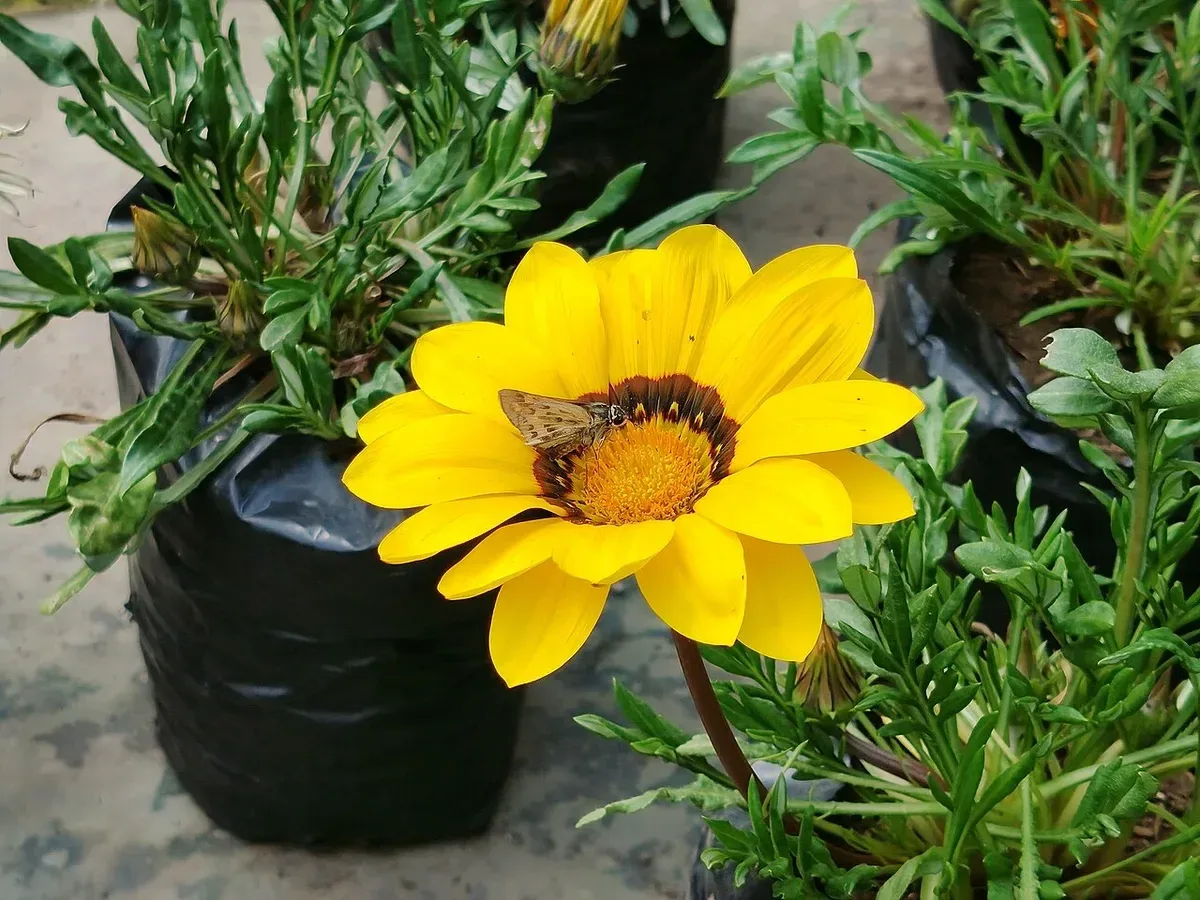
Gazania (Gazania rigens), the treasure flower, is a low, spreading daisy from coastal southern Africa with bold orange, yellow, pink, red or cream flowers, often striped or with a dark eye ring. It loves sun and dry, sandy soil, and its flowers close at night and on dull days.
Care instructions
Care Guide & Maintenance Routine
Plant in full sun in sandy or well-drained soil. Let the soil dry between waterings and never keep it soggy. Deadhead faded flowers to keep buds coming. Grow it as an annual where winters freeze, or root cuttings to overwinter. Avoid shade, rich soil and heavy watering.
Light & Sunlight
NC State Extension recommends full sun for the best blooming. The flowers close at night and may not open fully on cloudy days, so shade means few open flowers.
Watering Schedule
NC State advises letting the soil dry between waterings and warns that overwatering causes root rot. Water young plants until established, then only in dry spells. Pots need more frequent checks.
Potting Mix & Drainage
Sandy to average, well-drained soil; tolerates poor soil
Temperature & Humidity
NC State rates it a half-hardy perennial for USDA zones 9a to 11b, where winter lows reach about -6°C in well-drained soil; elsewhere it is grown as an annual. NC State also notes it may stop blooming in the hottest part of summer and does best where summers are cooler. Height 15 to 30 cm.
About gazania
Gazanias are low, clump-forming plants in the daisy family. NC State describes them as half-hardy perennials native to coastal southern Africa, and notes the genus name comes from the Latin gaza, meaning treasure. Plants grow 15 to 30 cm tall and as wide, with narrow, dark green leaves that are silvery and felted underneath.
The flowers are the reason to grow them. Each daisy is 5 to 8 cm across, in orange, yellow, red, pink, bronze or cream, often with a dark band near the centre or stripes along each petal. They open in sunshine and close in the evening and on dull days.
Types and varieties
Most plants sold are hybrid series raised from seed, in mixed or single colours. NC State lists several:
- 'Daybreak' series: large flowers on compact plants, including bright yellow and orange-and-yellow bicolours.
- 'Talent Orange': about 20 cm tall, tolerant of hot, dry conditions and poor, sandy soil.
- 'Sundrop': yellow flowers, tolerant of tough, dry sites.
- 'New Day Tiger Mix': striped flowers, but NC State notes poor resistance to phytophthora rot.
Trailing types with silver leaves are sold for baskets and ground cover.
Buying plants
Choose compact plants with several buds rather than ones already in full flower, which settle in more slowly. Turn the pot over: white roots that hold the mix together are fine, but a dense mat circling the base should be teased apart at planting. Avoid trays sitting in water, as soggy plugs often rot within a week of planting.
Gazania as ground cover
In frost-free gardens with dry summers, trailing gazanias spread into low mats on banks and road verges. In some coastal regions abroad they have escaped into wild land, so keep them in garden beds and do not dump old plants in natural areas.
Where to plant
Give gazania the sunniest, driest spot you have. NC State recommends full sun for the best blooming. It suits the front of a border, a rock garden, a gravel bed, a sunny bank, or a pot on a hot balcony. Avoid shade under trees, where flowers stay closed and stems stretch.
Soil
NC State notes gazanias prefer sandy to average well-drained soil and tolerate loam and poor soil. Wet, heavy soil is the main threat. Mix coarse sand into clay, or plant on a raised bed or slope. Skip rich compost and manure; lean soil gives more flowers and sturdier plants.
Sowing seed
Seed is the cheapest way to grow a bed of gazanias. Sow in trays of light, sandy mix and cover thinly. SKUAST-Jammu's guidance for seasonal annuals uses a nursery mix of equal parts garden soil, sand and well-rotted manure or vermicompost, with seed sown in lines 4 to 5 cm apart and covered with 0.5 to 1 cm of fine mix. Seedlings are ready to transplant in about four to five weeks in cool weather.
Planting out
Space plants 25 to 30 cm apart. SKUAST-Jammu recommends transplanting annuals in the evening or on cloudy days, so seedlings settle before facing full sun. Water in well and keep the soil lightly moist for the first week.
Watering
Once established, gazania is drought tolerant. NC State advises letting the soil dry between waterings and warns that overwatering causes root rot. Water at the base in the morning, deeply but infrequently. Pots dry faster, so check them every few days in hot weather.
Feeding
Very little is needed. In beds, lean soil is ideal. In containers, a balanced or bloom fertiliser at half the label rate once a month during flowering is enough.
Deadheading
NC State recommends deadheading to keep plants blooming. Cut each faded flower stalk back to the leaves rather than snapping off just the head. A few minutes every week keeps a bed flowering for months.
Containers and baskets
NC State notes gazanias are often best grown as annuals in containers or hanging baskets. Use a gritty, free-draining mix and a pot with drainage holes. Terracotta and shallow troughs work well. Turn pots occasionally so all the flowers face the sun.
Heat and flowering
NC State notes gazanias may stop blooming in the hottest part of summer and do best where summers are cooler. Plants are not dying; trim faded flowers, water sparingly and wait for cooler days.
Overwintering
Where winters freeze, NC State suggests bringing containers indoors for winter or rooting stem cuttings and overwintering them. Take side shoots 5 to 8 cm long in late summer, root them in gritty mix, and keep them on a bright, cool windowsill, watering sparingly.
Pests and problems
- Root and stem rot: collapse in wet, heavy soil. NC State notes some cultivars resist phytophthora poorly.
- Powdery mildew: white coating in humid spells.
- Mealybugs and aphids: mostly on plants indoors.
- Closed flowers: too much shade or cloudy weather, not a disease.
Yellowing and wilting can have more than one cause, so check how wet the soil is before treating.
Pets
ASPCA has no entry for gazania, and NC State lists no poison information. Safety for pets is not verified.
Common mistakes
- Planting in shade.
- Watering daily or growing in heavy soil.
- Skipping deadheading.
- Over-feeding.
Gazania combines well with other sun-lovers such as portulaca, marigold, zinnia and cosmos. Gerbera and calendula are other daisies for bright beds and pots.
India and Canada in brief
In one market gazania is a cool-season annual sown after the rains and flowering through winter and spring. In the other it is a summer bedding plant planted after frost and discarded or overwintered as cuttings in fall. The market sections give the months.
Seasonal rhythm
Seasonal Calendar
A month-by-month calendar for Gazania (Treasure Flower) in Global is coming soon. See the light, water and temperature notes above.
Diagnostics
Common Problems & Troubleshooting
Rot and collapse in wet or heavy soil; flowers staying closed in shade or cloudy weather; flowering pause in peak summer heat; powdery mildew in humid spells; aphids and mealybugs on overwintered plants.
Pests & seasonal watch: NC State lists root rot from overwatering, powdery mildew and mealybugs, and aphids on plants taken indoors. Some cultivars have poor resistance to phytophthora root and stem rot.
Q&A
Frequently Asked Questions
Why do my gazania flowers close?
Gazania flowers close at night and may not open fully on cloudy days, as NC State notes. Plants in shade also keep their flowers closed. Move them to full sun.
How often should I water gazania?
Let the soil dry between waterings. NC State warns that overwatering leads to root rot. Established plants in beds need water only in long dry spells.
Why has my gazania stopped flowering in summer?
Heat. NC State notes gazanias may stop blooming in the hottest part of summer and flower again when it cools. Shade from rich soil and missed deadheading also reduce flowers.
Is gazania an annual or a perennial?
A half-hardy perennial. NC State rates it for USDA zones 9a to 11b; colder areas grow it as an annual.
Can I grow gazania from cuttings?
Yes. Take side shoots in late summer and root them in gritty mix. NC State notes rooted cuttings can be overwintered indoors.
Does gazania grow in pots?
Very well. NC State suggests containers and hanging baskets. Use a gritty, free-draining mix and a pot with drainage holes.
Should I deadhead gazania?
Yes. NC State recommends deadheading to encourage continued blooms. Cut faded flower stalks back to the leaves.
When should I sow seed in India?
SKUAST-Jammu groups gazania with winter annuals sown in September or October and transplanted in October or November on the plains. In the hills, sow in spring.
Is gazania safe for pets?
Not verified. There is no ASPCA entry for gazania, and NC State lists no poison information.
Similar Botanical Matches
Keep exploring
Related plants
Grower field notes
Reader Field Notes in Global
Share how this plant performs in your local Global climate.