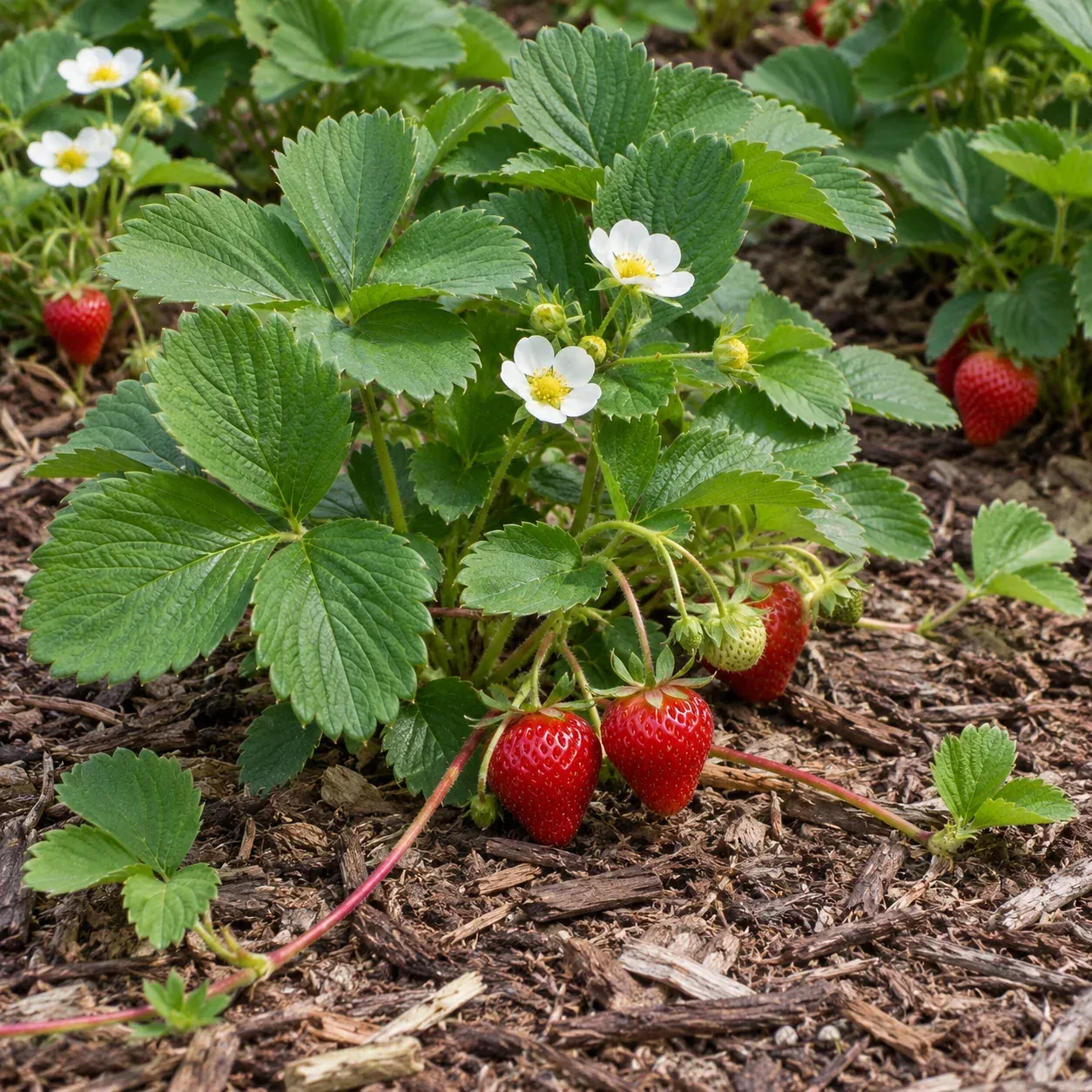
| ☀️ Light | Full sun |
|---|---|
| 💧 Water | Moderate (lightly moist) |
| 🪴 Soil | Fertile, well drained. |
| 🐾 Safety | Cats: toxic · Dogs: toxic (ASPCA Animal Poison Control) |
Where It Grows & Climate Tolerance
Pet & Companion Animal Toxicity (Garden Strawberry)
A popular backyard berry whose June-bearing, everbearing and day-neutral types need different harvest expectations.
Care instructions
Care Guide & Maintenance Routine
Full sun; Moderate, even during flowering and fruiting; Fertile, well drained. Choose a cultivar for the local region.
Light & Sunlight
Full sun supports fruiting; avoid shade from trees and buildings.
Watering Schedule
Maintain even moisture during establishment, flowering and fruiting without waterlogging.
Potting Mix & Drainage
Fertile, well drained.
Temperature & Humidity
Winter survival depends on cultivar, snow cover and local protection; no single national temperature range applies.
A popular backyard berry whose June-bearing, everbearing and day-neutral types need different harvest expectations.
Growing and care
Buy healthy plants and choose a sunny, weed-free site with drainage and airflow. Match the variety and production system to the local region. Plant crowns at the correct depth, keeping the growing point above soil and roots covered; too deep or shallow planting causes losses. Water evenly through establishment and fruiting, and use clean mulch to reduce fruit contact with soil. Manage runners according to the chosen bed system. Replace or renovate beds according to plant health and production type. Winter mulch timing and quantity differ across Canadian climates; follow local guidance rather than a national rule. Watch for slugs, fruit rot and local pests.
Canadian seasonal care
Spring—check crowns, remove winter protection at the right local time, weed. Summer—water, harvest and manage runners. Autumn—inspect plant health and prepare regional winter protection. Winter—keep crowns protected as locally advised.
Seasonal rhythm
Seasonal Calendar
A month-by-month calendar for Garden Strawberry in Canada is coming soon. See the light, water and temperature notes above.
Diagnostics
Common Problems & Troubleshooting
Small berries: check water, light and crowding. Crown decline: check planting depth and drainage.
Pests & seasonal watch: Inspect for slugs, fruit rot and local pests; keep fruit off wet soil.
Care encyclopedia · 5 guides
Guides & Articles for Garden Strawberry
When to Mulch Strawberries for Winter in Saskatchewan
Strawberry crowns are damaged by cold well above Prairie winter lows. Mulch with clean straw once plants are dormant, usually late October to early November.
Read guide →Growing Strawberries in Containers in Saskatchewan
Day-neutral and everbearing strawberries do well in pots on Saskatchewan patios. The hard part is winter, because roots in pots freeze far colder than in the ground.
Read guide →Leaf Spot, Rust and Botrytis (Grey Mould): A Canadian Gardener's Guide
Spots, orange pustules or fuzzy grey rot? Learn how to tell leaf spot, rust and botrytis (grey mould) apart, which Canadian plants they hit, from strawberries and peonies to saskatoons and hollyhocks, and the simple habits that prevent all three.
Read guide →When to Plant in Canada: Frost Dates and a Planting Calendar by Province
Find the average last spring frost, first fall frost and frost-free days for main cities in all 10 provinces and the territories, from Environment Canada's 1991–2020 climate normals, then turn them into your own planting calendar.
Read guide →Common Garden Pests in Canada: Slugs, Cutworms, Colorado Potato Beetle and Lily Leaf Beetle
Slugs, cutworms, Colorado potato beetle and lily leaf beetle cause more damage in Canadian gardens than almost anything else. Learn how to identify each one and control it with methods recommended by BC, Saskatchewan and Manitoba experts.
Read guide →Q&A
Frequently Asked Questions
Why are berries small?
Check cultivar, age, water, light and crowding.
Should runners be removed?
It depends on the bed system.
How deep should crowns be?
Keep roots covered but the crown growing point above soil.
Similar Botanical Matches
Grower field notes
Reader Field Notes in Canada
Share how this plant performs in your local Canada climate.