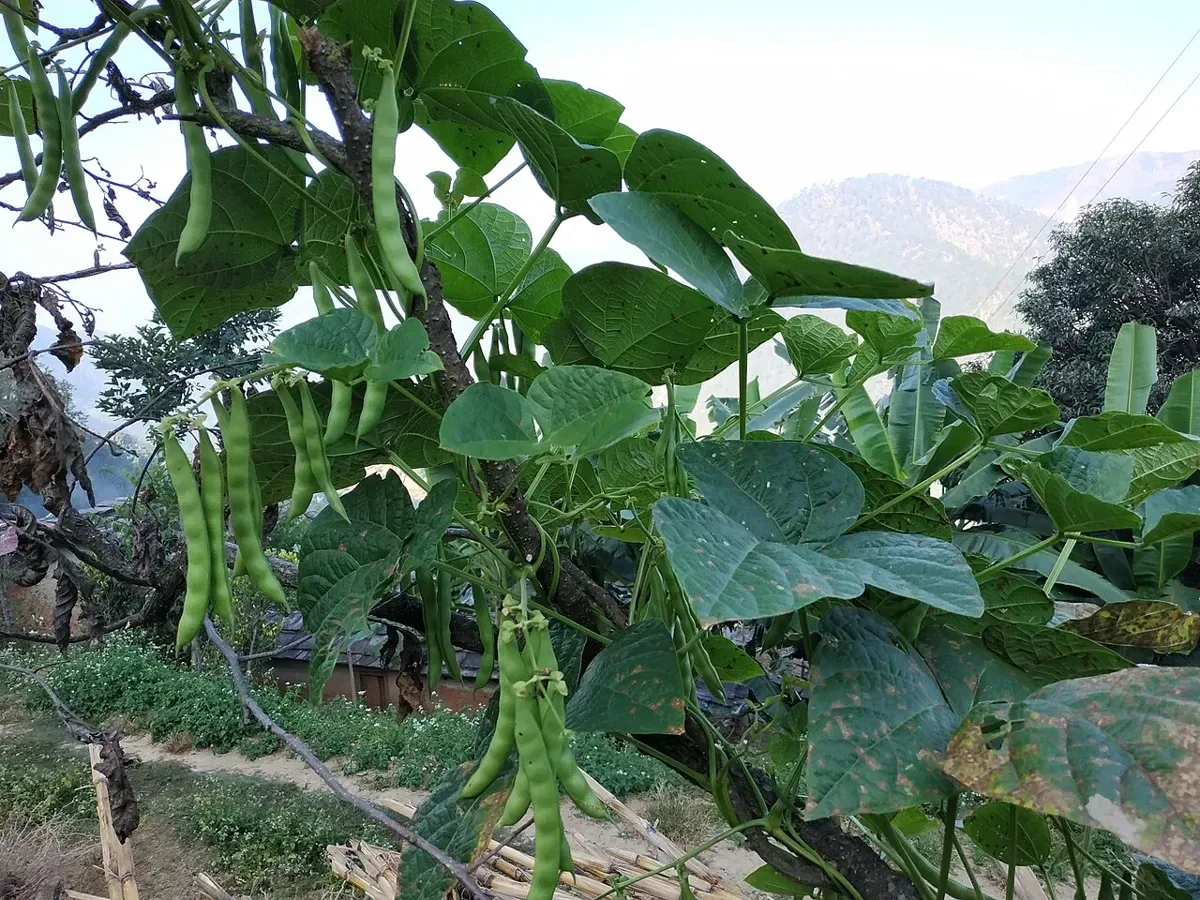
| ☀️ Light | Full sun |
|---|---|
| 💧 Water | Moderate (lightly moist) |
| 🪴 Soil | Well-drained loam, slightly acidic (about pH 5.5 to 6.5) |
| 🌡️ Temp | 10°C – 30°C |
| 🐾 Safety | Cats: not verified · Dogs: not verified |
| 📏 Mature size | 45 cm |
Where It Grows & Climate Tolerance
Pet & Companion Animal Toxicity (How to Grow Green Beans in Canada)
Green beans are a summer crop in Canada, sown after the last frost once the soil warms to 15°C. Bush beans crop in about two months; pole beans keep going until the first fall frost.
Care instructions
Care Guide & Maintenance Routine
Sow on or after your last frost date in soil at least 15°C. Sow every two weeks until mid-June for a longer harvest. Give about 2.5 cm of water a week. Pick pods every few days. Choose early varieties under 70 days in the north.
Light & Sunlight
NC State Extension and the University of Saskatchewan both recommend full sun. Beans tolerate a little shade but crop less.
Watering Schedule
The University of Saskatchewan suggests about 2.5 cm of water a week for actively growing beans. Dry soil at flowering makes flowers drop, and waterlogging at any stage harms the crop, as an ICAR Indian Horticulture article notes.
Potting Mix & Drainage
Well-drained loam, slightly acidic (about pH 5.5 to 6.5)
Temperature & Humidity
Plants are killed by frost and stall in cold soil. Sow only when soil reaches about 15°C, roughly one to three weeks after the average last frost. The first fall frost, from early September on the Prairies to early November on the BC coast, ends the crop.
Green beans in Canadian gardens
Beans are one of the most reliable crops in a Canadian vegetable garden. The University of Saskatchewan's Gardenline calls garden beans one of the easiest vegetables to grow and notes they are a warm-season crop that needs warm soil.
When to sow
Gardenline advises sowing on or after your last expected spring frost, when the soil is at least 15°C. Seed germinates in 8 to 12 days at that temperature, best at 21°C or warmer, and may rot in colder soil. Average last frost dates from ECCC 1991-2020 normals, compiled by GrowersGuide.ca:
- Vancouver 26 March, Victoria 14 April, Kamloops 30 April: sow from early to mid-May when soil warms.
- Windsor 22 April, Toronto 4 May, Ottawa 7 May, Halifax 8 May: sow from mid to late May.
- Québec City 11 May, Charlottetown 18 May, Saskatoon 22 May: sow in late May.
- Moncton 23 May, Winnipeg 24 May, Calgary 26 May, Regina 28 May and St. John's 1 June: wait until early June.
Succession sowing
Gardenline suggests sowing every two weeks until mid-June to spread out the harvest. Sow seeds 2.5 to 5 cm deep, about 10 cm apart, in rows 30 to 45 cm apart.
Varieties tested on the Prairies
Gardenline's list from University of Saskatchewan trials includes 'Provider', 'Strike', 'Tema' and 'Royal Burgundy' for green and purple beans, 'Gold Rush' and 'Eureka' for yellow beans, and 'Masai' and 'Delinel' for French filet types. In the far north it advises early varieties under 70 days to maturity.
Frost-free days
Calgary averages about 106 frost-free days and Regina 108, according to GrowersGuide.ca, while Victoria has over 200. On the Prairies, bush beans are the safer choice; pole beans need a long, warm season and do best in southern Ontario, the Okanagan and the BC coast.
Zones
Beans are tender annuals, so NRCan zones matter less than frost dates and soil warmth. NRCan's 1991-2020 map runs from about Zone 3a in Saskatchewan to 9a on southern Vancouver Island. The USDA range NC State gives (2a to 11b) uses a different calculation from NRCan.
Water in July
Gardenline suggests about 2.5 cm of water a week for growing beans. Hot, dry July weather in Ontario and Manitoba drops flowers if the soil dries out. A straw mulch helps.
Balconies and small yards
On a Montréal or Vancouver balcony, a 30 cm pot of bush beans or a single pole bean on a railing net gives fresh pods for several weeks. Pots warm faster than garden soil in May, so container sowings can go in a week earlier than beds in the same city.
Questions from Canadian readers
- Can I start beans indoors in April? Only in deep cells, two to three weeks ahead. Direct sowing in warm soil usually catches up.
- Are bean leaves safe for the dog? Pet safety is not verified. Raw dried beans contain a lectin, so store seed out of reach.
Seasonal rhythm
Seasonal Calendar
| Month | Care Tasks | Seasonal Focus |
|---|---|---|
| Jan | protect | Order bean seed. Check stored saved seed for weevil holes. |
| Feb | protect | Plan rotation and where pole beans will cast shade. |
| Mar | protect | Build trellises and wigwams while the ground is soft. |
| Apr | protect | BC coast: prepare beds. Warm the soil with a cover sheet. |
| May | sow | Sow when soil reaches 15°C: coast, southern Ontario and Okanagan first, then Quebec and the Maritimes. |
| Jun | sow, protect | Prairies and Newfoundland: sow early in the month. Sow again every two weeks until mid-June. |
| Jul | harvest, protect | First pickings from May sowings. Water about 2.5 cm a week. |
| Aug | harvest | Peak picking across Canada. Pick every two or three days. |
| Sep | harvest, protect | Prairies: watch for early frost; cover plants overnight. Coast: pole beans still cropping. |
| Oct | harvest | Save seed from dry pods. Cut plants and leave roots in the soil. |
| Nov | protect | Dry and store saved seed in sealed jars. |
| Dec | protect | Record which varieties did best for next year. |
Diagnostics
Common Problems & Troubleshooting
Seed rotting in cold, wet soil; flowers dropping in heat or drought; stringy, tough pods when picking is left too late; yellowing leaves in waterlogged soil; poor germination from old seed.
Pests & seasonal watch: Cutworms and slugs on seedlings in May and June. Mexican bean beetle and aphids in hot summers in southern Ontario. Anthracnose and white mould in wet Maritime and coastal BC summers.
- Yellow leaves — Leaves fade from green to yellow, often starting at the bottom.
- Thrips — Silvery streaks and twisted new leaves, sometimes with black specks of frass.
- Aphids — Clusters of small soft insects on new tips, often sticky.
- Whitefly — Tiny white insects fly up in a cloud when you touch the plant.
- White powder — A white powdery film on leaves, usually in still, humid air with dry soil at the roots.
- Leaf spot — Brown or tan spots with a yellow halo, sometimes with tiny dots in the centre.
- Underwatering — Soil is bone dry and leaves are crispy, curled or dull.
Similar Botanical Matches
Grower field notes
Reader Field Notes in Canada
Share how this plant performs in your local Canada climate.