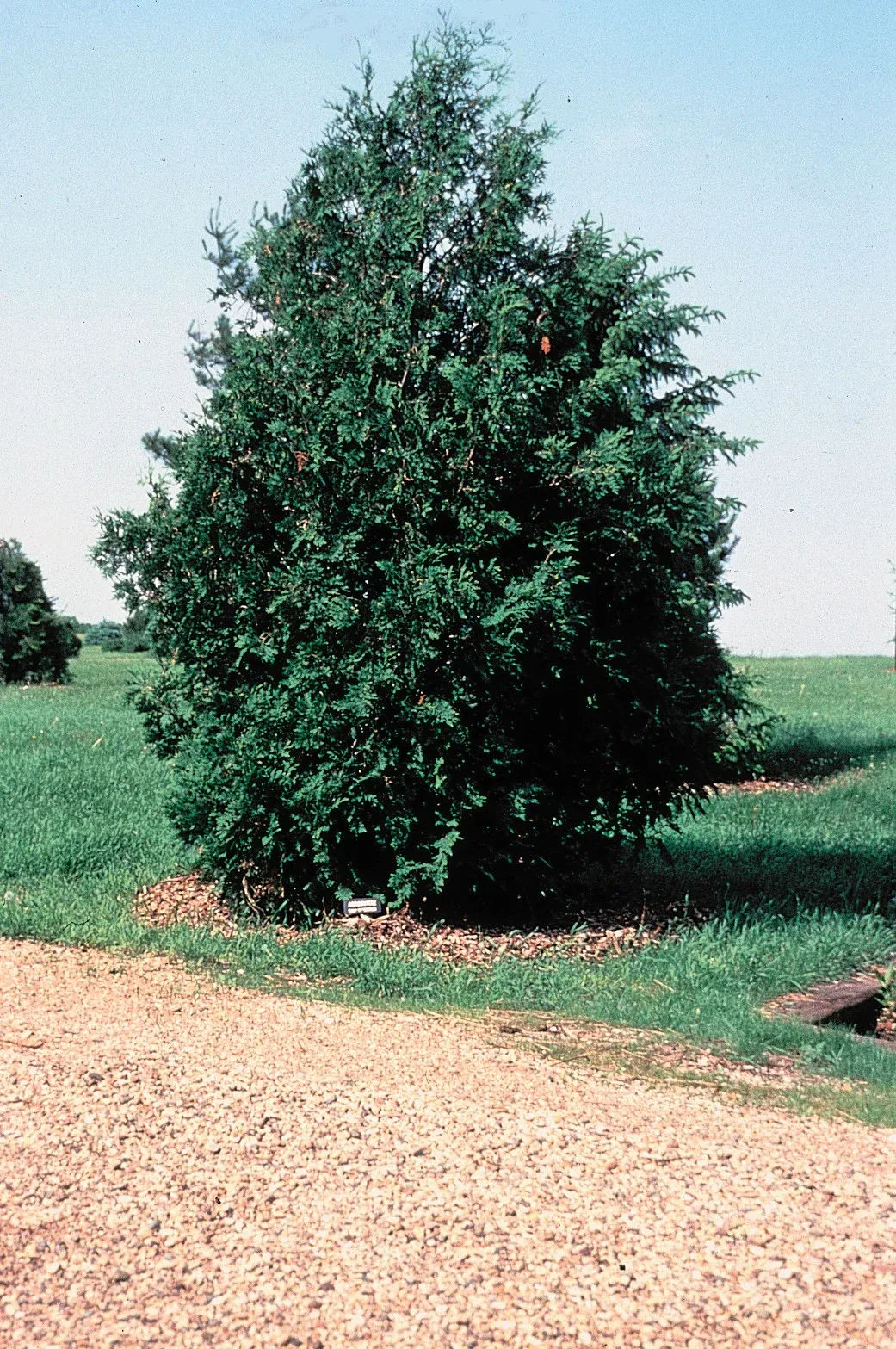
| ☀️ Light | Full sun |
|---|---|
| 💧 Water | Moderate (lightly moist) |
| 🪴 Soil | Moist, well-drained loam; tolerates some clay |
| 🐾 Safety | Cats: not verified · Dogs: not verified |
| 📏 Mature size | 7.0 m |
Where It Grows & Climate Tolerance
Pet & Companion Animal Toxicity (Eastern White Cedar in Canada)
A native evergreen conifer for screens and wildlife shelter in many Canadian regions.
Care instructions
Care Guide & Maintenance Routine
Plant in sun or part shade and keep roots moist while establishing. Shelter exposed hedges from winter wind and deer.
Light & Sunlight
Full sun or part shade; deep shade leads to sparse foliage.
Watering Schedule
Keep young plants evenly moist. Water during long dry spells; avoid hot, dry exposed sites.
Potting Mix & Drainage
Moist, well-drained loam; tolerates some clay
Temperature & Humidity
KPU lists zone 3; winter windburn is more likely in dry exposed positions.
Eastern white cedar is native to parts of Canada and grows as a conical evergreen tree. Many garden varieties are smaller or narrower than the species. Kwantlen Polytechnic University lists the species as hardy to zone 3, but cultivar choice and site still matter.
Choose moist soil with drainage and a site away from persistent drying wind. Water new plants well, especially during the first summers. Mulch roots, leaving the trunk clear. A hedge planted in dense shade may become thin.
In winter, dry wind can brown foliage and heavy snow can bend branches. Deer may browse the lower growth. Monitor for leafminers and other pests, and consult local advice if damage is extensive.
Seasonal rhythm
Seasonal Calendar
| Month | Care Tasks | Seasonal Focus |
|---|---|---|
| Jan | Inspect winter browning; gently remove damaging snow loads. | |
| Feb | Keep winter wind and deer protection in place. | |
| Mar | Assess winter injury as ground thaws; water if dry. | |
| Apr | Plant when soil is workable; water deeply. | |
| May | Mulch new plants and check soil moisture. | |
| Jun | Trim hedges lightly; inspect for leafminers. | |
| Jul | Water deeply during dry heat, especially new hedges. | |
| Aug | Continue watering young plants; watch mites. | |
| Sep | Stop heavy trimming so growth can harden. | |
| Oct | Water before freeze-up if autumn is dry. | |
| Nov | Protect exposed new hedges from wind and deer. | |
| Dec | Check snow load and avoid shaking frozen branches. |
Diagnostics
Common Problems & Troubleshooting
Winter browning, deer browsing, snow breakage and sparse foliage in shade.
Pests & seasonal watch: Deer browsing is common. Check leafminers, bagworms, scale and mites before choosing a treatment.
Care encyclopedia · 3 guides
Guides & Articles for Eastern White Cedar in Canada
Overwintering Perennials and Bulbs in Canada: Mulch, Tender Bulbs and Containers
Get perennials and bulbs through a Canadian winter: pick plants for your NRCan hardiness zone, mulch at the right time, dig and store dahlias, gladiolus and cannas, and keep container plants alive.
Read guide →Plant Problem Diagnosis Guide: From Symptom to Cause to Fix
A step-by-step way to diagnose plant problems in Canada, with symptom tables that point from yellow leaves, spots, holes, wilting and winter browning to the likely cause and the GardenOrbit guide that fixes it.
Read guide →Japanese Beetle in Canada: How to Identify It, Control It and Where It's Regulated
Japanese beetles are established in Ontario, Quebec and the Maritimes, and CFIA is fighting them in BC and Newfoundland. Learn how to identify adults and grubs, where they are regulated in 2026, how to report a sighting, and how to protect your roses, raspberries and lawn.
Read guide →Similar Botanical Matches
Grower field notes
Reader Field Notes in Canada
Share how this plant performs in your local Canada climate.