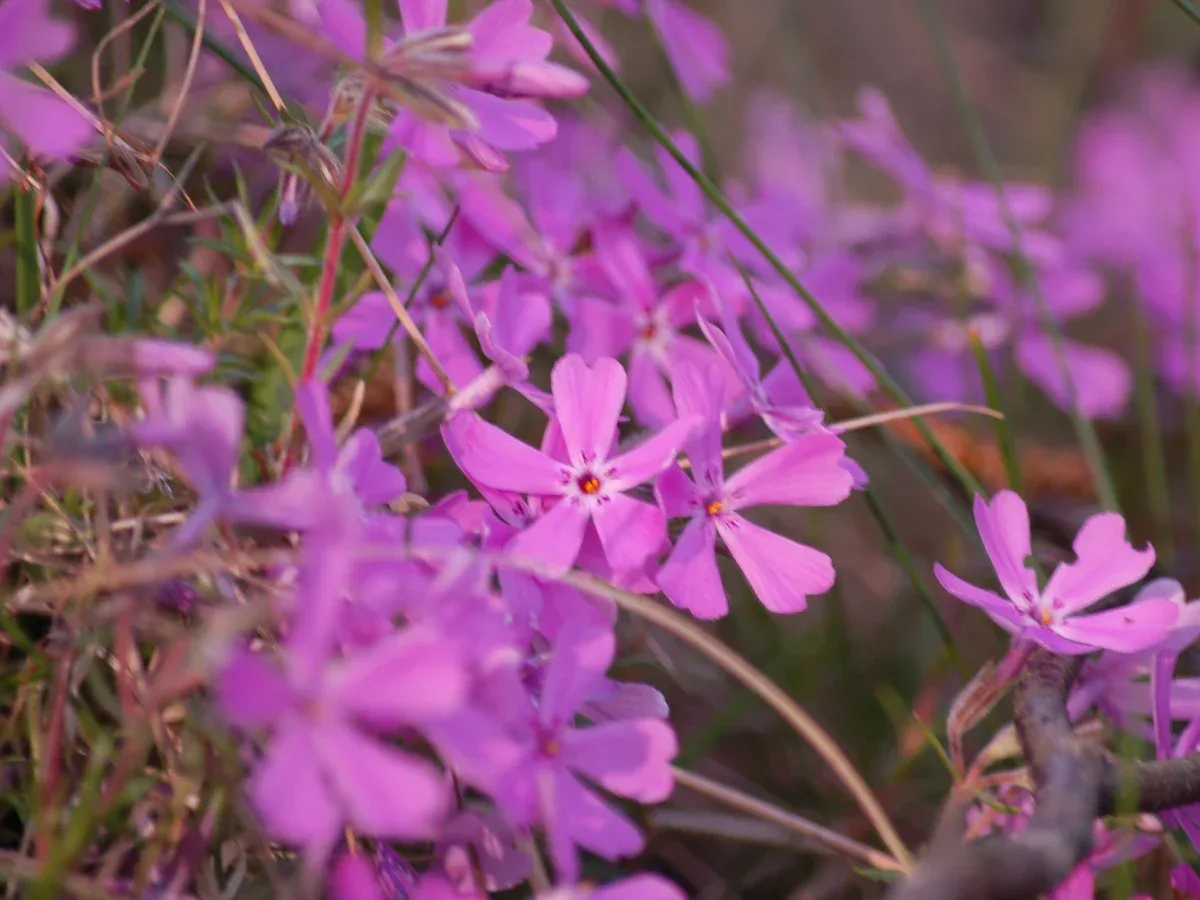
| ☀️ Light | Full sun |
|---|---|
| 💧 Water | Moderate (lightly moist) |
| 🪴 Soil | Well-drained loam, sandy or rocky soil |
| 🐾 Safety | Cats: not verified · Dogs: not verified |
| 📏 Mature size | 15 cm |
Where It Grows & Climate Tolerance
Pet & Companion Animal Toxicity (Creeping Phlox for Canadian Gardens)
A colourful spring mat for Canadian rock gardens and sunny slopes. Choose Phlox subulata, allow room to spread and keep its roots well drained.
Care instructions
Care Guide & Maintenance Routine
Sun gives the best bloom. Water new plants while they root. Keep the bed free draining through spring thaw, then trim lightly after flowering.
Light & Sunlight
Full sun gives the best flower display; part sun is possible.
Watering Schedule
Keep newly planted roots watered while they establish. Check soil before watering mature plants.
Potting Mix & Drainage
Well-drained loam, sandy or rocky soil
Temperature & Humidity
KPU lists the species at zone 2. Site exposure, drainage, snow cover and cultivar all affect winter survival.
In Canada, creeping phlox often delivers its main colour after winter when many perennials are just waking up. The exact bloom week changes with snow cover and local temperature. A sheltered Ontario garden may flower before a colder prairie site, so do not follow one nationwide planting or pruning date.
Choose an open, sunny position with soil that does not stay wet after snowmelt. A slope, raised edge or rock garden can help. In part sun the plant may survive but bloom less. Kwantlen Polytechnic University lists the species as hardy to zone 2; use the nursery label for your particular cultivar and check the hardiness of your exact location. The plant is native to some central and eastern Canadian regions, but suitability still depends on your garden conditions.
Set young plants out when soil can be worked and hard frost risk has passed. Give them water while the roots establish. Later, test the soil rather than watering on a fixed schedule. Once flowering ends, trim long stems to keep a tight mat. If an old patch opens in the middle, lift and divide healthy outer pieces. Leave room around it for air movement and look for spider mites in hot dry weather. Rabbits sometimes browse the leaves.
Seasonal rhythm
Seasonal Calendar
| Month | Care Tasks | Seasonal Focus |
|---|---|---|
| Jan | Leave the frozen mat alone; avoid piling salted snow on it. | |
| Feb | Check for drainage problems during a midwinter thaw. | |
| Mar | As snow melts, remove soggy leaf litter without pulling new stems. | |
| Apr | Watch for buds and bloom in milder regions; timing varies across Canada. | |
| May | Enjoy spring flowers; water new plantings while their roots settle. | |
| Jun | After the main bloom, trim long stems lightly to encourage dense growth. | |
| Jul | Inspect for spider mites during hot, dry weather. | |
| Aug | Check moisture during drought; divide healthy outer growth if an old centre is bare. | |
| Sep | Clear competing weeds and give divisions time to root before frost. | |
| Oct | Remove fallen leaves that hold moisture against the mat. | |
| Nov | Avoid waterlogging as growth slows and the ground cools. | |
| Dec | Let snow cover protect the plant; plan any division for the next growing season. |
Diagnostics
Common Problems & Troubleshooting
Poor bloom can follow too much shade. Wet soil may damage roots; old mats can thin in the centre.
Pests & seasonal watch: Rabbits can browse foliage; spider mites may appear in a hot dry spell.
Similar Botanical Matches
Grower field notes
Reader Field Notes in Canada
Share how this plant performs in your local Canada climate.