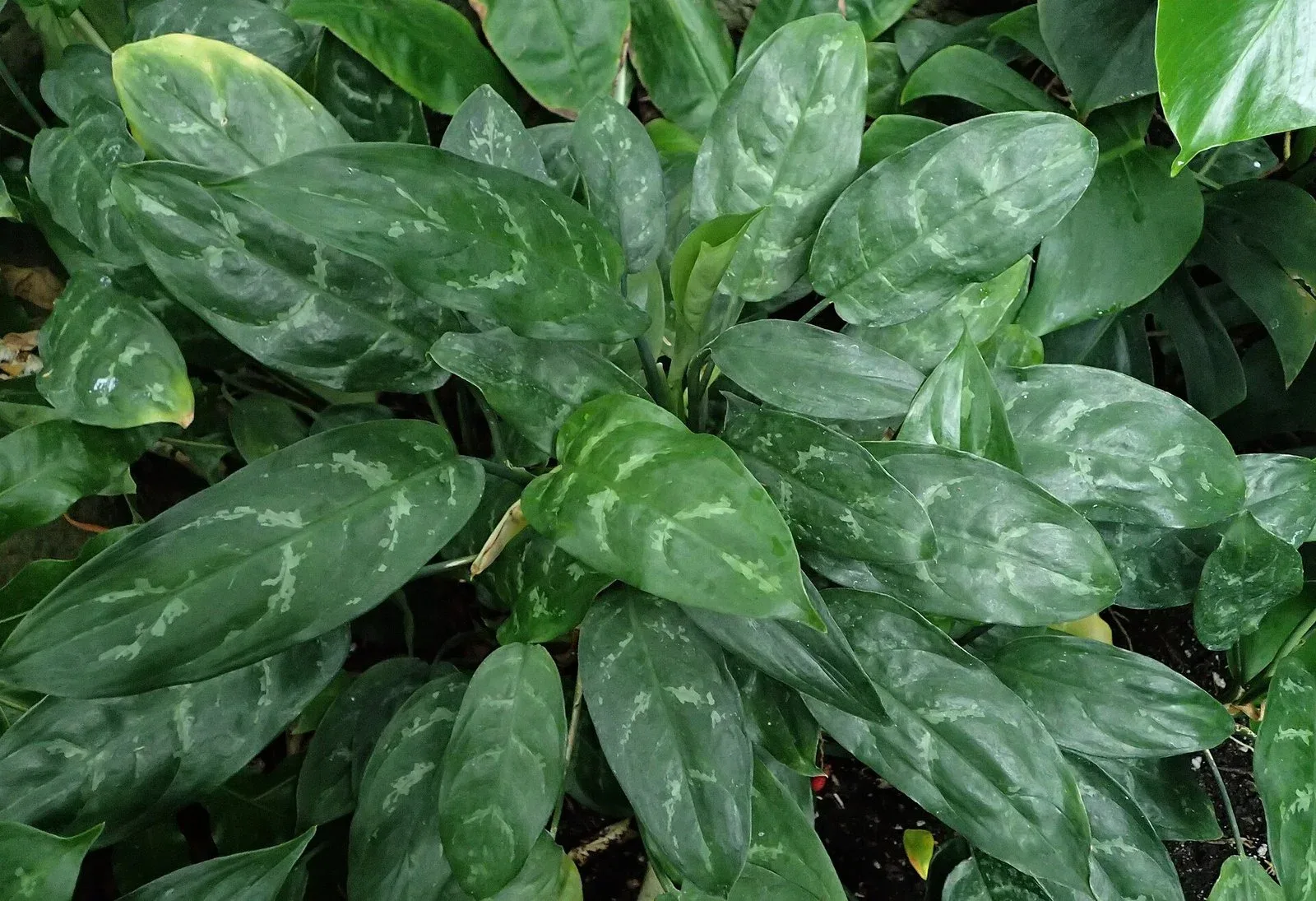
| ☀️ Light | Low light |
|---|---|
| 💧 Water | Moderate (lightly moist) |
| 🪴 Soil | Well-draining soilless mix with perlite or extra humus; pot must drain |
| 🌡️ Temp | 13°C – 27°C |
| 🐾 Safety | Cats: toxic · Dogs: toxic (ASPCA Animal Poison Control) |
| 🏔️ Hardiness | Indoors only in Canada (Clemson Extension: indoors only tropical foliage plant) |
| 📏 Mature size | 90 cm |
Where It Grows & Climate Tolerance
Pet & Companion Animal Toxicity (Chinese Evergreen)
Tough, slow-growing foliage plant for dim rooms. Silver, green or pink leaves; keep it warm and don't overwater. Toxic to cats and dogs.
Care instructions
Care Guide & Maintenance Routine
Low to moderate indirect light. Water when top 3-5 cm is dry with room-temperature water. 20-27 C, avoid below 13 C. No fertilizer October-February. Toxic to cats and dogs.
Light & Sunlight
Low to moderate indirect light; coloured varieties need more; no direct sun
Watering Schedule
Moderate: water when top 3-5 cm is dry (about every 7-21 days); less in winter
Potting Mix & Drainage
Well-draining soilless mix with perlite or extra humus; pot must drain
Temperature & Humidity
Verified temperature range: 13°C–27°C (55°F–81°F). Protect from cold drafts and direct airflow from heating or cooling vents.
Chinese evergreen (Aglaonema) is a group of tropical foliage plants from tropical and subtropical Asia and New Guinea. Clemson Extension calls it one of the most durable houseplants: it tolerates poor light, dry air and drought. Leaves range from solid dark green to silver-marked and pink or red varieties, and plants typically grow one to three feet (30-90 cm) tall and wide.
A good fit for dim Canadian rooms
Aglaonema is grown indoors only, so in every part of Canada it is a houseplant. Solid green types grow in low light, such as a north window or a spot well back from a window. Variegated and colourful types need low to moderate light, meaning bright indirect light. Direct sun scorches the leaves.
Water and temperature
Keep the soil moist but not wet, and water when the top 1-2 inches (3-5 cm) are dry, using room-temperature water. In winter, growth slows and soil stays wet longer in low light, so stretch the interval to about every two to three weeks and always check the soil first, because winter overwatering is the leading cause of root rot. The plant prefers 68-80 F (20-27 C). Clemson advises avoiding temperatures below about 55 F (13 C), so keep it off cold windowsills and away from drafts.
Humidity, feeding and soil
It tolerates the low humidity of heated homes. Plant it in a standard soilless mix with perlite or extra humus and make sure the pot drains. Stop fertilizing from October to February and resume a diluted feed in spring.
Pet and skin warning
The ASPCA lists Aglaonema as toxic to dogs, cats and horses. Chewing it causes oral irritation, pain and swelling of the mouth, tongue and lips, drooling and vomiting. The sap can also irritate skin, so wear gloves when pruning and keep it away from children and pets.
Choosing a variety
Silver and green types such as 'Silver Queen' tolerate the least light. Pink and red cultivars are showier but need brighter light.
Seasonal rhythm
Seasonal Calendar
A month-by-month calendar for Chinese Evergreen in Canada is coming soon. See the light, water and temperature notes above.
Diagnostics
Common Problems & Troubleshooting
- Yellow leaves | Cause: Overwatering; one old lower leaf yellowing is normal ageing | Fix: Check the soil, let it dry, and make sure the pot drains - Brown leaf tips | Cause: Dry air, mineral build-up or underwatering | Fix: Add humidity, flush the soil and keep watering consistent - Pale or scorched leaves | Cause: Direct sun | Fix: Move to indirect light - Leaf damage or drooping from cold | Cause: Temperatures below about 13 C or cold drafts | Fix: Move to a warm spot away from windows and doors
- Leaf spot — Brown or tan spots with a yellow halo, sometimes with tiny dots in the centre.
- Brown spots — Scattered brown blotches on the leaf blade, not only the tip.
Care encyclopedia · 4 guides
Guides & Articles for Chinese Evergreen
How to Water Houseplants During a Canadian Winter
Most houseplants need less water in a Canadian winter, but how much less depends on the plant, the pot and the room. Here is how to judge it yourself.
Read guide →Yellow Leaves on Plants: What's Causing It and How to Fix It
Yellow leaves are a symptom, not a diagnosis. Learn to read the pattern, from lower leaves yellowing after overwatering to new growth yellowing between green veins on the Prairies, and how to fix the most common causes indoors and in Canadian gardens.
Read guide →Top 10 "Air-Purifying" Plants for Canadian Apartments: What They Can and Can't Do
The famous 1989 NASA plant study doesn't translate to real homes: a 2019 review found you'd need 10 to 1,000 plants per square metre to match normal ventilation. Here is what plants can do, what really cleans apartment air, and 10 easy NASA-list plants.
Read guide →15 Low-Light Houseplants for Dim Canadian Winters
A cast-iron plant, a Chinese evergreen or a parlor palm is a realistic start in a dim Canadian winter room. Here are 15 plants with live Canada profiles, plus an honest note on a few that only pretend to like the dark.
Read guide →Q&A
Frequently Asked Questions
Is Chinese evergreen safe for cats and dogs?
No. The ASPCA lists Aglaonema as toxic to dogs and cats and it can cause mouth irritation, drooling and vomiting.
Can it grow in low light?
Yes. Solid green varieties grow in low light, while variegated and pink types need low to moderate indirect light.
How cold can it tolerate?
Clemson Extension advises avoiding temperatures below about 55 F (13 C). Keep it away from cold windows in winter.
How often should I water it?
When the top 3-5 cm of soil is dry, typically every 1-3 weeks depending on light and season.
Similar Botanical Matches
Grower field notes
Reader Field Notes in Canada
Share how this plant performs in your local Canada climate.