| ☀️ Light | Full sun |
|---|---|
| 💧 Water | Low (allow soil to dry) |
| 🪴 Soil | Clay, loam or sandy soil with good drainage |
| 🌡️ Temp | Min -40°C |
| 🐾 Safety | Cats: non-toxic · Dogs: non-toxic (ASPCA Animal Poison Control) |
| 📏 Mature size | 1.0 m |
Where It Grows & Climate Tolerance
Pet & Companion Animal Toxicity (Black-eyed Susan)
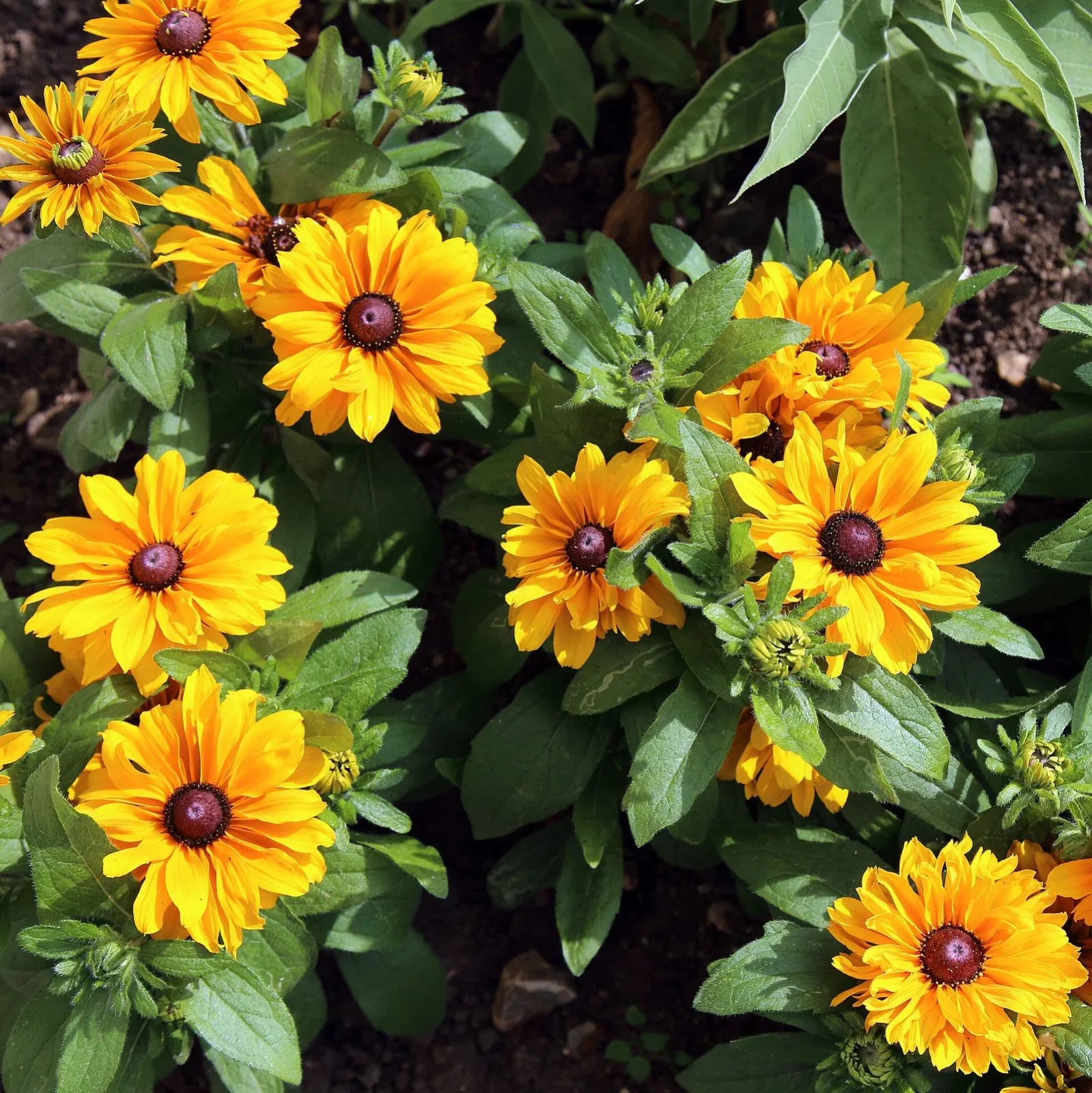
Cheerful golden daisies from July to September. Grows easily from seed in full sun, self-seeds, and is loved by bees, butterflies and birds.
Care instructions
Care Guide & Maintenance Routine
Full sun, well-drained soil, low to moderate water. Sow seed shallowly in fall or spring. Deadhead for more blooms; leave some seed heads for birds. Self-seeds.
Light & Sunlight
Full sun
Watering Schedule
Low to moderate; handles moderately dry soil
Potting Mix & Drainage
Clay, loam or sandy soil with good drainage
Temperature & Humidity
USDA zones 3a-8b (NC State Plant Toolbox); behaves as an annual, biennial or short-lived perennial (Mossfield)
Black-eyed Susan (Rudbeckia hirta) is a North American wildflower that has become a staple of Canadian gardens and wildflower mixes. It is a bristly-hairy plant up to about 1 m tall with stiff stems and lance-shaped leaves. Each flower head has 8 to 16 golden-yellow to orange rays around a dark brown-purple dome. It is not native to Alberta, although it occasionally escapes to roadsides and parks there.
Annual, biennial or short-lived perennial
It can behave as an annual, a biennial or a short-lived perennial. Seedlings often come up in fall, spend winter as a low rosette of leaves and flower the next summer. Because it self-seeds, a patch tends to carry on even as individual plants die out. NC State lists it for USDA zones 3 to 8.
Site and soil
Plant in full sun in clay, loam or sandy soil with good drainage. It handles moderately dry soil and needs low to moderate water.
Growing from seed
Sow outdoors in fall or spring. Fall-sown seed often comes up before winter and flowers the next summer. Sow shallowly, about 6 mm deep or just pressed in, on firm soil, because seedlings come up poorly in loose, fluffy soil. Established plants do not like their roots disturbed.
Care
Deadhead to keep it flowering and to reduce self-seeding, but leave some seed heads standing in fall for the birds. Bees, including small carpenter bees and leafcutter bees, collect its pollen and nectar, butterflies visit the flowers, and songbirds eat the seed.
Wildflower mixes
It is commonly sold in wildflower seed mixes; check the species list on the packet.
Pets
The ASPCA does not list Rudbeckia hirta. A Canadian nursery catalogue describes it as generally considered safe around pets, but this is not veterinary-verified, so check with your vet if your pet eats plants.
Seasonal rhythm
Seasonal Calendar
A month-by-month calendar for Black-eyed Susan in Canada is coming soon. See the light, water and temperature notes above.
Diagnostics
Common Problems & Troubleshooting
- Poor germination | Cause: Seed sown in loose, fluffy soil or buried too deep | Fix: Sow shallowly on firm soil, about 6 mm deep or just pressed in - Plants disappear after 1-2 years | Cause: Short-lived perennial or biennial habit | Fix: Let it self-seed or sow new seed each year - Self-seeding too widely | Cause: Prolific seed production | Fix: Deadhead before seed ripens
Care encyclopedia · 1 guide
Guides & Articles for Black-eyed Susan
Q&A
Frequently Asked Questions
Is black-eyed Susan a perennial?
It can be an annual, biennial or short-lived perennial. It usually self-seeds so patches carry on.
When do I sow the seed?
In fall or spring, shallowly on firm soil. Fall-sown seed often flowers the next summer.
Is black-eyed Susan native to Alberta?
No. It is a North American wildflower from farther east and south that is grown in Alberta gardens and wildflower mixes, with occasional escapes to roadsides and parks.
Is it pet safe?
It is not listed by the ASPCA. One Canadian nursery calls it generally safe, but we could not verify this with a veterinary source.
Similar Botanical Matches
Grower field notes
Reader Field Notes in Canada
Share how this plant performs in your local Canada climate.