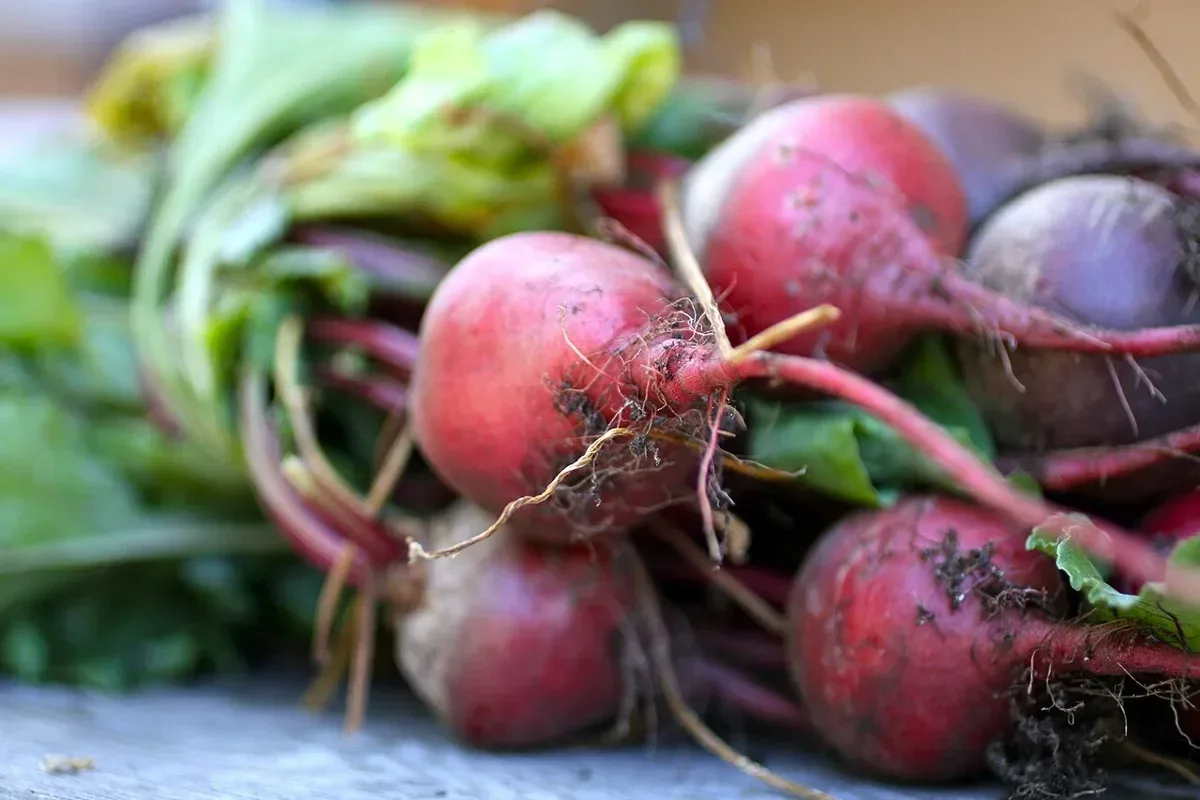
| ☀️ Light | Full sun |
|---|---|
| 💧 Water | Moderate (lightly moist) |
| 🪴 Soil | Loose, fertile, well-drained loam; pH about 6.0 to 7.0 |
| 🌡️ Temp | -3°C – 28°C |
| 🐾 Safety | Cats: non-toxic · Dogs: non-toxic |
| 📏 Mature size | 35 cm |
Where It Grows & Climate Tolerance
Pet & Companion Animal Toxicity (How to Grow Beets in Canada)
Beets are a dependable cool-season crop across Canada. Sow a couple of weeks before the last frost once the soil reaches 10°C, keep sowing every two weeks into summer, and store fall roots for winter.
Care instructions
Care Guide & Maintenance Routine
Sow about 1 cm deep, 3 to 5 cm apart, once soil is 10°C, then thin to 8 to 10 cm. Sow again every two weeks until midsummer. Keep weeds down while plants are young. Pull at 5 to 7 cm across. Store fall roots in a cold, humid place.
Light & Sunlight
Full sun gives the best roots. Beetroot tolerates a few hours of shade, which grows more leaf and smaller roots.
Watering Schedule
Even moisture is the key to smooth, tender roots. Dry spells make roots woody and can trigger bolting; heavy watering after drought splits them. Water deeply once or twice a week and mulch.
Potting Mix & Drainage
Loose, fertile, well-drained loam; pH about 6.0 to 7.0
Temperature & Humidity
Seedlings tolerate light spring frosts, so sowing starts before the average last frost once the soil reaches 10°C. A cold snap on young plants can cause bolting. Lift fall roots before the ground freezes.
Beets in Canadian gardens
Beets handle cool springs, light frost and short seasons, so they suit gardens from Victoria to Whitehorse. The University of Saskatchewan's Gardenline calls beets a cold-season crop that can be sown a couple of weeks before the last expected frost.
When to sow
Gardenline gives 10°C as the minimum soil temperature and 20°C as ideal, with germination in 5 to 8 days. Average last frost dates from ECCC 1991-2020 normals, compiled by GrowersGuide.ca, help with planning:
- Vancouver 26 March and Victoria 14 April: first sowings in March or April.
- Kamloops 30 April, Montréal 29 April, Toronto 4 May: sow from late April.
- Ottawa 7 May, Halifax 8 May, Québec City 11 May, Sudbury 17 May: sow in early May.
- Saskatoon 22 May, Winnipeg 24 May, Calgary 26 May, St. John's 1 June: sow in mid-May.
Succession sowing
Gardenline suggests sowing part of a row in early spring, another section two weeks later and a third two weeks after that. In southern Ontario and on the BC coast, a sowing in July gives roots for fall storage.
Spacing and weeds
Gardenline advises sowing about 1 cm deep and 3 to 5 cm apart, then thinning to 8 to 10 cm. It notes young beets compete poorly with weeds but cope better once they are four to six weeks old, so weed carefully early on.
Far north
For Yellowknife, Whitehorse and other northern gardens, Gardenline suggests sowing indoors about three weeks before planting out and setting beets out as transplants. Gardenline also notes Saskatoon has around 130 frost-free days and Yellowknife about 111, both long enough for quick varieties.
Zones
Beets are grown as an annual, so frost dates matter more than NRCan zones. NRCan's 1991-2020 map runs from about Zone 3a in Regina and Saskatoon to 9a on the coast. Fall beets in the ground take light frost but should be lifted before the soil freezes. In Charlottetown or Halifax that is usually late October; on the Prairies, early October.
Root cellar storage
Lift fall beets in October, twist off tops leaving 2 to 3 cm of stem, and store them unwashed in damp sand or sawdust in a cold room or root cellar. Many Prairie and Maritime families keep beets this way into spring, alongside potatoes and carrots.
Pickled beets and borscht
Pickled beets are a staple of Canadian pantries, and borscht is a family dish in Ukrainian Canadian communities across Manitoba, Saskatchewan and Alberta. Cylindrical varieties slice evenly for pickling jars.
Questions from Canadian readers
- Can I sow beets in fall for spring? Not usually; seedlings rarely survive a Prairie winter. Sow early in spring instead.
- Safe for the dog? ASPCA lists beets as non-toxic to dogs and cats.
Seasonal rhythm
Seasonal Calendar
| Month | Care Tasks | Seasonal Focus |
|---|---|---|
| Jan | protect | Check stored beets in the root cellar. Order seed. |
| Feb | protect | Plan succession rows. BC coast: prepare beds. |
| Mar | sow | Vancouver and Victoria: first sowings once soil reaches 10°C. Far north: plan indoor starts. |
| Apr | sow | Southern Ontario, Quebec and the interior of BC: sow. Far north: sow indoors. |
| May | sow, protect | Prairies and Maritimes: sow. Thin earlier sowings. Watch for flea beetles. |
| Jun | sow, harvest | Sow again every two weeks. First baby beets from April sowings. |
| Jul | sow, harvest | Last sowing for fall storage on the coast and in southern Ontario. Pull summer roots at 5 to 7 cm. |
| Aug | harvest | Steady harvest. Use the greens. Pickle surplus roots. |
| Sep | harvest | Prairies: lift main crop before hard frost. |
| Oct | harvest, protect | Lift fall beets, twist off tops and store in damp sand. |
| Nov | protect | Check stored roots for rot. |
| Dec | protect | Use stored beets. Plan next spring's varieties. |
Diagnostics
Common Problems & Troubleshooting
Crowded, tiny roots when seedlings are not thinned; woody or split roots after uneven watering; bolting in heat or after cold on young plants; white rings inside roots after stress; leaf spots in wet weather.
Pests & seasonal watch: Flea beetles on seedlings in May. Leaf miners tunnel leaves in June. Cercospora leaf spot in humid summers in Ontario and the Maritimes. Scab on roots in alkaline Prairie soils.
- Yellow leaves — Leaves fade from green to yellow, often starting at the bottom.
- Root rot — Roots turn brown and mushy in soil that stays wet.
- Aphids — Clusters of small soft insects on new tips, often sticky.
- Leaf spot — Brown or tan spots with a yellow halo, sometimes with tiny dots in the centre.
- Underwatering — Soil is bone dry and leaves are crispy, curled or dull.
- Nutrient shortage — Overall pale growth, or yellowing between veins, on a plant that is otherwise watered well.
- Tired mix — Water races down the inside of the pot and the root ball stays dry, or the mix is a hard brick.
Similar Botanical Matches
Grower field notes
Reader Field Notes in Canada
Share how this plant performs in your local Canada climate.