
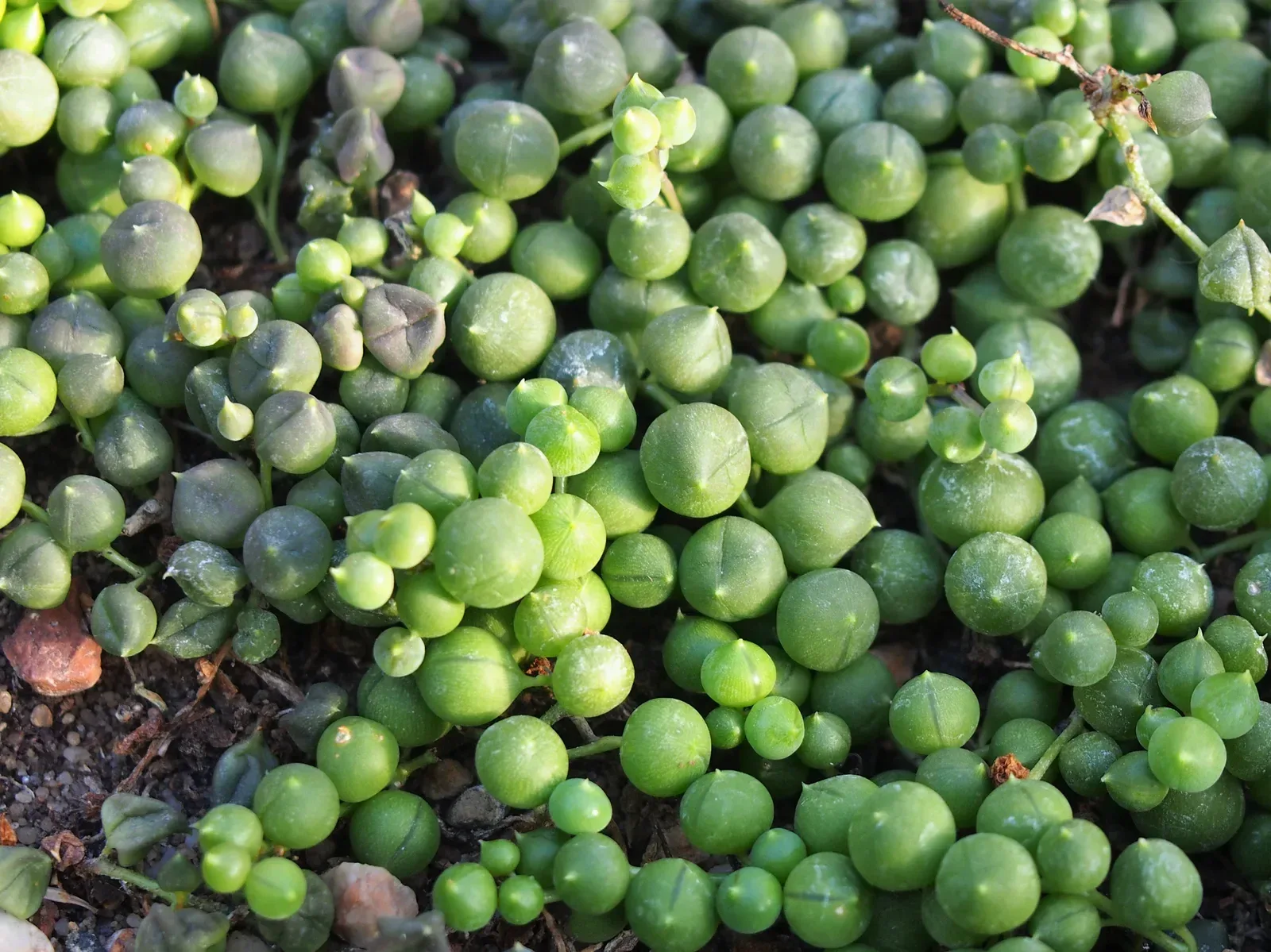
A string of pearls needs light at the soil surface as well as along its trailing strands. Many sparse baskets are hung too high, where the crown remains shaded even beside a bright window.
Quick answer
Light must reach the crown of string of pearls as well as its trails. Let a small airy root zone dry well before thorough watering. Wrinkled beads above wet compost may indicate lost roots, not thirst. Canadian winter shelves often need a lamp positioned over the pot to maintain compact growth.
How do you identify string of pearls?
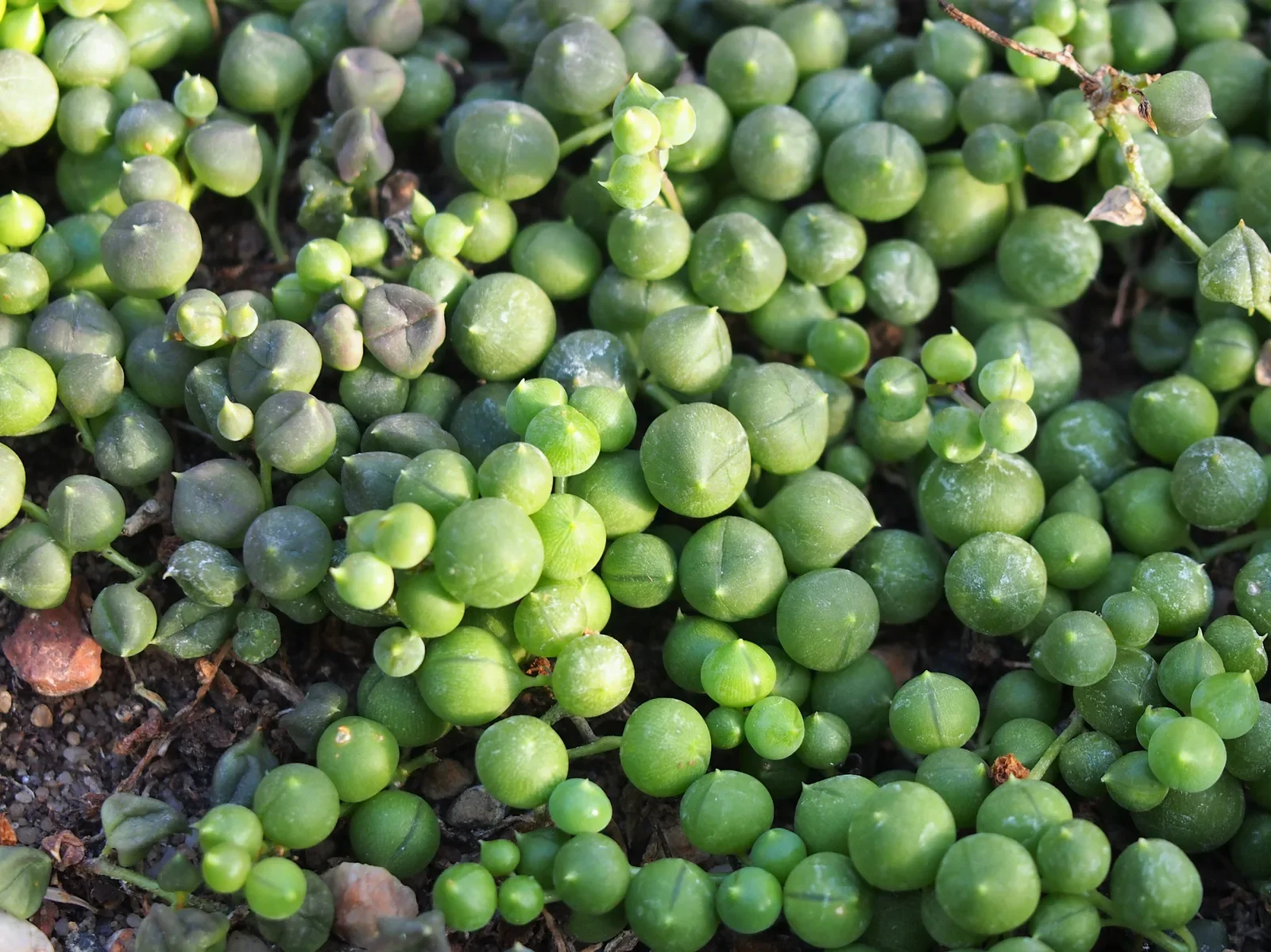
String of pearls: Curio rowleyanus, formerly Senecio rowleyanus, has bead-like leaves. String of bananas and string of tears are related but different plants. Variegated forms grow more slowly. A small basket may be several young cuttings.
How do you stop string of pearls going bald on top?
The crown needs light. A basket above the window frame may shade the pot while its tails remain bright. Lower it and check stems for rot before adding cuttings. Slightly wrinkled firm pearls may signal thirst; soft translucent ones suggest excess water or damaged roots. Do not use wrinkling alone as a watering test. A shallow draining pot is easier to manage than a deep decorative bowl of dense mix.
What light does it need in a Canadian winter?
Bright indirect plus some gentle sun. Low light = sparse strands.
The trailing beads need light near the crown as well as along the hanging ends. A pot placed high above a window can have bright-looking trails while its base remains shaded. Position the container so the top receives useful daylight. In winter, a grow light above the pot can help maintain compact new growth. Introduce direct sun gradually after purchase. Pearls grown under gentle nursery conditions can scorch in a sudden hot window. Long thin gaps between beads suggest insufficient light, but do not shorten the trails until you have corrected the position that produced them.
How should you water through the seasons?
Each bead stores water, yet wrinkling is not a diagnosis on its own. Check the medium and roots. A light dry pot with slightly deflated beads may need thorough watering; a wet pot with collapsing beads may have lost roots. Water through an open mix and let all excess leave the container. Avoid leaving the pot in a deep decorative bowl where runoff is invisible. In winter, lower light and cooler conditions slow use of that stored water. The safest interval comes from observation of your actual pot, not a fixed promise to water all succulents once every month.
What soil or potting mix is best?
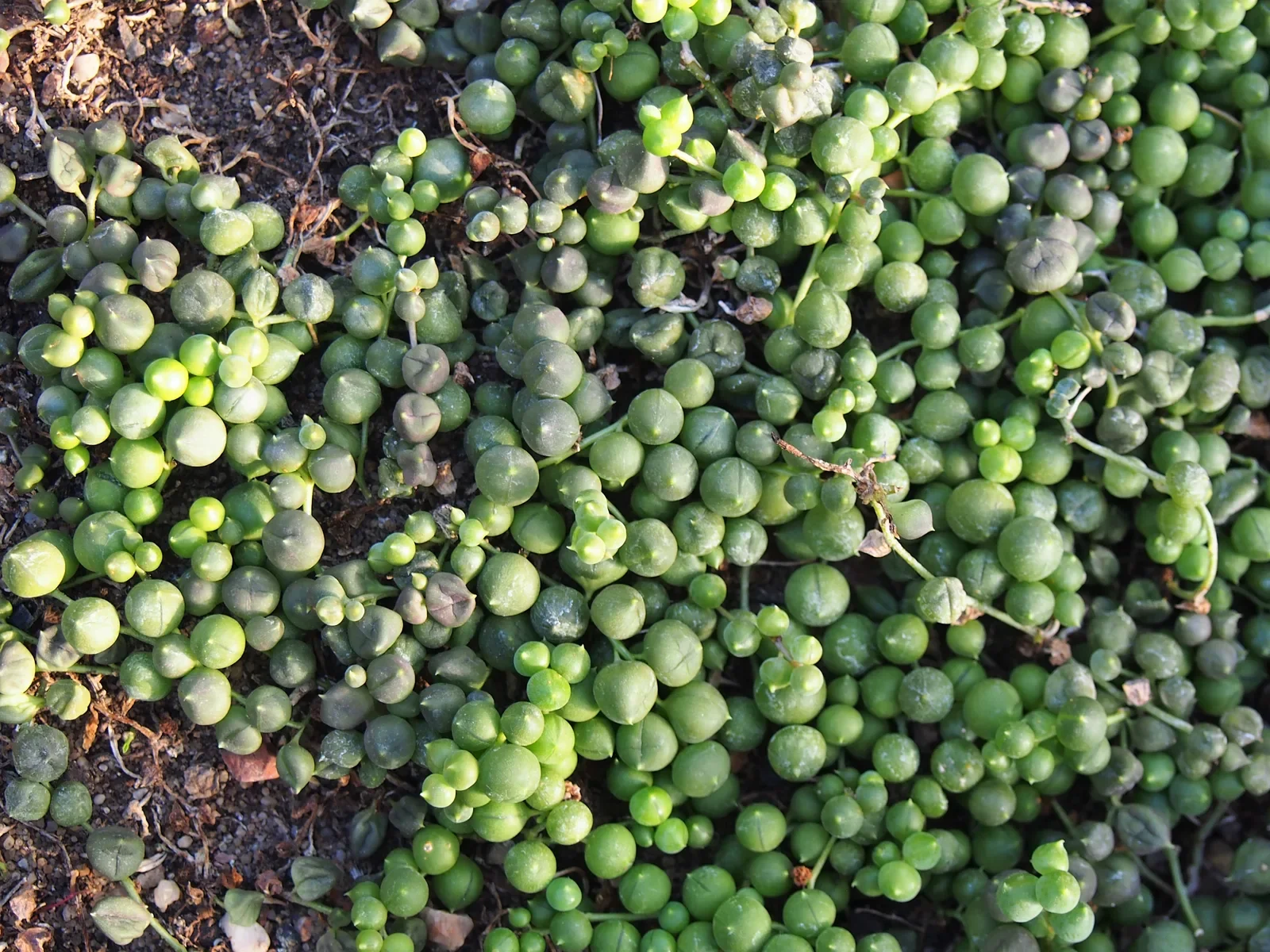
Use a small draining container and a gritty airy medium suited to fine roots. A deep pot can hold a wet lower layer long after the surface appears dry. Keep the crown near the rim so air and light reach it, rather than planting the strands far down inside an ornamental vessel. When repotting, support the trails and avoid crushing the beads. They detach easily under pressure. A broad tray under the work area catches pieces and prevents them being stepped on or found by a pet. Check the original nursery plug because dense peat hidden inside a gritty outer mix can still stay wet.
When should you fertilize?
Feeding should be modest while new strands are developing. Strong fertilizer does not fill the gaps on an old stretched stem. Remove dead or rotten lengths and use healthy tips to renew the crown if needed. Be cautious about cutting away too much functioning foliage from a plant with weak roots. It needs reserves to recover. Older strands may become woody or sparse, which is another reason to keep a small healthy backup cutting. A neat nursery pot is the result of good light and careful training as much as the age or size of the plant.
Does dry air or humidity matter?
String of pearls does not need the high humidity treatment given to a calathea. A dry heated room still requires monitoring because the mix may dry faster near a vent, but misting the beads is not the answer. Move the pot out of direct hot airflow. Check for mealybugs where stems branch and around the crown. A cottony patch partly hidden behind beads is easy to miss in a hanging pot. Any spray needs to be suitable for succulents and applied carefully; unsuitable mixtures can damage the leaf surface. Isolate the pot during treatment so insects do not move to neighbouring plants.
What temperatures and winter protection does it need?
Cool winter rest at 12 to 16 C can help bloom.
How should you prune it?
Trim bare strands; replant tips on the soil.
What is the best propagation method?
Lay healthy strands over gritty propagation mix with nodes touching the surface. Pin gently and keep the rooting zone lightly moist, not bone dry or soaked. Ease into normal soak-and-dry care after rooting. Do not bury the beads.
Propagation works with healthy lengths that include several nodes. Lay a section across a lightly moist rooting surface, pinning it gently so nodes contact the medium without burying all the beads. A long cutting hanging away from the soil has less useful contact than a short well-positioned piece. Keep it in bright indirect light while roots form. A humid sealed box is usually unnecessary and can encourage soft decay. Individual detached beads are less dependable than a suitable stem section. Use sound material from a pest-free parent rather than attempting to root every shrivelled remnant of a failing pot.
Which pests and diseases should you watch for?
Mealybugs and aphids.
How do you work out the cause?
Mushy pearls (overwater); shrivelled flat pearls (thirst); bare top (low light, rot at crown).
Is it safe around pets and children?
Treat Curio rowleyanus as unsafe to eat and keep away from children and pets. A missing or differently named ASPCA entry is not proof of safety. Use its botanical name when seeking veterinary advice.
A seasonal care calendar for Canada
| Season | What to do |
|---|---|
| Spring | Growth; take cuttings. |
| Summer | Bright light; water carefully. |
| Autumn | Check stored bead firmness alongside declining autumn water use. |
| Winter | Cool, bright, mostly dry. |
What should you check before buying?
For a succulent collection, compare the rosette of echeveria and the smaller structure of haworthia. The trailing stems of tradescantia zebrina provide a useful visual comparison without implying that striped leaves and water-storing beads need identical treatment.
Choose a specimen with a full firm centre rather than judging by trail length alone. A bare wet crown under long decorative strings is a warning. Protect the plant during Canadian winter transport and support hanging stems so a sleeve does not pull them off. Keep it beyond the reach of cats and children, remembering that trailing growth can soon reach furniture below the shelf. All fallen pieces should be collected. If summering outdoors, acclimate it gradually, shelter it from prolonged rain and bring it inside before cold nights. Inspect the crown for pests before returning it to the indoor collection.
Can trails be returned to the crown?
A healthy flexible strand can be laid across an open area of the pot so suitable nodes contact the mix. Secure it lightly without crushing beads. This can help fill a sparse centre, but only after correcting poor crown light or root trouble. Adding more stems to a wet shaded pot merely creates more tissue at risk of decay.
Comments
No comments yet — share what worked in your climate.