
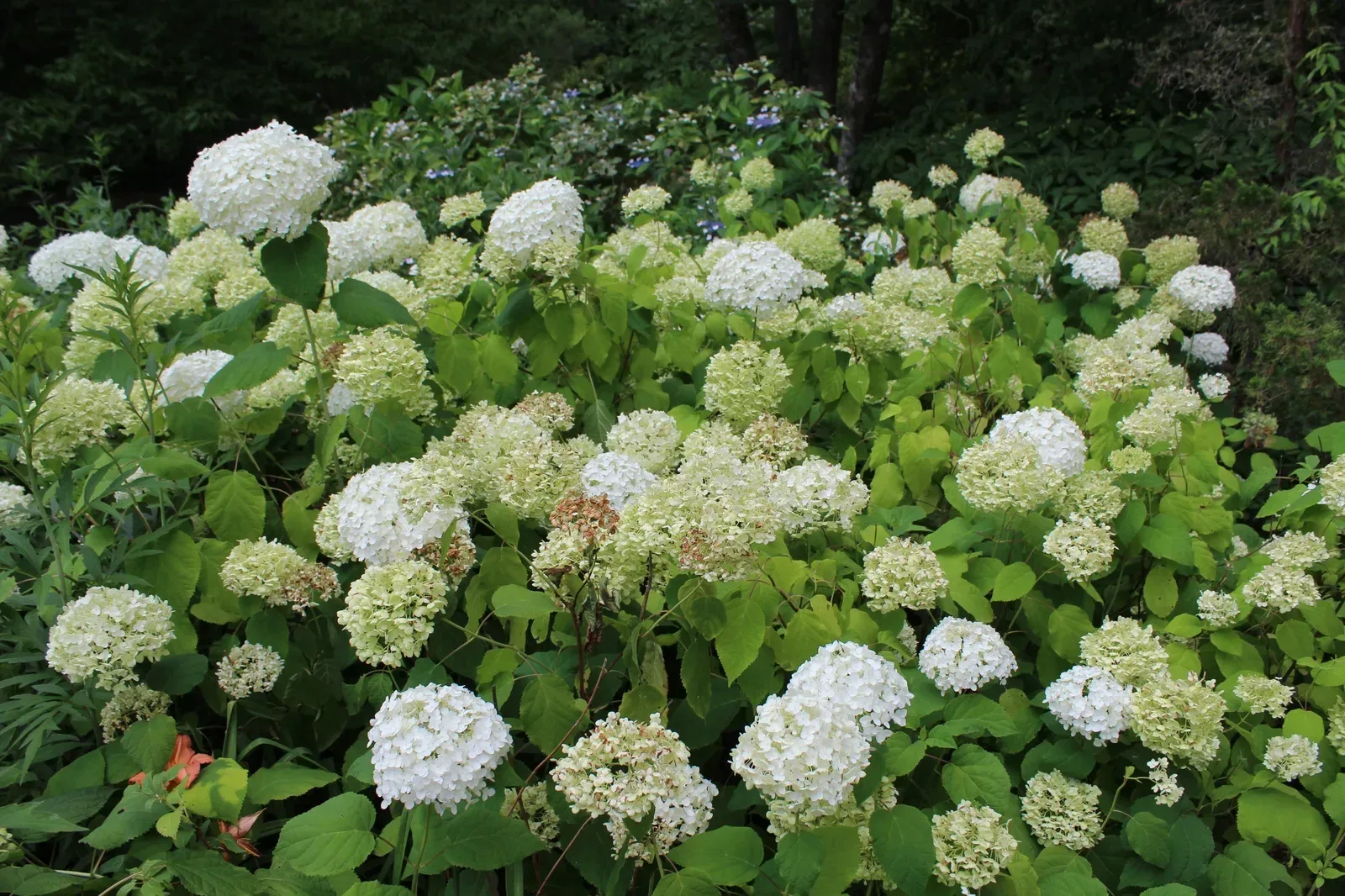
Smooth hydrangea flowers on new growth, which makes it useful in cold gardens. Large white heads still need support from sensible pruning, moderate feeding and enough light for sturdy stems.
Quick answer
Smooth hydrangea flowers on new growth and needs dependable moisture without a saturated crown. Choose stem strength and mature size carefully. Moderate spring pruning can retain a useful framework; extremely low annual cuts may increase flopping. Canadian winter tip loss does not necessarily kill the crown. Soil acidification will not create blue Annabelle flowers.
How do you identify smooth hydrangea?
Smooth hydrangea: Hydrangea arborescens includes 'Annabelle' and stronger-stemmed 'Incrediball'. It flowers on new growth. Bigleaf hydrangea is different; blue-or-pink soil treatments do not turn white Annabelle blooms blue.
How do you stop Annabelle flowers flopping?
Support stems before heavy heads develop and avoid excess nitrogen. Ground-level pruning can produce very large heads on new stems that struggle in rain. Leaving a modest framework in spring may help depending on cultivar and site. Too much shade weakens stems too. Afternoon wilt does not always justify flooding: feel the soil and check again in cooler conditions. Do not add aluminium products to change white flower colour. Compare stronger-stemmed cultivars if flopping is a recurring problem.
Where should you plant it for enough light?
Morning sun / light afternoon shade in hot sites.
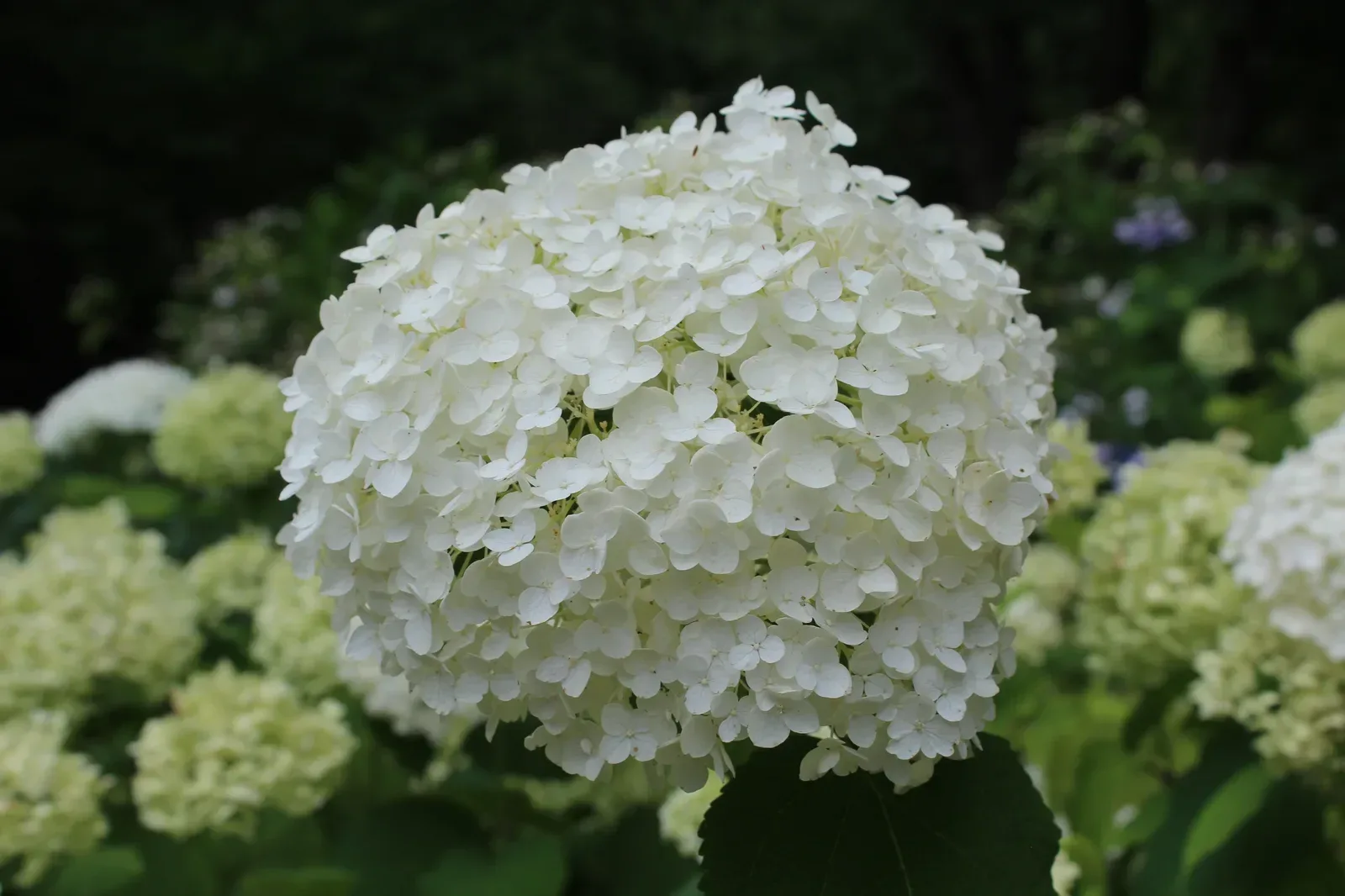
Smooth hydrangea, Hydrangea arborescens, is different from the bigleaf hydrangeas sold with blue or pink mophead flowers. Soil acidification will not turn a white Annabelle-type flower head blue. Cultivars vary in colour, stem strength and size, so retain the exact name. Flower heads often change from green to white or pinkish tones and back toward green as they age. That progression can be normal. Choose a site with useful sun or light shade and enough room for the full clump. Deep shade can reduce flowering and encourage weak stems.
How should you water through the seasons?
Needs moisture in summer ; mulch well.
Moisture management matters more than the name hydrangea suggests. The plant appreciates dependable moisture, not permanent saturation. Water new shrubs through the nursery root ball and surrounding soil. In summer heat, large leaves may droop temporarily, but check the soil before adding more water to an already wet bed. Prolonged wilting in dry ground calls for a slow thorough irrigation. Mulch helps buffer moisture changes while keeping the crown clear. A shrub beside a mature tree may face intense root competition even in apparently suitable shade. That location can need more attention than an open bed with the same rainfall.
What soil or potting mix is best?
Moist, fertile, well-drained. Rich and moist but not swampy.
When should you fertilize?
Feed modestly when the soil and growth indicate a need. An established shrub receiving compost may not require another strong product. Excess nitrogen can encourage soft growth and does not solve flopping caused by cultivar habit, shade or heavy heads. Check those factors before changing fertilizer. New plants should establish roots rather than being pushed into maximum top growth. A light spring surface dressing can improve the bed without burying the crown. Avoid concentrated fertilizer placed directly against stems or roots. If leaves show unusual yellowing, investigate drainage and soil conditions before treating an assumed nutrient deficiency.
What temperatures and winter protection does it need?
Many smooth hydrangeas are used from Canadian zone 3 upward. Check the cultivar and avoid winter waterlogging.
Remove broken flower stems cleanly, but leave healthy foliage to support the roots through the growing season. Dried heads can remain for winter interest if they are not causing stems to break under snow. Do not beat ice from frozen branches. In exposed Canadian sites, some tips may die while the crown remains healthy and produces new growth. Wait for spring evidence before deciding the whole shrub has been lost. A pot-grown hydrangea needs more protection for its roots than an in-ground hardiness rating describes. A warm living room is not an appropriate substitute for dormant outdoor conditions.
How should you prune it?
Prune in early spring because this species flowers on new growth. Avoid assuming a ground-level cut is best for every cultivar; retaining a framework can help support.
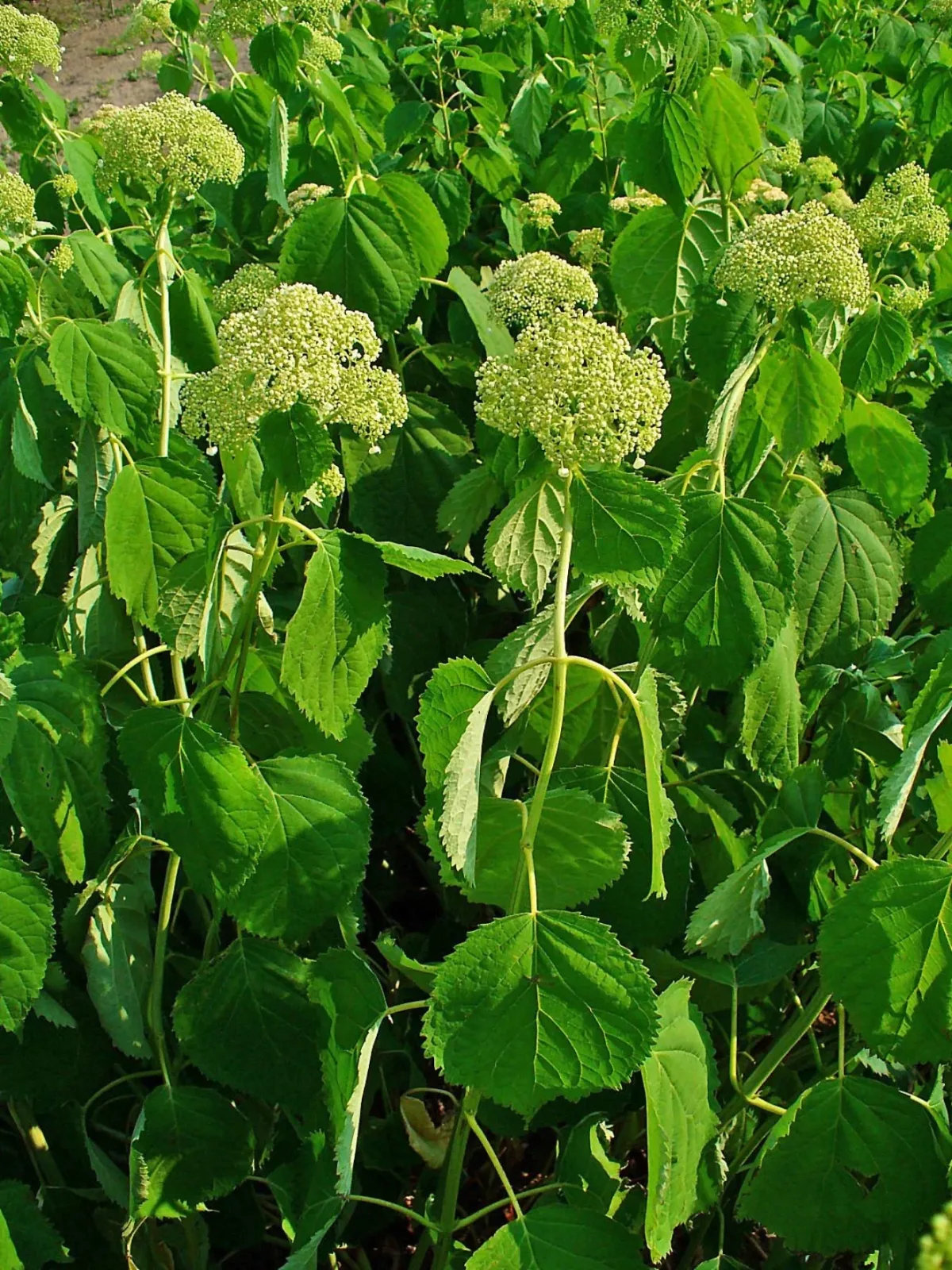
Smooth hydrangeas flower on new seasonal growth, making their pruning different from many old-wood bigleaf types. Remove dead stems and shape before growth advances in spring. Cutting everything extremely low each year can encourage large heads on stems that struggle to hold them. Retaining a useful framework or choosing a stronger-stemmed cultivar may be preferable. Do not assume the largest possible flower head is the best garden result. A balanced shrub with flowers held above the ground is often more attractive after Canadian summer storms. Install any discreet support before the canopy becomes heavy.
What is the best propagation method?
Root softwood cuttings from healthy shoots or separate a well-rooted sucker where appropriate. Keep humidity moderate with ventilation. Check cultivar rights before sale. A vase bloom is not a reliable new plant.
Which pests and diseases should you watch for?
Leaf spots, powdery mildew and root problems can occur. Check the root zone before treating wilting as a foliage disease.
Leaf spots and powdery mildew can appear, especially where foliage is crowded. Improve spacing, water at the soil level where practical and clean up badly affected debris. Inspect insects before selecting a treatment; chewed leaves and fungal spotting are not the same problem. Healthy softwood cuttings can root under controlled moisture, and established clumps may sometimes offer rooted sections. Use clean material and keep young plants out of harsh sun while roots develop. Named cultivars may carry propagation restrictions. A seedling should not be sold or shared under the parent's cultivar name.
How do you work out the cause?
Wilted leaves (thirst); flopping flower heads (needs water/support); few blooms (shade too deep).
Is it safe around pets and children?
ASPCA lists hydrangea as toxic to cats and dogs. Keep cut flowers and prunings away from children and pets. Do not use blooms as edible cake decorations.
A seasonal care calendar for Canada
| Season | What to do |
|---|---|
| Spring | Prune to a suitable framework; mulch clear of stems and watch new shoots. |
| Summer | Maintain hydrangea soil moisture as large flower heads develop. |
| Autumn | Dry heads for winter interest. |
| Winter | Dormant; snow OK. |
What should you check before buying?
The foliage colour of ninebark can contrast with pale hydrangea heads. Compare spirea and potentilla for other shrub roles, leaving enough room that wet flower heads do not collapse onto a crowded neighbouring plant.
At purchase, inspect the crown and stems as well as the flower display. Choose stock with sound roots and an accurate label distinguishing smooth hydrangea from panicle and bigleaf types. Ask about mature width and stem strength in local gardens. All hydrangeas should be treated as plants for display, not chewing, because ingestion can cause poisoning. Place prunings beyond the reach of pets and children. In a small bed, buy for the mature clump rather than trying to contain it indefinitely with severe cuts. Correct identification and a suitable site save more work than any special bloom additive.
Can a support be added discreetly?
Set a broad support around young shoots before the heads become heavy, leaving space for natural stem movement. A small tight hoop that squeezes the whole canopy into a bundle can cause rubbing and poor airflow. Check the arrangement after wind or rain, adjusting ties without breaking the flower-bearing stems.
Watch: a related growing task
Comments
No comments yet — share what worked in your climate.