
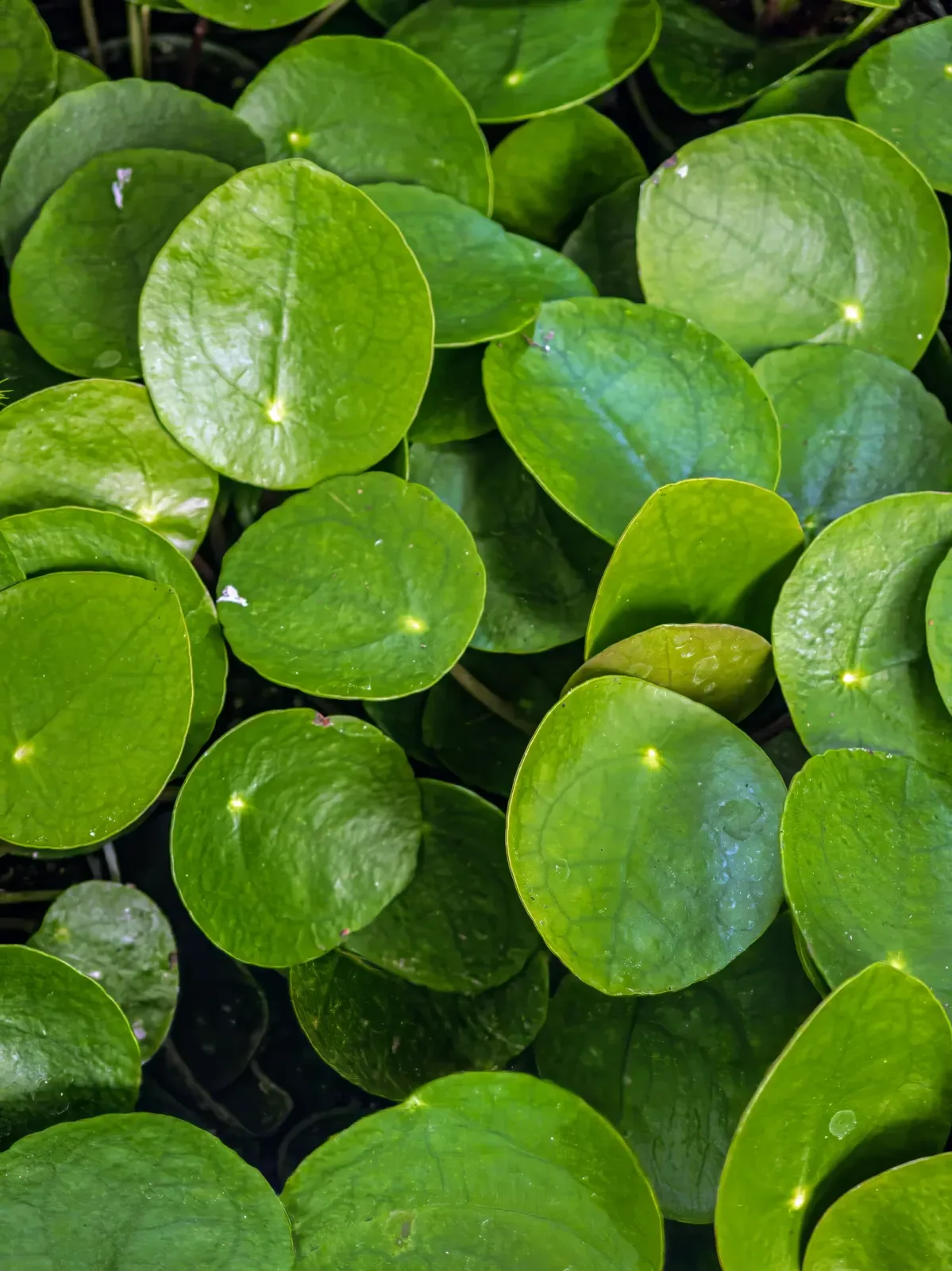
A pilea with round leaves and a few rooted pups is a good sharing plant. Its tendency to lean toward the window is useful information about the light, not a reason to keep repotting it.
Quick answer
Grow Chinese money plant in bright gentle light and turn it for a balanced crown. Water after the upper mix dries, not whenever one leaf curves. Separate pups only when they have enough structure to establish. During a Canadian winter, improve light before using fertilizer to push weak or stretched growth.
How do you identify pilea?
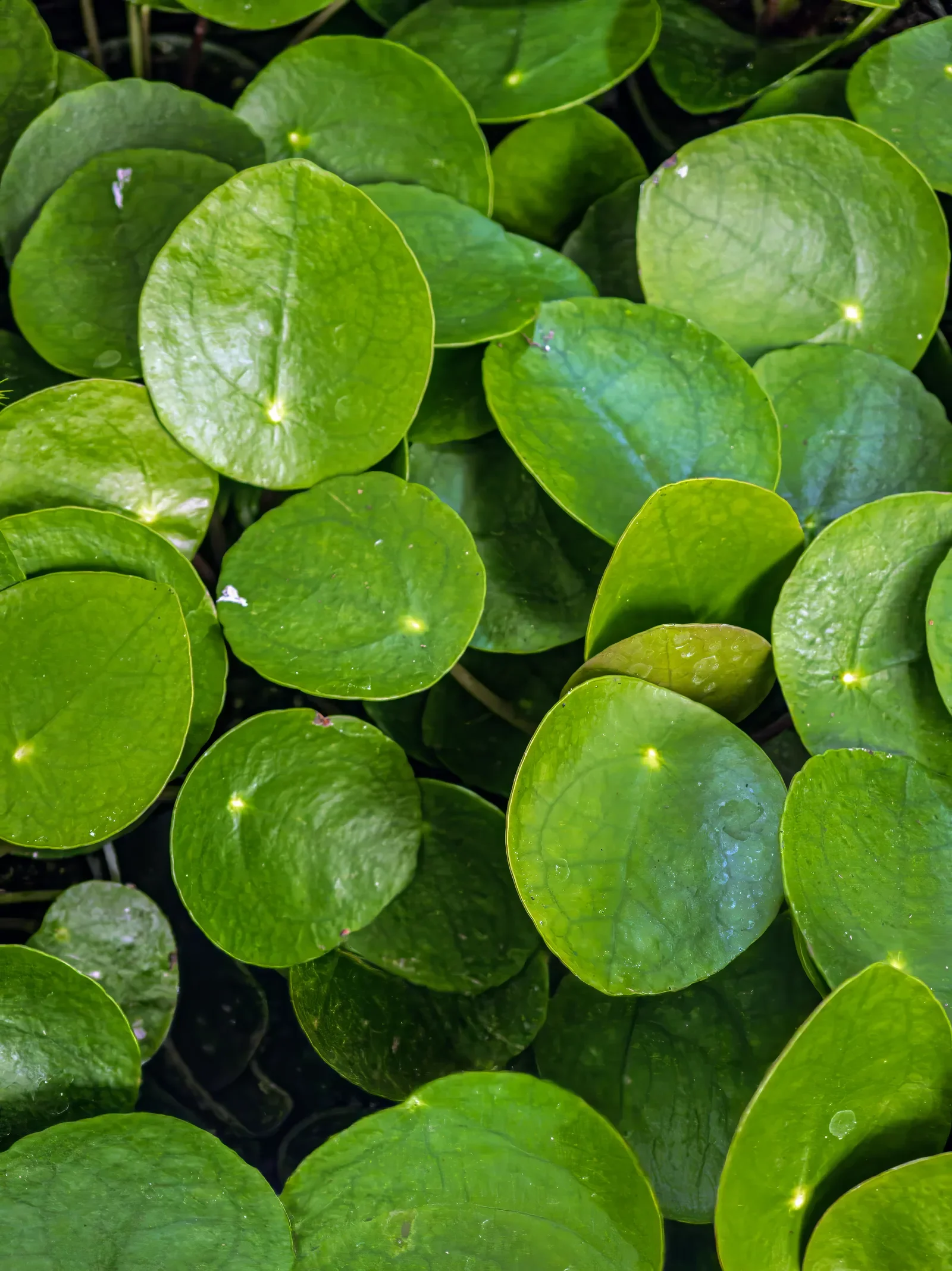
Pilea: Pilea peperomioides has round leaves on long stalks attached near the leaf centre. Chinese money plant is not pothos, jade or Pachira. Offsets around the base are useful for sharing.
Why does a pilea lean or make curved leaves?
Rotate a plant gently to balance window growth. Cupped leaves alone do not diagnose a problem: check light, moisture and recent temperature changes. White mineral dots beneath leaves may be harmless deposits, but inspect them before ruling out pests. The main stem becomes woody and naturally loses some lower leaves with age. Healthy top growth matters more than preserving every old leaf. Separate rooted pups when crowding makes watering difficult.
What light does it need in a Canadian winter?
Turn the money plant periodically to distribute daylight around its rounded canopy.
A Chinese money plant is recognized by its round shield-like leaves and long petioles attached near the middle of each blade. Do not confuse it with other pileas when looking up propagation or safety information. A bright position encourages a compact crown, while a dark one can produce widely spaced leaves and a pronounced lean. Turn the pot gently as it develops. In winter, a small lamp can help preserve balanced growth when daylight is limited. A single window-facing leaf bending toward the light is ordinary; the whole plant becoming increasingly sparse suggests the growing position needs improvement.
How should you water through the seasons?
Watering errors are easier to understand by checking the pot rather than reading one curled leaf. Leaf shape can change with age, light and moisture, so curling alone is not a precise diagnosis. Let the upper mix dry before watering evenly through the root ball. Empty any runoff collected in the outer pot. A heavy pot that remains damp for a long time after a winter watering deserves attention. If the plant has many pups, remember that their small roots share the same conditions as the parent. Keeping the whole pot soaked to encourage them can damage the established root system.
What soil or potting mix is best?
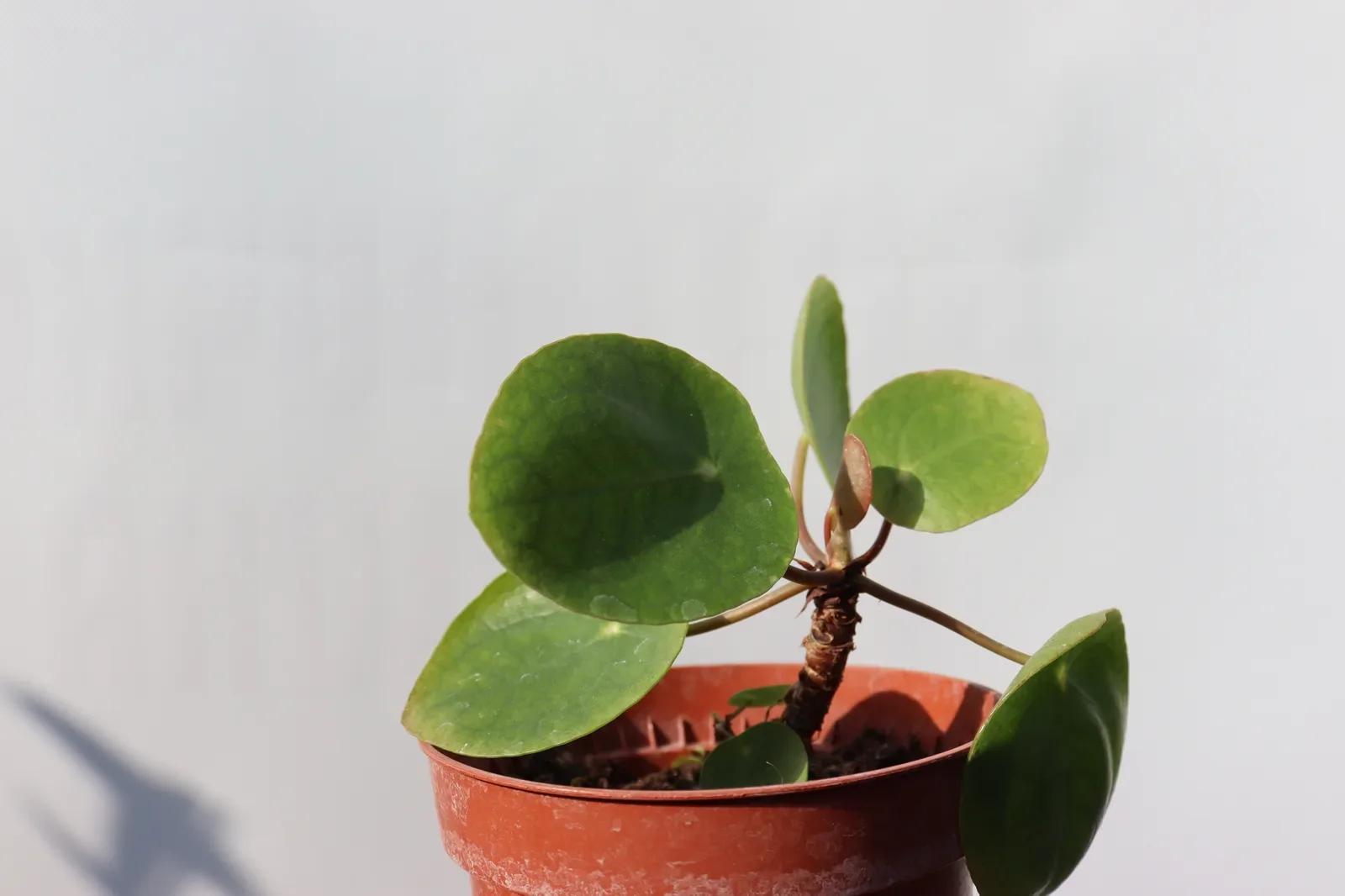
Use an airy indoor blend in a pot with reliable drainage. The plant often looks top-heavy on its slender trunk, but a very large container is not the only way to stabilize it. Choose a suitably weighted outer pot or a discreet support without adding unnecessary wet soil around the roots. Repot when roots and growth justify it, and keep the trunk at its former depth. Do not bury fallen leaf stalks under fresh compost. Gently remove dead material around the base so emerging pups and signs of decay remain visible. A clean surface makes the small plant much easier to assess.
When should you fertilize?
Half-strength monthly in growth season.
Feed during active growth with a restrained measured dilution. A recently separated pup or a parent recovering from root damage does not need a strong dose. Older lower leaves can yellow and fall as the trunk elongates, while repeated loss from several levels requires a closer review. Inspect new leaves for normal size and texture. Pale dots visible on the undersides may be normal structures or mineral deposits rather than insects; examine them with good light before spraying. Actual pests show other evidence such as movement, residue or damage. Avoid treating every unfamiliar mark on this distinctive foliage as an infestation.
What temperatures and winter protection does it need?
Above 12 C.
How should you prune it?
Remove yellow leaves; separate crowded pups.
A detached round leaf is attractive in a vase, but leaf-only propagation is not the same as taking a viable stem or offset. For a new growing plant, include tissue with the capacity to produce a shoot. An old tall parent can sometimes be restarted from a suitable top cutting while the rooted base produces new growth. This is best attempted when the plant is healthy and conditions support rooting. Clean the blade and protect the cut pieces from rot. Do not expect an injured stump in cold wet compost to respond just because a social-media demonstration showed rapid results in summer.
What is the best propagation method?
Separate an offset with its own roots and several leaves. Use a small pot and steady light moisture initially. A single round leaf without suitable stem tissue will not normally grow into a full new plant.
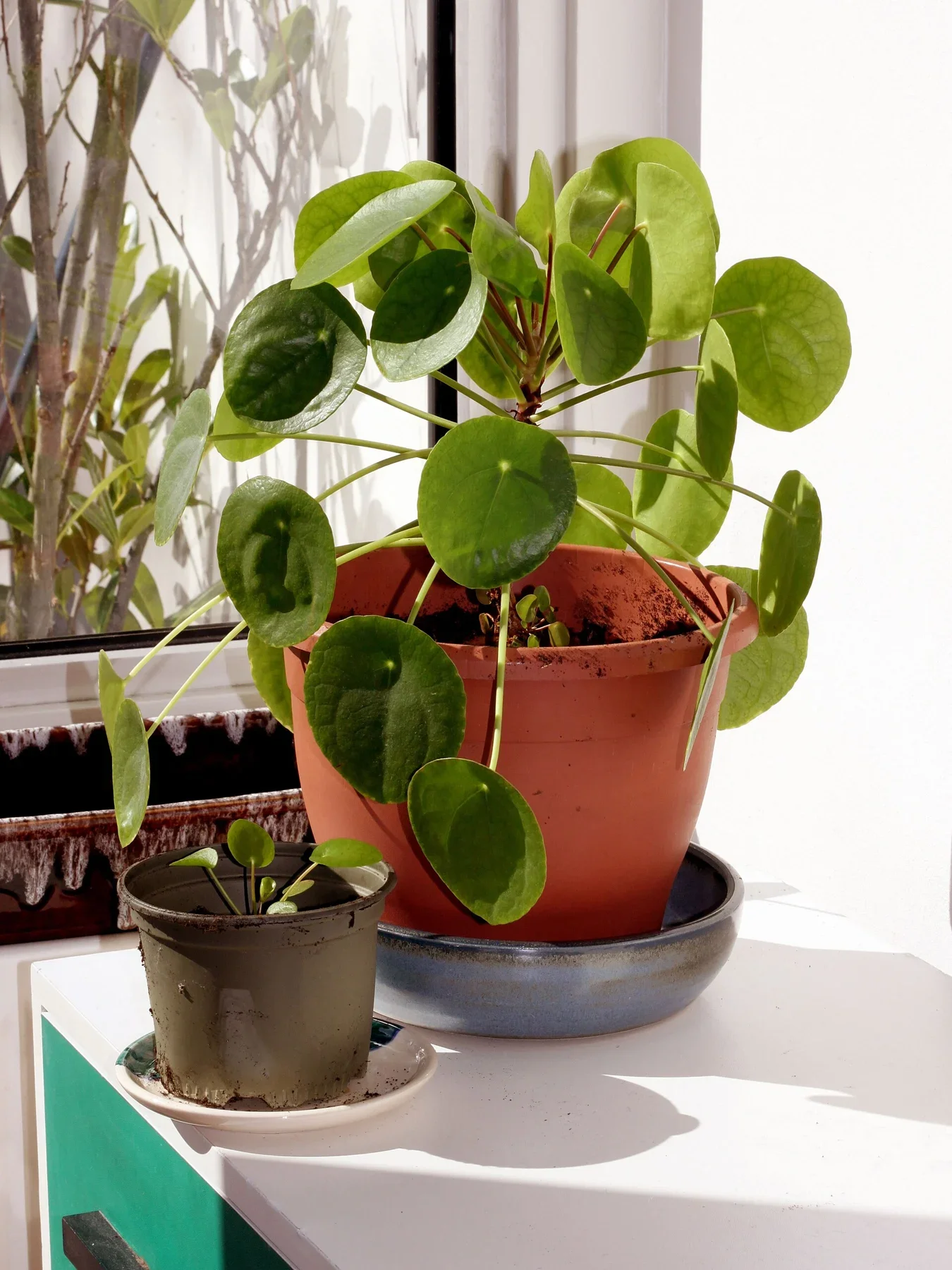
Offshoots offer the simplest route to another plant. Wait until a pup has enough structure and, ideally, its own useful roots before separation. Move compost aside carefully to see how it connects to the parent. Cut cleanly rather than yanking it upward and tearing the base. Pot a rooted offset into a small container and give it gentle light while it settles. Very small unrooted pieces require more careful propagation conditions. Keeping a few healthy pups is more practical than separating every tiny shoot immediately. They can also replace an older parent whose bare trunk no longer suits the display.
Which pests and diseases should you watch for?
Rare; occasional fungus gnats if wet.
How do you work out the cause?
Leaning (needs rotate/light); curling (thirst or too much sun); pale leaves (low light).
Is it safe around pets and children?
Do not use ASPCA's Pilea cadieri entry as a species-specific citation for P. peperomioides. The latter is generally grown as a lower-risk houseplant, but individual ASPCA clearance is not claimed here. Prevent chewing.
A seasonal care calendar for Canada
| Season | What to do |
|---|---|
| Spring | Pups appear; share and pot. |
| Summer | Bright shade; steady water. |
| Autumn | Watch money-plant growth before continuing a summer fertilizer routine. |
| Winter | Water less; keep bright. |
What should you check before buying?
Rounded leaves also occur in parts of the peperomia group, but identification still matters. Compare prayer plant and oxalis when planning a small indoor collection with distinct textures rather than several crowded money-plant pots.
Choose stock with firm petioles, a sound central growing point and clean leaf undersides. Transport a purchase under a protective sleeve during Canadian winter weather, keeping the leaves away from icy glass in the car. At home, position it outside the direct furnace stream. Moderate household humidity is usually more useful than a tightly sealed wet enclosure, and occasional dust removal helps maintain the leaf surface. Keep the cultivar or species label because the wider Pilea genus contains very different plants. A compact healthy parent with a few sturdy offsets is a better starting point than an overcrowded bargain pot of weak shoots.
Should a bare trunk be hidden?
An older Chinese money plant can develop a visible trunk as lower leaves age. If the growing tip and roots are healthy, this is not automatically a failure. You can keep the tree-like shape, train a suitable top cutting, or replace the display with a strong pup. Avoid burying the trunk deeply simply to conceal it; that adds wet material around tissue that was previously exposed to air. Choose the appearance you prefer while preserving a sound growing point.
Watch: a related growing task
Comments
No comments yet — share what worked in your climate.