
Zebra haworthias suit a bright shelf where harsher-sun succulents may struggle. They still need a drained root zone and enough light to keep their compact form through the winter.
Quick answer
Identify your haworthia or Haworthiopsis before choosing exposure, since softer windowed forms differ from zebra types. Give gentle bright light and let a gritty mix dry between thorough waterings. Avoid wet terrariums. Canadian indoor winter care centres on adequate light and careful root moisture rather than high humidity or repeated feeding.
How do you identify haworthia?
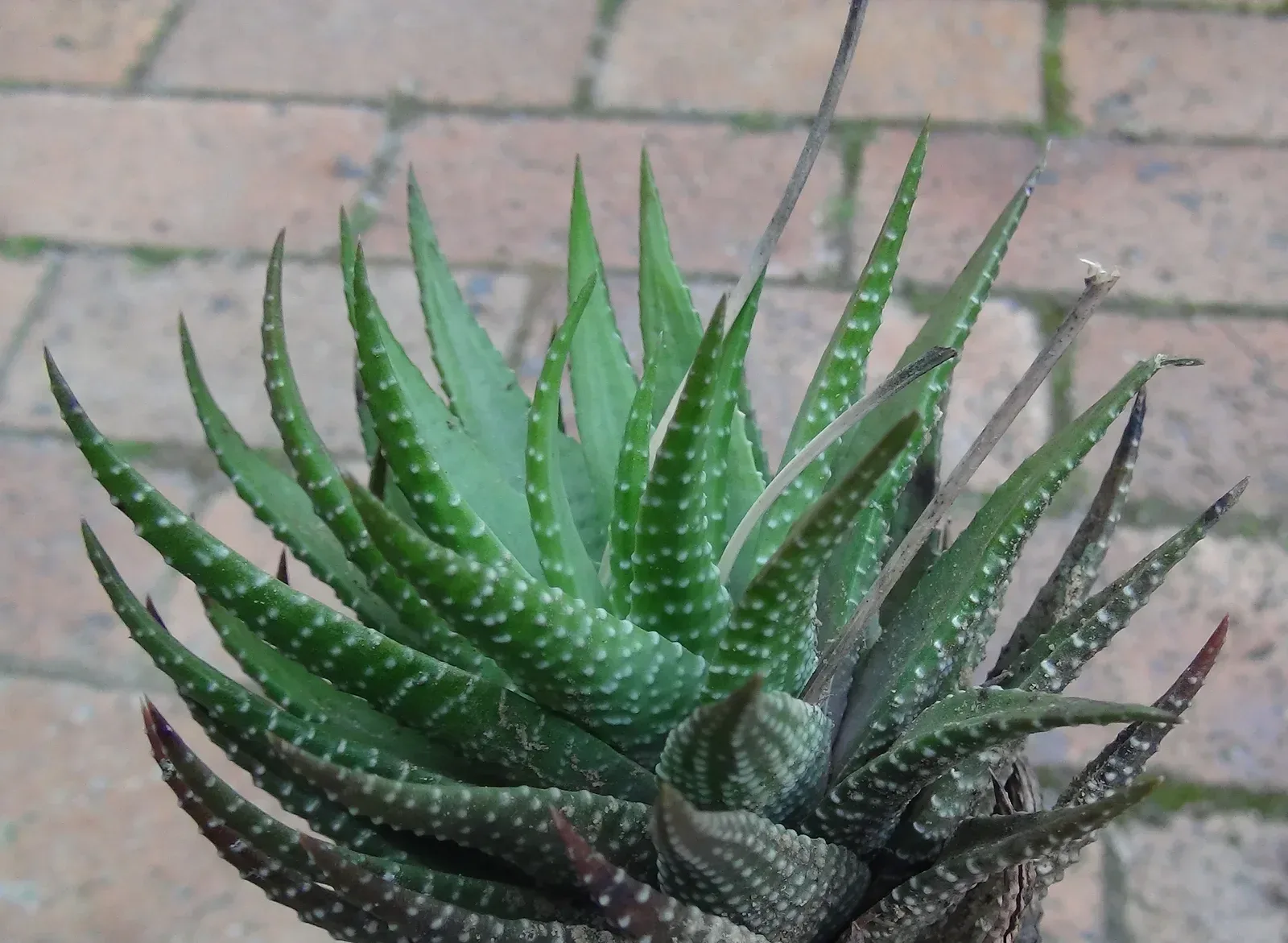
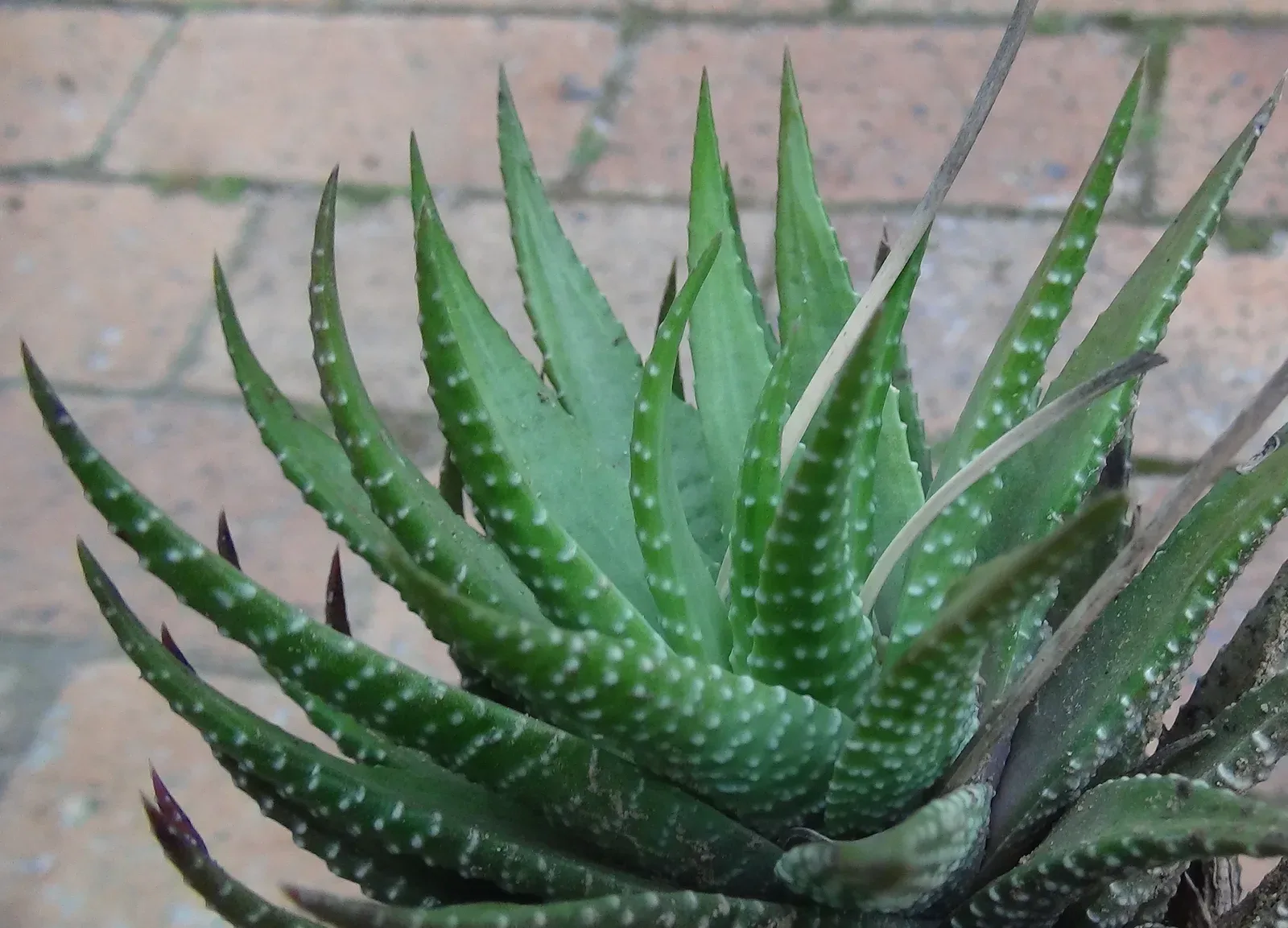
Haworthia: Zebra succulents are often Haworthiopsis attenuata or H. fasciata under old Haworthia labels. Attenuata usually has white bumps on both leaf surfaces; true fasciata has a smoother inner surface. Other haworthias have translucent windows.
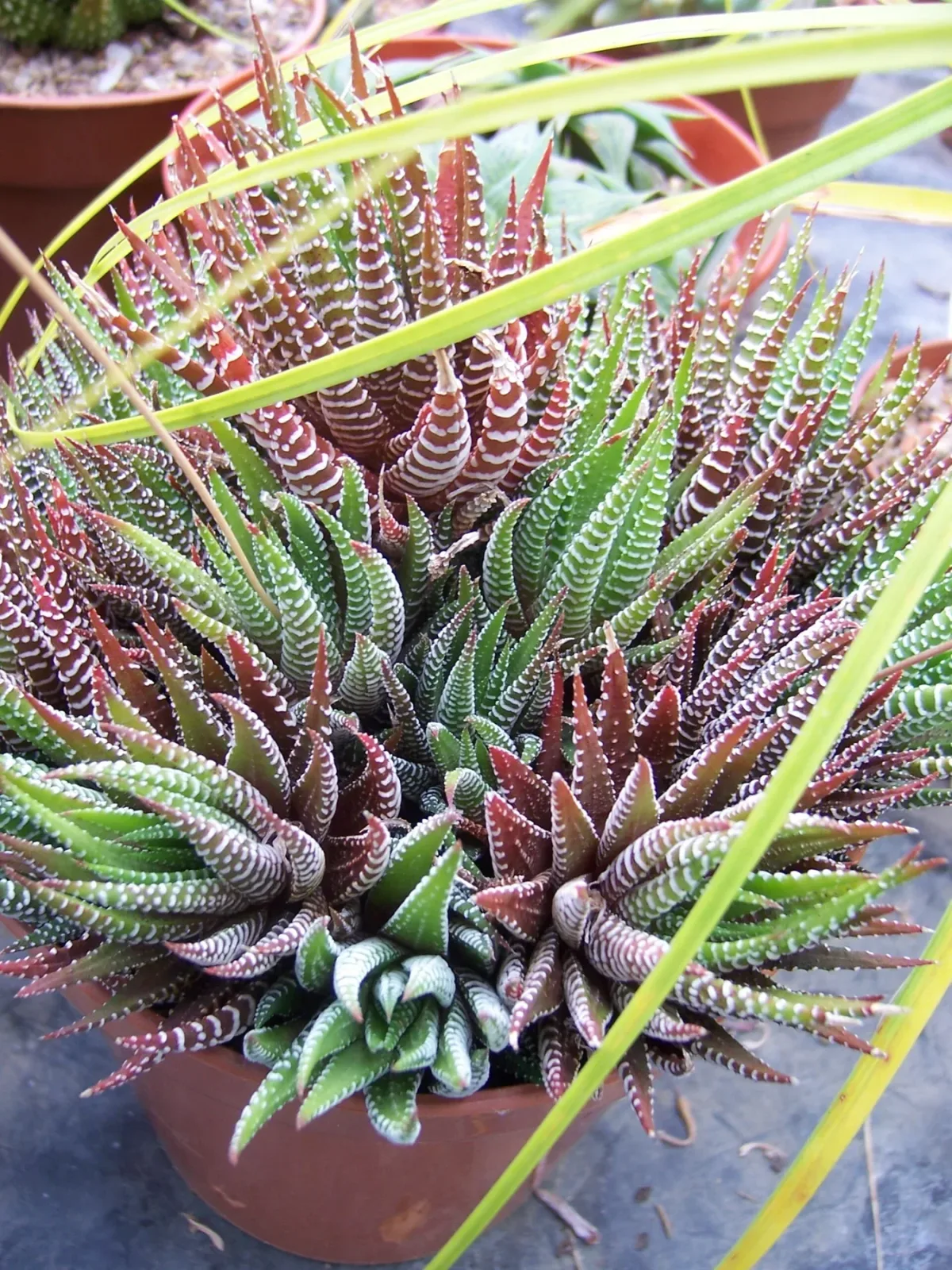
Why does a zebra succulent turn reddish brown?
Strong sun, drought or other stress can change its colour without causing rot. Introduce brighter conditions slowly. A translucent soft base is different and needs root inspection. These plants tolerate less direct sun than many echeverias but not a dark shelf indefinitely. Winter water use is often low; extreme summer heat can also slow growth. Use actual pot dryness rather than assuming all succulents follow one calendar. Do not leave water caught in a cold crown.
What light does it need in a Canadian winter?
Bright indirect; tolerates less sun than echeveria.
Haworthia and the closely related Haworthiopsis include small rosettes with very different leaf surfaces. Windowed, softer-looking forms do not need the same exposure as every stiff zebra-striped selection. Keep the nursery name if available. Bright indirect light or gentle morning sun is a useful starting point. In a Canadian winter, move the pot out of a dim room corner or provide a modest grow light. Red-brown stress colour can develop under excessive light or drought, but it is not a competition to make the plant as dark as possible. Firm, well-shaped new growth is a better goal.
How should you water through the seasons?
The thick leaves and roots store reserves, so avoid a routine of frequent little drinks. Let the medium dry well before watering it thoroughly and draining the pot. Check the season and actual growth, since some plants slow in very warm conditions as well as during a dark winter. Do not assume that every hot day requires watering. A rosette that becomes soft should be inspected at its base. Dry roots, rotted roots and ordinary temporary thirst need different responses. The surface gravel can look completely dry while dense compost remains moist underneath, making a probe or careful pot-weight check useful.
What soil or potting mix is best?
Use a gritty blend that still allows the roots to establish throughout it. Purely decorative stones surrounding a dense peat plug do not solve drainage. Many haworthias develop substantial roots relative to the small rosette, so select a pot that accommodates the root structure without adding excessive wet volume. Repot gently and remove only clearly dead roots. Do not bury the leaves deeply to hold a loose plant upright. Support it temporarily if needed. Keep water from sitting for long in the centre, particularly when the plant stands beside a cool window during winter nights.
When should you fertilize?
Weak feed once or twice in summer.
A low fertilizer input suits most household specimens. Feed during genuine growth with a measured weak application, following the product's guidance rather than adding a succulent tonic at every watering. If the rosette becomes elongated and open, review light before nutrition. If leaf tips brown, inspect moisture history and salts as well as exposure. Old damage will remain visible. Remove dead outer leaves only when they are ready to release, because pulling firmly attached tissue can injure the base. Thin flower stalks may rise well above the compact plant; flowering does not require moving it into a much larger pot.
Does dry air or humidity matter?
Furnace-dry air is not a reason to enclose haworthias in a wet terrarium. Place them outside direct hot airflow and focus on adequate light and controlled root moisture. Root mealybugs can be a hidden cause of poor growth, while ordinary mealybugs shelter between tight leaves. Examine a declining plant closely before applying fertilizer. Any pesticide must be suitable for indoor succulents, and sensitive leaf surfaces deserve a small test first. A translucent window on a leaf is normal anatomy; mushy spreading transparency accompanied by collapse is not. Knowing the plant's usual appearance helps distinguish the two.
What temperatures and winter protection does it need?
Avoid frost.
How should you prune it?
Remove dead leaves.
What is the best propagation method?
Separate rooted offsets, let fresh cuts dry briefly and use a small draining pot. A leaf broken halfway up is rarely useful. Do not strip every offset from a small parent.
Offsets are useful once they have enough independent structure. During repotting, inspect the connection and separate a suitable pup cleanly, retaining roots where possible. Allow wounds to dry appropriately before normal watering resumes. Tiny unrooted offsets need patience and a carefully managed medium, not a deep pot kept wet to encourage roots. Leaf propagation is more exacting and depends on retaining the right basal tissue; it is not equivalent to laying any broken leaf on compost. Seed-grown offspring can vary and take time. For a small collection, a few healthy offsets are usually the practical method.
How do you work out the cause?
Mushy (overwater); red/brown tint (too much sun); stretching (low light).
Is it safe around pets and children?
ASPCA lists haworthia or zebra haworthia as non-toxic to cats and dogs. Confirm identity instead of applying that advice to similar-looking aloe. Prevent children from swallowing gritty mix.
A seasonal care calendar for Canada
| Season | What to do |
|---|---|
| Spring | Divide pups. |
| Summer | Water when dry. |
| Autumn | Follow haworthia pot moisture as seasonal growth changes. |
| Winter | Mostly dry. |
What should you check before buying?
The open rosette of echeveria provides a comparison for light planning. Read about string of pearls and kalanchoe before combining small succulents with unrelated houseplants in one bowl that forces every root system onto the same schedule.
Choose a firm rosette with a clean centre and a correctly identified label. Check beneath decorative gravel for a healthy base where possible. A tiny pot may be perfectly adequate if roots are sound and the mix behaves well. In winter, wrap the purchase and carry it directly indoors rather than leaving it in a cold car. Do not mistake zebra haworthias for every spiny aloe sold nearby when seeking pet-safety information. Mixed bowls complicate both watering and identification. A separate well-drained pot makes it easier to observe your plant and adjust care without compromising several unrelated succulents.
Can you judge roots through surface gravel?
Move a little loose top-dressing aside to inspect the base without digging aggressively. Thick decorative gravel can conceal both a buried rosette and a dense wet nursery core. If the plant remains firm and produces healthy new growth, there is no need to unpot it repeatedly for reassurance. If decline continues despite appropriate watering, one careful root inspection is more informative than several speculative fertilizer treatments. Photograph the roots before removing damaged tissue and choose the next pot around what survives. A small rosette with few roots needs a different moisture balance from an established plant filling its container.
Watch: a related growing task
Comments
No comments yet — share what worked in your climate.