
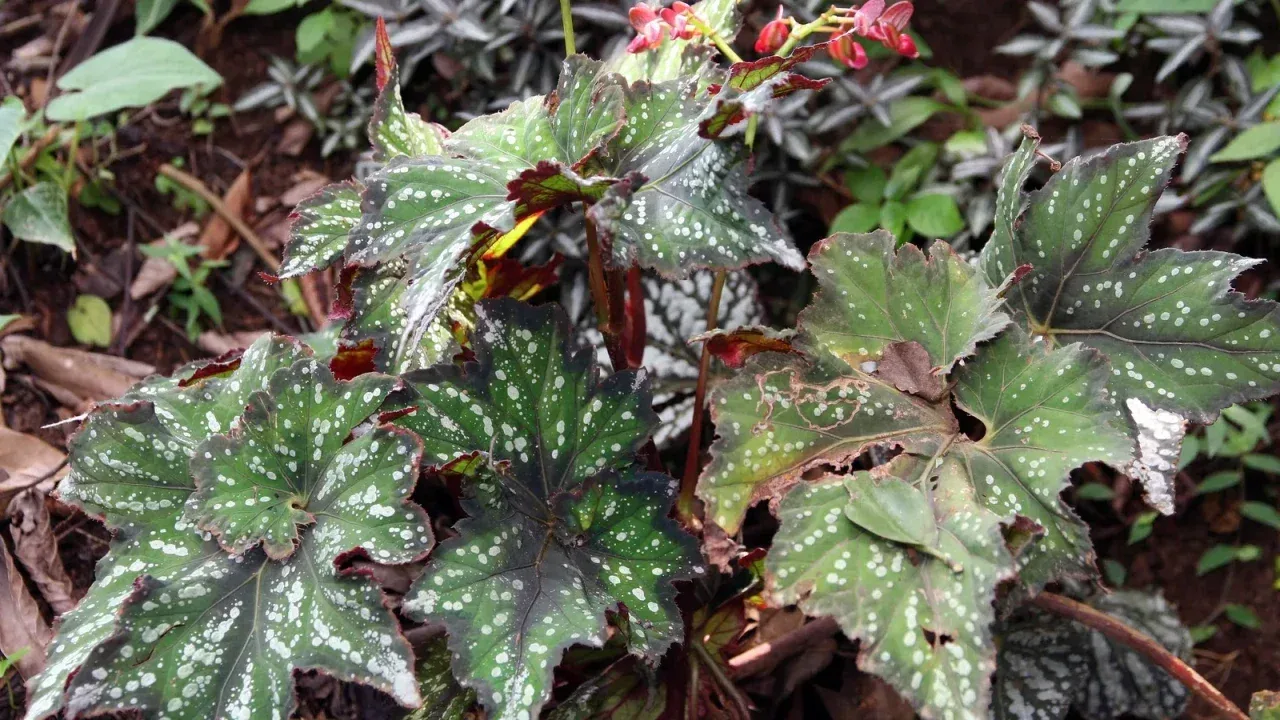
A rex begonia brings patterned foliage to a windowsill, but warm wet leaves are not the same as useful humidity. The crown, shallow rhizome and root mix need particular care during a Canadian winter.
Quick answer
Rex begonias need filtered daylight, an airy surface-level rhizome and moisture managed without a soaked crown. Protect textured leaves from furnace blasts while maintaining ventilation. In a Canadian winter, growth may slow. Preserve useful foliage, remove decaying fragments, and judge corrections by the next leaves rather than expecting scars to disappear.
How do you identify rex begonia?
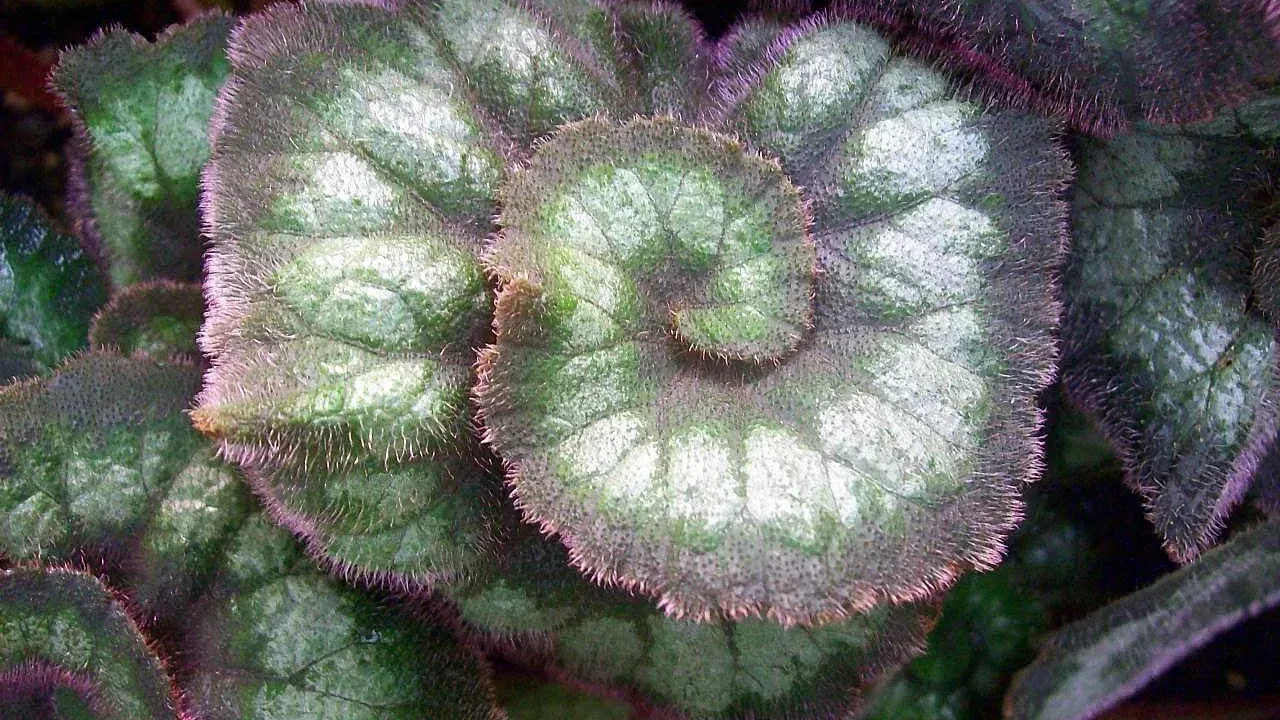
Begonia rex: Rex begonias are hybrids grown for patterned leaves. Silver, burgundy and spiral forms vary widely. Surface rhizomes distinguish them from many cane begonias. Tuberous begonia winter-storage advice does not apply to an actively growing rex.
How can you raise humidity without rotting a rex begonia?
Improve room humidity rather than constantly wetting the leaves. Keep a humidifier away from foliage and water the mix, not the crown. Dense wet soil in a cold room is more dangerous than slightly imperfect humidity. Some rex plants slow markedly in winter; reduce water as growth slows. Do not bury a surface rhizome deeper to hide it. Remove damaged leaves cleanly and leave space for air around the crown.
Humidity management is a balance between moist air and sound ventilation. Rex leaves may suffer beside a furnace register, yet a tightly closed damp cabinet can encourage decay where leaves touch one another. Give each rosette space. A humidifier serving the room can be easier to manage than daily spraying onto textured foliage. Avoid cold condensation dripping from a window onto the crown. If winter growth slows markedly, reduce water in response to the roots' slower demand rather than trying to maintain a summer timetable. A temporary pause in leaf production is not automatically a reason to discard the plant.
What light does it need in a Canadian winter?
Harsh sun scorches patterns.
Rex begonia foliage varies widely in texture, colour and shape, so buy for the leaves the plant will carry at home, not a heavily edited photograph. An east-facing window is often a useful place to start. A pale silver cultivar may respond differently from one with darker, thicker foliage. Introduce stronger light slowly and avoid hot sun through glass. During a Canadian winter, a grow light can support the leaves without forcing the pot into the coldest corner of the sill. Rotate gently, since petioles can be brittle and a large lopsided leaf catches easily on curtains or furniture.
What soil or potting mix is best?
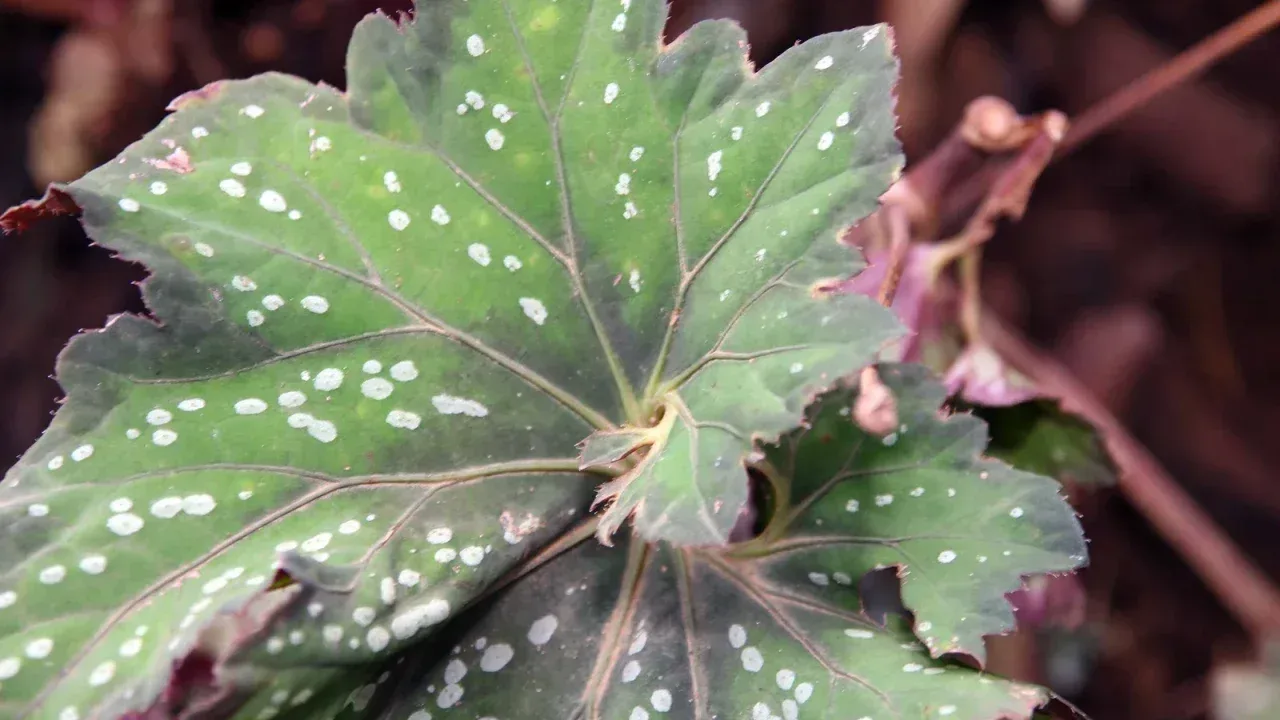
The rhizome should sit near the surface of an airy medium, not disappear beneath a deep mound of fresh compost. Broad shallow containers often fit its sideways growth better than tall narrow pots. Water around the growing area and allow excess to leave through drainage holes. Do not keep a saucer permanently full to imitate humid forest conditions. At the same time, repeatedly allowing the root ball to become bone dry can cause crisp edges and collapsed petioles. Learn how the particular mix changes weight as it dries. Foliage can conceal the soil surface almost completely, making a quick visual check unreliable.
When should you fertilize?
Feed with a mild measured fertilizer only while healthy leaves are being produced. Root damage and accumulated salts can also cause edge burn, so adding nutrients to a failing specimen may worsen the situation. When white crust appears around the rim, review both the water source and fertilizer practice. Remove badly damaged leaves with clean scissors, leaving sound growth to supply the rhizome. Do not strip every imperfect leaf simultaneously merely to create a spotless photograph. The remaining leaf area matters to recovery. Wash tools between plants if suspicious spots or soft decay are present.
What temperatures and winter protection does it need?
Cold + wet causes rot.
How should you prune it?
Remove spent leaves; do not bury rhizome deeper.
What is the best propagation method?
Root healthy leaf pieces with veins touching moist propagation mix, or use rhizome sections with growing points. A ventilated cover helps humidity. Pot plantlets only once they have roots; discard rotting pieces.
Leaf propagation takes advantage of the plant's ability to produce new growth from prepared leaf tissue. Use an undamaged mature leaf and a clean, lightly moist rooting medium. A whole leaf with a petiole or suitable vein-bearing sections can work, depending on the method. Keep the setup warm and out of harsh sun. Condensation should not leave the cutting permanently dripping. Tiny plantlets need time before separation; lifting them at the first hint of green can tear their limited roots. Rhizome division is another option for a mature healthy specimen, but each piece needs viable growth and careful handling.
Which pests and diseases should you watch for?
Powdery mildew and mealybugs.
Powdery mildew and bacterial-looking wet spots call for different responses. Isolate a suspicious plant and inspect the pattern rather than buying a general spray without a diagnosis. Remove fallen leaf fragments from the pot, where they can stay damp under the canopy. Water-soaked collapse around the rhizome is a more urgent concern than a dry brown margin on one older leaf. Mealybugs may shelter in folds and leaf bases. Any treatment should be suitable for indoor begonias and tested first; ornamental leaves can mark even when a product controls the insect successfully.
How do you work out the cause?
Crispy edges (dry air); rot (cold wet soil); faded colour (too much sun).
Is it safe around pets and children?
ASPCA identifies begonias as poisonous to cats and dogs, with underground tissues of particular concern. Keep rhizomes, cuttings and fallen leaves away from children and animals.
A seasonal care calendar for Canada
| Season | What to do |
|---|---|
| Spring | New leaves; propagate. |
| Summer | Humidity steady; shade hot glass. |
| Autumn | Growth slows. |
| Winter | Humidity up; water carefully. |
What should you check before buying?
Textured foliage in peperomia offers one comparison with rex leaves. Look at calathea for a different pattern and pilea for a compact alternative before deciding which plant best suits the light and humidity you can maintain.
Choose stock with firm rhizomes, clean leaf undersides and no stale wet smell. A few transport marks on an otherwise sound leaf are less concerning than a soft growing point. Ask the nursery to wrap the plant against Canadian winter cold and support its leaves during the trip. At home, keep it apart long enough to inspect new growth before adding it to a collection. Save the cultivar label because rex hybrids are not interchangeable in appearance. A plant that stays handsome under your actual humidity and light is more useful than chasing a rare name that needs conditions you cannot maintain.
How do you handle a large fragile leaf?
Move a rex begonia by supporting the pot, never by gathering the leaf stalks in one hand. A heavy blade can split where its petiole joins it. If a leaf breaks, remove the damaged stalk cleanly and inspect the rhizome for injury. Do not tape wet leaf tissue together or leave it pressed against neighbouring foliage. When rearranging a winter plant shelf, measure the space the leaves actually occupy, including their movement toward the light. A slightly wider gap can prevent repeated damage that otherwise looks like a mysterious disease appearing along the same edge of successive leaves.
Watch: a related growing task
Comments
No comments yet — share what worked in your climate.