
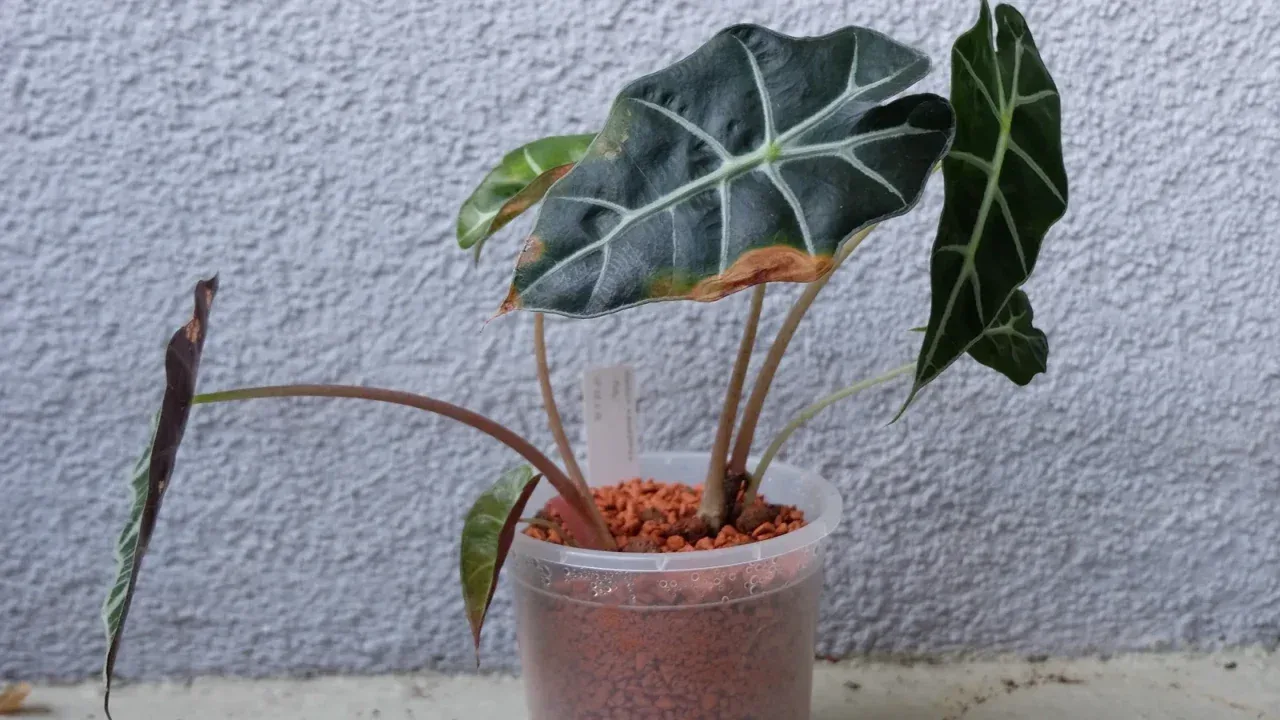
A Polly can lose a leaf just as a new one opens, but repeated collapse deserves a closer look. In Canada, the difference between a resting plant and rotting roots becomes especially important during dark, cold months.
Quick answer
Grow Polly in a warm, bright spot without harsh unfiltered sun. Its corm needs air around the roots as well as moisture, with much less water if leaves decline into dormancy. Canadian windowsills can chill the pot overnight. A firm resting corm may recover; soft rotting tissue needs prompt attention.
How do you identify alocasia polly?
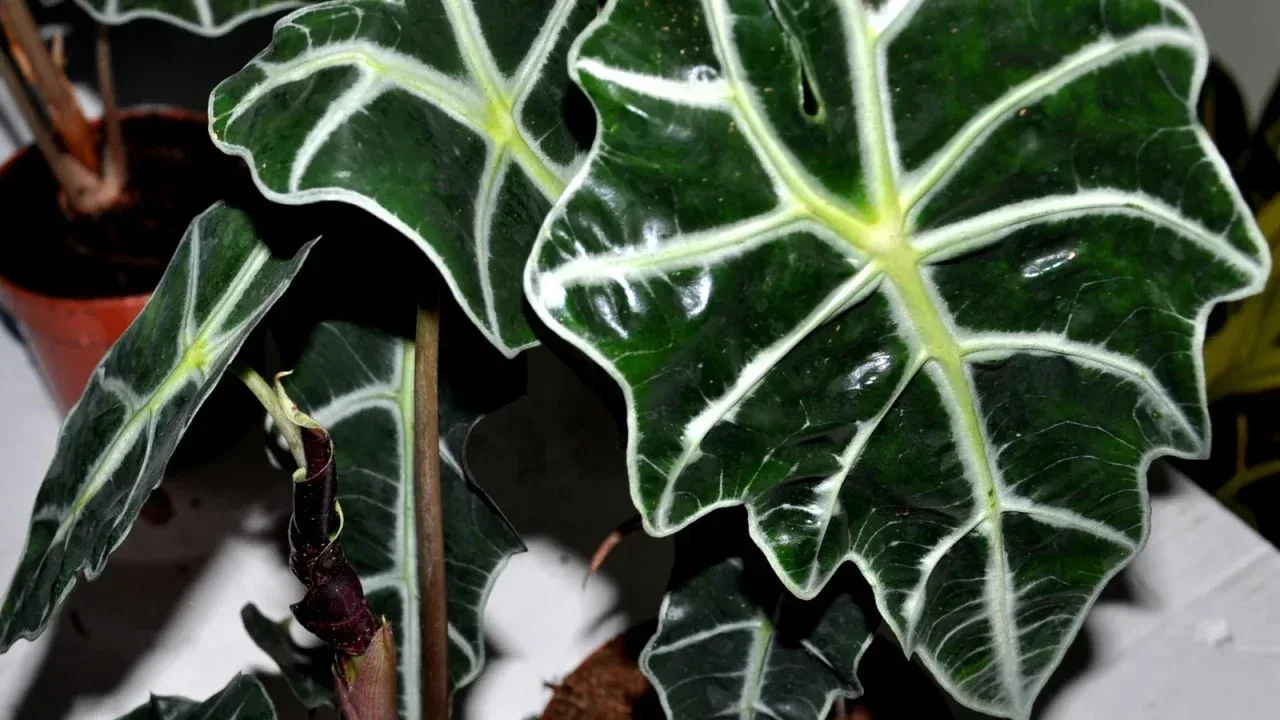
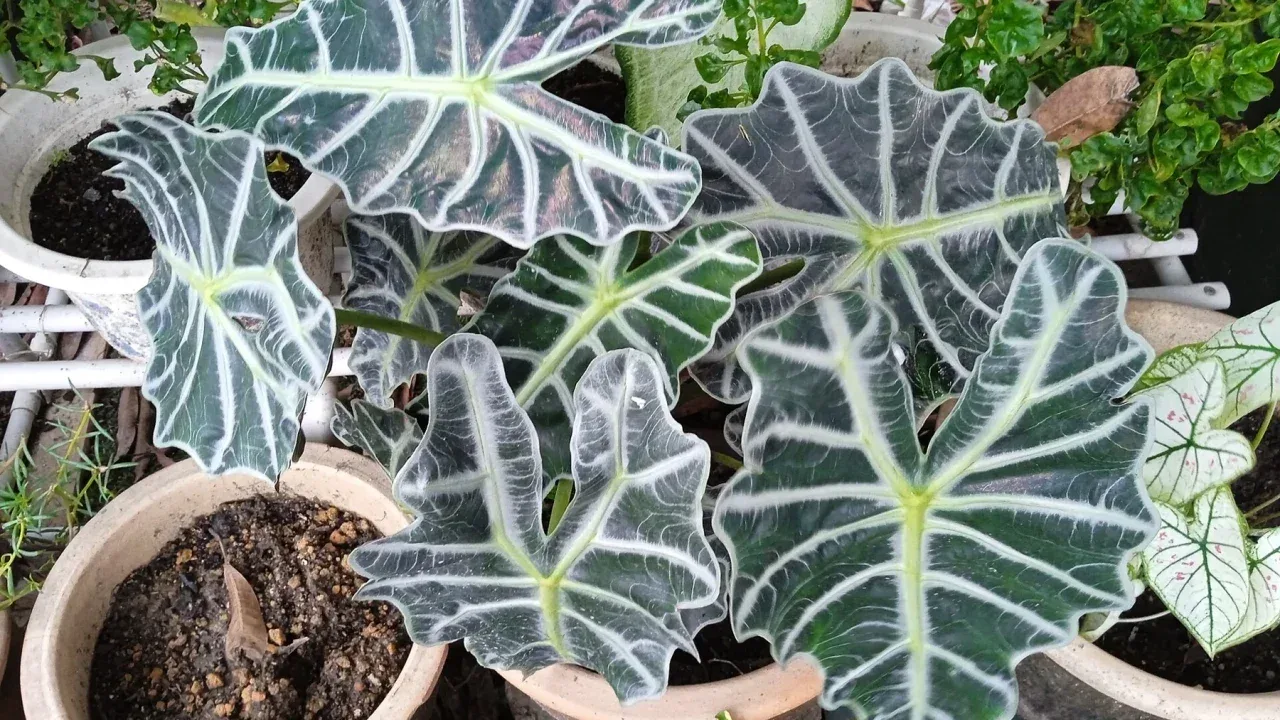
Alocasia polly: 'Polly' is a compact Alocasia hybrid with shield-shaped dark leaves, pale veins and often purple undersides. It is not Colocasia. Young plants naturally hold fewer leaves than large specimens.
Is a leafless alocasia dead or resting?
Short days, a cold root ball or a dry spell can trigger a rest. A soft, foul-smelling base suggests rot instead. A firm underground stem may recover under warmer, brighter conditions. Reduce water to match the loss of leaves without soaking a leafless corm. Resume feeding only after active growth returns. A grow light can reduce seasonal slowdown, but it cannot rescue roots left in cold, saturated mix. One yellow leaf alone does not prove dormancy.
What light does it need in a Canadian winter?
Supplement with a grow light in dark Canadian winters if needed.
Give Polly enough light to maintain its compact shape without baking its dark blades. An east-facing exposure or filtered brighter window often suits it better than a dim decorative shelf. At high Canadian latitudes, the amount of useful winter daylight can shrink markedly even in a south-facing room. A grow light can maintain a steadier season, provided it reaches the emerging leaves without heating them. Acclimatise a nursery plant rather than placing it immediately against full afternoon sun. New growth should look firm and balanced; pale scalded patches are not a sign that the plant is becoming more variegated.
How should you water through the seasons?
The mix should move from evenly moist toward slightly drier near the surface between waterings. Polly is not watered like a desert rosette, but neither should its base remain immersed. Feel the container's weight and check deeper moisture before relying on a dry-looking surface. When a leafless corm is resting, it has far less demand than a leafy plant. Supply only enough moisture to avoid severe desiccation of sound living tissue. A transparent storage box with dripping condensation can be a rot chamber rather than a rescue. Ventilation and a firm corm are essential to any restart attempt.
What soil or potting mix is best?
Polly's roots benefit from a chunky aroid mix that still holds some fine moisture around them. Combine an indoor potting base with bark and a porous mineral ingredient, adjusting the coarseness to the pot size. Large bark chunks around a tiny corm leave dry pockets that a new root system cannot easily bridge. Conversely, a deep container of fine wet peat can stay saturated below the visible surface. Keep the plant's crown above buried debris. When removing rotten roots, retain firm tissue and reassess the pot size instead of replacing lost roots with an even bigger volume of compost.
When should you fertilize?
Do not feed a resting alocasia in an attempt to wake it. Wait for roots and leaves to resume active development, then begin with a modest dose appropriate to the product. Polly can occasionally shed an old leaf as another forms, particularly on a small plant. That pattern differs from several stalks collapsing together. Leave a yellowing blade until it has substantially finished its job, then remove it with a clean cut close to its attachment. Never pull a petiole out with force: the nearby growing tissue is easily damaged and the sap should not contact skin or eyes.
Does dry air or humidity matter?
A warm room is not necessarily a warm root zone. On a stone sill, the container may cool quickly during a frosty night. Place it on an insulating surface and keep blades away from the pane. Higher surrounding humidity can help the leaves, but moving a humidifier closer does not correct a cold corm. Avoid blasts from forced-air outlets. If you use a cabinet, leave enough exchange of air to prevent constantly wet foliage. Temperature stability matters particularly while a new leaf is unfolding. Repeatedly moving the plant between a bathroom and living room can create more stress than one imperfect but steady location.
What temperatures and winter protection does it need?
Dislikes cold. Below 15 C it may go dormant and lose leaves.
How should you prune it?
Remove yellow or spent leaves at the base with clean shears.
What is the best propagation method?
Separate rooted offsets or firm corms during spring repotting. Keep small corms warm in lightly moist material with ventilation. Ordinary leaf cuttings do not produce a new Polly.
Corms and offsets provide a better route to another Polly than ordinary stem or leaf cuttings. During a necessary repot, look for small firm structures and separate only those you can identify confidently. Label the propagation container so a bare corm is not mistaken for discarded debris. Warmth, cautious moisture and patience are more useful than fertilizer at this stage. A newly rooted plant needs a small vessel that you can inspect easily. Let it establish several functioning roots before treating it like an adult specimen. Expect variation in timing; a calendar promise of new leaves is unreliable.
Which pests and diseases should you watch for?
Spider mites and mealybugs. Inspect weekly in winter.
How do you work out the cause?
Leaf drop in cold (dormancy); yellow mushy base (rot from wet soil); crispy edges (dry air).
Is it safe around pets and children?
Alocasia appears on ASPCA's toxic list: calcium oxalate crystals can cause painful oral irritation in an animal that chews Polly. Keep all parts away from children too; wear gloves for division and contact a vet after chewing.
A seasonal care calendar for Canada
| Season | What to do |
|---|---|
| Spring | New leaves; resume watering and light feed. Divide if crowded. |
| Summer | Inspect Polly's dark blades for fine pest stippling and protect an emerging leaf from dry vent air. |
| Autumn | Slow down as light falls. |
| Winter | May rest. Water sparingly. Keep warm and humid. |
What should you check before buying?
Compare Polly with anthurium for a different patterned leaf, philodendron birkin for a less architectural outline, and monstera adansonii if you would prefer a vining plant rather than a corm-based upright specimen.
Inspect the lower leaf surfaces for mites, especially through the heating season. Faint speckling across a dark blade is easier to notice before webbing becomes obvious. Mealybugs hide around stalk bases and can be missed if you inspect only the top surface. At purchase, avoid a plant with soft tissue where the petioles meet, even if one leaf looks striking. A lone firm new leaf on a healthy base can be a better prospect than a lush canopy above decaying roots. Transport Polly in a protective sleeve and keep the base stable so the heavy leaves do not lever it loose.
Should you remove a yellowing leaf immediately?
Wait until a declining Polly leaf has lost most of its useful green area unless it is diseased. One older leaf can decline as a new one develops; judge the corm and overall sequence rather than treating that event alone as a watering emergency.
Watch: a related growing task
Comments
No comments yet — share what worked in your climate.