
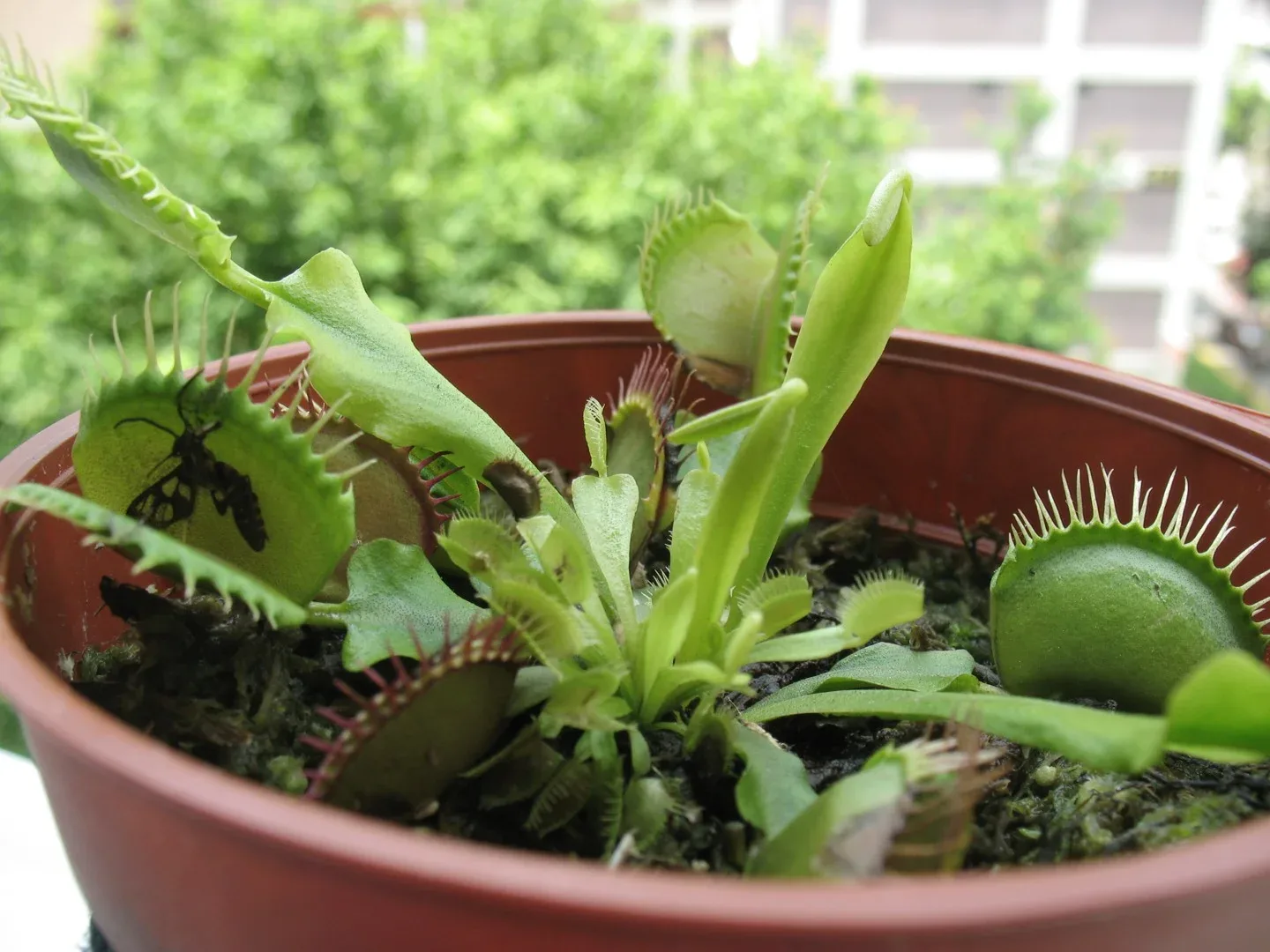
| ☀️ Light | Full sun |
|---|---|
| 💧 Water | High (consistently moist) |
| 🪴 Soil | Unfertilized carnivorous plant mix or long-fiber sphagnum |
| 🐾 Safety | Cats: non-toxic · Dogs: non-toxic |
Where It Grows & Climate Tolerance
Pet & Companion Animal Toxicity (Venus Flytrap)
Set up a Venus flytrap for Australian seasons with low-mineral water, good light and a cooler winter rest in suitable climates.
Care instructions
Care Guide & Maintenance Routine
A sunny, ventilated position in southern or eastern Australia can support a Venus flytrap outdoors during active growth. On a west-facing patio, watch the heat around the roots and keep a supply of pure water ready for the summer.
Light & Sunlight
Use a bright spot with direct sun or a strong grow light. Acclimate a nursery plant over several days. A dim terrarium can lead to long, weak leaves.
Watering Schedule
Use clean rainwater, distilled water or low-mineral reverse-osmosis water. A shallow tray works during active growth. Keep the medium damp through dormancy without keeping the crown submerged.
Potting Mix & Drainage
Unfertilized carnivorous plant mix or long-fiber sphagnum
Temperature & Humidity
The plant is a temperate perennial. Most naturally lit pots need a cooler winter rest. Protect container roots from prolonged hard freezing and use the local hemisphere's season.
Summer heat
In Sydney or Brisbane, start a new plant in gentler light and work toward more direct sun. Check the shallow tray more often in January. A pot may dry quickly even when the surrounding air feels humid.
Southern Hemisphere timing
Look for slower growth around June to August in temperate districts. Keep the medium damp and shelter the pot from hard frost. A tropical site without cool nights calls for an intentionally managed setup.
Pet safety
The ASPCA lists Dionaea muscipula as non-toxic to cats and dogs.
Photo by Mokkie via Wikimedia Commons. CC BY-SA 3.0. Resized and converted to WebP under the same license.
Seasonal rhythm
Seasonal Calendar
| Month | Care Tasks | Seasonal Focus |
|---|---|---|
| Jan | Protect from frost/heat | Check the tray often during hot summer weather. |
| Feb | Routine check | Watch pots on exposed paving and keep the roots damp. |
| Mar | Routine check | Top up pure water while the plant is still making traps. |
| Apr | Routine check | Watch for slower growth as nights cool. |
| May | Routine check | Reduce standing water if the plant is entering its rest. |
| Jun | Protect from frost/heat | Keep the resting pot damp and protected from hard frost. |
| Jul | Routine check | Check that the crown is firm while older traps darken. |
| Aug | Routine check | Prepare a bright spot for spring growth. |
| Sep | Plant out | Increase watering when new active traps appear. |
| Oct | Routine check | Move acclimated pots into stronger sun. |
| Nov | Routine check | Check trays more often as days become warmer. |
| Dec | Protect from frost/heat | Keep pure water on hand and shade the pot in extreme heat. |
Diagnostics
Common Problems & Troubleshooting
Old traps blacken naturally. Check light and water quality when new traps also decline. In winter, a firm growing centre and smaller traps often indicate seasonal dormancy.
Similar Botanical Matches
Keep exploring
Related plants

Grower field notes
Reader Field Notes in Australia
Share how this plant performs in your local Australia climate.