
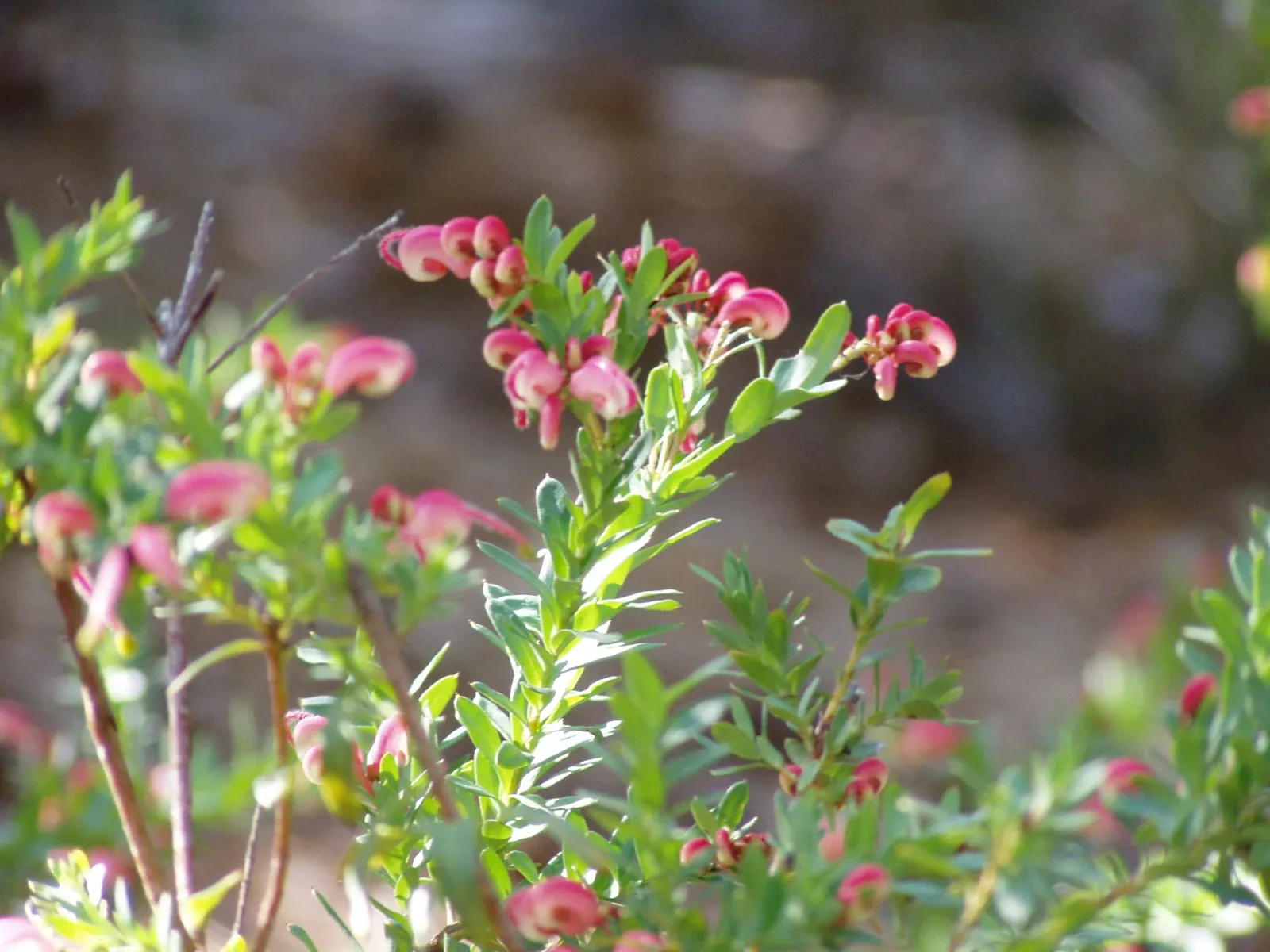
| ☀️ Light | Full sun |
|---|---|
| 💧 Water | Moderate (lightly moist) |
| 🪴 Soil | Light lime-free garden soil |
| 🐾 Safety | Cats: not verified · Dogs: not verified |
| 📏 Mature size | 1.5 m |
Where It Grows & Climate Tolerance
Pet & Companion Animal Toxicity (Bauer's Grevillea (Grevillea baueri) – Australia)
Not yet verified: Toxicity status for cats, dogs, and horses has not yet been confirmed against veterinary poison-control records. Keep out of reach of pets or consult your veterinarian.
A hardy NSW mountain shrub with variable habit and red to crimson flowers, often through autumn and winter.
Care instructions
Care Guide & Maintenance Routine
For temperate NSW and ACT gardens, use a light lime-free soil and maintain adequate moisture, especially while the plant establishes.
Light & Sunlight
Provide a bright open garden site with sufficient light for flowering.
Watering Schedule
Water during establishment and extended dry periods. Open-branching forms can suffer if allowed to dry badly.
Potting Mix & Drainage
Light lime-free garden soil
Temperature & Humidity
Winter is June–August in Australia. This species is cold hardy, while drought sensitivity varies between forms.
Grevillea baueri is a variable native shrub from mountain areas of New South Wales. One form may be upright while another spreads broadly, so check the nursery label and allow room for the selected plant. The Australian National Botanic Gardens records forms reaching at least 1.5 m high or about 3 m across, and flowers beginning around April and continuing through winter, sometimes into November. Plants are cold hardy, but drought response varies: an open, widely branched form can struggle if allowed to dry too severely. In a temperate NSW or ACT garden, use a lighter, lime-free soil and give adequate water during establishment and dry periods. Usually little pruning is required; light shaping or picking winter flowering sprigs is sufficient. Half-ripe tip cuttings can be taken toward late winter. Inspect tender shoots for aphids and avoid unverified pest treatments.
Seasonal rhythm
Seasonal Calendar
| Month | Care Tasks | Seasonal Focus |
|---|---|---|
| Jan | Routine check | In January heat, inspect the root zone and water if a young or open-form shrub is drying. |
| Feb | Routine check | February dry spells can stress open branches; water deeply as needed and maintain mulch. |
| Mar | Routine check | In March, check soil drainage and prepare a light lime-free planting site. |
| Apr | Routine check | April may start flowering in some forms; avoid hard pruning flowering shoots. |
| May | Routine check | In May, enjoy early blooms and check soil moisture during dry autumn weather. |
| Jun | Routine check | June winter flowers can feed wildlife; lightly inspect leaves for cold damage. |
| Jul | Routine check | In July, monitor blooming shrubs and avoid letting recently planted roots dry completely. |
| Aug | Routine check | Late August is a suitable time to take half-ripe tip cuttings under proper conditions. |
| Sep | Routine check | In September, inspect new growth for aphids and water if spring rainfall is low. |
| Oct | Routine check | October flowers may continue in some forms; observe local timing before shaping. |
| Nov | Routine check | In November, lightly trim only if shape requires it and check summer readiness. |
| Dec | Routine check | December warmth increases water demand; monitor young plants in dry spells. |
Diagnostics
Common Problems & Troubleshooting
Open forms can decline during severe drought; lime-rich soil may reduce vigour.
Pests & seasonal watch: Aphids may appear on young shoots. Check plant moisture and lime exposure when overall growth weakens.
Similar Botanical Matches
Keep exploring
Related plants
Grower field notes
Reader Field Notes in Australia
Share how this plant performs in your local Australia climate.