
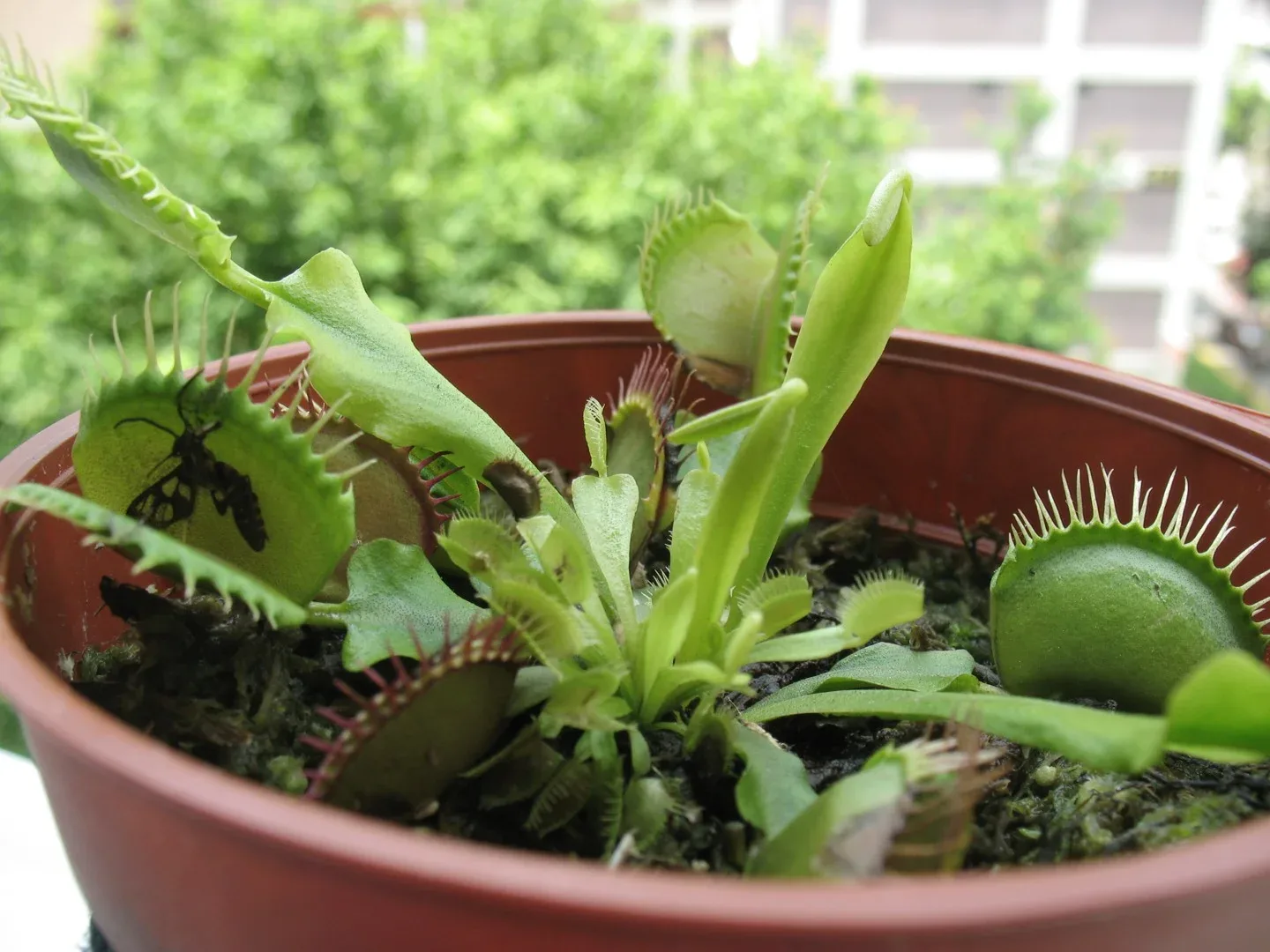
| ☀️ Light | Full sun |
|---|---|
| 💧 Water | High (consistently moist) |
| 🪴 Soil | Unfertilized carnivorous plant mix or long-fiber sphagnum |
| 🐾 Safety | Cats: non-toxic · Dogs: non-toxic |
Where It Grows & Climate Tolerance
Pet & Companion Animal Toxicity (Venus Flytrap)
Learn how to care for a Venus flytrap, from pure water and strong light to potting mix and the winter rest that can turn old traps black.
Care instructions
Care Guide & Maintenance Routine
Give the plant several hours of direct sun once acclimated. Keep its specialist mix damp with rainwater, distilled water or reverse-osmosis water. Reduce standing water during the cool rest and protect the pot from hard freezes.
Light & Sunlight
Use a bright spot with direct sun or a strong grow light. Acclimate a nursery plant over several days. A dim terrarium can lead to long, weak leaves.
Watering Schedule
Use clean rainwater, distilled water or low-mineral reverse-osmosis water. A shallow tray works during active growth. Keep the medium damp through dormancy without keeping the crown submerged.
Potting Mix & Drainage
Unfertilized carnivorous plant mix or long-fiber sphagnum
Temperature & Humidity
The plant is a temperate perennial. Most naturally lit pots need a cooler winter rest. Protect container roots from prolonged hard freezing and use the local hemisphere's season.
A Venus flytrap needs strong light, a low-mineral water supply and a specialist growing mix. Its hinged traps catch small insects. Most plants growing under natural light slow down when their local winter arrives.
Set up the pot
Use a drained plastic container and an unfertilized medium intended for carnivorous plants. Put the pot in a shallow tray during active growth and keep it where it can receive direct light. Acclimate plants grown under cover before moving them into stronger sun.
Water and feeding
Start with distilled, reverse-osmosis or clean rainwater. Minerals from hard tap water can accumulate in the pot. An outdoor plant usually catches its own prey. Leave traps alone between feedings and avoid meat or fertilizer.
Handle winter dieback
A plant following natural day length often makes shorter leaves and loses old traps in its cool season. Keep the growing mix damp and guard pots against hard freezes. Resume the active-season tray as new traps grow.
Pet safety
The ASPCA lists Dionaea muscipula as non-toxic to cats and dogs.
Sources
- Royal Horticultural Society · Venus flytrap
- NC State Extension · Home cultivation
- NC Cooperative Extension · Venus flytrap dormancy
- Botanic Gardens of Sydney · Venus flytrap care
- ASPCA · Dionaea muscipula
Photo by Mokkie via Wikimedia Commons. CC BY-SA 3.0. Resized and converted to WebP under the same license.
Seasonal rhythm
Seasonal Calendar
A month-by-month calendar for Venus Flytrap in Global is coming soon. See the light, water and temperature notes above.
Diagnostics
Common Problems & Troubleshooting
Old traps blacken naturally. Check light and water quality when new traps also decline. In winter, a firm growing centre and smaller traps often indicate seasonal dormancy.
Q&A
Frequently Asked Questions
What water is best for a Venus flytrap?
Use distilled water, clean rainwater or reverse-osmosis water with low mineral content. Avoid hard tap water, which can leave damaging mineral deposits in the mix.
Why are my Venus flytrap traps turning black?
Individual old traps turn black naturally, and seasonal dieback is common as days shorten. If new traps also decline during active growth, check light levels, water quality and the condition of the growing point.
Do I have to feed a Venus flytrap?
An outdoor plant usually catches enough live prey on its own. Avoid meat and repeated trigger tests. Strong light remains essential.
Similar Botanical Matches
Keep exploring
Related plants

Grower field notes
Reader Field Notes in Global
Share how this plant performs in your local Global climate.