
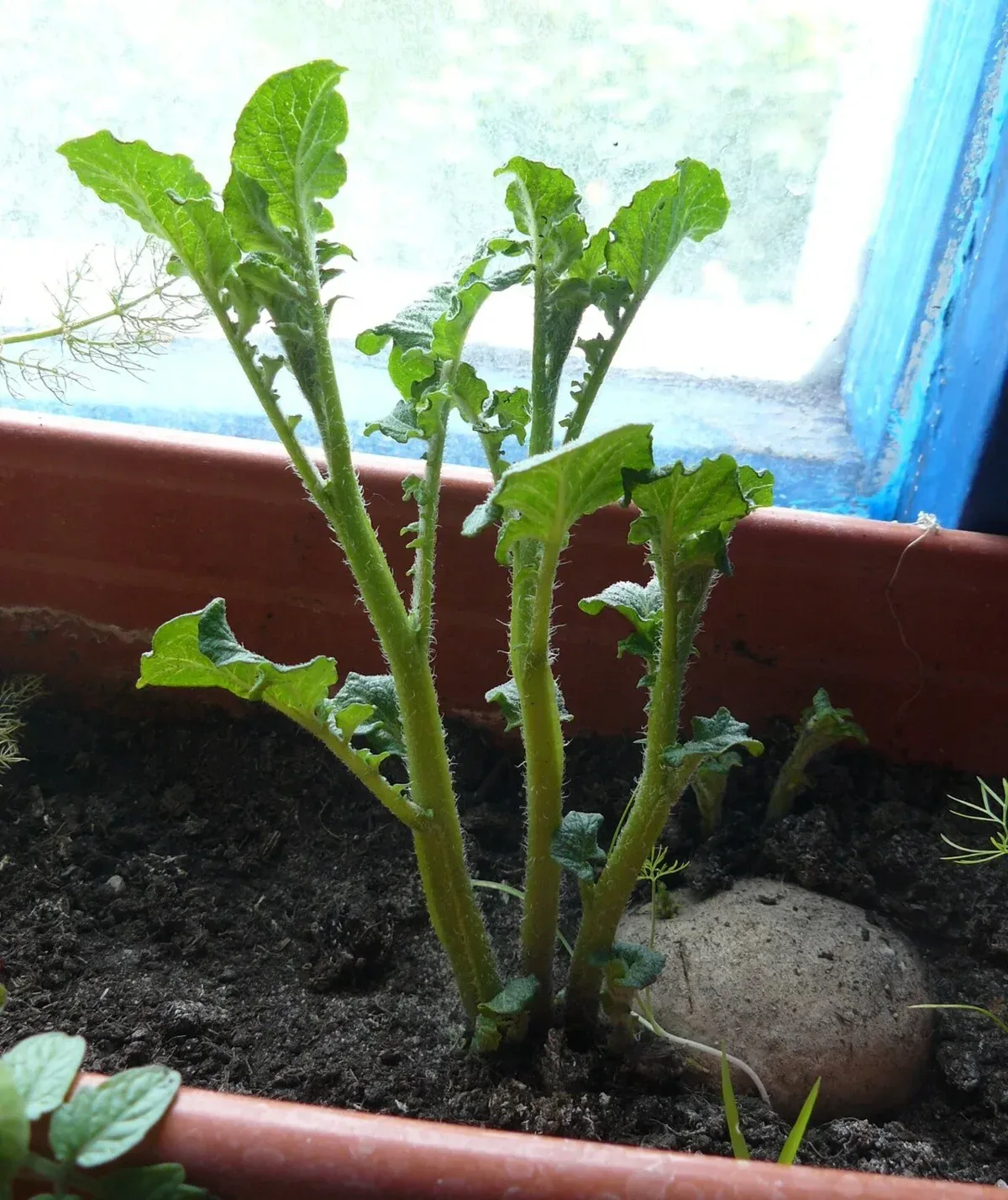
| ☀️ Light | Full sun |
|---|---|
| 💧 Water | Moderate (lightly moist) |
| 🪴 Soil | Loose, well-drained sandy loam with organic matter; slightly acidic is ideal |
| 🌡️ Temp | 0°C – 30°C |
| 🐾 Safety | Cats: toxic · Dogs: toxic |
| 📏 Mature size | 60 cm |
Where It Grows & Climate Tolerance
Pet & Companion Animal Toxicity (Potato)
Potato (Solanum tuberosum) is a leafy, bushy crop grown for the starchy tubers that form underground on short stems called stolons. It is planted from small 'seed' tubers rather than true seed, crops in roughly three to four months, and does well in beds, grow bags and deep containers.
Care instructions
Care Guide & Maintenance Routine
Plant healthy, sprouted seed tubers in loose, well-drained soil in full sun. Mound soil or mulch over the stems as they grow so the tubers stay dark. Keep the soil evenly moist, stop watering as the leaves yellow, and dig once the tops die back. Never eat green tubers.
Light & Sunlight
NC State Extension lists full sun. Plants in shade make long, weak stems and few tubers. Six or more hours of direct sun is a good minimum for beds and grow bags.
Watering Schedule
Even moisture matters most once tubers start to form, which is around flowering in many varieties. Dry spells followed by heavy watering can cause cracked or knobbly tubers. Ease off as the foliage yellows so skins firm up before digging.
Potting Mix & Drainage
Loose, well-drained sandy loam with organic matter; slightly acidic is ideal
Temperature & Humidity
PAU says the crop is raised when day temperatures stay below about 30°C and nights below 20°C, with the best tuber formation near 20°C by day and 14°C at night. Leaves and stems are killed by frost, so 0°C is used as the lower limit for the growing plant. NC State rates the species for USDA zones 2a to 11b, which reflects how widely it is grown as a seasonal crop.
About potatoes
Potato (Solanum tuberosum) belongs to the nightshade family with tomato, chilli and brinjal. NC State Extension notes it is native to the Andes of Argentina, Bolivia, Chile and Peru. The edible part is a tuber: a swollen underground stem tip that forms on short side shoots called stolons. Each eye on a tuber is a bud that can grow into a new plant, which is why potatoes are planted from small tubers rather than from true seed.
Above ground the plant grows into a leafy bush about 60 cm tall with compound leaves. Many varieties flower in mid-season. Some then set small, green, tomato-like berries. These are not edible.
Early and maincrop varieties
The RHS groups potatoes by how fast they crop. Early varieties, sometimes called new potatoes, take up less space and can be ready in about 12 weeks. Maincrop varieties stay in the ground longer, give heavier yields of bigger tubers and store better. Varieties also differ in skin colour, in texture (waxy for boiling and salads, floury for mashing and frying) and in disease resistance. Choose by the time you have, how you cook, and which diseases are common where you garden.
Buying seed potatoes
Seed potatoes are tubers grown and inspected for planting. NC State recommends certified, disease-free stock because viruses and soil diseases pass from one generation of tubers to the next. Pick firm tubers about the size of a hen's egg with no soft spots, shrivelling or mould. Long, pale, thin sprouts mean they were stored too warm and dark. Short, thick, green or purple sprouts are what you want.
Chitting
Chitting means sprouting the tubers before planting. Stand them in egg trays or shallow boxes, eyes up, in a cool, bright room out of direct sun. After a few weeks each tuber has sturdy sprouts 1 to 2 cm long. The RHS notes this gives an earlier crop, which matters most with early varieties.
Site and soil
Choose an open, sunny spot. NC State suggests well-drained, sandy, slightly acidic soil, and notes that acidity helps keep common scab down. Heavy, wet soil causes rot and misshapen tubers. Dig in well-rotted compost before planting and remove stones. Do not plant where potatoes, tomatoes or brinjal grew in the last two or three years, because these crops share pests and diseases.
Planting
Plant tubers 10 to 15 cm deep with the sprouts pointing up. Space them about 20 to 30 cm apart in rows 60 to 75 cm apart, wider for maincrops. In containers, NC State recommends a depth of at least 60 cm. Plant three or four tubers in a bag about 40 cm wide and start with only part of the mix in the bottom so there is room to earth up later.
Earthing up
When stems reach about 20 to 30 cm, draw soil from between the rows up around them, leaving the top leaves showing. NC State suggests doing this when plants are about 30 cm tall and once or twice more. A thick mulch of straw or dry leaves does the same job. The aim is simple: any tuber that sees light turns green.
Watering through the season
After planting
Water once to settle the soil, then hold back until shoots appear unless the ground is dry. Soggy soil at this stage rots seed tubers.
Flowering and tuber growth
This is when steady moisture matters most. Water deeply and regularly so the soil never dries out completely. Uneven watering, with long dry spells broken by heavy soakings, causes cracks, knobs and hollow centres.
Before harvest
Reduce watering once the leaves start to yellow. Drier soil helps the skins firm up, and the tubers then store better.
Feeding
Most of the feeding is done before planting with compost or well-rotted manure. A balanced fertiliser at label rate can go in when you first earth up. Avoid heavy nitrogen, which grows big, soft tops and fewer tubers. For larger plots, use a soil test or local extension advice for exact amounts.
Harvesting and storing
For new potatoes, NC State says digging can start about 7 to 8 weeks after planting. Feel gently into the soil under one plant and take a few. For a storing crop, wait 3 to 4 months, until the tops yellow and die back, then leave the tubers in the soil for another week or two. Lift with a fork from the outside of the row to avoid spearing them. Let them dry in shade for a few hours, sort out any damaged ones, and store the rest in a cool, dark, airy place.
Troubleshooting
Green patches on tubers
Light reached them. Earth up more deeply next time and store in the dark. Cut away green parts generously or throw badly greened tubers away.
Rough, corky patches on the skin
Often common scab. It is mostly cosmetic. NC State notes that slightly acidic soil reduces it; avoid adding lime before potatoes.
Dark, spreading patches on leaves in wet weather
Blight is one possibility, but several problems look similar. Remove badly affected foliage and ask your local extension service or agricultural office to confirm the cause before spraying anything.
Holes in tubers
Wireworms or slugs are common causes. Lift the crop promptly once mature rather than leaving it in the ground.
Safety and pets
NC State Extension lists potato as poisonous: the leaves, stems, sprouts, berries and green tubers contain solanine and are a problem for cats, dogs and horses. Cooked, unblemished tubers are a staple food. Keep pets and small children away from the plants and from sprouting potatoes in storage.
Common mistakes
- Planting shop potatoes instead of certified seed tubers.
- Skipping earthing up, which leaves green tubers near the surface.
- Watering heavily after a long dry spell, which splits tubers.
- Growing potatoes in the same bed year after year.
- Digging too early for a storing crop, so the skins rub off.
Potatoes share a bed rotation with tomato and eggplant, so plan them together. Garden peas make a good crop to follow them.
India and Canada in brief
The plant is the same in both markets; only the calendar changes. One grows it as a cold-season crop and the other as a summer crop, so planting and digging fall in almost opposite months. The sections below give the local details.
Seasonal rhythm
Seasonal Calendar
A month-by-month calendar for Potato in Global is coming soon. See the light, water and temperature notes above.
Diagnostics
Common Problems & Troubleshooting
Green tubers from light exposure; scab on the skin; hollow or cracked tubers after uneven watering; blackened, collapsing foliage in wet weather; small crops from shade, crowding or late planting.
Pests & seasonal watch: NC State lists Colorado potato beetle, flea beetles, wireworms and leafhoppers, plus late blight. Aphids spread viruses. Rotation and clean seed are the main defences.
Q&A
Frequently Asked Questions
Can I plant potatoes from the kitchen?
It is possible, but NC State and the RHS both recommend certified seed potatoes. Shop potatoes may carry viruses or be treated so they do not sprout, which gives weak or patchy plants.
Why do potatoes turn green, and are they safe?
Tubers exposed to light turn green and build up solanine. NC State lists green tubers, sprouts and green parts as poisonous. Cut away small green patches generously or discard badly greened tubers, and keep the crop covered while it grows.
What is earthing up?
Drawing soil or mulch up around the stems as they grow. It keeps forming tubers in the dark, gives more room for them along the buried stem, and the RHS notes it protects early shoots from frost.
How long do potatoes take?
NC State says new potatoes can be dug about 7 to 8 weeks after planting and a mature crop takes 3 to 4 months. The RHS says early varieties can be ready in as little as 12 weeks.
When are potatoes ready to dig?
For new potatoes, start after flowering and check under one plant. For storing, wait until the foliage yellows and dies back, then leave the tubers in the ground for a further week or two so the skins set.
Can I grow potatoes in pots?
Yes. NC State suggests a container at least 60 cm deep. Grow bags work well because you can roll the sides up as you add mix.
Should I cut seed potatoes?
Small seed tubers of 40 to 50 g are planted whole. Larger ones can be cut into pieces with at least two eyes; let the cut surfaces dry for a day before planting so they do not rot.
Are potato plants toxic to pets?
Yes. NC State lists the leaves, stems, sprouts and green tubers as poisonous to cats, dogs and horses. Keep pets away from the plants and from sprouting potatoes in storage.
How should I store potatoes?
Brush off soil, let tubers dry out of the sun for a few hours, and store them in a cool, dark, airy place in sacks or boxes. Light turns them green, and warmth makes them sprout sooner.
Similar Botanical Matches
Keep exploring
Related plants
Grower field notes
Reader Field Notes in Global
Share how this plant performs in your local Global climate.