
| ☀️ Light | Bright indirect light |
|---|---|
| 💧 Water | Low (allow soil to dry) |
| 🪴 Soil | Gritty, well-drained cactus and succulent mix |
| 🌡️ Temp | 10°C – 32°C |
| 🐾 Safety | Cats: not verified · Dogs: not verified |
| 📏 Mature size | 15 cm |
Where It Grows & Climate Tolerance
Pet & Companion Animal Toxicity (Moon Cactus)
Not yet verified: Toxicity status for cats, dogs, and horses has not yet been confirmed against veterinary poison-control records. Keep out of reach of pets or consult your veterinarian.
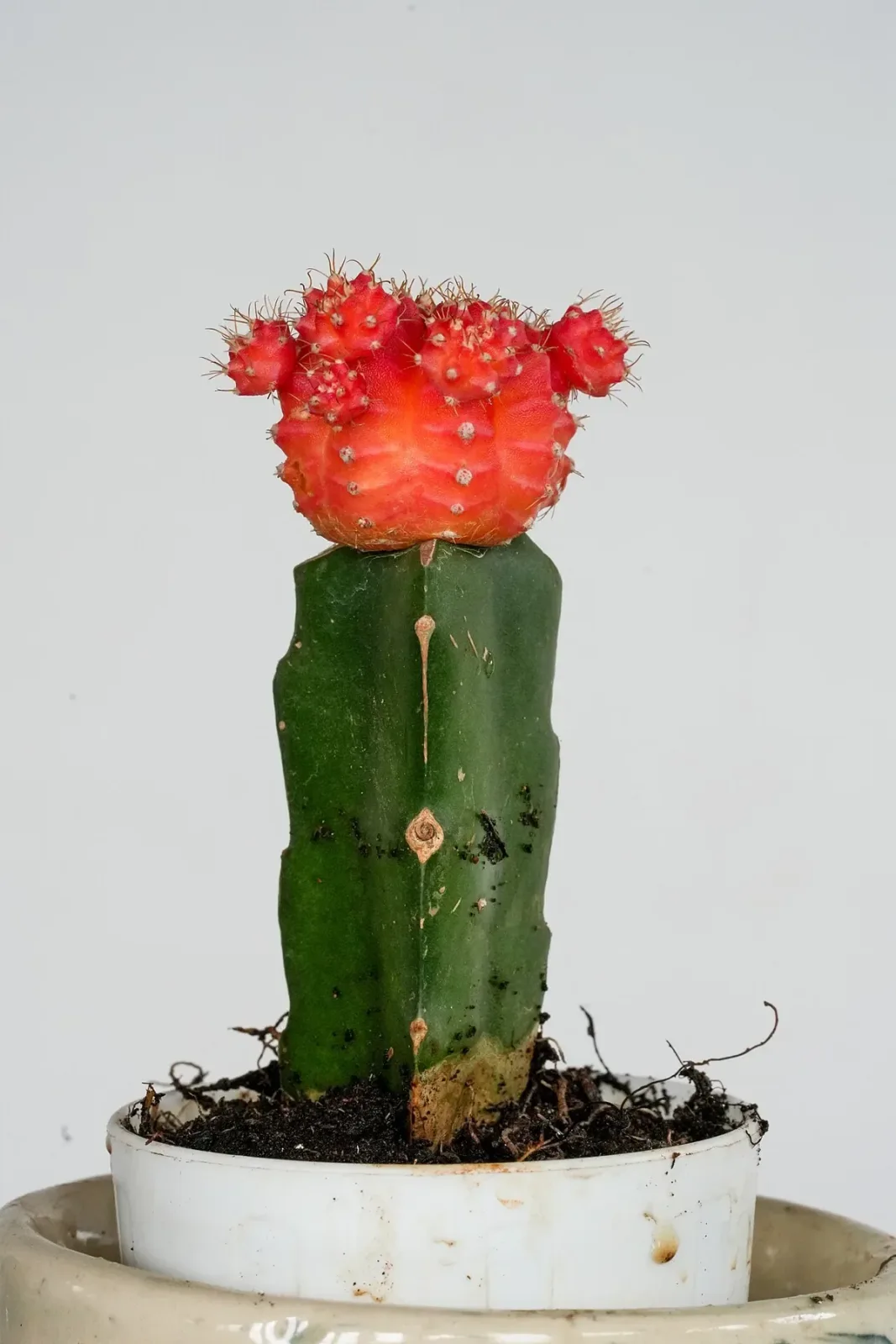
Moon cactus is a grafted pair: a brightly coloured ball of Gymnocalycium mihanovichii, red, pink, orange or yellow, sitting on a green cactus stem. The coloured top has no chlorophyll and depends entirely on the green rootstock to feed it.
Care instructions
Care Guide & Maintenance Routine
Give bright light with shade from harsh midday sun. Water only when the mix is completely dry, and much less in winter. Use a gritty cactus mix in a pot with drainage. Keep above about 10°C. Feed lightly in the growing season only.
Light & Sunlight
NC State says moon cactus prefers bright, indirect light and notes that too much direct sun can scorch grafted plants. A little gentle morning sun is fine; the coloured top burns in harsh afternoon sun.
Watering Schedule
NC State advises watering sparingly and letting the mix dry out completely between waterings, with even less water in the winter rest. Wet mix and high humidity encourage fungal rot.
Potting Mix & Drainage
Gritty, well-drained cactus and succulent mix
Temperature & Humidity
NC State notes the plant is not frost tolerant, prefers about 20 to 30°C (68 to 86°F), and should be brought indoors before temperatures drop below 10°C (50°F). Height shown is the whole graft; the coloured top is usually 5 to 8 cm across.
What a moon cactus is
A moon cactus is two cacti joined together. The coloured ball on top is a mutant form of Gymnocalycium mihanovichii, a small cactus from rocky areas of Paraguay and northeast Argentina. It lacks chlorophyll, the green pigment that plants use to make food, so its red, pink, orange or yellow colour shows through. Unable to feed itself, it is grafted onto a green cactus that does the work. NC State Extension notes the rootstock is typically Hylocereus undatus, the climbing cactus that produces dragon fruit.
NC State records that grafted seedlings were introduced by a Japanese grower in 1948, reached the market in the 1960s and became very popular by the 1980s. The common cultivar name 'Hibotan' is often used for the red forms.
The wild species
Gymnocalycium mihanovichii, also called chin cactus, is a slow-growing, globe-shaped, grey-green cactus about 5 to 8 cm tall and wide, with eight notched ribs and short curved spines, according to NC State. The genus name means "naked calyx", because the flower buds have no spines or hairs. Ungrafted green plants are grown by collectors but are much less common in shops.
How to recognise a moon cactus
- A brightly coloured, ribbed ball, usually 3 to 8 cm across.
- A green, three-angled or ribbed stem below it, the rootstock.
- A visible join where the two meet.
- Short spines on both parts.
Buying a healthy plant
Choose a plant whose coloured top is firm and evenly coloured, with no brown, sunken or shrivelled patches. The green stem should be firm and green right down to the soil, not yellow, wrinkled or soft. Look closely at the join and the base of the spines for white fluff, a sign of mealybugs. Avoid pots where the mix is soaked or covered with glued gravel that hides the soil.
Colours and forms
Red is the classic Hibotan colour, but pink, orange, yellow and near-white tops are common, and some plants are part-coloured with green patches. Part-green tops contain some chlorophyll. Several small tops are sometimes grafted onto one rootstock for a cluster effect; each still depends on the stem below.
Light
NC State says moon cactus prefers bright, indirect light, and warns that too much direct sun can scorch grafted forms. A spot with gentle morning sun and shade later in the day suits it. Very low light weakens the rootstock, which then stretches and becomes pale.
Watering
NC State advises watering sparingly and letting the mix dry out completely between waterings. Water thoroughly, let excess drain away, and wait until the mix is dry right through before watering again. In the winter rest, water even less.
Overwatering is the most common cause of death. NC State notes that fungal diseases follow overwatering or high humidity.
Soil and pots
Use a well-drained cactus or succulent mix, as NC State recommends. Mixing in grit or perlite makes it drain faster still. A small pot with drainage holes is best; terracotta dries out faster than plastic.
Temperature
NC State notes the plant is not frost tolerant and prefers temperatures between about 20 and 30°C with low humidity. It advises bringing outdoor plants inside before temperatures fall below 10°C. The rootstock is a tropical cactus and is often the first part to suffer in cold, wet conditions.
Feeding
NC State says to fertilise only during the growing season. A cactus fertiliser at or below label rate, about once a month from spring to late summer, is enough. Do not feed in winter.
Lifespan and regrafting
Many moon cacti last only a few years. The rootstock may rot, or it may grow quickly while the top grows slowly, until the two no longer match. Offsets that form on the coloured top can be cut off and grafted onto a new green stock. Grafting needs clean, matching cuts and close contact between the two cambium rings, then a few days of light pressure while they knit.
Flowers and fruit
NC State notes that funnel-shaped flowers appear at the crown in late spring to early summer, pale pink on Hibotan types and pale green to brownish yellow on the wild species. Small berries follow and turn red when ripe.
Troubleshooting
Soft or dark rootstock
Often linked to wet mix or cold. Check the roots and base; if the rootstock is rotting but the top is firm, the top can sometimes be regrafted.
Pale, bleached or brown patches on the top
Often sun scorch. Move to bright, indirect light.
Shoots on the green stem
Remove them so the rootstock feeds the coloured top.
White cottony spots at the graft
Mealybugs, which NC State lists along with spider mites and aphids. Remove them with a cotton bud and recheck often.
Safety and pets
Moon cactus is not listed in the ASPCA plant database, and NC State does not tag it for toxicity, so this guide leaves pet safety blank. The spines can still injure curious pets and children, so place it out of reach.
Common mistakes
- Watering on a schedule while the mix is still damp.
- Leaving it in hot afternoon sun.
- Letting it stand in water inside a decorative pot.
- Keeping it in a cold room or near cold glass.
- Gripping the coloured top when repotting.
For other easy cacti and succulents, see golden barrel cactus, Christmas cactus, haworthia and echeveria.
India and Canada in brief
The care is the same in both markets. What changes is the risky season: heavy rain and harsh sun in one, cold and short days in the other.
Seasonal rhythm
Seasonal Calendar
A month-by-month calendar for Moon Cactus in Global is coming soon. See the light, water and temperature notes above.
Diagnostics
Common Problems & Troubleshooting
Rot at the base or at the graft from wet mix; scorched, pale patches on the top from strong sun; a shrivelled top when the rootstock fails; the rootstock outgrowing or swallowing the top over time.
Pests & seasonal watch: NC State lists mealybugs, spider mites and aphids. Mealybugs often hide where the two cacti join.
Q&A
Frequently Asked Questions
Why is a moon cactus grafted?
The coloured top is a mutant seedling with no chlorophyll, so it cannot make its own food. NC State explains it is grafted onto a green cactus, usually Hylocereus undatus, which feeds it.
How long does a moon cactus live?
Grafts often last only a few years. The rootstock may fail in cold or wet conditions, or grow faster than the top. A healthy top can be regrafted onto a new rootstock.
How often should I water a moon cactus?
Only when the mix is completely dry, as NC State advises. In warm months that may be every 10 to 14 days in a small pot; in winter, much less.
Can it take full sun?
NC State notes direct sun can scorch grafted plants. Give bright light with shade from the hottest part of the day.
What is the green stem?
The rootstock, typically Hylocereus undatus according to NC State. This is the same climbing cactus that produces dragon fruit.
Can the coloured top grow roots on its own?
No. Without chlorophyll it cannot survive on its own roots. Its offsets must be grafted onto green stock.
Why is the top turning brown or soft?
Possible causes include rot from wet mix, sun scorch or a failing rootstock. Check the base and the graft before deciding; a soft, discoloured rootstock usually means rot.
Should I remove shoots from the green stem?
Yes. Shoots from the rootstock take energy from the coloured top. Twist or cut them off.
Does a moon cactus flower?
It can. NC State notes funnel-shaped flowers in late spring to early summer, pale pink on Hibotan types.
Similar Botanical Matches
Keep exploring
Related plants
Grower field notes
Reader Field Notes in Global
Share how this plant performs in your local Global climate.