
| ☀️ Light | Full sun |
|---|---|
| 💧 Water | Moderate (lightly moist) |
| 🪴 Soil | Fertile, well-drained, sandy loam; pH 6.0 to 6.5 |
| 🌡️ Temp | 4°C – 35°C |
| 🐾 Safety | Cats: toxic · Dogs: toxic |
| 📏 Mature size | 1.2 m |
Where It Grows & Climate Tolerance
Pet & Companion Animal Toxicity (Gladiolus (Sword Lily))
Gladiolus is a corm-forming plant in the iris family, grown for tall spikes of funnel-shaped flowers that open from the bottom up. Most garden glads are hybrids grouped as Gladiolus × hortulanus. They need full sun and well-drained soil, and are among the most widely grown cut flowers.
Care instructions
Care Guide & Maintenance Routine
Plant corms 7 to 15 cm deep in full sun and light, well-drained soil. Stagger plantings every two weeks for a longer show. Water steadily, earth up or stake tall spikes, and cut spikes when the lowest florets open. Lift corms after the leaves yellow, dry them, and store cool and dry.
Light & Sunlight
NC State recommends full sun with shelter from strong wind. PAU notes most varieties need at least 8 hours of light a day; spike quality is better in long days, while corm and cormel production improves in short days.
Watering Schedule
Keep soil evenly moist while plants grow; NC State warns against letting the soil dry out. PAU notes the stage just after sprouting and the 4 to 6 leaf stage are very sensitive to water shortage, and advises stopping irrigation 4 to 6 weeks before lifting corms.
Potting Mix & Drainage
Fertile, well-drained, sandy loam; pH 6.0 to 6.5
Temperature & Humidity
PAU gives day temperatures up to 25°C and nights up to 16°C as optimum for growth and flowering. AAFC notes most cultivars grow best with days of 10 to 25°C. Foliage is killed by frost, and corms are stored at 2 to 7°C. NC State rates garden hybrids hardy in USDA zones 7a to 10b. Height varies from 50 cm to 2 m.
About gladiolus
Gladiolus belongs to the iris family. The name is Latin for a small sword, after the leaves. NC State describes over 300 species from Africa, Madagascar and Eurasia; AAFC notes most are native to sub-Saharan Africa, especially South Africa. Garden and florist glads are complex hybrids, usually grouped as Gladiolus × hortulanus.
A plant forms a fan of stiff, sword-shaped leaves and a single spike carrying a double row of funnel-shaped florets on one side. Florets open one after another from the base upwards. AAFC gives flower widths of 5 to 10 cm, and heights from 50 cm to 2 m. Colours cover almost everything except true blue, with ruffled, frilled and bicolour forms.
Corms and cormels
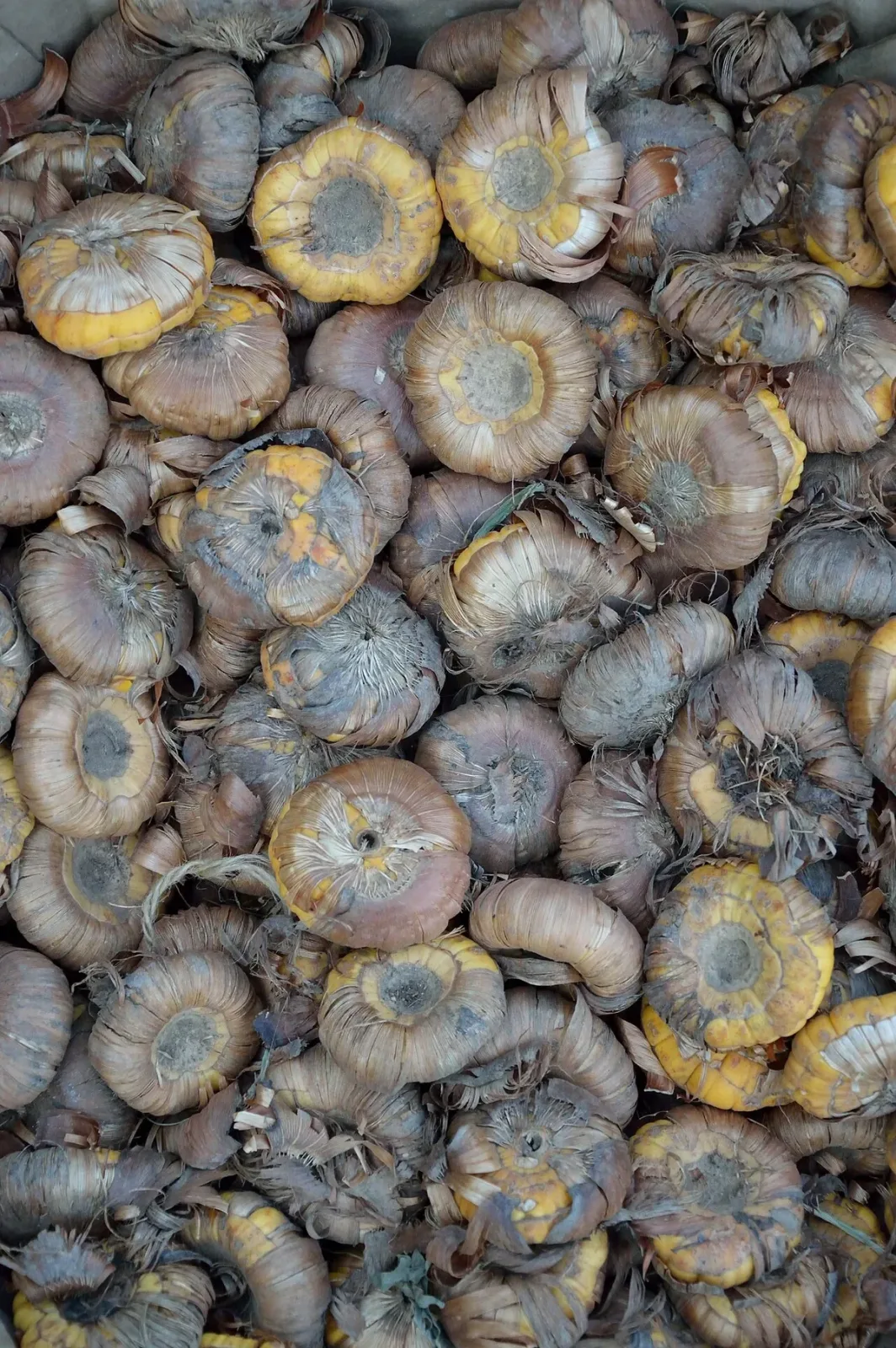
Gladiolus grows from a corm, a swollen stem base covered in a papery tunic, not a true bulb. AAFC explains that the planted corm shrivels during the season and a new corm forms on top of it, with a ring of small cormels at the base. Larger corms give bigger spikes; AAFC notes about 2.5 cm across is the smallest that flowers reliably in most cultivars. Choose firm, plump corms with no soft or dark patches.
Types
- Large-flowered hybrids: tall spikes for cutting and the back of the border; often need support.
- Miniature and dwarf glads: shorter, for pots and small beds.
- Species and their hybrids: NC State lists G. murielae, with scented white flowers, and G. byzantinus, which is hardier.
Where to plant
NC State recommends full sun with protection from strong wind. PAU notes most varieties need at least 8 hours of light a day. Plant glads in groups rather than single rows; the University of Saskatchewan suggests clumps because spikes break in wind. Put tall cultivars at the back of a bed.
Soil
PAU recommends fertile, well-drained, sandy soil with a pH between 6.0 and 6.5. Waterlogged or sticky clay rots corms. Mix in compost or well-rotted manure, or plant on raised beds or ridges.
Planting
Set corms pointed end up. PAU spaces them 30 by 20 cm at a depth of 7 to 10 cm, depending on corm size. AAFC suggests 10 to 15 cm deep for large corms. Deeper planting gives better anchorage. In pots, use a container at least 30 cm deep.
Staggered planting
Each corm gives one main spike. To spread flowering over weeks, plant a batch every two weeks or so. PAU advises 10 to 15 day intervals; AAFC suggests two or three weeks, mixing early, mid and late cultivars.
Watering
NC State advises not letting the soil dry out. PAU notes plants are most sensitive to water shortage just after sprouting and at the 4 to 6 leaf stage, when the spike is forming. Stop watering several weeks before lifting so the corms ripen.
Feeding
Work organic matter into the bed before planting. PAU feeds field crops with nitrogen in two splits, at the 3-leaf and 6-leaf stages. In a home garden, a balanced fertiliser at those stages, at the dose on the label, is enough.
Support
PAU earths up soil 10 to 15 cm around plants at the 4 to 6 leaf stage to stop them falling over. Tall cultivars in windy gardens may also need a stake or a run of twine.
Cutting spikes
PAU advises cutting with secateurs early in the morning or in the evening and putting the spikes in water straight away. For use at home, cut when the lowest floret opens; for longer keeping, when the lowest one to three florets show colour. Leave at least four leaves on the plant so the new corm can build up.
Lifting and storing corms
When the foliage yellows, lift the corms, cut off the stems, and dry them in an airy, shaded place. Remove the old corm, separate the cormels, and discard any with lesions. AAFC and PAU both advise storage at 2 to 7°C, in a dry, ventilated place.
Growing on cormels
The small cormels that form around the base can be saved and grown on to build up a stock of a favourite colour. Plant them thickly in a row or a wide pot, keep them watered, and lift them with the main corms. SKUAST-Jammu notes they take two to three seasons to reach flowering size. Soaking hard cormels in water for a day before planting helps them sprout.
In the vase
Recut the stem under water, strip leaves that would sit below the water line, and use a tall, clean vase. Florets keep opening up the spike for a week or more; pinch off the faded lower ones and snip the top buds if they fail to open. AAFC notes plant breeders are still working on longer vase life.
Pests and diseases
- Thrips: silvery streaks on leaves and deformed, brown-flecked flowers.
- Fusarium wilt and corm rot: PAU describes yellowing, wilting and sickle-shaped leaves, and brown lesions on stored corms. It advises curing corms at 30 to 35°C for 7 to 10 days and discarding rotted ones.
- Botrytis blight: spots on leaves and flowers in cool, damp weather.
- Viruses and aster yellows: Wisconsin Horticulture notes these can ruin plantings; remove affected plants.
Yellow leaves and wilting can have several causes, so check the soil and the corm before treating.
Pets
ASPCA lists gladiola as toxic to dogs, cats and horses. The corm has the highest concentration of the toxic compounds, so store corms out of reach.
Gladiolus pairs well with dahlia, tuberose and chrysanthemum in a cutting garden, and with daylily and agapanthus in summer borders. Amaryllis is another bulb grown for big flowers.
India and Canada in brief
On the Indian plains, gladiolus is planted after the rains and flowers in winter. In Canada, corms go in after the spring frost, flower in summer and are dug in autumn. The market sections give the months.
Seasonal rhythm
Seasonal Calendar
A month-by-month calendar for Gladiolus (Sword Lily) in Global is coming soon. See the light, water and temperature notes above.
Diagnostics
Common Problems & Troubleshooting
Corm rot in wet soil; yellowing and wilting from Fusarium; streaked, deformed flowers from thrips; spikes falling over in wind; no flowers from small corms or shade; corms shrivelling in warm storage.
Pests & seasonal watch: NC State lists thrips, aphids, spider mites and mealybugs. Gladiolus thrips cause silvery streaks on leaves and brown, deformed flowers. PAU lists Fusarium wilt and corm rot and Botrytis blight. Wisconsin Horticulture notes virus complexes and aster yellows can damage plantings.
Q&A
Frequently Asked Questions
How deep should I plant gladiolus corms?
PAU advises 7 to 10 cm, depending on corm size. AAFC suggests 10 to 15 cm for large corms in Canadian gardens. Deeper planting helps tall spikes stand up.
How long do gladiolus take to flower?
PAU notes spikes appear 60 to 120 days after planting, depending on the variety.
How do I get gladiolus flowers over a longer period?
Stagger planting. PAU advises planting at 10 to 15 day intervals, and AAFC suggests intervals of two or three weeks.
When should I cut gladiolus for a vase?
PAU advises cutting when the lowest floret is fully open for local use, or when the lowest one to three florets show colour for longer keeping. Cut early in the morning or in the evening and put the spike in water straight away.
Do I need to dig up gladiolus corms?
In cold climates, yes. AAFC notes gladiolus is not hardy enough to overwinter outdoors in most of Canada. On the Indian plains, corms dry out in summer heat, so PAU advises cold storage until the next planting season.
How should I store gladiolus corms?
Dry them in shade, remove the old corm and discard any with rot, then store at 2 to 7°C in a dry, ventilated place, as AAFC and PAU advise.
Why are my gladiolus flowers streaked and brown?
Often gladiolus thrips, which NC State lists among its common pests. Viruses can also streak flowers, as Wisconsin Horticulture notes. Check closely before treating.
Do gladiolus need staking?
Tall cultivars often do. The University of Saskatchewan notes glads are prone to breaking in wind and recommends planting in clumps and staking. PAU earths up plants at the 4 to 6 leaf stage.
Is gladiolus toxic to pets?
Yes. ASPCA lists gladiola as toxic to dogs, cats and horses, with the corm the most toxic part.
Similar Botanical Matches
Keep exploring
Related plants
Grower field notes
Reader Field Notes in Global
Share how this plant performs in your local Global climate.