
| ☀️ Light | Full sun |
|---|---|
| 💧 Water | High (consistently moist) |
| 🪴 Soil | Rich, moist soil high in organic matter |
| 🌡️ Temp | -4°C – 40°C |
| 🐾 Safety | Cats: non-toxic · Dogs: non-toxic |
| 📏 Mature size | 1.5 m |
Where It Grows & Climate Tolerance
Pet & Companion Animal Toxicity (Canna Lily (Indian Shot, Sarvajjaya))
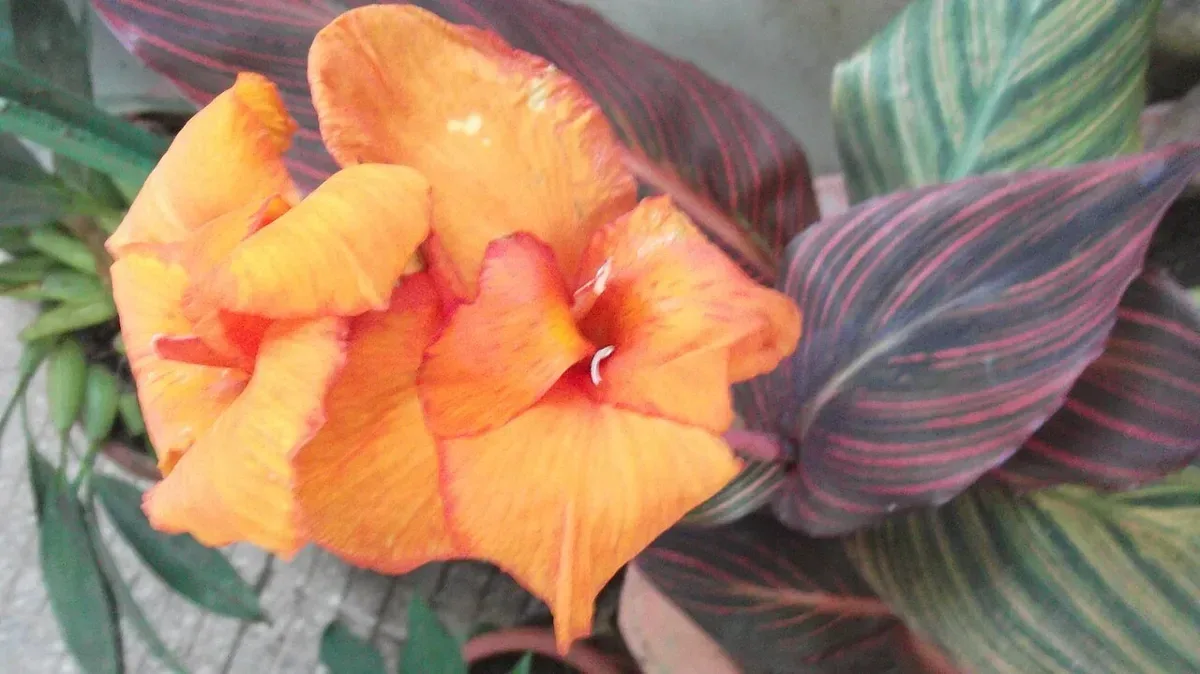
Cannas are bold, fast-growing rhizomatous perennials with broad, banana-like leaves in green, bronze, purple or striped patterns and spikes of red, orange, yellow or pink flowers. They love heat and moisture, flower from summer until frost, and are listed as non-toxic to cats, dogs and horses.
Care instructions
Care Guide & Maintenance Routine
Plant rhizomes in full sun in rich, moist soil once the ground is warm. Water freely, feed during the growing season, and cut off faded flower spikes to keep new ones coming. Cannas are injured by frost, so in cold climates lift the rhizomes in autumn and store them cool and frost-free.
Light & Sunlight
NC State notes cannas flower poorly in shade, and UMN Extension recommends full sun and hot weather. A warm site with part-day sun, such as along a house wall, still gives flowers.
Watering Schedule
Cannas need steady moisture and plenty of water in hot weather. RHS notes they can grow at a pond edge with no more than 15 cm of water over the roots. Never let pots dry out in summer.
Potting Mix & Drainage
Rich, moist soil high in organic matter
Temperature & Humidity
NC State notes cannas are injured below about -4°C (25°F) and have high heat tolerance. Canna × generalis is rated for zones 8a to 11b; in zone 7 and colder, lift rhizomes and store them at 7 to 10°C. RHS notes cannas keep growing above 10°C.
About cannas
Cannas are tropical and subtropical perennials from the Americas, grown for both foliage and flowers. Garden cannas are mostly hybrids grouped as Canna × generalis, which NC State describes as crosses of C. indica with other species. Canna indica, the wild species often called Indian shot, has smaller flowers and has naturalised widely in the tropics.
Plants grow from thick, branching rhizomes. Each stem carries large paddle-shaped leaves; UMN Extension gives a leaf width of 15 to 30 cm, in plain green, blue-green, bronze, purple, burgundy or striped. Flower spikes up to 30 cm long rise from the top of the stems. Heights range from dwarf types near 45 cm to giants of 2.5 m.
Choosing a canna
Garden centres sort cannas mainly by height and leaf colour.
- Dwarf types (45 to 90 cm): suit pots, edges and small beds.
- Medium types (1 to 1.5 m): the usual border canna, good in groups of three or five.
- Tall types (1.8 to 2.5 m): screens, back-of-border plants and large tubs.
- Foliage types: bronze, purple or boldly striped leaves give colour even before flowering. Some striped cultivars have orange flowers that clash or blend, so view them in bloom if you can.
Flowers of older cultivars drop cleanly; others hold on and turn brown, which makes deadheading more important.
Light and position
Full sun gives the most flowers. NC State notes cannas are prone to wind damage, which tears the leaves, so choose a sheltered spot. They make strong background plants, screens and centrepieces for large containers, and suit the margins of ponds.
Soil
Cannas like rich soil with plenty of organic matter and steady moisture. They cope with heavy clay and damp ground better than most flowering plants, but stagnant, cold soil rots rhizomes before they sprout.
Planting
Plant rhizomes once the soil has warmed and frost has passed. NC State gives a depth of 10 to 15 cm and spacing from 30 cm to 90 cm; UMN Extension gives 8 to 10 cm deep. RHS starts rhizomes in pots at 10 to 16°C in spring for an earlier display, then plants them out at the end of May in the UK, about 10 cm deep. Set the eyes facing up.
Watering
Cannas drink a great deal in hot weather. Water deeply and often, especially in containers, and mulch to hold moisture. Some types grow at a pond edge; RHS advises no more than 15 cm of water above the roots.
Feeding
Dig compost into the bed before planting. During summer, a balanced or high-potassium feed at the label rate supports flowering, especially in pots, which use up nutrients quickly.
Deadheading
Each stem carries a main spike with side buds below it. When the first flush fades, cut just above the side buds; when the whole stem has finished, cut it to the base. This keeps new flowers coming until frost.
Winter care
Cannas are not frost hardy. NC State notes they are injured below about -4°C. In frost-free and mild gardens they stay in the ground, sometimes under mulch. In colder areas:
- Let the first frost blacken the leaves, but dig before a hard freeze.
- Cut stems back to 5 to 15 cm and shake off soil.
- Dry the rhizomes for a day or two.
- Store them in peat moss, vermiculite or newspaper at 7 to 10°C.
- Check during winter and remove soft pieces.
RHS stores them in barely damp compost in a frost-free place.
Propagation
Division is the easiest method. Wisconsin Horticulture advises waiting until spring to divide stored rhizomes and keeping at least three eyes per piece. UMN Extension notes the pieces should dry for a few days before planting. Seed of species cannas germinates after the hard coat is nicked and soaked; RHS sows at about 16°C.
Pests and diseases
- Canna viruses: yellow streaks, mottling and distorted leaves. RHS advises destroying affected plants and buying from reputable suppliers.
- Rust: orange pustules on leaves.
- Bud rot: buds blacken and fail to open in wet weather.
- Slugs, snails and Japanese beetles: ragged holes in leaves.
- Leaf-rolling caterpillars: stitch young leaves shut and feed inside.
Pets and wildlife
ASPCA lists canna lily as non-toxic to dogs, cats and horses. NC State notes the red-flowered types attract hummingbirds, and UMN Extension notes some varieties draw bees.
Common mistakes
- Planting in cold, wet soil, which rots rhizomes before shoots appear.
- Growing them in shade, which gives leaves but few flowers.
- Letting pots dry out in summer, which browns leaf edges and stops flowering.
- Storing rhizomes in sealed plastic, which traps moisture and causes rot.
- Buying cheap rhizomes with streaked leaves, which may carry virus to healthy plants.
Through the year
In cold climates the canna year runs from potting up in spring, through planting out after frost, flowering from midsummer, and lifting after the first autumn frost. In frost-free climates the clump keeps growing; old stems are cut out once they finish, the clump is divided every few years, and a fresh layer of compost goes on before the main growing season.
Cannas in containers
RHS recommends containers at least 30 cm across, and larger tubs for tall types. Use a rich, moisture-holding compost, keep it watered daily in hot spells, and feed regularly. Dwarf cultivars suit balconies and patios; giant types need a half barrel.
Companions
For a tropical look, plant cannas with banana, ginger and turmeric, their relatives in the ginger order, and with bird of paradise. In summer borders they pair with dahlia, and in water gardens with lotus.
India and Canada in brief
In most of India cannas grow outdoors all year and flower through the hot months and the rains. In Canada they are summer plants, started indoors and lifted every fall.
Seasonal rhythm
Seasonal Calendar
A month-by-month calendar for Canna Lily (Indian Shot, Sarvajjaya) in Global is coming soon. See the light, water and temperature notes above.
Diagnostics
Common Problems & Troubleshooting
No flowers in shade or dry soil; streaked, mottled leaves from virus; ragged leaves from wind or chewing insects; rust spots; rhizome rot in cold, wet storage; frost-blackened leaves.
Pests & seasonal watch: NC State lists Japanese beetles, slugs and snails, and diseases including aster yellows, bud rot, rust and mosaic virus. Leaf-rolling caterpillars and grasshoppers chew the leaves in warm climates. RHS advises destroying plants with virus symptoms such as streaked, mottled or distorted leaves.
Q&A
Frequently Asked Questions
Is canna a true lily?
No. Cannas belong to their own family, Cannaceae, related to bananas and ginger. The name canna lily is a popular label only.
Are cannas safe for pets?
Yes. ASPCA lists canna lily (Canna generalis) as non-toxic to dogs, cats and horses.
Why is my canna not flowering?
The usual reasons are too much shade, dry soil, or overcrowded clumps. NC State notes cannas flower poorly in shade. RHS lists non-flowering among the common complaints.
Do I need to dig up cannas in winter?
Only where the ground freezes. NC State advises lifting in zone 7 and colder and storing rhizomes at 7 to 10°C. In frost-free areas they stay in the ground.
How deep do I plant canna rhizomes?
UMN Extension plants them 8 to 10 cm deep; NC State gives 10 to 15 cm. Space 30 cm to 90 cm apart, depending on the size of the variety.
Why are canna leaves streaked yellow?
Yellow streaks or mottling, often with twisted leaves, can mean a canna virus. RHS advises destroying affected plants, as there is no cure. Confirm before discarding, because nutrient problems can look similar.
Why is it called Indian shot?
The seeds of Canna indica are small, round, black and very hard, like shot pellets. The name does not mean it is native to India; Canna comes from the Americas.
How do I store cannas over winter?
Wisconsin Horticulture advises letting frost kill the tops, digging before a hard freeze, drying the rhizomes for a day or two, then wrapping them in newspaper or peat moss at 7 to 10°C.
Can cannas grow in water?
Yes, to a point. RHS notes cannas can be grown at a pond margin with no more than 15 cm of water over the roots.
Similar Botanical Matches
Keep exploring
Related plants
Grower field notes
Reader Field Notes in Global
Share how this plant performs in your local Global climate.