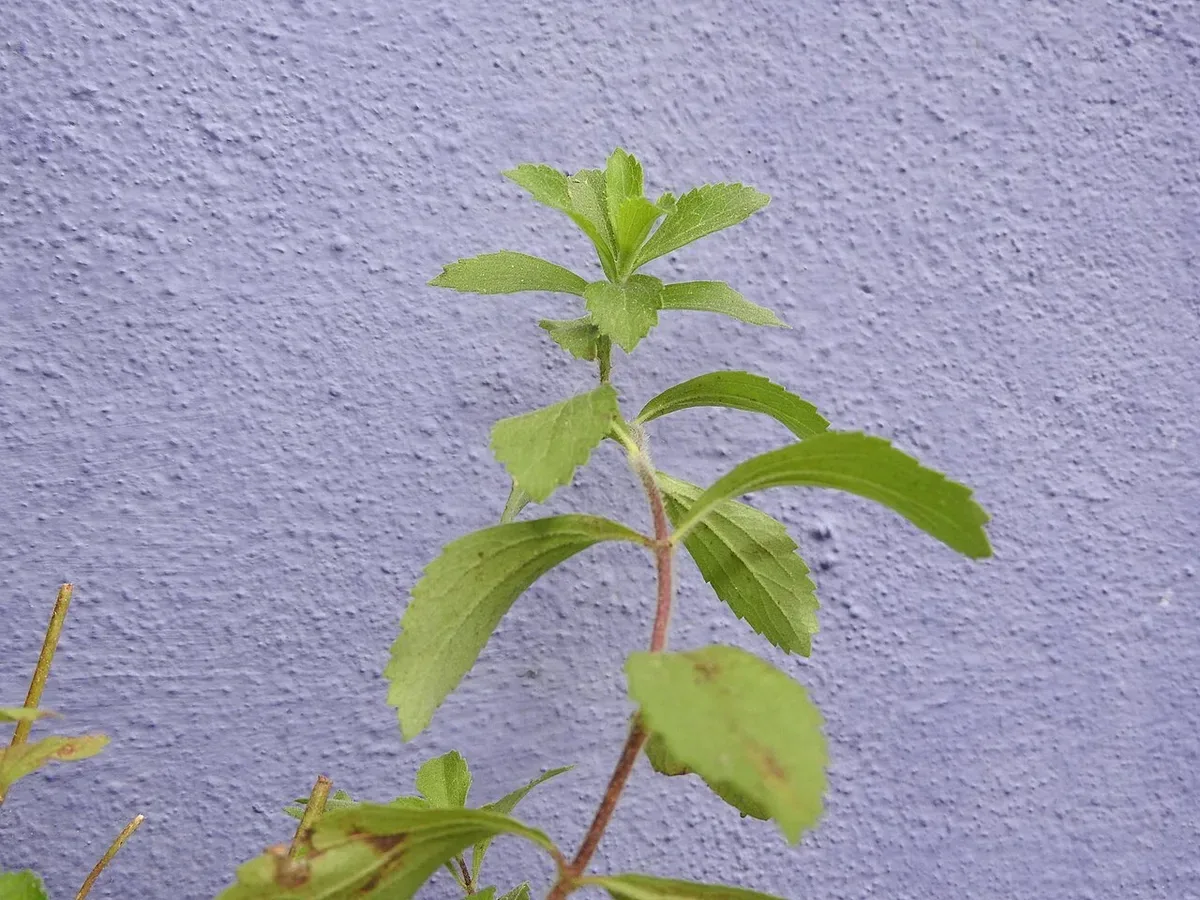
| ☀️ Light | Full sun |
|---|---|
| 💧 Water | Moderate (lightly moist) |
| 🪴 Soil | Loose sandy loam, well drained, slightly acidic to neutral |
| 🌡️ Temp | 4°C – 40°C |
| 🐾 Safety | Cats: non-toxic · Dogs: non-toxic |
| 📏 Mature size | 60 cm |
Where It Grows & Climate Tolerance
Pet & Companion Animal Toxicity (How to Grow Stevia in India)
Stevia, sold as meethi tulsi, grows well in most of India. TNAU describes its ideal as a warm climate averaging 31°C with about 140 cm of rain, and the southern and western states come closest. In the north it grows fast from February to October and needs shelter on cold winter nights.
Care instructions
Care Guide & Maintenance Routine
Plant rooted cuttings in February or March, or after the monsoon. Use a gamla with sandy, well-drained mitti and some compost. Water when the top dries, raise pots during the rains, and harvest just before flowering. In Punjab, Haryana and UP, move pots to a warm wall before December nights near 4°C.
Light & Sunlight
NC State Extension lists full sun to part shade. Plants in full sun are stockier and sweeter; in hot inland summers a little afternoon shade stops pots from drying out too fast.
Watering Schedule
NC State recommends moist but well-drained soil and lists overwatering as a common problem. Water when the top two or three centimetres feel dry, and never leave a pot standing in water. Shallow roots mean stevia wilts quickly in a dry spell.
Potting Mix & Drainage
Loose sandy loam, well drained, slightly acidic to neutral
Temperature & Humidity
No frost tolerance. TNAU advises nights above 4°C, so cold nights in Punjab, Haryana and the hills in December and January damage or kill exposed plants. Extreme May heat with hot loo winds scorches leaves and dries pots quickly.
Stevia in Indian homes
Stevia is not a native herb, but nurseries now sell it everywhere as meethi tulsi, and families growing it to cut down on sugar keep a pot near the kitchen. It is no relation of real tulsi; the name refers only to the sweet leaf. TNAU's crop guide for Tamil Nadu is the most practical Indian reference.
TNAU guidance
TNAU recommends red sandy loam with pH 6.5 to 7.5, 15 cm stem cuttings taken in February and March, and transplanting after 25 to 30 days. It spaces field plants 45 cm apart each way and harvests at 40 to 60 cm, before flowering. Its upper limit is a day temperature of 48°C, and nights should not drop below 4°C.
Region by region
- Bengaluru, Mysuru, Hosur, Coimbatore: the easiest areas. Plants in beds keep producing for several years with three or four cuts.
- Pune, Nashik, Hyderabad: grows well; shade pots from mid-April to the rains, when terraces get very hot.
- Mumbai, Goa, Kochi, Chennai: humid heat is fine but heavy rain is not. Keep plants in pots under a chajja from June to September.
- Kolkata and Bhubaneswar: plant after the rains in October; growth is strong until the next monsoon.
- Delhi, Lucknow, Jaipur, Chandigarh: best growth runs from February to October. Loo winds in May dry pots within hours, and December and January nights get too cold.
- Shimla, Dehradun, Darjeeling: treat it as a summer pot plant and bring it inside a glassed verandah before winter.
Mitti and gamla
For a 12-inch gamla, mix two parts garden mitti, one part sand and one part vermicompost or well-rotted gobar khad. A pure cocopeat mix stays too wet. Put a few pieces of broken pot over the drainage hole.
Monsoon care
Most failures in India happen in July and August. Stand pots on bricks, stop feeding during continuous rain and trim back soft, crowded growth so air moves through. IMD's normal monsoon onset is 11 June in Mumbai and 27 June in Delhi.
North Indian winter
From mid-December, plants on the northern plains stop growing. Move pots against a sunny wall, water lightly and expect some leaf drop. Root a few cuttings in October and keep them indoors near a bright window as backup.
Flowering in winter
Short days push stevia into flower from October onwards. Pinch buds and take a final big cut so the plant does not waste energy on seed.
Questions from Indian growers
- Is meethi tulsi a kind of tulsi? No. It is Stevia rebaudiana, a daisy-family herb.
- Can I make my own powder? Yes. Shade-dry leaves for two to three days and grind them. Dried leaf is sweeter than fresh.
Seasonal rhythm
Seasonal Calendar
| Month | Care Tasks | Seasonal Focus |
|---|---|---|
| Jan | protect | North: keep pots against a sunny wall. South: steady leaf picking. |
| Feb | plant, prune | Take 15 cm cuttings, as TNAU advises. Pinch tips of young plants. |
| Mar | plant, feed | Plant rooted cuttings. Top-dress with vermicompost. |
| Apr | harvest, protect | First cut in the south. North: shade pots from afternoon sun. |
| May | protect | Loo winds: water early morning and use shade cloth on terraces. |
| Jun | harvest | Cut back before the rains. Raise pots on bricks. |
| Jul | protect | Monsoon: no feeding during continuous rain; check drainage. |
| Aug | prune | Thin crowded stems so air moves through. |
| Sep | feed, harvest | Rains ease: harvest, then feed lightly. |
| Oct | plant, harvest | Plant new stock. Pinch flower buds as days shorten. |
| Nov | harvest | Final big cut and drying in the north. Root cuttings as backup. |
| Dec | protect | North and hills: protect from cold nights; water sparingly. |
Diagnostics
Common Problems & Troubleshooting
Root rot and wilting in wet soil; leggy, thin stems in shade; early flowering and fewer leaves in short days; spider mites in hot, dry weather; frost kill in cold winters.
Pests & seasonal watch: Root and stem rot in waterlogged pots during the monsoon. Aphids on tender shoots in February and March. Spider mites on hot, dry terraces in April and May. Whitefly in sheltered balconies. Ask the local KVK before using any spray.
- Root rot — Roots turn brown and mushy in soil that stays wet.
- Leggy — Long weak stems with big gaps between small leaves, leaning to the window.
- Spider mites — Fine webbing and pale speckled leaves, worse in dry heated rooms.
- Aphids — Clusters of small soft insects on new tips, often sticky.
- Whitefly — Tiny white insects fly up in a cloud when you touch the plant.
- Overwatering — Soil stays wet, leaves yellow or droop, and the pot feels heavy.
- Underwatering — Soil is bone dry and leaves are crispy, curled or dull.
- Cold damage — Dark, water-soaked or blackened patches after a cold night or an AC blast.
Q&A
Frequently Asked Questions
How sweet is stevia leaf?
Very sweet. The sweetness comes from steviol glycosides in the leaves, and NC State notes dried leaves taste sweeter than fresh. A single fresh leaf is enough to sweeten a cup of tea.
Can I grow stevia from seed?
You can, but seed germinates unevenly and seedlings differ in sweetness. TNAU recommends stem cuttings, which copy a sweet parent plant exactly.
When should I harvest stevia?
Just before flowering, when plants are 40 to 60 cm tall. NC State notes this is usually about 90 days after planting, and removing flower buds keeps leaves sweet.
Why is my stevia flowering so early?
Short days trigger flowering, as TNAU notes. Plants also flower early when stressed by drought or a cramped pot. Pinch off the buds and harvest.
Why are the lower leaves turning yellow?
Most often the soil is staying wet and the roots are suffocating. Check drainage and let the top of the mix dry slightly before watering. Look at the roots before assuming a pest.
How many times can I harvest in a year?
TNAU reports three to four cuts a year in warm climates, with plants productive for up to five years. In a cold climate expect one or two harvests per summer.
Does stevia survive frost?
No. NC State rates it hardy only in USDA zones 10 and 11, and TNAU says nights should stay above 4°C. Bring pots indoors or keep rooted cuttings over winter.
Is stevia safe for cats and dogs?
ASPCA lists Stevia rebaudiana as non-toxic to dogs, cats and horses.
Is home-grown stevia the same as stevia powder from the shop?
It is the same plant, but shop powders are refined extracts and much more concentrated. Dried home-grown leaf is milder and slightly grassy in flavour.
Similar Botanical Matches
Grower field notes
Reader Field Notes in India
Share how this plant performs in your local India climate.