
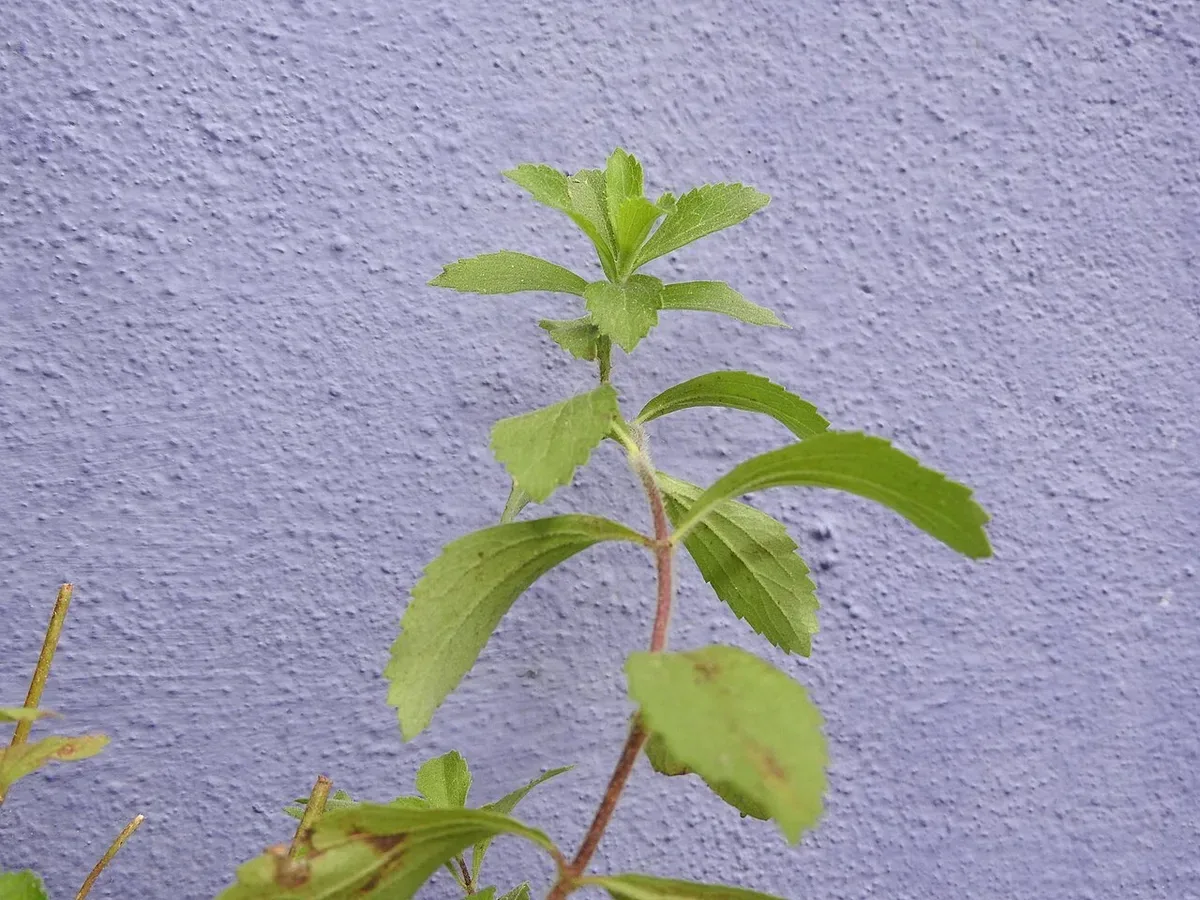
| ☀️ Light | Full sun |
|---|---|
| 💧 Water | Moderate (lightly moist) |
| 🪴 Soil | Loose sandy loam, well drained, slightly acidic to neutral |
| 🌡️ Temp | 4°C – 40°C |
| 🐾 Safety | Cats: non-toxic · Dogs: non-toxic |
| 📏 Mature size | 60 cm |
Where It Grows & Climate Tolerance
Pet & Companion Animal Toxicity (Stevia (Sweet Leaf))
Stevia (Stevia rebaudiana) is a small, bushy herb from Paraguay and Brazil whose leaves taste intensely sweet. It grows quickly in warm weather, likes sun and steady moisture without waterlogging, and is cut back several times a year for fresh or dried leaves.
Care instructions
Care Guide & Maintenance Routine
Grow in full sun or light afternoon shade in loose, well-drained soil. Keep the soil evenly moist but never soggy. Pinch the tips to keep plants bushy, harvest just before flowering, and protect from frost. Root fresh cuttings each year so you always have young plants.
Light & Sunlight
NC State Extension lists full sun to part shade. Plants in full sun are stockier and sweeter; in hot inland summers a little afternoon shade stops pots from drying out too fast.
Watering Schedule
NC State recommends moist but well-drained soil and lists overwatering as a common problem. Water when the top two or three centimetres feel dry, and never leave a pot standing in water. Shallow roots mean stevia wilts quickly in a dry spell.
Potting Mix & Drainage
Loose sandy loam, well drained, slightly acidic to neutral
Temperature & Humidity
TNAU notes the night temperature should not fall below 4°C, and NC State rates it hardy only in USDA zones 10 and 11. It dies back in frost. TNAU gives an upper field limit of 48°C, but potted plants on hot terraces scorch and dry out well before that, so shade them above about 40°C. NC State gives a height of 30 to 60 cm.
About stevia
Stevia rebaudiana is a herb in the daisy family from the uplands of Paraguay and Brazil. NC State describes it as a tender perennial that reaches 30 to 60 cm, with square-ish green stems and opposite, finely toothed leaves 3 to 5 cm long. Small white flowers appear late in the season.
The plant is grown for its leaves, which contain steviol glycosides. Chew a fresh leaf and the sweetness arrives slowly, followed by a faint liquorice note. Dried leaves are sweeter still, which is why most growers dry part of every harvest.
Buying a plant
Most people start with a young plant or a rooted cutting rather than seed. Look for a compact plant with several stems, deep green leaves and no wilting. Taste a leaf if the seller allows it: sweetness varies between seedlings, and a good plant is worth propagating for years.
Light and position
Stevia wants as much sun as you can give it. NC State lists full sun to part shade; in shade stems stretch and leaves thin out. A south or west balcony, a sunny bed or a bright window in summer all work. In very hot, dry places, light shade in the afternoon keeps pots from drying out between waterings.
Soil and pots
Roots are fine and shallow and rot easily, so drainage matters more than richness. TNAU recommends red sandy loam with a pH of 6.5 to 7.5. In a bed, add compost and coarse sand to heavy soil, or plant on a slight ridge. In a pot, use a free-draining potting mix with a handful of sand or perlite and some compost. Choose a container 25 to 30 cm wide with drainage holes.
Watering
Stevia sits between thirsty and drought-tolerant herbs. It wilts quickly if the soil dries out, yet NC State lists overwatering as one of its main problems. Water when the top two or three centimetres feel dry. A thin mulch of dry leaves or straw evens out moisture in beds. In cool weather water much less.
Feeding
NC State suggests a light feed every 4 to 6 weeks during growth. Compost, vermicompost or a balanced fertiliser at the label rate all work. Avoid heavy nitrogen, which pushes soft growth that tastes less sweet.
Pinching and shaping
Left alone, stevia grows into a few tall, floppy stems. Pinch out the tips when the plant is about 15 cm tall and again when side shoots reach the same length. Each pinch doubles the number of stems and the eventual leaf harvest.
Harvesting
Leaves are sweetest just before flowering. NC State notes the first harvest is usually about 90 days after planting, and recommends cutting stems about 15 cm above the ground. TNAU gives the harvest stage as 40 to 60 cm tall, with three to four cuts a year and plants staying productive for up to five years in a warm climate. Between cuts, pick a few leaves at a time as needed.
Drying and storing
Strip leaves from the stems and spread them in a single layer in a warm, shaded, airy place. Commercial growers in Tamil Nadu use driers at 40 to 50°C for one to two days, according to TNAU; at home, shade-drying for two to three days or a dehydrator on low does the same job. Store dried leaves in an airtight jar and crush or grind them just before use.
Propagation
TNAU recommends 15 cm stem cuttings. Strip the lower leaves, insert them in moist, sandy mix and keep them in bright shade. Roots form in two to four weeks, and TNAU suggests transplanting after 25 to 30 days. Seed is possible but germinates unevenly, and seedlings vary in sweetness, so it is best for experiments rather than a reliable crop.
Day length and flowering
Stevia flowers when days shorten, as TNAU notes. Once it flowers, leaf production slows and the leaves lose some sweetness. Pinch off buds as they appear and harvest promptly. Long summer days keep the plant leafy.
Pests and problems
- Root rot: wilting in wet soil, blackened stem base. Improve drainage and water less.
- Aphids: clusters on soft tips. Wash off with water.
- Spider mites: fine speckling and webbing in hot, dry weather. Raise humidity and rinse leaves.
- Leggy growth: too little sun or no pinching.
- Frost damage: blackened leaves after a cold night. The plant is not frost hardy.
Yellowing or spotted leaves can have several causes, so check watering, roots and the undersides of leaves before treating anything.
Using the leaves
Drop a fresh leaf or two into tea, lemonade or a pot of kheer while it simmers. Crushed dried leaf sweetens more strongly than fresh. Home-grown leaf is milder and greener in taste than refined shop extracts, so start with a little and adjust.
Pets
ASPCA lists stevia as non-toxic to dogs, cats and horses.
Common mistakes
- Keeping the soil constantly wet.
- Letting plants flower before harvesting.
- Growing in shade.
- Relying on one old plant instead of rooting new cuttings.
Stevia sits well in a herb corner with tulsi, mint, lemongrass and basil. Drier herbs such as oregano and rosemary prefer less water, so keep them in separate pots.
India and Canada in brief
In one market stevia can stay in the ground for several years and be cut repeatedly. In the other it is a summer pot plant that is either brought indoors or restarted from cuttings. The market sections give planting months and winter care.
Seasonal rhythm
Seasonal Calendar
A month-by-month calendar for Stevia (Sweet Leaf) in Global is coming soon. See the light, water and temperature notes above.
Diagnostics
Common Problems & Troubleshooting
Root rot and wilting in wet soil; leggy, thin stems in shade; early flowering and fewer leaves in short days; spider mites in hot, dry weather; frost kill in cold winters.
Pests & seasonal watch: NC State lists aphids and spider mites. Whitefly can build up on plants kept indoors. Root and stem rot follow overwatering or poorly drained soil.
Care encyclopedia · 1 guide
Guides & Articles for Stevia (Sweet Leaf)
Q&A
Frequently Asked Questions
How sweet is stevia leaf?
Very sweet. The sweetness comes from steviol glycosides in the leaves, and NC State notes dried leaves taste sweeter than fresh. A single fresh leaf is enough to sweeten a cup of tea.
Can I grow stevia from seed?
You can, but seed germinates unevenly and seedlings differ in sweetness. TNAU recommends stem cuttings, which copy a sweet parent plant exactly.
When should I harvest stevia?
Just before flowering, when plants are 40 to 60 cm tall. NC State notes this is usually about 90 days after planting, and removing flower buds keeps leaves sweet.
Why is my stevia flowering so early?
Short days trigger flowering, as TNAU notes. Plants also flower early when stressed by drought or a cramped pot. Pinch off the buds and harvest.
Why are the lower leaves turning yellow?
Most often the soil is staying wet and the roots are suffocating. Check drainage and let the top of the mix dry slightly before watering. Look at the roots before assuming a pest.
How many times can I harvest in a year?
TNAU reports three to four cuts a year in warm climates, with plants productive for up to five years. In a cold climate expect one or two harvests per summer.
Does stevia survive frost?
No. NC State rates it hardy only in USDA zones 10 and 11, and TNAU says nights should stay above 4°C. Bring pots indoors or keep rooted cuttings over winter.
Is stevia safe for cats and dogs?
ASPCA lists Stevia rebaudiana as non-toxic to dogs, cats and horses.
Is home-grown stevia the same as stevia powder from the shop?
It is the same plant, but shop powders are refined extracts and much more concentrated. Dried home-grown leaf is milder and slightly grassy in flavour.
Similar Botanical Matches
Keep exploring
Related plants
Grower field notes
Reader Field Notes in Global
Share how this plant performs in your local Global climate.