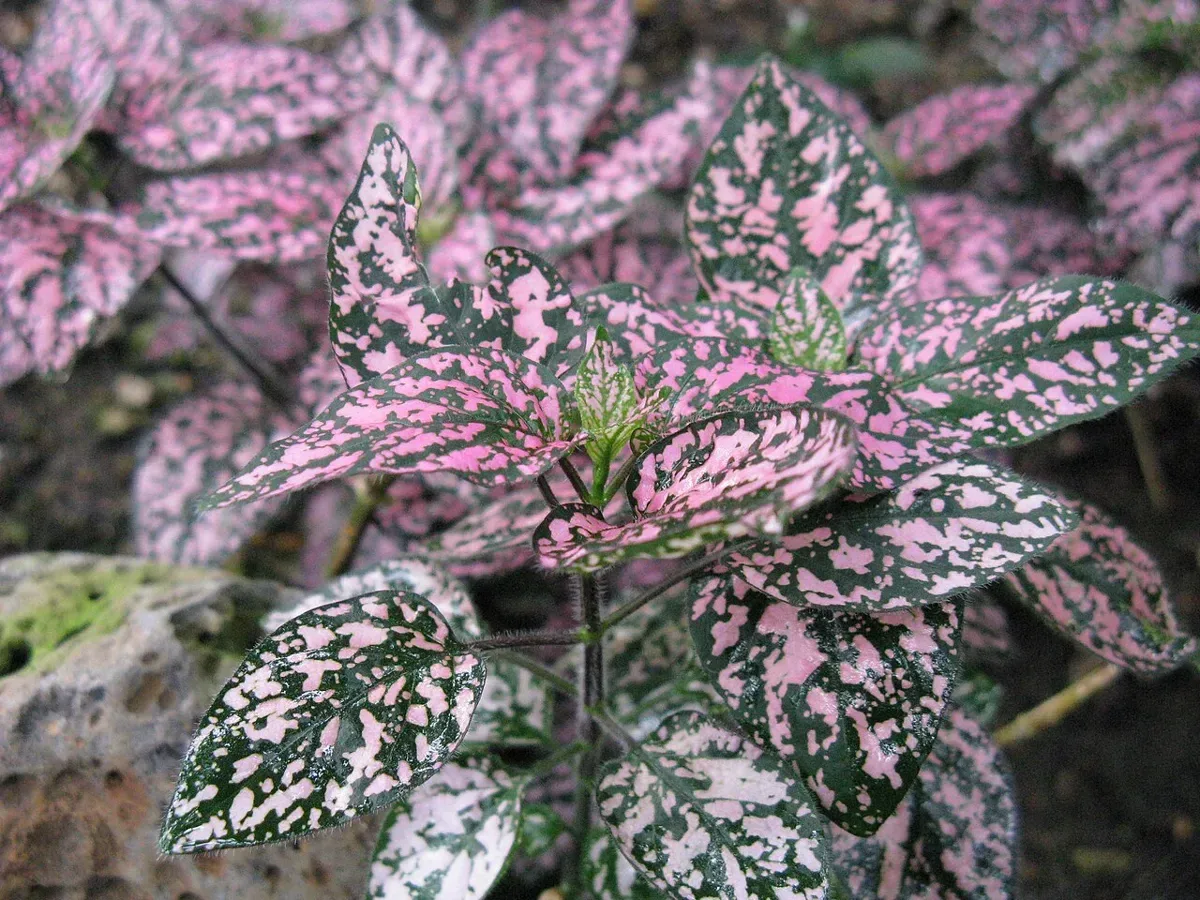
| ☀️ Light | Bright indirect light |
|---|---|
| 💧 Water | Moderate (lightly moist) |
| 🪴 Soil | Airy houseplant mix that holds some moisture |
| 🌡️ Temp | 10°C – 32°C |
| 🐾 Safety | Cats: non-toxic · Dogs: non-toxic |
| 📏 Mature size | 30 cm |
Where It Grows & Climate Tolerance
Pet & Companion Animal Toxicity (How to Grow Polka Dot Plant in India)
In India, hypoestes is a popular, low-cost indoor plant for bright windowsills, office desks and dish gardens. It also grows outdoors in shaded beds in Bengaluru, Kerala and the coastal cities, where it can self-seed. It needs bright light without harsh sun.
Care instructions
Care Guide & Maintenance Routine
Keep it near a bright window or on a shaded balcony, out of direct afternoon sun. Water when the top of the mix starts to dry: often in garmi, less in sardi. Pinch every few weeks, cut off flower spikes, and root fresh cuttings each Feb to March and again after the barsaat.
Light & Sunlight
NC State and Wisconsin Horticulture both recommend bright, filtered light. NC State notes too much sun crinkles the leaves, while too little fades the colour and makes plants leggy. Wisconsin Horticulture notes colour is better in partial shade than full sun.
Watering Schedule
Wisconsin Horticulture advises watering well while plants grow actively and letting the mix dry slightly between waterings. The plant wilts quickly when dry but usually recovers after watering. Soggy soil causes root rot.
Potting Mix & Drainage
Airy houseplant mix that holds some moisture
Temperature & Humidity
Grows best between 18 and 30°C. North Indian loo and hot glass windows scorch it; winter nights below 10°C in Delhi, Punjab or the hills check growth, so keep it indoors. No tolerance for pala.
Hypoestes in Indian homes
Polka dot plant arrived in India as a nursery houseplant and is now sold everywhere, from city nurseries to roadside plant stalls. Its small size suits windowsills, study tables and terrarium bowls. In mild, humid places such as Bengaluru, Mangaluru, Kochi, Goa and Mumbai, it grows happily outdoors in shaded beds and pots. Wisconsin Horticulture notes it reseeds freely in warm areas, so expect seedlings in nearby pots.
Light through the Indian year
- Garmi (April to June): keep it away from west-facing windows and hot glass. Bright shade under a chajja or behind a net curtain is best.
- Barsaat: cloudy weeks bring weaker light; move it closer to the window.
- Sardi: in north India, morning sun through an east window is welcome.
Watering by season
In Delhi or Jaipur summers, a small pot may need water daily, because the thin leaves collapse when the mix dries. In the monsoon, check before watering; constant wet mix causes root rot. In winter, water every few days and do not let cold water sit in the saucer.
Humidity in north Indian winters
Dry air from room heaters and the cold, dry months of December and January brown the leaf edges. Group plants together, stand the pot on a tray of wet pebbles, or mist the leaves in the morning, as Wisconsin Horticulture suggests for indoor plants in winter.
Region notes
- Delhi, Lucknow, Chandigarh: indoors in summer and winter; a shaded balcony during the barsaat.
- Bengaluru, Pune, Hyderabad: indoors or in shaded outdoor gamlas all year.
- Kolkata, Mumbai, Chennai, Kochi: outdoors in shade; watch for root rot in the monsoon.
- Hill stations: indoors; protect from cold below 10°C.
Cuttings in an Indian home
The best times to root cuttings are February and March, and again in August and September. Put 10 cm tips in a glass of water on a bright windowsill and pot them in a mix of cocopeat, garden mitti and leaf mould or vermicompost once roots form.
A typical year in Bengaluru
Plants grow fast through the mild summer and rains, needing a pinch every two or three weeks. Flower spikes appear around Deepawali as days shorten; cut them off. By Sankranti, older plants look thin, so pot up the cuttings rooted in autumn.
Buying at the nursery
At Indian nurseries, polka dot plants are often sold in small black plastic pots packed with garden mitti that stays wet. Repot within a week into a lighter mix with cocopeat and perlite, and check the stems for mealybugs, a common hitchhiker in nursery stock during the dry months.
Questions from Indian growers
- Why did my plant collapse after a hot day on the balcony? Heat and dry mix. Water, move it into shade, and it usually recovers.
Seasonal rhythm
Seasonal Calendar
| Month | Care Tasks | Seasonal Focus |
|---|---|---|
| Jan | protect | Sardi: keep away from heaters; mist in the morning. |
| Feb | prune, repot | Basant: repot young plants; take cuttings. |
| Mar | prune | Holi: pinch tips; feed at half strength. |
| Apr | protect | Garmi begins: move away from west windows. |
| May | protect | Loo: water daily; bright shade only. |
| Jun | protect | Barsaat: check before watering; avoid soggy mix. |
| Jul | prune | Monsoon growth spurt: pinch every two weeks. |
| Aug | prune | Take a second round of cuttings in water. |
| Sep | feed | Pitru paksha: light feed; watch for mealybugs. |
| Oct | prune | Navratri: flower spikes appear; cut them off. |
| Nov | repot | Diwali: pot up rooted cuttings for winter. |
| Dec | protect | Pala nights in the north: keep indoors above 10°C. |
Diagnostics
Common Problems & Troubleshooting
Leggy, floppy stems in low light or with age; faded spots in shade; crinkled, scorched leaves in direct sun; sudden wilting when dry; root rot in soggy mix; powdery mildew; whitefly and mealybugs.
Pests & seasonal watch: Mealybugs and whitefly on stems in the dry months, spider mites near room heaters, powdery mildew in humid, still corners, and root rot in waterlogged pots during the barsaat. Ask a KVK or nursery expert before spraying.
- Drooping — Stems and leaves hang limp even though the plant was recently fine.
- Root rot — Roots turn brown and mushy in soil that stays wet.
- Mealybugs — White cottony clumps in leaf joints, often with sticky honeydew.
- Leggy — Long weak stems with big gaps between small leaves, leaning to the window.
- Whitefly — Tiny white insects fly up in a cloud when you touch the plant.
- White powder — A white powdery film on leaves, usually in still, humid air with dry soil at the roots.
- Sun scorch — Bleached or crispy patches on the side that faces strong sun.
- Fading variegation — Variegated leaves come in greener, or whole shoots turn fully green.
Q&A
Frequently Asked Questions
Is polka dot plant safe for cats and dogs?
Yes. ASPCA lists it as non-toxic to dogs, cats and horses, though eating it may cause mild vomiting or diarrhoea.
Why is my polka dot plant leggy?
Low light and age. NC State and Wisconsin Horticulture both note plants get leggy over time. Pinch regularly and replace old plants with cuttings.
Why are the spots fading?
Too little light. NC State notes low light fades the colour; move it to brighter, filtered light.
Why are the leaves crinkled and pale?
Too much direct sun. NC State notes strong sun crinkles the leaves.
Should I remove the flowers?
Yes. NC State suggests cutting off flower spikes; plants often decline after flowering.
How do I propagate polka dot plant?
Take 10 cm stem cuttings and root them in water or moist mix. Wisconsin Horticulture notes they root quickly.
Why does my plant wilt suddenly?
It is usually dry. Water thoroughly; it normally recovers within hours. Repeated severe wilting weakens it.
Can I grow it outdoors?
In warm climates, yes, in partial shade. Wisconsin Horticulture notes it is used as a shade bedding plant and reseeds freely in warm areas.
Is it the same as polka dot begonia?
No. Polka dot begonia is Begonia maculata, a different plant with silver-spotted, wing-shaped leaves.
Similar Botanical Matches
Grower field notes
Reader Field Notes in India
Share how this plant performs in your local India climate.