| ☀️ Light | Bright indirect light |
|---|---|
| 💧 Water | Low (allow soil to dry) |
| 🪴 Soil | Cactus or succulent mix; gritty and fast draining |
| 🌡️ Temp | 10°C – 35°C |
| 🐾 Safety | Cats: toxic · Dogs: toxic |
| 📏 Mature size | 45 cm |
Where It Grows & Climate Tolerance
Pet & Companion Animal Toxicity (Panda Plant Care in India)
Panda plant is a popular balcony and windowsill succulent in Indian cities. It grows happily in a bright, covered spot most of the year. The two risks are the monsoon, when wet mix and humid air rot the stems, and hard afternoon sun on open terraces in April and May.
Care instructions
Care Guide & Maintenance Routine
A covered balcony or bright windowsill facing east is perfect. Use a small clay gamla filled with sand, brick grit and some mitti. Give water once the gamla feels light and bone-dry, roughly weekly from April to June, rarely during the barsaat and the northern winter. In Delhi, Punjab and UP, carry it inside on chilly December nights.
Light & Sunlight
NC State Extension says it prefers bright, indirect light for at least six hours a day, with protection from the sun in very hot climates to prevent leaf burn. Too little light makes it leggy.
Watering Schedule
NC State advises letting the soil dry out between waterings. Wrinkled or shrivelled leaves suggest too little water; yellow or mushy leaves and stems suggest too much. Water less in cool or dull weather.
Potting Mix & Drainage
Cactus or succulent mix; gritty and fast draining
Temperature & Humidity
Frost kills it. Chilly December and January nights across Punjab, Haryana, Delhi, UP and the hill states harm plants left out. NC State notes it dislikes extreme heat, so screen terrace plants once April to June temperatures climb past about 35°C.
Panda plant in Indian homes
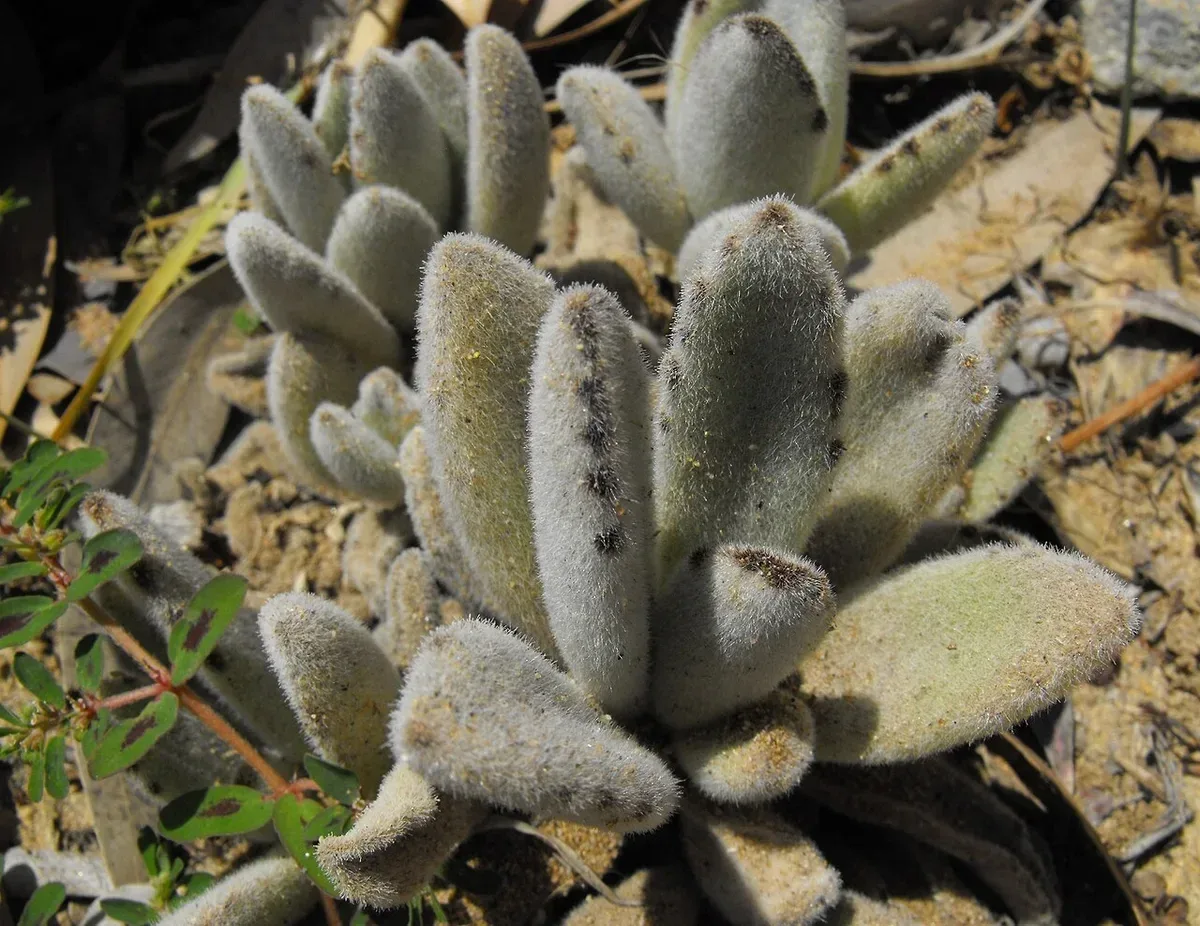
The silvery, furry leaves make it a favourite on office desks and balcony shelves, and nurseries in Bengaluru, Pune, Delhi and Kolkata sell it cheaply. It copes with Indian heat and dry winters well. Most losses come from overwatering and monsoon damp.
Where to keep it
- Bengaluru, Pune, Hyderabad: near ideal. A covered balcony with morning sun suits it all year.
- Delhi, Jaipur, Lucknow, Chandigarh: shade it from afternoon sun from April to June; NC State notes it dislikes extreme heat. Bring it inside on December and January nights.
- Mumbai, Chennai, Kochi, Kolkata: grows well, but keep it under a roof from June to September and water far less.
- Shimla, Darjeeling, Shillong: an indoor plant near a sunny window; cold verandahs are too chilly in winter.
The right mix
Nursery plants often come in heavy, peat-like mix that stays wet. Repot into a small clay gamla with one part garden mitti, one part coarse sand and one part brick grit or perlite. A little vermicompost is enough feed for a year.
Watering by season
During April and May, lift the gamla: when it feels light, give a full drink, often weekly. Through barsaat, humid air means once every two or three weeks may be plenty. Over the northern winter, a cup every few weeks will do.
Monsoon care
IMD's normal monsoon onset is 11 June in Mumbai and 27 June in Delhi. Before then, move the pot under cover, remove any saucer, and keep it where air moves. Soft, dark stems mean rot: cut above the damaged part and reroot the top in dry mix.
Light on terraces
Open south- or west-facing terraces are too harsh in summer. A 50 per cent shade net or a spot under a pergola works well.
Dust and city air
In Delhi, Ghaziabad or Kanpur, winter smog and construction dust settle on the fuzzy leaves and dull them. Brush them with a soft, dry paintbrush instead of washing; water droplets trapped in the hairs leave marks and can start rot.
In an AC office
A desk under tubelights or LED panels and air conditioning is fine if it sits near a window. Cold air blowing straight from a split AC unit chills the leaves, so keep it out of the airflow. Water less in an office that stays cool.
Buying tips
Weekend plant markets and nurseries along city ring roads sell it in small black bags or plastic pots. Choose plants with firm, plump leaves and no white fluff at the leaf joints.
Cuttings for gifts
Leaf cuttings root best in February and March or after the rains in October, when it is warm but not humid.
Questions from Indian growers
- Is it safe near my cat? No. ASPCA lists kalanchoes as toxic to cats and dogs.
- Is it the same as the flowering kalanchoe sold at Diwali? A relative, not the same plant.
Seasonal rhythm
Seasonal Calendar
| Month | Care Tasks | Seasonal Focus |
|---|---|---|
| Jan | protect | Delhi, Lucknow, Amritsar: carry indoors at night; a sip of water monthly. |
| Feb | plant | Basant panchami warmth: start leaf cuttings in trays. |
| Mar | feed, repot | Holi time: shift into a clay gamla with brick grit; first feed. |
| Apr | protect | Plains: away from scorching afternoon rays. |
| May | protect | Loo season: 50 per cent shade net over terrace shelves. |
| Jun | protect | Before barsaat: place under a chajja; remove saucers. |
| Jul | protect | Peak rains: hardly any watering; inspect stems for blackening. |
| Aug | protect | Muggy weeks: brush leaf joints to find mealybugs. |
| Sep | protect | Stay dry till the rains withdraw. |
| Oct | plant, feed | Navratri to Diwali: root cuttings and feed lightly. |
| Nov | protect | Shorter days: shift to the sunniest ledge. |
| Dec | protect | Northern cold: indoors after dusk; water once every few weeks. |
Diagnostics
Common Problems & Troubleshooting
Root rot and mushy stems from overwatering; shrivelled leaves from underwatering; stretched, leggy stems in low light; scorched leaves in hot sun; leaf drop after cold.
Pests & seasonal watch: Mealybugs hiding in the felt, mostly from February to May. Red spider mites on hot, dusty Delhi and Jaipur balconies. Stem rot during barsaat if the gamla stays soggy. Fungus gnats around waterlogged pots. Ask a nursery or the local KVK before spraying.
- Root rot — Roots turn brown and mushy in soil that stays wet.
- Mealybugs — White cottony clumps in leaf joints, often with sticky honeydew.
- Leggy — Long weak stems with big gaps between small leaves, leaning to the window.
- Spider mites — Fine webbing and pale speckled leaves, worse in dry heated rooms.
- Overwatering — Soil stays wet, leaves yellow or droop, and the pot feels heavy.
- Underwatering — Soil is bone dry and leaves are crispy, curled or dull.
- Leaf drop — Many leaves fall in a short time, sometimes still green.
- Sun scorch — Bleached or crispy patches on the side that faces strong sun.
- Cold damage — Dark, water-soaked or blackened patches after a cold night or an AC blast.
Care encyclopedia · 1 guide
Guides & Articles for Panda Plant Care in India
Q&A
Frequently Asked Questions
How often should I water a panda plant?
Only when the mix has dried out completely, as NC State advises. That may be every two to three weeks in warm months and much less in winter.
Why are the leaves wrinkled?
NC State notes shrivelled or wrinkled leaves can mean underwatering. Check the mix: if it is bone dry, water thoroughly. If the mix is wet, look at the stem and roots for rot.
Why is my panda plant leggy?
Too little light. NC State lists inadequate sunlight as the usual cause. Move it to a brighter spot and cut back the stretched stem to root as a new plant.
Can it go in direct sun?
Some gentle morning sun is fine. NC State warns that full, hot sun can cause leaf burn, especially in very hot climates.
Is it easy to propagate?
Leaf cuttings and offsets work, but NC State notes the fuzzy leaves make it slower than many succulents. Be patient and keep the mix only slightly damp.
Is the panda plant toxic to cats and dogs?
Yes. ASPCA lists Kalanchoe species as toxic to dogs and cats, and NC State lists the panda plant as poisonous if eaten.
Will it flower?
Rarely indoors. NC State notes small tubular flowers form in summer on mature plants, mainly outdoors in warm climates.
What are 'Chocolate Soldier' and 'Teddy Bear'?
Cultivars described by NC State. 'Chocolate Soldier' has longer, thinner leaves with reddish-brown edges; 'Teddy Bear' has rounder, darker brown leaves.
What is the lowest temperature it tolerates?
It is not cold hardy. NC State gives an ideal range of 16 to 24°C. Keep it above about 10°C and away from frost.
Similar Botanical Matches
Grower field notes
Reader Field Notes in India
Share how this plant performs in your local India climate.