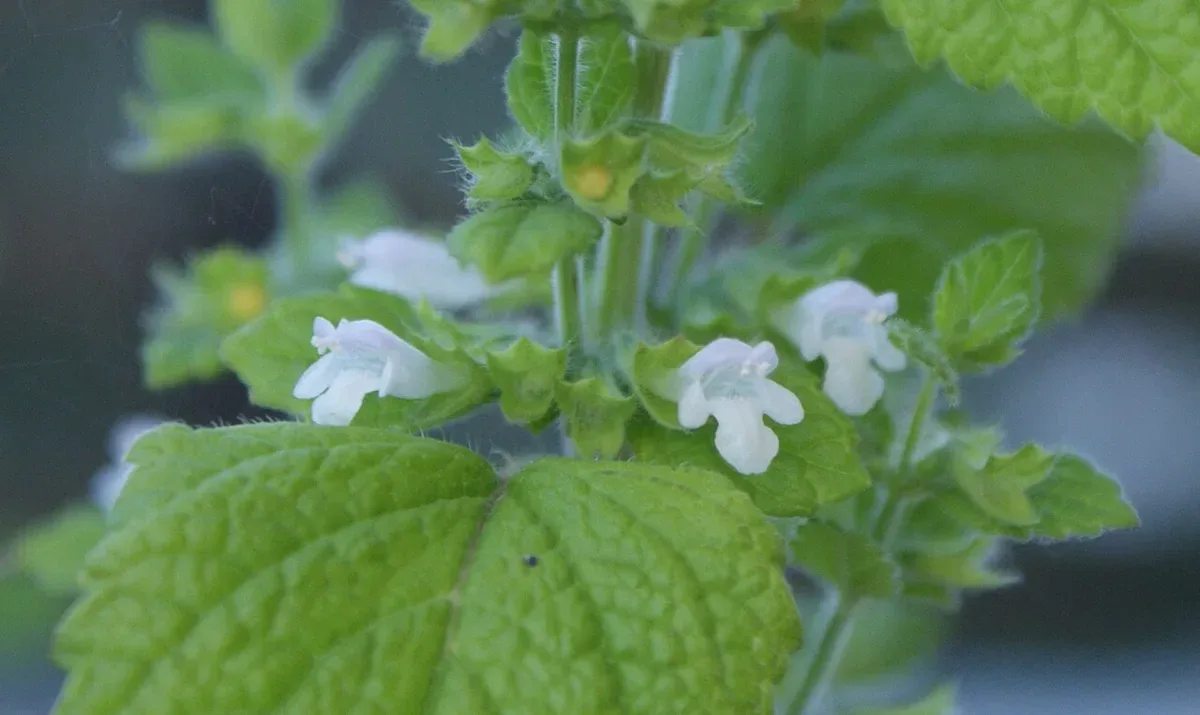
| ☀️ Light | Full sun |
|---|---|
| 💧 Water | Moderate (lightly moist) |
| 🪴 Soil | Fertile, moist but well-drained loam; tolerates most soils |
| 🌡️ Temp | -37°C – 32°C |
| 🐾 Safety | Cats: non-toxic · Dogs: non-toxic |
| 📏 Mature size | 60 cm |
Where It Grows & Climate Tolerance
Pet & Companion Animal Toxicity (How to Grow Lemon Balm in India)
Lemon balm is a temperate herb that does best in India's hills. CSIR-CIMAP and the Centre for Aromatic Plants have grown it in Uttarakhand, where it is a perennial. On the plains it is a cool-season herb, planted in October and kept in shade through the summer.
Care instructions
Care Guide & Maintenance Routine
Hills: plant in March or September in a bed or large pot. Plains: plant in October or November in a gamla with good mitti and compost, give afternoon shade from March, and keep it out of standing water in the monsoon. Cut back after flowering and root cuttings as insurance.
Light & Sunlight
NC State and the RHS list full sun to partial shade. Wisconsin Horticulture notes the yellow-leaved 'All Gold' colours best in partial shade. In hot, dry climates afternoon shade prevents scorched leaves.
Watering Schedule
Keep the soil lightly moist during active growth and water in dry spells. NC State notes established plants tolerate some drought, but leaves turn tough and less fragrant when stressed. Pots dry faster and need checking every day or two in warm weather.
Potting Mix & Drainage
Fertile, moist but well-drained loam; tolerates most soils
Temperature & Humidity
Hardy to frost and snow in the hills, dying back to the roots in winter. On the plains, heat above about 35°C with dry loo winds in May and June causes wilting and scorch, and plants often die out by the monsoon unless kept in shade.
Lemon balm in Indian gardens
Lemon balm is grown in India mostly by herb lovers and tea drinkers, and commercially on a small scale in the Himalaya. It should not be confused with lemongrass or lemon tulsi, which are different plants. The right season and position decide whether it lives for years or only for one winter.
Research from Uttarakhand
A trial at the Centre for Aromatic Plants, Selaqui, in the Doon Valley (PMC4243263) used planting material from Dhanolti and found harvesting about 160 days after planting gave the best herb and oil yield. At CSIR-CIMAP's Purara centre in Bageshwar, a study in the ICAR Indian Journal of Hill Farming found cuttings rooted in a 1:1:1 mix of vermicompost, soil and farmyard manure had the best survival, about 85 per cent.
Region by region
- Uttarakhand, Himachal, Jammu and Kashmir, Sikkim: grows as a perennial. Plant in March or after the rains; it dies back in a hard winter and returns.
- Nilgiris, Kodaikanal, Munnar: cool enough all year, but give it raised beds for the heavy monsoon.
- Bengaluru and Pune: can survive several years in a pot with morning sun and afternoon shade.
- Delhi, Punjab, Haryana, Lucknow: plant in October. It grows well until March, then needs deep shade and daily watering; many plants collapse in May and June.
- Mumbai, Chennai, Kolkata: humid heat shortens its life. Treat it as a winter herb and keep cuttings going.
Buying and starting
Nurseries in Mussoorie, Nainital, Shimla and Ooty often carry potted plants; elsewhere, online herb sellers ship young plants and seed packets. On the northern plains, sow in seedling trays in the first half of October, because seed germinates slowly once December nights turn cold. A rooted plant bought in October gives tea leaves by Diwali or soon after.
Gamla and mitti
A 12-inch gamla with two parts mitti, one part vermicompost and one part coarse sand suits it. Following the Bageshwar result, root cuttings in a similar mix of soil, vermicompost and old gobar khad.
Hot season
From April, move pots to the north side of the house or under a shade net. Water in the early morning. Cut back hard and let the plant rest rather than forcing growth in 40°C heat.
Monsoon
Raise pots on bricks and trim the clump so air moves through. IMD's normal monsoon onset is 11 June in Mumbai and 27 June in Delhi; withdrawal from Delhi is around 25 September, when new plants can go in.
Questions from Indian growers
- Is it the same as lemongrass? No. Lemongrass is a tall grass; lemon balm is a soft-leaved mint-family herb.
- Can I make tea from it? Yes. Steep a handful of fresh leaves in hot water.
Seasonal rhythm
Seasonal Calendar
| Month | Care Tasks | Seasonal Focus |
|---|---|---|
| Jan | harvest | Plains: pick leaves freely. Hills: dormant; keep the crown dry. |
| Feb | feed, harvest | Plains: steady picking; light feed. Root a few cuttings. |
| Mar | plant, prune | Hills: plant or divide. Plains: move pots to afternoon shade. |
| Apr | harvest, protect | Plains: heavy harvest before the heat; cut back. |
| May | protect | Plains: deep shade and morning watering through loo winds. |
| Jun | protect | Raise pots before the monsoon. Hills: first big harvest. |
| Jul | prune, protect | Monsoon: thin crowded stems; remove mildewed leaves. |
| Aug | protect | Check drainage; do not water when the mix is wet. |
| Sep | plant | Hills: divide and replant after the rains. |
| Oct | sow, plant | Plains: plant new pots; sow seed in trays. |
| Nov | plant, repot | Plains: plant out seedlings; refresh pots with compost. |
| Dec | harvest, protect | Plains: regular picking. Hills: cut down stems after frost. |
Diagnostics
Common Problems & Troubleshooting
Self-seeding and spreading clumps; tall, floppy flowering stems with tough leaves; powdery mildew in humid, crowded conditions; wilting and leaf scorch in heat and drought; declining old clumps after three or four years.
Pests & seasonal watch: Powdery mildew in humid spells after the rains. Aphids on soft spring growth. Spider mites on hot, dry terraces. Root rot in waterlogged pots during the monsoon. Ask the local KVK before using any spray.
- Leggy — Long weak stems with big gaps between small leaves, leaning to the window.
- Spider mites — Fine webbing and pale speckled leaves, worse in dry heated rooms.
- Aphids — Clusters of small soft insects on new tips, often sticky.
- White powder — A white powdery film on leaves, usually in still, humid air with dry soil at the roots.
- Leaf spot — Brown or tan spots with a yellow halo, sometimes with tiny dots in the centre.
- Grey mould — Fuzzy grey mould on faded flowers, damaged leaves or soft stems.
- Underwatering — Soil is bone dry and leaves are crispy, curled or dull.
- Sun scorch — Bleached or crispy patches on the side that faces strong sun.
Q&A
Frequently Asked Questions
Is lemon balm the same as bee balm?
No. Wisconsin Horticulture notes lemon balm is not related to bee balm (Monarda), although both are in the mint family and both attract bees.
Does lemon balm spread like mint?
It spreads, but mainly by seed. NC State notes it self-seeds and also creeps by rhizomes. Cut it back after flowering and grow it in a pot if space is limited.
When should I harvest lemon balm?
Pick young tips any time from spring to autumn. For a bigger harvest, Wisconsin Horticulture suggests cutting several inches of top growth at flowering, with two or three cuts a season on established plants.
Can I dry lemon balm?
Yes, on screens in a dark, airy room. Wisconsin Horticulture notes dried leaves lose much of their aroma, so fresh leaves give the best tea.
Why does my lemon balm look tired by midsummer?
Flowering stems turn tough and leggy. Cut the whole plant back hard after flowering; a fresh flush of leaves follows within a few weeks.
Can I grow lemon balm from seed?
Yes. Sow indoors 4 to 6 weeks before the last frost, as Wisconsin Horticulture advises, and be patient, because germination can be slow.
How long does a plant last?
Wisconsin Horticulture notes plants generally decline after three or four seasons. Divide or replace them at that point.
Is lemon balm safe for pets?
ASPCA lists Melissa officinalis as non-toxic to dogs, cats and horses.
Will lemon balm grow in shade?
In partial shade, yes. The RHS notes it is happy in sun or partial shade, and the yellow-leaved forms prefer light shade. Deep shade gives thin, floppy growth.
Similar Botanical Matches
Grower field notes
Reader Field Notes in India
Share how this plant performs in your local India climate.