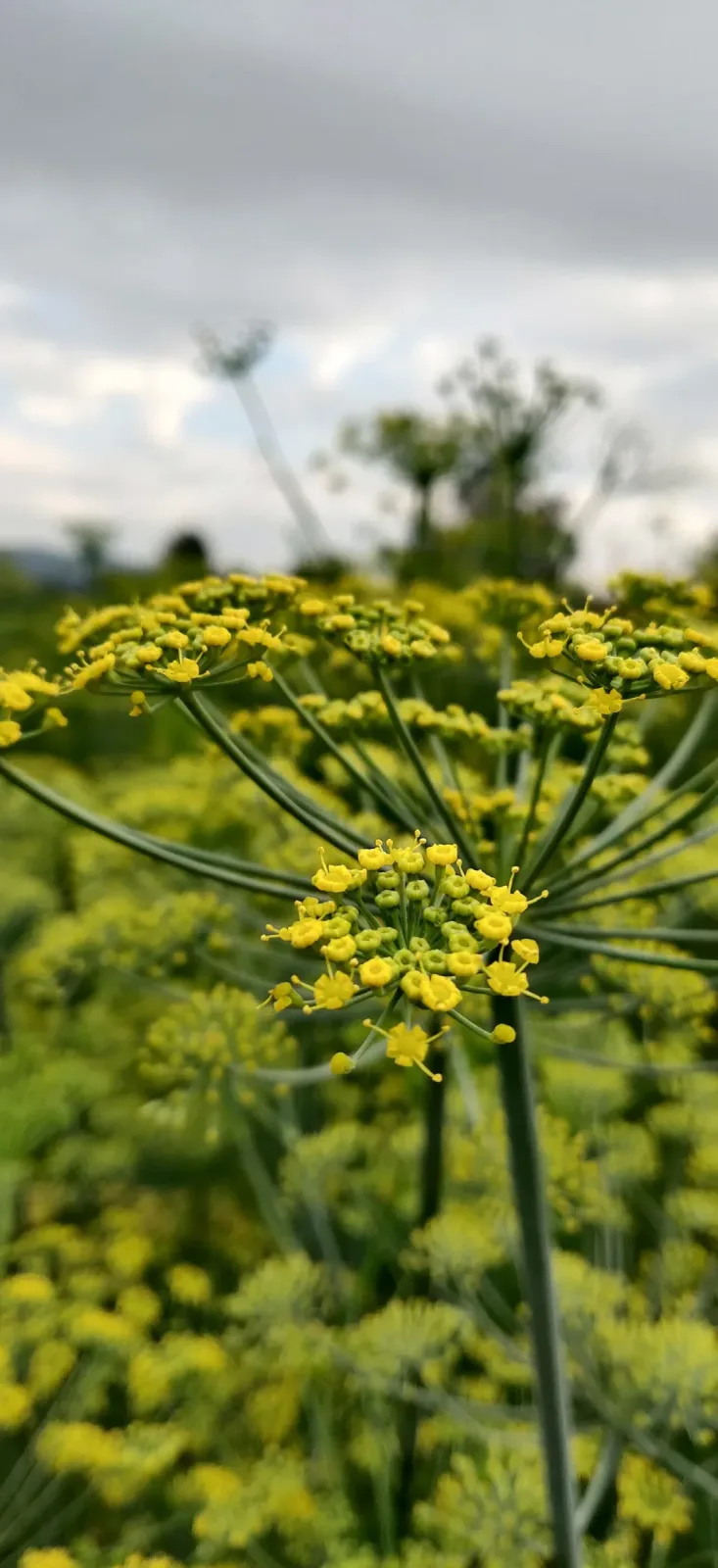
| ☀️ Light | Full sun |
|---|---|
| 💧 Water | Moderate (lightly moist) |
| 🪴 Soil | Deep, well-drained loam; pH about 6.5 to 8.0 |
| 🌡️ Temp | -30°C – 35°C |
| 🐾 Safety | Cats: non-toxic · Dogs: non-toxic |
| 📏 Mature size | 1.5 m |
Where It Grows & Climate Tolerance
Pet & Companion Animal Toxicity (How to Grow Fennel (Saunf) in India)
Saunf is a rabi crop in India. ICAR reports Gujarat produces more than 90% of the country's fennel, and the Spices Board notes it is grown widely across north India as a cold-weather crop. Home gardeners sow it in late October or November for green leaves and seed by spring.
Care instructions
Care Guide & Maintenance Routine
On the plains, sow seed 2 cm deep in late October or early November in a sunny kyari of deep, well-drained loam. Thin plants to 25 to 30 cm, water every 7 to 10 days, and earth up the base as plants grow. Pick umbels when the seed is full but still green, then dry them mostly in shade.
Light & Sunlight
Full sun. NC State, RHS and TNAU all grow fennel in open, sunny positions. Shade gives weak, floppy stems and few seed heads.
Watering Schedule
Keep seedlings moist. RHS notes herb fennel is drought tolerant once established, while Florence fennel bolts if the soil dries out. TNAU irrigates the seed crop every 7 to 10 days. NC State notes stem and root rot in poorly drained soil.
Potting Mix & Drainage
Deep, well-drained loam; pH about 6.5 to 8.0
Temperature & Humidity
A cool-season rabi crop. Dry, cold weather suits seed set; pala and kohra during flowering in January and February damage umbels and bring disease. Hot loo in April ripens seed fast, so harvest promptly.
Saunf in India
Fennel is an important seed spice in India. ICAR's Indian Horticulture report by KVK Sabarkantha notes that Gujarat produces more than 90% of India's fennel, with Rajasthan also a major grower. The Spices Board notes fennel is grown widely across north India as a cold-weather crop, and that dry, cold weather favours seed production while cloudy weather at flowering increases disease.
Varieties
ICAR names GF-11 and GF-12, released by Sardarkrushinagar Dantiwada Agricultural University's research station at Jagudan, as varieties for North Gujarat. TNAU lists CO 1, UF 32, PF 35 and Gujarat Fennel 1. Seed of named varieties gives more uniform plants than kitchen saunf.
Sowing and spacing
ICAR recommends sowing from the last week of October to the first week of November, about 2 cm deep, in loam with a pH of 6.5 to 8.0, and cites NRCSS Ajmer spacing of 50 to 60 cm between rows and 25 to 30 cm between plants. TNAU sows in May and June in the hills and October and November on the plains, transplanting five- to six-week-old seedlings at 60 by 30 cm.
Water and earthing up
TNAU irrigates every 7 to 10 days and earths up plants about three months after sowing, which supports the tall stems. Avoid waterlogging; heavy, wet mitti causes root rot.
Harvest and drying
TNAU notes the crop matures in seven to eight months, with umbels harvested four or five times at 10 to 15 day intervals. ICAR advises picking when seed is fully developed but still green, drying one to two days in the sun and then 8 to 10 days in the shade, because sun drying dulls the colour.
Region by region
- Gujarat (Mehsana, Banaskantha, Patan, Sabarkantha) and Rajasthan: the main rabi seed belt.
- Punjab, Haryana, UP, MP: a rabi garden crop; protect from heavy pala at flowering.
- Bengaluru, Pune, Hyderabad: sow after the rains for leaves and seed.
- Hills: TNAU sows in May and June.
Leaves in the kitchen garden
For saunf leaves and a few umbels, sow a short row or a deep 14 inch gamla in November. Pick tender leaves from January.
Mandi and kitchen use
Unjha in Mehsana district is known for its large seed-spice market, where saunf from North Gujarat and Rajasthan is traded. At home, green saunf is used in achar, panch phoron and paan, and roasted saunf with mishri is served after meals. Lucknowi saunf, a fine, bright green type, is valued for mukhwas. For best colour in home-dried seed, follow ICAR's shade-drying advice and store the seed in an airtight dabba away from light.
Questions from Indian growers
- Will kitchen saunf germinate? Often, if it has not been roasted or treated, but variety seed is more reliable.
Seasonal rhythm
Seasonal Calendar
| Month | Care Tasks | Seasonal Focus |
|---|---|---|
| Jan | protect | Lohri: crop growing; protect from heavy pala. |
| Feb | protect | Basant: umbels forming; watch for mahu. |
| Mar | harvest | Holi: pick first umbels green; shade dry. |
| Apr | harvest | Pick umbels every 10 to 15 days before the loo. |
| May | sow | Hills: TNAU sows in May and June. |
| Jun | sow, harvest | Hills sowing continues; plains seed stored airtight. |
| Jul | protect | Barsaat: prepare deep, well-drained beds. |
| Aug | protect | Add compost to beds; clear weeds. |
| Sep | sow | Plains: raise seedlings for transplanting. |
| Oct | sow | Last week of October: sow 2 cm deep. |
| Nov | sow | First week of November: finish sowing; thin. |
| Dec | feed | Irrigate every 7 to 10 days; weed rows. |
Diagnostics
Common Problems & Troubleshooting
Bolting in Florence fennel during dry spells or after early sowing; root rot in wet soil; aphids on flower heads; slugs on seedlings; self-sown seedlings becoming weedy; disease on flower heads in cloudy weather.
Pests & seasonal watch: Aphids (mahu) on umbels in February, as in other rabi spices; root rot in waterlogged kyaris; disease on flower heads in cloudy weather. Swallowtail caterpillars on leaves. Ask the nearest KVK before spraying.
- Yellow leaves — Leaves fade from green to yellow, often starting at the bottom.
- Drooping — Stems and leaves hang limp even though the plant was recently fine.
- Root rot — Roots turn brown and mushy in soil that stays wet.
- Aphids — Clusters of small soft insects on new tips, often sticky.
- White powder — A white powdery film on leaves, usually in still, humid air with dry soil at the roots.
- Overwatering — Soil stays wet, leaves yellow or droop, and the pot feels heavy.
- Underwatering — Soil is bone dry and leaves are crispy, curled or dull.
- Stem rot — The stem goes soft, dark or black at soil level and the top collapses.
Q&A
Frequently Asked Questions
Is fennel safe for pets?
Yes. ASPCA lists fennel as non-toxic to dogs, cats and horses.
What is the difference between herb fennel and Florence fennel?
Herb fennel is a perennial grown for leaves and seed. Florence fennel, var. azoricum, is grown as an annual for its swollen leaf base. Wisconsin Horticulture notes Florence fennel is hardy only to zone 5a.
Why is my Florence fennel bolting?
RHS notes it bolts easily in dry conditions or from early sowings. Keep it moist and choose bolt-resistant cultivars.
Can I grow fennel in a pot?
Yes. RHS advises a container at least 30 cm wide and deep.
Should fennel be planted near dill?
Many gardeners keep them apart because the two can cross-pollinate, giving seed of mixed character. This matters mainly if you save seed.
When is fennel seed ready to harvest?
ICAR advises picking umbels when seed is fully developed but still green, then drying them briefly in sun and mostly in shade to keep the colour.
Does fennel self-seed?
Yes. NC State notes it self-seeds and has naturalised in places; Wisconsin Horticulture warns it may become invasive in mild climates. Cut seed heads before they drop.
Why are caterpillars eating my fennel?
Swallowtail butterfly larvae feed on fennel. NC State lists it as a larval host plant. Many gardeners grow extra plants to share.
Is fennel hardy?
Herb fennel is hardy in zones 4a to 9b according to NC State and Wisconsin Horticulture.
Similar Botanical Matches
Grower field notes
Reader Field Notes in India
Share how this plant performs in your local India climate.