
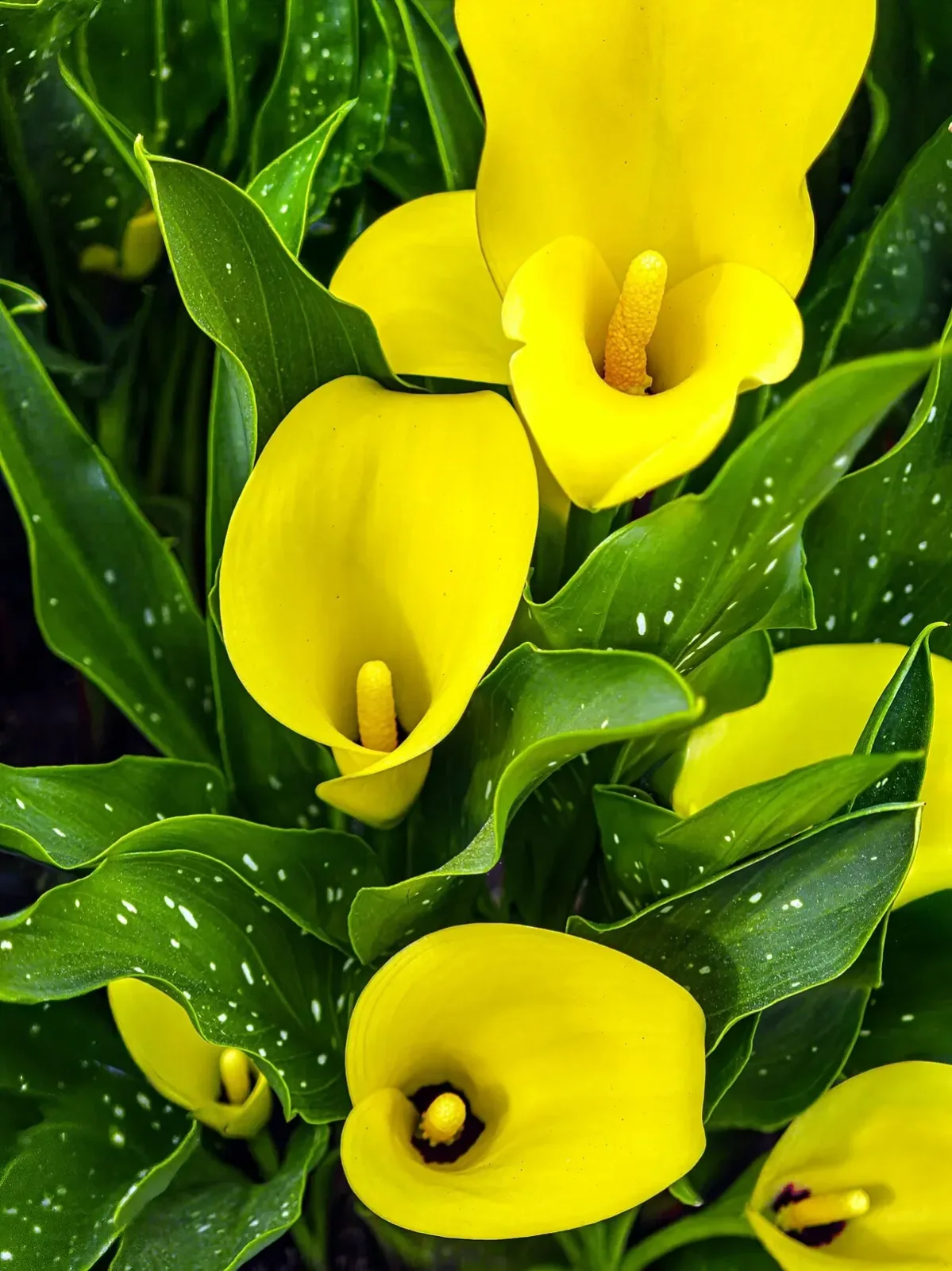
| ☀️ Light | Full sun |
|---|---|
| 💧 Water | High (consistently moist) |
| 🪴 Soil | Rich, moisture-retentive soil high in organic matter |
| 🌡️ Temp | -10°C – 30°C |
| 🐾 Safety | Cats: toxic · Dogs: toxic |
| 📏 Mature size | 75 cm |
Where It Grows & Climate Tolerance
Pet & Companion Animal Toxicity (How to Grow Calla Lily in India)
In India callas grow best in the hills: Ooty, Kodaikanal, Darjeeling, Kalimpong, Sikkim and Meghalaya. CSIR-IHBT Palampur released two Indian cultivars in 2016. On the plains, coloured callas are a winter gamla plant that rests through the hot months.
Care instructions
Care Guide & Maintenance Routine
In the hills, plant in rich, moist mitti with partial shade and mulch. On the plains, plant coloured callas in gamlas after the rains, keep them under a chajja or shade net, and water regularly through winter. When the leaves yellow in April, stop watering and keep the pot dry and shaded until the next season.
Light & Sunlight
NC State lists full sun to partial shade and advises partial shade in hot climates. UMN Extension notes callas flower more freely in full sun in cool summers. In Indian plains summers, shade from the afternoon sun.
Watering Schedule
The white arum lily, Z. aethiopica, likes soil that never dries out; RHS notes it can grow as a pond marginal in water up to 30 cm deep. Coloured hybrid callas want moist but well-drained soil in growth and a drier rest after flowering. Too little water browns leaf edges; stagnant wet soil rots coloured callas.
Potting Mix & Drainage
Rich, moisture-retentive soil high in organic matter
Temperature & Humidity
Grows best in cool weather between about 12 and 25°C. In the plains, the loo of May and June forces dormancy, and the barsaat brings rot. Hill pala can damage leaves, but the white arum lily recovers from rhizomes.
Calla lilies in India
Callas are best known in India as hill-station flowers. The white arum lily grows in gardens and along wet banks in the Nilgiris, and ICAR's review of temperate floriculture notes Zantedeschia being grown in Nagaland greenhouses and in Sikkim and Meghalaya, with bulb production in Kalimpong and Darjeeling. Cool nights and steady moisture suit them.
CSIR-IHBT cultivars
CSIR-IHBT Palampur bred two Indian calla cultivars through hybridisation and selection. 'Him Shweta' is a white Z. aethiopica and 'Him Sumukh' a yellow Z. elliottiana. Both were released at CSIR's 75th Foundation Day on 26 September 2016 and given to progressive farmers of Himachal Pradesh at a Kisan Mela in Palampur, as part of the institute's floriculture programme for rural growers.
Hills
- Ooty, Kodaikanal, Yercaud, Munnar: plant at the start of the dry season; flowers from winter into spring. The white arum lily can stay in the ground for years.
- Darjeeling, Kalimpong, Gangtok, Shillong: plant in spring after the cold; the barsaat brings soft rot in heavy soil, so use raised beds.
- Shimla, Palampur, Mussoorie: plant after the frosts; mulch in winter and lift coloured callas where the ground freezes.
Plains
In Delhi, Lucknow, Pune or Bengaluru, coloured callas are grown as a seasonal pot plant. Plant rhizomes in October, after the rains, in a gamla of mitti, leaf mould and sand. Keep the pot in bright light under a chajja or 50% shade net, away from the harsh afternoon sun. Water whenever the top 2 cm feels dry. Flowers come in late winter and spring. When the leaves yellow around Holi or April, let the pot dry out, move it to a cool, shaded corner, and do not water through the loo and barsaat. Bengaluru's milder climate allows a longer season.
Soft rot in the rains
Warm, waterlogged soil is the main killer in India. Keep resting rhizomes dry during the monsoon, raise pots on bricks, and use a free-draining mix. A rhizome that turns soft and smells bad cannot be saved. For other problems, your nearest KVK or state horticulture department can help identify the cause.
A typical year in Ooty
Clumps of white arum lilies in hill gardens send up spathes in the cool, bright months after the northeast monsoon, and keep flowering into the summer tourist season when the Ooty flower show is held in May. Mulch with leaf litter, give a little khad after flowering, and divide crowded clumps once the heavy southwest monsoon rains have passed.
Questions from Indian growers
- Can I grow calla in Mumbai or Chennai? It is difficult. Heat and humidity favour rot. Treat it as a short winter pot plant in a bright, airy spot.
Seasonal rhythm
Seasonal Calendar
| Month | Care Tasks | Seasonal Focus |
|---|---|---|
| Jan | Fertilize, Protect from frost/heat | Plains: flowering in gamlas; Lohri cold, keep pots sheltered. |
| Feb | Fertilize, Harvest | Basant: pull spathes for the vase; feed every two weeks. |
| Mar | Protect from frost/heat | Plains: leaves start to yellow after Holi; reduce water. |
| Apr | Protect from frost/heat | Plains: dry rest begins; hills: plant after frost. |
| May | Protect from frost/heat | Loo: keep resting plains pots dry and shaded. |
| Jun | Protect from frost/heat | Barsaat begins: raise pots on bricks, no water. |
| Jul | Protect from frost/heat | Hills: watch clumps for soft rot in heavy rain. |
| Aug | Protect from frost/heat | Check stored rhizomes; discard any soft ones. |
| Sep | Repot | Pitru paksha: refresh gamla mix with leaf mould. |
| Oct | Plant out | After Navratri: plant rhizomes 5 to 10 cm deep. |
| Nov | Fertilize | Diwali onward: shoots appear; water and feed lightly. |
| Dec | Fertilize, Protect from frost/heat | Ooty, Kodaikanal: flowering; plains: buds forming. |
Diagnostics
Common Problems & Troubleshooting
Soft rot in wet, warm soil; no flowers from too much shade, too small a rhizome or overcrowding; brown leaf tips in dry air or dry soil; yellow leaves after flowering as plants go dormant; aphids and slugs.
Pests & seasonal watch: Bacterial soft rot during the barsaat in heavy mitti. Aphids on new leaves in spring. Slugs and snails in hill gardens. Spider mites on plains pots in dry March heat. Ask the nearest KVK before spraying.
- Yellow leaves — Leaves fade from green to yellow, often starting at the bottom.
- Brown tips — Leaf tips and edges turn dry, brown and papery.
- Root rot — Roots turn brown and mushy in soil that stays wet.
- Spider mites — Fine webbing and pale speckled leaves, worse in dry heated rooms.
- Aphids — Clusters of small soft insects on new tips, often sticky.
- Leaf spot — Brown or tan spots with a yellow halo, sometimes with tiny dots in the centre.
- Overwatering — Soil stays wet, leaves yellow or droop, and the pot feels heavy.
- No flowers — A flowering houseplant stays leafy and will not bloom.
Q&A
Frequently Asked Questions
Is a calla lily a true lily?
No. NC State notes callas belong to the arum family, Araceae, and come from Africa. True lilies are Lilium, in the Liliaceae.
Are calla lilies poisonous to pets?
Yes. ASPCA lists calla lily as toxic to dogs and cats. Insoluble calcium oxalate crystals cause mouth irritation, drooling, vomiting and difficulty swallowing.
Why is my calla lily not flowering?
Common causes are too much shade, rhizomes that are too small, overcrowded clumps, and coloured callas that did not get a proper dry rest. Feed while in leaf and divide crowded clumps.
Do calla lilies come back every year?
Yes, as perennials. The white arum lily is hardy to about zone 8 by NC State's rating. Coloured callas are lifted or kept frost-free in pots in cold areas.
How do I store calla rhizomes over winter?
Wisconsin Horticulture advises drying calla rhizomes for two to three weeks in a warm place, removing soil and dead stems, and storing them at 7 to 13°C.
Can calla lilies grow in water?
The white arum lily can. RHS notes it can grow as a pond marginal in up to 30 cm of water. Coloured callas rot if kept wet.
Why are the leaves turning yellow?
Yellowing after flowering is normal dormancy. Yellow leaves with a soft, smelly base suggest rot from waterlogged soil.
When should I divide callas?
NC State suggests early spring or late summer. Let cut pieces dry for a day or two before replanting.
Do callas need full sun?
In cool climates, yes. In hot climates NC State advises partial shade, and in Indian plains summers they need afternoon shade.
Similar Botanical Matches
Keep exploring
Related plants
Grower field notes
Reader Field Notes in India
Share how this plant performs in your local India climate.