| ☀️ Light | Bright indirect light |
|---|---|
| 💧 Water | High (consistently moist) |
| 🪴 Soil | Moist, humus-rich, well-drained soil; acid soil for blue flowers |
| 🌡️ Temp | -18°C – 32°C |
| 🐾 Safety | Cats: toxic · Dogs: toxic |
| 📏 Mature size | 1.8 m |
Where It Grows & Climate Tolerance
Pet & Companion Animal Toxicity (How to Grow Hydrangea in India)
In India, bigleaf hydrangea is a shrub of cool hill gardens, from Shimla and Darjeeling to Shillong and the Nilgiris. On the plains it can be kept as a pot plant in shade for a season or two, but hot, dry summers are hard on it.
Care instructions
Care Guide & Maintenance Routine
Hills: plant in partial shade in acid, humus-rich soil and mulch with pine needles or leaf mould. Plains: use a large pot in bright shade, water daily in summer and keep it out of loo winds. Prune lightly after the cold season, in February to March, to strong buds.
Light & Sunlight
NC State says it performs best in dappled sunlight or partial shade and should be protected from afternoon sun. The RHS says light shade is best, but sun is fine if the soil is not too dry.
Watering Schedule
Needs steady moisture; the leaves wilt quickly in hot, dry weather. Water deeply rather than often, and mulch. The RHS suggests rainwater for blue-flowered plants to help keep the colour, but tap water is better than letting the shrub go dry.
Potting Mix & Drainage
Moist, humus-rich, well-drained soil; acid soil for blue flowers
Temperature & Humidity
Hill plants handle winter frost and light snow as leafless shrubs, but hard frost and late cold can kill flower buds. On the plains, leaves scorch and wilt once days pass about 35°C, and loo winds in May and June can kill pot plants left in the open.
Hydrangeas in Indian hill gardens
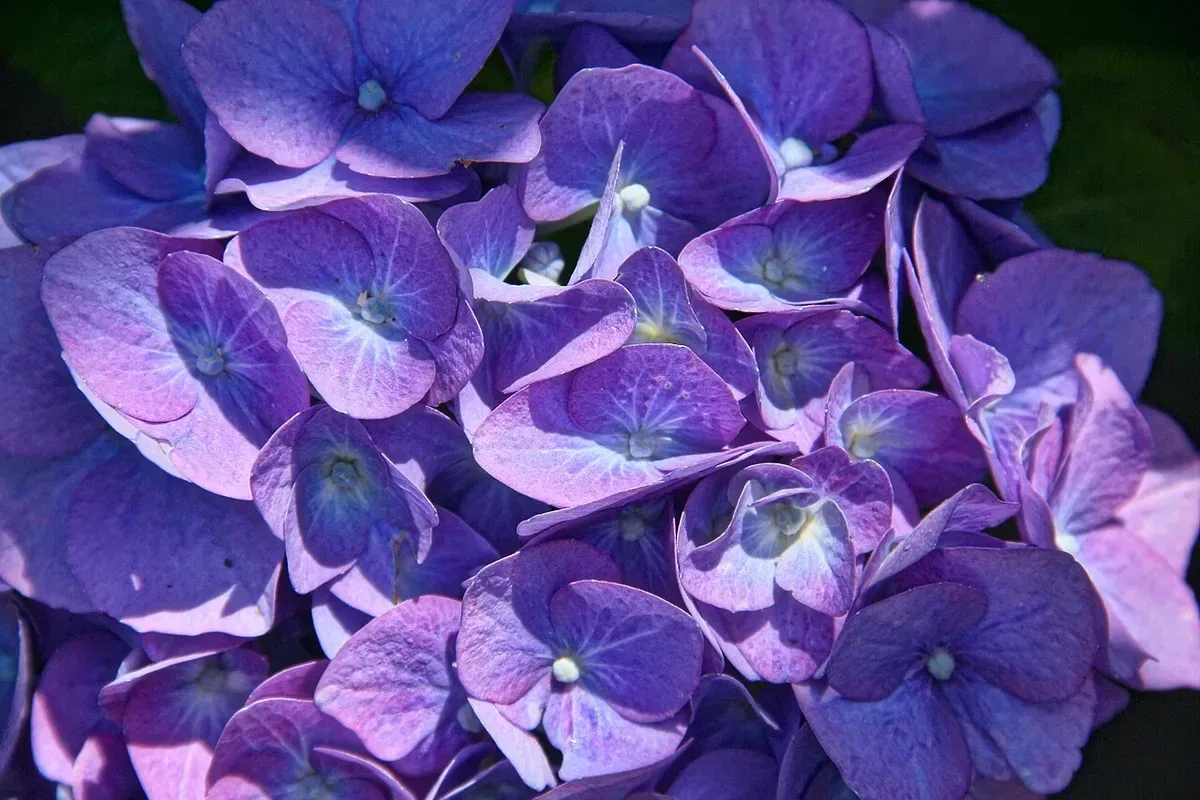
Large blue and pink hydrangea bushes are a familiar sight around cottages and churches in Shimla, Mussoorie, Darjeeling, Kalimpong, Gangtok, Shillong, Ooty and Kodaikanal. These places offer what the shrub wants: mild summers, rain and acid forest soils. SKUAST-Jammu lists Hydrangea macrophylla among ornamental shrubs raised from soft and hardwood cuttings.
Hill regions
- Western Himalaya (Himachal, Uttarakhand, Jammu and Kashmir): plants drop leaves in winter and flower from early summer into the rains. Heavy snow on stems can kill flower buds at higher places.
- Eastern Himalaya and North-East (Darjeeling, Sikkim, Meghalaya): high rainfall and acid soil give deep blue flowers. Make sure beds drain well on slopes.
- Nilgiris and Palani Hills: mild weather lets plants grow for most of the year. Flowering is often strongest after the summer showers.
On the plains
Delhi, Lucknow, Jaipur and Ahmedabad summers, with days above 40°C and hot loo winds, are too harsh for a garden hydrangea. A pot can last a season or two on a shaded north- or east-facing balcony with daily watering. Bengaluru and Pune, with milder summers, are kinder; give bright shade and mulch.
Pink or blue in Indian soils
Much of the plains has neutral to alkaline soil and hard borewell water, which turns blue types pink or mauve. Hill soils are often acid, which is why blue plants are common in Shillong and Darjeeling. For blue on the plains, use a pot of acid compost and water with collected rainwater.
Water and mulch
Hill gardens need watering mainly in the dry weeks of April and May. Pots on the plains may need water every day from April until the monsoon arrives (IMD normal onset: Delhi around 27 June). Pine needles, leaf mould or dry leaves make good mulch.
Pruning in India
Leave old flower heads on through the cold months. In February to March, as buds swell, cut each stem back to the first strong pair of buds and remove a few of the oldest stems. Hard cutting in winter removes the summer flowers.
Cuttings
Root soft cuttings during the rains in hill gardens, when humidity is high, or hardwood cuttings in winter. Keep them in a shaded nursery bed.
A pot recipe for plains balconies
Use a terracotta or glazed pot 35 to 40 cm across. Fill it with equal parts leaf mould, cocopeat and sieved garden soil plus a handful of perlite. Stand it on bricks so the drainage hole stays clear, and group it with other pots to keep the air around it a little moister.
Gift pots in a North Indian winter
Flowering pots bought in Delhi or Chandigarh between December and February are usually florist-forced. Keep them near a bright north window, away from room heaters, and water when the top 2 cm feels dry. Move them to a shaded spot outside after Holi, once nights warm up.
Pets and children
Hydrangea is toxic to dogs and cats if chewed, so keep pots out of their reach.
Seasonal rhythm
Seasonal Calendar
| Month | Care Tasks | Seasonal Focus |
|---|---|---|
| Jan | protect | Hills: dormant; leave dead heads on. Take hardwood cuttings. Plains: keep pots shaded and moist. |
| Feb | prune | Hills and plains: prune to the first strong buds as they swell. Remove a few old stems. |
| Mar | feed | Mulch with leaf mould or pine needles; light feed as new leaves open. |
| Apr | protect | Dry weeks in the hills: water deeply. Plains pots: move to shade. |
| May | harvest, protect | Hills: first flowers. Plains: daily watering, shelter from loo. |
| Jun | harvest | Hills: flowering. Plains: watch for spider mites on pots. |
| Jul | plant, harvest | Rains: peak flowering in Darjeeling and Shillong. Root soft cuttings. |
| Aug | protect | Check drainage on slopes; remove badly spotted leaves. |
| Sep | plant | Plant new shrubs in hill gardens as the rains ease. |
| Oct | protect | Flowers fade and age. Leave heads on; stop feeding. |
| Nov | protect | Leaves drop in the hills. Reduce watering of pots. |
| Dec | protect | Hills: protect young plants from heavy snow. Do not prune. |
Diagnostics
Common Problems & Troubleshooting
No flowers after a cold winter or hard pruning; wilting in afternoon sun; yellow leaves with green veins in very alkaline soil; brown leaf edges from drought or wind; flowers turning pink when blue was wanted.
Pests & seasonal watch: Leaf spot in long wet spells in hill gardens. Aphids on spring shoots. Red spider mites on pot plants on hot plains balconies. Snails on young leaves in the rains.
- Yellow leaves — Leaves fade from green to yellow, often starting at the bottom.
- Brown tips — Leaf tips and edges turn dry, brown and papery.
- Drooping — Stems and leaves hang limp even though the plant was recently fine.
- Spider mites — Fine webbing and pale speckled leaves, worse in dry heated rooms.
- Aphids — Clusters of small soft insects on new tips, often sticky.
- White powder — A white powdery film on leaves, usually in still, humid air with dry soil at the roots.
- Leaf spot — Brown or tan spots with a yellow halo, sometimes with tiny dots in the centre.
- Underwatering — Soil is bone dry and leaves are crispy, curled or dull.
- Sun scorch — Bleached or crispy patches on the side that faces strong sun.
- No flowers — A flowering houseplant stays leafy and will not bloom.
Q&A
Frequently Asked Questions
How do I make my hydrangea flowers blue?
Blue flowers need acid soil, where aluminium is available to the plant. The RHS suggests rainwater for watering, ericaceous compost in pots, or a hydrangea blueing product containing aluminium sulphate, used as the label says. It will not work on very alkaline or chalky soil, and white varieties do not change colour.
Why did my hydrangea not flower this year?
Most often the flower buds on last year's stems were cut off by pruning or killed by a cold winter or late frost. Too much shade or too much nitrogen can also cut flowering.
When should I prune bigleaf hydrangea?
The RHS advises mid-spring, cutting back to the first or second strong pair of buds below the old flower. NC State says to finish any pruning before 1 August.
Should I cut off dead hydrangea flowers in autumn?
No. The RHS says the dead heads help protect new growth below from frost. Remove them in spring.
Is hydrangea poisonous to dogs and cats?
Yes. ASPCA lists hydrangea as toxic to dogs, cats and horses, with signs such as vomiting, diarrhoea and depression.
Why are my hydrangea leaves wilting in the afternoon?
Heat and strong sun. If leaves recover by evening, add mulch and give afternoon shade. If the soil is dry, water deeply.
Mophead or lacecap: what is the difference?
Mopheads have round heads full of large showy florets. Lacecaps have a flat centre of tiny fertile flowers ringed by larger showy ones.
Is bigleaf hydrangea the same as panicle hydrangea?
No. Panicle hydrangea (Hydrangea paniculata) is a different species with cone-shaped flowers that open on new growth and is much hardier in cold winters.
Can I grow hydrangea in a pot?
Yes. Use a pot at least 40 cm wide with good drainage, water often in summer and move it to shelter in cold winters.
Similar Botanical Matches
Grower field notes
Reader Field Notes in India
Share how this plant performs in your local India climate.