
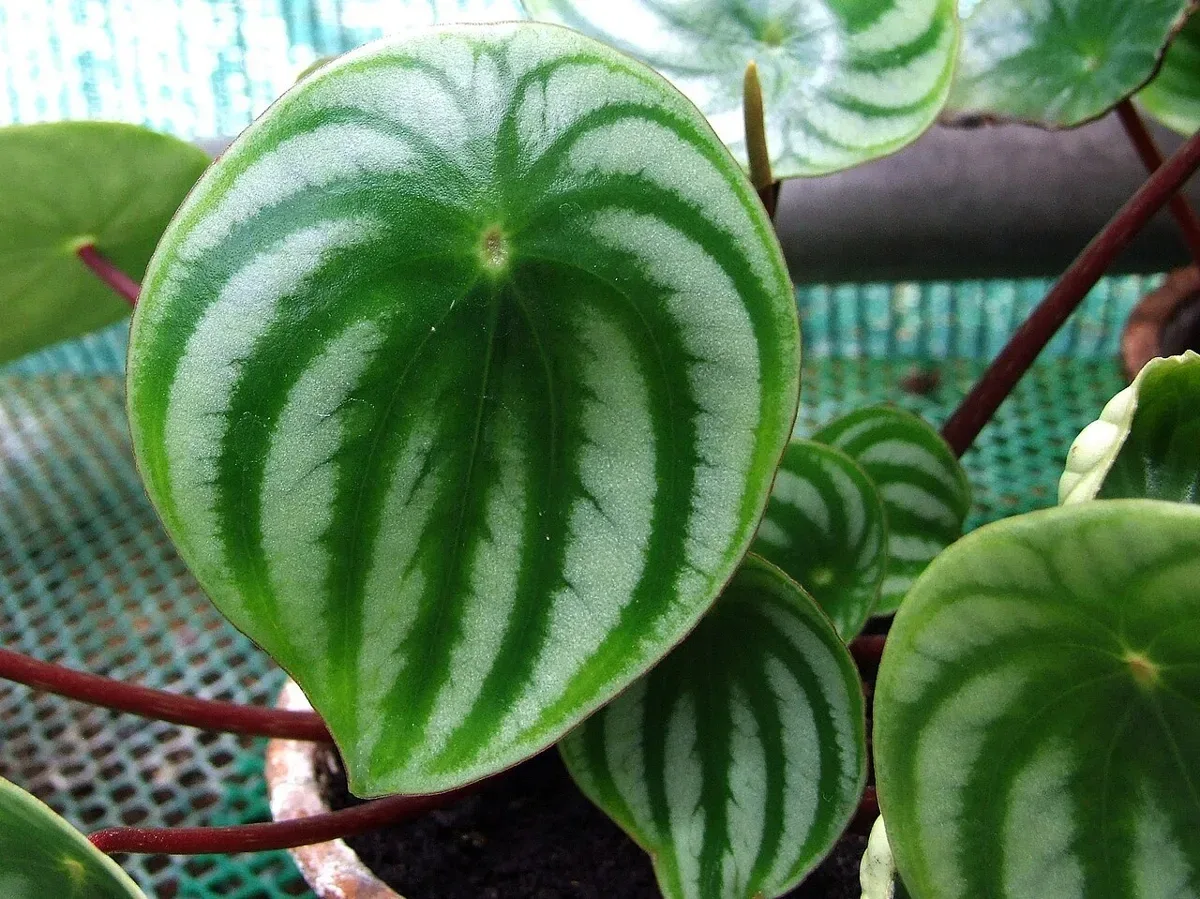
| ☀️ Light | Bright indirect light |
|---|---|
| 💧 Water | Low (allow soil to dry) |
| 🪴 Soil | Light, fast-draining potting mix with perlite or bark |
| 🌡️ Temp | 10°C – 30°C |
| 🐾 Safety | Cats: non-toxic · Dogs: non-toxic |
| 📏 Mature size | 20 cm |
Where It Grows & Climate Tolerance
Pet & Companion Animal Toxicity (Watermelon Peperomia Care in Canadian Homes)
Watermelon peperomia suits Canadian apartments and offices because it stays small and tolerates dry indoor air. Winter is the tricky season: short days, cold glass and slow growth make overwatering easy.
Care instructions
Care Guide & Maintenance Routine
Give bright, indirect light, with full light from November to February. Water when the top of the mix is dry, and much less in winter. Keep off cold windowsills and away from heat registers. Feed lightly from April to August.
Light & Sunlight
NC State says it prefers bright, indirect light. The RHS advises bright indirect light in active growth and full light in winter. Strong direct sun bleaches and burns the leaves; low light makes stems stretch and stripes fade.
Watering Schedule
NC State notes it is intolerant of both wet soil and very dry soil. Let the top of the mix dry to the touch before watering, and reduce watering in winter. The fleshy leaves store water, so it forgives a missed watering better than an extra one.
Potting Mix & Drainage
Light, fast-draining potting mix with perlite or bark
Temperature & Humidity
Not frost hardy; an indoor plant everywhere in Canada. Keep above about 10°C, off cold windowsills and away from exterior doors in winter. Outdoors only in shade in midsummer when nights stay above about 15°C.
Watermelon peperomia in Canadian homes
Watermelon peperomia is a common sight on Canadian windowsills and office desks. It stays compact, it is non-toxic to cats and dogs according to ASPCA, and it puts up with dry indoor air better than many tropical houseplants. Its main enemy in Canada is winter overwatering.
Winter light
The RHS advises full light in winter. From November to February, days in Edmonton or Winnipeg are short and the sun stays low, so move the plant right up to a south or west window. In Vancouver and Victoria, long grey stretches make a small LED grow light worthwhile. Turn the pot weekly so the rosette stays even.
Cold glass and drafts
NC State notes the plant dislikes cold drafts. On a January night in Regina or Québec City, the air beside a window can be far colder than the room. Keep leaves from touching the glass and lift the pot off cold stone sills. Avoid spots near exterior doors.
Dry furnace air
Forced-air heating dries homes, especially on the Prairies. The thick leaves cope, but keep the plant away from heat registers, which dry the mix unevenly and crisp the edges.
Watering through the Canadian year
- April to September: water when the top of the mix is dry, often every 7 to 10 days.
- October to March: growth slows. Water only every two to three weeks in a cool room, and always check first.
Hard tap water in Calgary, Winnipeg and much of Ontario leaves crust on pots. Flush with plenty of water now and then, or use rainwater in summer.
Summer on a balcony
Once nights stay above about 15°C, usually late June in Toronto or Montréal, the plant can sit outdoors in full shade. Bring it back in by late August on the Prairies and early September in Ontario. Check for aphids before it comes in.
Leaf cuttings
April to July is the best time for leaf cuttings in Canada, when light and warmth are reliable. A heat mat helps in a cool basement.
Province notes
- British Columbia: mild, cloudy Lower Mainland winters mean low light is the limit, not cold.
- Alberta, Saskatchewan and Manitoba: bone-dry January air and -30°C cold snaps; keep the plant on an interior shelf away from glass during deep freezes.
- Ontario and Quebec: condos with large windows suit it, but heat from in-floor radiators dries pots quickly.
- Nova Scotia, New Brunswick, PEI and Newfoundland: older, drafty houses mean an inside spot in winter.
- Yukon, NWT and Nunavut: grow under lights through the dark months, when Whitehorse gets barely six hours of daylight.
Bringing one home in winter
A peperomia carried from a Mississauga, Laval or Surrey shop through a January parking lot can chill in seconds. Ask for a paper sleeve, warm the car first and go straight home.
Seasonal rhythm
Seasonal Calendar
| Month | Care Tasks | Seasonal Focus |
|---|---|---|
| Jan | Protect from frost/heat | Coldest month: keep off cold glass; water sparingly. |
| Feb | Protect from frost/heat | Lowest light: give full light or a grow light. |
| Mar | Fertilize, Repot | Days lengthen: repot root-bound plants; start light feeding. |
| Apr | Plant out, Fertilize | Take leaf cuttings; flush salts from the pot. |
| May | Plant out, Fertilize | Divide large plants. Move slightly back from strong sun. |
| Jun | Plant out | Root more cuttings; plan a shaded summer spot. |
| Jul | Fertilize, Protect from frost/heat | Outdoors in full shade if nights stay warm. |
| Aug | Protect from frost/heat | Prairies: bring in late in the month. Check for aphids. |
| Sep | Protect from frost/heat | Bring all plants indoors. Last feed. |
| Oct | Protect from frost/heat | Reduce watering as growth slows. |
| Nov | Protect from frost/heat | Furnace season: keep away from heat registers. |
| Dec | Protect from frost/heat | Short days: move to the brightest window. |
Diagnostics
Common Problems & Troubleshooting
Root rot and mushy stems from overwatering; wilting from very dry mix; drooping or dropped leaves after cold drafts; stretched stems and faded stripes in low light; scorched patches in direct sun.
Pests & seasonal watch: Fungus gnats when mix stays wet in winter, mealybugs and scale on indoor plants, aphids on plants summered outdoors.
- Drooping — Stems and leaves hang limp even though the plant was recently fine.
- Root rot — Roots turn brown and mushy in soil that stays wet.
- Mealybugs — White cottony clumps in leaf joints, often with sticky honeydew.
- Leggy — Long weak stems with big gaps between small leaves, leaning to the window.
- Fungus gnats — Tiny dark flies hover around wet potting mix.
- Scale — Hard or soft brown bumps stuck to stems and leaf ribs, often with sticky honeydew.
- Overwatering — Soil stays wet, leaves yellow or droop, and the pot feels heavy.
- Sun scorch — Bleached or crispy patches on the side that faces strong sun.
- Cold damage — Dark, water-soaked or blackened patches after a cold night or an AC blast.
Similar Botanical Matches
Keep exploring
Related plants
Grower field notes
Reader Field Notes in Canada
Share how this plant performs in your local Canada climate.