
| ☀️ Light | Bright indirect light |
|---|---|
| 💧 Water | Low (allow soil to dry) |
| 🪴 Soil | Light, fast-draining potting mix with perlite or bark |
| 🌡️ Temp | 10°C – 30°C |
| 🐾 Safety | Cats: non-toxic · Dogs: non-toxic |
| 📏 Mature size | 20 cm |
Where It Grows & Climate Tolerance
Pet & Companion Animal Toxicity (Watermelon Peperomia)
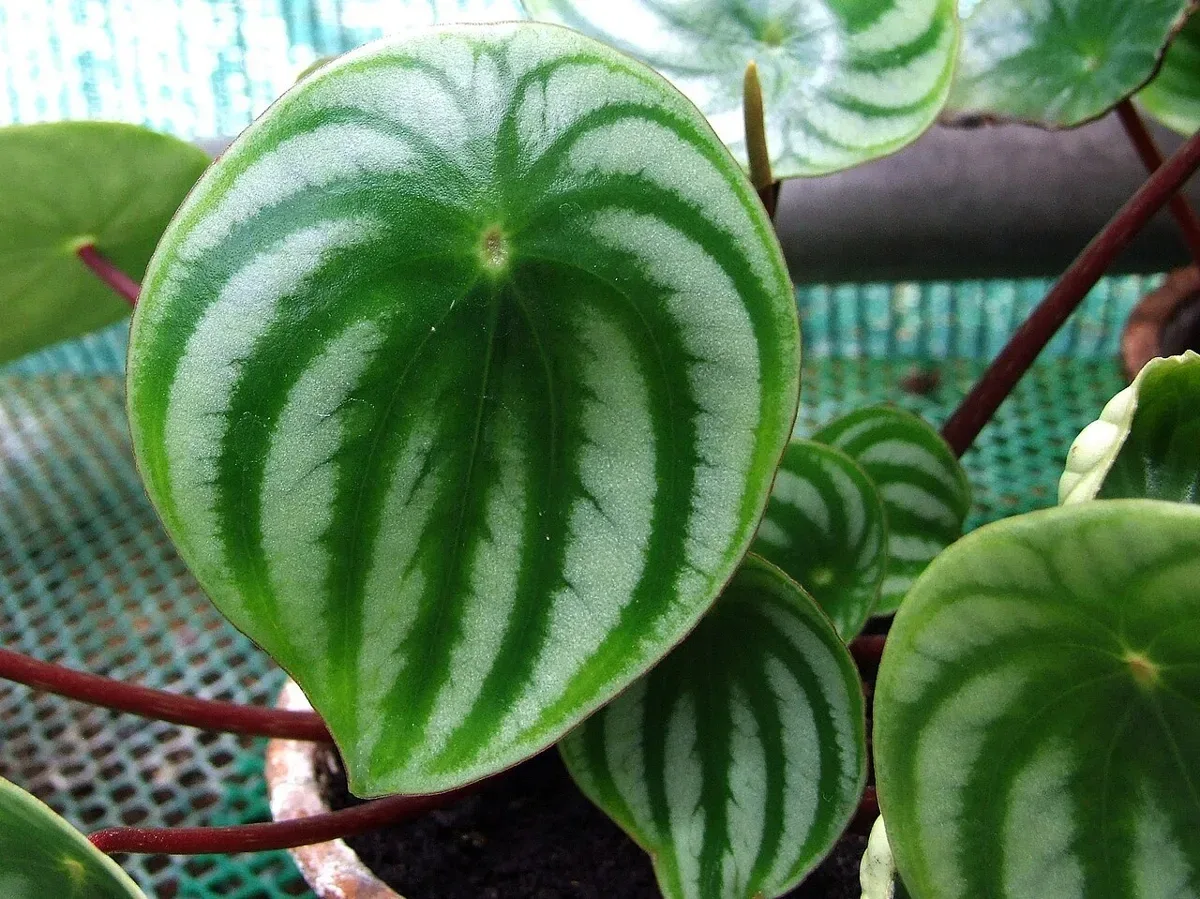
Watermelon peperomia (Peperomia argyreia) is a compact Brazilian houseplant with round, fleshy leaves striped silver and green like a watermelon rind, held on red stalks. It stays small, likes a snug pot, and is non-toxic to cats and dogs.
Care instructions
Care Guide & Maintenance Routine
Grow in bright, indirect light. Let the top of the mix dry before watering, and water less in winter. Use a light, fast-draining mix in a small pot. Keep away from cold drafts. Feed lightly in the growing season. Root rot from overwatering is the main risk.
Light & Sunlight
NC State says it prefers bright, indirect light. The RHS advises bright indirect light in active growth and full light in winter. Strong direct sun bleaches and burns the leaves; low light makes stems stretch and stripes fade.
Watering Schedule
NC State notes it is intolerant of both wet soil and very dry soil. Let the top of the mix dry to the touch before watering, and reduce watering in winter. The fleshy leaves store water, so it forgives a missed watering better than an extra one.
Potting Mix & Drainage
Light, fast-draining potting mix with perlite or bark
Temperature & Humidity
NC State notes it dislikes cold drafts and rates it for USDA zones 10a to 12b outdoors. Room temperatures between about 18 and 27°C suit it; keep it above 10°C. NC State gives a height of about 20 cm (8 in); the RHS range is 10 to 50 cm.
About watermelon peperomia
Watermelon peperomia (Peperomia argyreia) is a small evergreen perennial from eastern Brazil, in the pepper family, Piperaceae. NC State Extension describes it as an erect, bushy plant about 20 cm tall, named for its leaves, which look like the striped rind of a watermelon. The RHS lists it under the old common name watermelon begonia, but it is not a begonia.
The rounded leaves are thick and waxy, striped silver and deep green, and carried on red stalks. NC State notes the stalk joins the leaf near its centre rather than at the edge, a feature called peltate attachment. Thin, cream flower spikes appear in warm months, but the foliage is the main attraction.
How to recognise it
- Smooth, rounded to oval leaves with silver bands running from the centre to the tip.
- Red stalks and stems.
- Numerous narrow cream spikes in the growing season.
- A compact rosette, rarely more than a hand span tall.
NC State lists cultivars such as 'Costa Rica', with a maroon dimple at the leaf base, and 'Harmony's Gold Dust', with gold speckles.
Choosing a healthy plant
Look for a full rosette of firm, upright leaves with crisp silver bands and no soft or blackened stalks at soil level. Lift the pot: one that feels heavy and smells musty has probably been kept too wet. Small plants with several crowns can later be divided into two or three.
Peperomia relatives
Peperomia is a large genus of more than a thousand species. Relatives often grown indoors include the baby rubber plant (Peperomia obtusifolia), ripple peperomia (Peperomia caperata) and string of turtles (Peperomia prostrata). Most share the same need for a light mix and careful watering.
Light
NC State says watermelon peperomia prefers bright, indirect sunlight. The RHS suggests bright indirect light during active growth and full light in winter, when the sun is weaker. A spot near an east-facing window, or a little back from a brighter one, works well. Too much direct sun bleaches and scorches the leaves; too little makes stems lean and stretch and the silver bands fade.
Watering
This is where most plants are lost. NC State notes it is intolerant of wet soil, very dry soil and cold drafts. Overwatering causes root rot; underwatering makes it wilt.
Growing season
Water when the top of the mix feels dry to the touch, then let excess water drain completely.
Winter
Growth slows, so water less often. A plant in a cool room may need water only every two to three weeks.
Reading the plant
Firm, upright leaves mean the plant is content. Limp leaves can mean thirst or rot, so feel the mix before reaching for the watering can.
Potting mix and pots
The RHS recommends a peat-free potting compost. Adding perlite or fine bark keeps it open and fast draining. Choose a small pot with drainage holes. NC State notes the plant grows happily when pot-bound, so a pot that looks slightly small is usually right. Terracotta dries faster than plastic and suits heavy-handed waterers.
Temperature and humidity
Normal room temperatures suit it. Keep it out of cold drafts from doors and windows, and away from heaters and air-conditioning vents. Average household humidity is fine; drainage matters more than misting.
Feeding
Peperomias need little fertiliser. Feed with a balanced houseplant fertiliser at half the label rate about once a month in spring and summer. Do not feed in winter or when the plant is dry.
Propagation
NC State lists division and leaf cuttings; the RHS also mentions seed, leaf-bud cuttings and offsets. Leaf cuttings are the easiest. Cut a healthy leaf with a short stalk, or slice a leaf across into halves, let the cut dry briefly, and insert it into moist, free-draining mix. Keep it warm and in bright shade. New plantlets appear after several weeks. Larger plants can be divided when repotting.
Repotting
Repot only when roots fill the pot, usually every two or three years, in spring. Use a pot one size larger and fresh mix. Water lightly afterwards.
Grouping and display
NC State notes the plant is small and looks best grouped with plants that have similar needs, or alone as a desktop specimen. Its striped leaves contrast well with plain green foliage and with the fine silver veins of fittonia.
Troubleshooting
Soft, dark stems at the base
Often linked to mix that stays wet. Check the roots before deciding; cut away soft tissue and root healthy leaves as cuttings.
Wilting with dry mix
Water thoroughly and let it drain. Leaves usually firm up within a day.
Leaves dropping suddenly
Cold drafts or a sudden move can cause leaf drop. Find a stable, warm spot.
Leggy growth and faded stripes
The plant needs more light. Move it gradually to a brighter spot.
Cottony or scaly spots
NC State lists mealybugs, scale and aphids. Wipe them away and check the undersides of leaves.
Safety and pets
ASPCA lists watermelon begonia (Peperomia argyreia) as non-toxic to dogs, cats and horses, and NC State tags it the same way. It is a good choice for low shelves in homes with pets.
Common mistakes
- Watering on a schedule instead of checking the mix.
- Using a large pot that stays wet.
- Placing it in hot direct sun.
- Standing it near a cold door or AC vent.
- Overfeeding.
For related small houseplants, see peperomia, pilea, fittonia and string of turtles, another peperomia.
India and Canada in brief
Indoors, care is the same everywhere. What differs is the hard season: humid months that keep pots wet in one market, short days and dry heated rooms in the other.
Seasonal rhythm
Seasonal Calendar
A month-by-month calendar for Watermelon Peperomia in Global is coming soon. See the light, water and temperature notes above.
Diagnostics
Common Problems & Troubleshooting
Root rot and mushy stems from overwatering; wilting from very dry mix; drooping or dropped leaves after cold drafts; stretched stems and faded stripes in low light; scorched patches in direct sun.
Pests & seasonal watch: NC State lists mealybugs, scale and aphids as typical houseplant pests; the RHS calls it generally pest-free. Fungus gnats appear when the mix stays wet.
Q&A
Frequently Asked Questions
Why is my watermelon peperomia drooping?
Drooping can come from both too much and too little water, or from cold drafts. Check the mix before watering: wet and heavy mix points to overwatering, bone-dry mix to underwatering. Look at the stems and roots too.
How often should I water it?
When the top of the mix is dry to the touch. That is often every 7 to 10 days in warm months and less often in winter. Always let excess water drain away.
Can I grow it from a single leaf?
Yes. NC State lists leaf cuttings as a propagation method. A leaf with a short stalk, or a halved leaf, can root in moist, free-draining mix.
Is watermelon peperomia safe for pets?
Yes. ASPCA lists Peperomia argyreia, under the name watermelon begonia, as non-toxic to dogs, cats and horses.
Is it a begonia?
No. Despite the old name watermelon begonia, it belongs to the pepper family, Piperaceae, not to Begoniaceae.
Why are the stripes fading?
Usually too little light. Move it to bright, indirect light. Very strong sun can also bleach the leaves.
How big does it get?
Small. NC State gives about 20 cm tall; the RHS range is 10 to 50 cm. It suits a desk or shelf.
Should I repot it every year?
No. NC State notes it grows happily when pot-bound. Repot only when roots fill the pot.
Why are the stems going soft at the base?
Soft, dark stems at soil level often go with mix that stays wet. Check the roots; firm white roots are healthy, brown mushy ones are rotting. Take leaf cuttings from healthy growth as a backup.
Similar Botanical Matches
Keep exploring
Related plants
Grower field notes
Reader Field Notes in Global
Share how this plant performs in your local Global climate.