
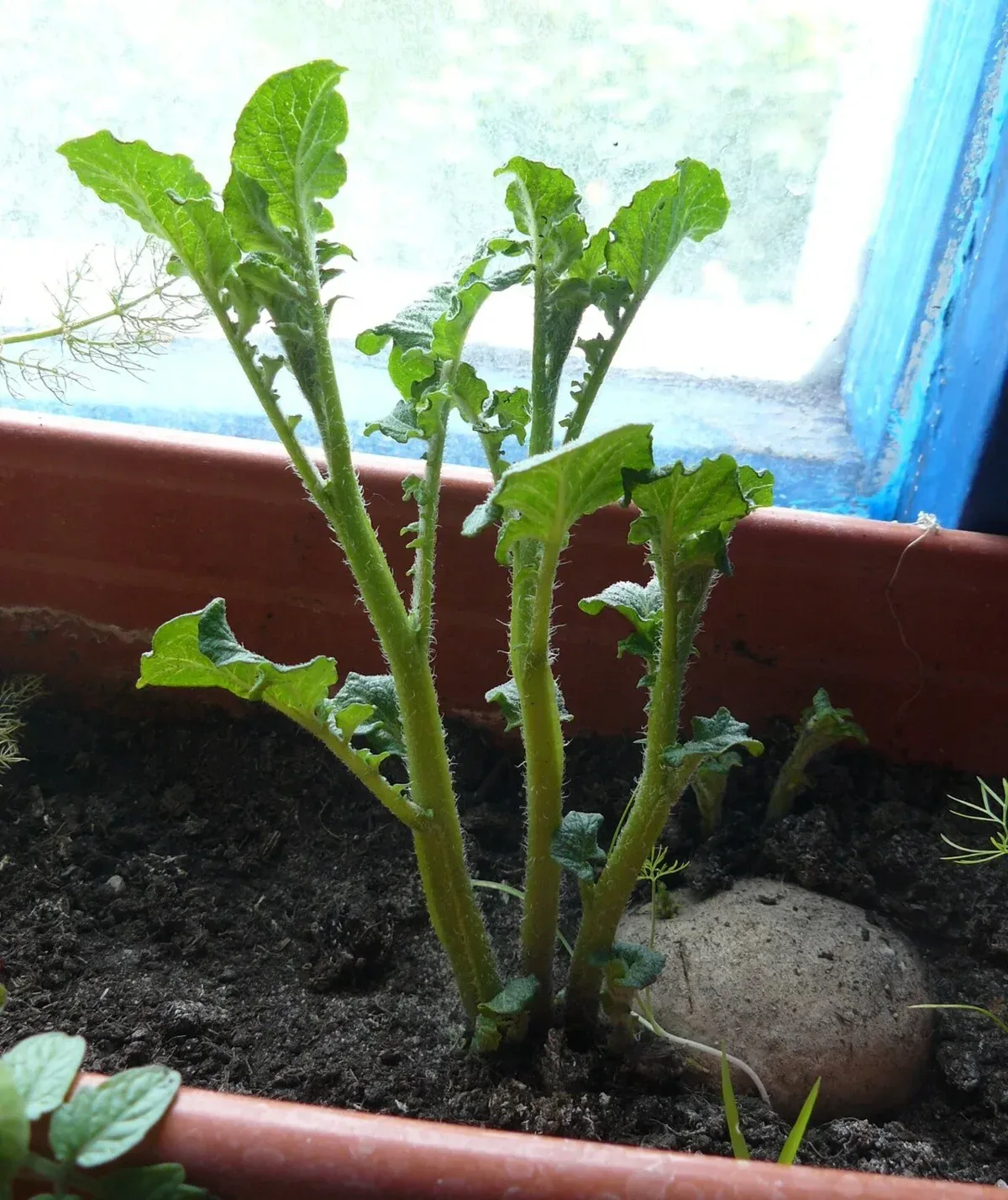
| ☀️ Light | Full sun |
|---|---|
| 💧 Water | Moderate (lightly moist) |
| 🪴 Soil | Loose, well-drained sandy loam with organic matter; slightly acidic is ideal |
| 🌡️ Temp | 0°C – 30°C |
| 🐾 Safety | Cats: toxic · Dogs: toxic |
| 📏 Mature size | 60 cm |
Where It Grows & Climate Tolerance
Pet & Companion Animal Toxicity (How to Grow Potatoes in Canada)
Potatoes suit Canadian summers: they like cool nights and grow in every province. Plant certified seed potatoes as soon as the soil can be worked in spring and dig through late summer and early fall.
Care instructions
Care Guide & Maintenance Routine
Plant chitted seed potatoes about two weeks before to a week after your last frost date, when the soil is workable. Hill the rows as shoots grow, which also protects them from late frost. Water evenly in July. Dig after the tops die back and cure before cellar storage.
Light & Sunlight
NC State Extension lists full sun. Plants in shade make long, weak stems and few tubers. Six or more hours of direct sun is a good minimum for beds and grow bags.
Watering Schedule
Even moisture matters most once tubers start to form, which is around flowering in many varieties. Dry spells followed by heavy watering can cause cracked or knobbly tubers. Ease off as the foliage yellows so skins firm up before digging.
Potting Mix & Drainage
Loose, well-drained sandy loam with organic matter; slightly acidic is ideal
Temperature & Humidity
Shoots are damaged by frost but regrow from below ground; hilling protects them. Last frost ranges from 26 March in Vancouver to 1 June in St. John's. A hard fall frost kills the vines; tubers in the ground are safe from light frost but should be lifted before the soil freezes.
Potatoes in Canadian gardens
Canada grows potatoes from Prince Edward Island to the Peace River country, and a home row is easy to fit into almost any vegetable garden. The plant handles cool weather well, so the main limit is the length of the frost-free season.
Planting dates by city
Plant when the soil has dried enough to crumble, usually close to the average last spring frost. Average dates from ECCC 1991-2020 normals, compiled by GrowersGuide.ca:
- Vancouver 26 March, Victoria 14 April: plant from late March or April.
- Windsor 22 April, Montréal 29 April, Toronto 4 May, Ottawa 7 May, Halifax 8 May: plant from late April through mid-May.
- Fredericton 16 May, Charlottetown 18 May, Edmonton and Saskatoon 22 May: plant in mid to late May.
- Winnipeg 24 May, Calgary 26 May, Regina 28 May and St. John's 1 June: plant in the last week of May.
Short seasons on the Prairies
The same GrowersGuide.ca table gives Calgary about 106 frost-free days, Regina 108 and Edmonton 110, with first fall frost around 10 to 15 September. That favours early and mid-season varieties. Chitting the tubers indoors in April gains a couple of weeks. On the BC coast, with more than 200 frost-free days, maincrop types have plenty of time.
Zones
Potatoes are grown as an annual, so the NRCan zone matters less than frost dates. NRCan's 1991-2020 map runs from Zone 3a in Regina and Saskatoon to 9a in Vancouver and Victoria. NC State's USDA rating of 2a to 11b uses a different method from NRCan zones.
Certified seed and potato wart
Canada runs a seed potato certification system, and certified tubers are the safest start. The Canadian Food Inspection Agency regulates potato wart, a soil-borne fungal disease found in PEI. CFIA notes it poses no risk to human or animal health but makes tubers unmarketable, and there are rules on moving potatoes and soil out of PEI. Buy seed locally from a certified source and do not carry soil-covered tubers between provinces.
Hilling, July heat and harvest
The University of Saskatchewan's Gardenline suggests planting once the soil is warmer than 7°C, around the third week of May in Saskatoon, then hilling two to three weeks later and again in late June and mid-July. It also notes that a frost of about -1°C kills the tops without freezing the tubers. July in Ontario, Quebec and the southern Prairies can bring hot, dry weeks, so water deeply during flowering. Dig early potatoes in July. For storage, wait until the vines die in late August or September, leave the tubers in the soil for ten days, then lift on a dry day.
Storing over winter
Cure tubers for a week or two in a dark, airy spot, then keep them in a cool basement, root cellar or unheated room where they will not freeze. Keep them away from light so they do not turn green.
Questions from Canadian readers
- Do Colorado potato beetles reach my garden? They are a common pest across much of southern Canada. Hand-pick adults and the orange egg clusters under leaves from June.
Seasonal rhythm
Seasonal Calendar
| Month | Care Tasks | Seasonal Focus |
|---|---|---|
| Jan | Protect from frost/heat | Order certified seed potatoes. Check stored tubers in the cold room for rot. |
| Feb | Protect from frost/heat | BC coast: prepare beds. Elsewhere: plan rotation away from last year's tomatoes. |
| Mar | Sow | Start chitting tubers in a cool, bright room. Vancouver and Victoria: first plantings late in the month. |
| Apr | Plant out | BC coast and southern Ontario: plant. Prairies and Maritimes: keep chitting. |
| May | Plant out, Protect from frost/heat | Main planting across Ontario, Quebec, the Maritimes and the Prairies. Hill against late frost. |
| Jun | Fertilize, Protect from frost/heat | Hill rows as plants grow. Hand-pick Colorado potato beetles. Side-dress if growth is pale. |
| Jul | Harvest, Protect from frost/heat | Water deeply during flowering. Dig early varieties for new potatoes. |
| Aug | Harvest | Vines yellow on early and mid-season varieties. Begin digging storage crops on the coast. |
| Sep | Harvest | Prairies and Ontario: dig maincrops before hard frost. Cure in a dark, airy place. |
| Oct | Harvest, Protect from frost/heat | Final digging in the Maritimes and Newfoundland. Move cured tubers to cold storage. |
| Nov | Protect from frost/heat | Check stored potatoes and remove any that soften. Keep them in the dark. |
| Dec | Protect from frost/heat | Plan next year's varieties and record which beds grew potatoes. |
Diagnostics
Common Problems & Troubleshooting
Green tubers from light exposure; scab on the skin; hollow or cracked tubers after uneven watering; blackened, collapsing foliage in wet weather; small crops from shade, crowding or late planting.
Pests & seasonal watch: Colorado potato beetle adults and larvae from June in Ontario, Quebec and the Prairies. Flea beetles on young leaves in May. Late blight in humid Maritime and BC coastal summers. Wireworms in beds dug from old lawn.
- Yellow leaves — Leaves fade from green to yellow, often starting at the bottom.
- Aphids — Clusters of small soft insects on new tips, often sticky.
- Leaf spot — Brown or tan spots with a yellow halo, sometimes with tiny dots in the centre.
- Overwatering — Soil stays wet, leaves yellow or droop, and the pot feels heavy.
- Underwatering — Soil is bone dry and leaves are crispy, curled or dull.
- Nutrient shortage — Overall pale growth, or yellowing between veins, on a plant that is otherwise watered well.
- Tired mix — Water races down the inside of the pot and the root ball stays dry, or the mix is a hard brick.
Similar Botanical Matches
Keep exploring
Related plants
Grower field notes
Reader Field Notes in Canada
Share how this plant performs in your local Canada climate.