
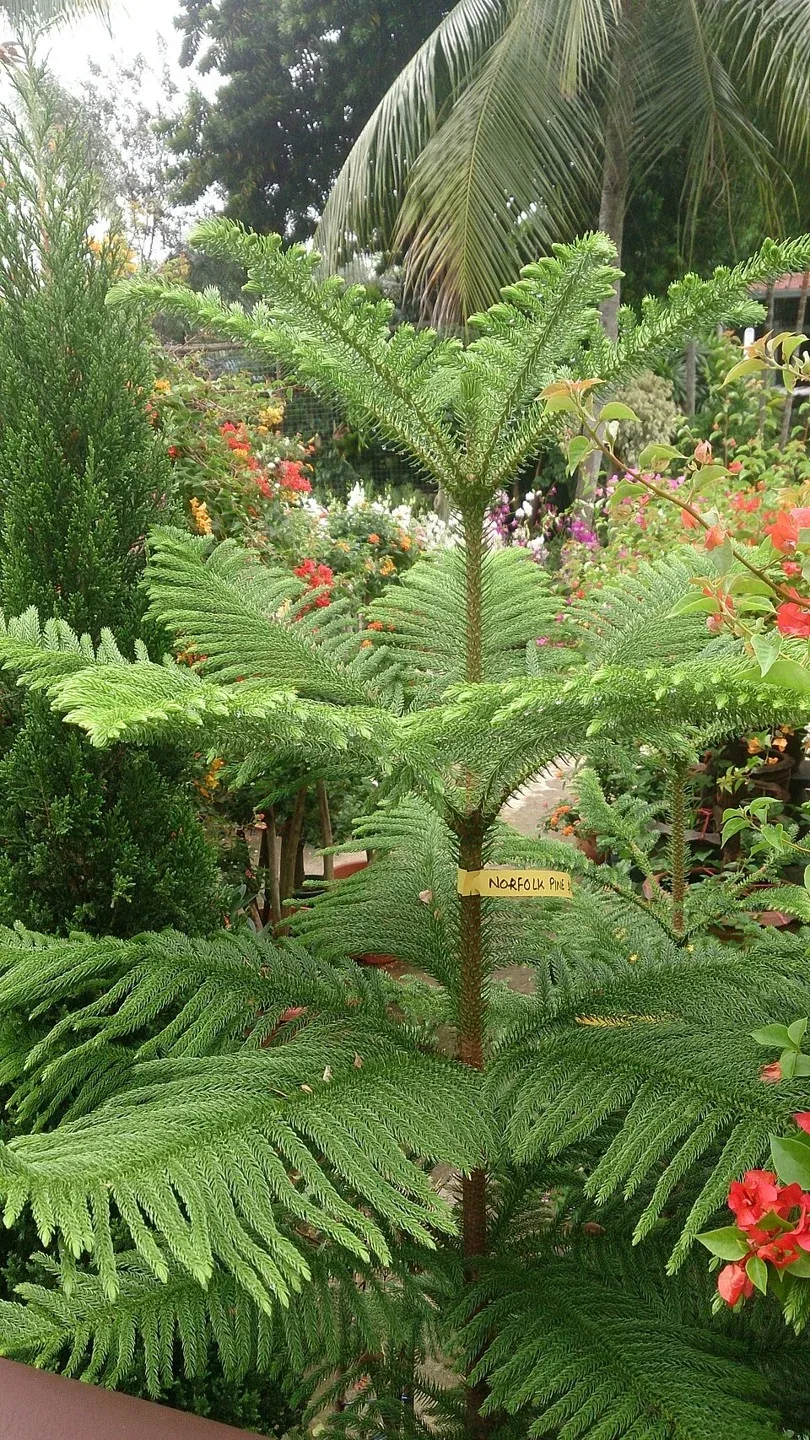
| ☀️ Light | Bright indirect light |
|---|---|
| 💧 Water | Moderate (lightly moist) |
| 🪴 Soil | Porous, slightly acidic potting mix with free drainage |
| 🐾 Safety | Cats: non-toxic · Dogs: non-toxic |
Where It Grows & Climate Tolerance
Pet & Companion Animal Toxicity (Norfolk Island Pine)
Learn how to keep a living Norfolk Island pine bright, cool and reliably watered in a heated Canadian home.
Care instructions
Care Guide & Maintenance Routine
A potted Norfolk Island pine sold in Canada over the holidays can stay indoors after the decorations come off. Put it in a bright room away from furnace vents. Check the soil before watering, since forced air can dry foliage while the root ball remains wet.
Light & Sunlight
Choose a bright room. Gentle direct light can suit an acclimated plant. Turn the pot in small increments for even growth and move it back from hot glass if foliage bleaches.
Watering Schedule
Water thoroughly after the surface starts to dry and drain the saucer. In cool or dim conditions the root ball dries more slowly. Avoid allowing it to remain sodden or bone dry.
Potting Mix & Drainage
Porous, slightly acidic potting mix with free drainage
Temperature & Humidity
A cooler bright room can suit this subtropical tree. Keep the plant frost-free and away from hot indoor vents and abrupt temperature swings.
Winter placement
Choose an unobstructed bright window without letting branches touch cold glass. Avoid putting the pot beside the door to a balcony or above a heater. Turn it periodically rather than moving to very different light every week.
Summer moves
Once nights are reliably mild, an outdoor spot with shelter can help an established plant. Acclimate it and bring it indoors ahead of frost. Keep the top leader intact to maintain the layered shape.
Pet safety
The ASPCA entry for Araucaria heterophylla lists it as non-toxic to cats and dogs. Nursery names such as Australian pine can refer to other species, so confirm the botanical name.
Photo by Mokkie via Wikimedia Commons. CC BY-SA 4.0. Resized and converted to WebP under the same license.
Seasonal rhythm
Seasonal Calendar
| Month | Care Tasks | Seasonal Focus |
|---|---|---|
| Jan | Protect from frost/heat | Move holiday purchases away from furnace vents. |
| Feb | Routine check | Check the root ball instead of watering on a fixed day. |
| Mar | Routine check | Improve window exposure as the days get brighter. |
| Apr | Repot | Repot only if the plant has outgrown its container. |
| May | Protect from frost/heat | Wait for mild nights before moving the pot outdoors. |
| Jun | Routine check | Acclimate slowly to protected outdoor light. |
| Jul | Routine check | Check a sheltered pot more often during warm days. |
| Aug | Routine check | Keep the saucer clear and look for new pale growth. |
| Sep | Protect from frost/heat | Bring pots indoors when nights turn cold. |
| Oct | Routine check | Put the plant near its brightest winter window. |
| Nov | Routine check | Rotate the pot to improve lighting on the shaded side. |
| Dec | Routine check | Remove decorations that are pulling down branch tips. |
Diagnostics
Common Problems & Troubleshooting
Dry air, uneven moisture or low light can brown tips or cause lower tiers to decline. Lost branches seldom fill back in. Preserve the leader to keep the plant's tiered shape.
Similar Botanical Matches
Keep exploring
Related plants

Grower field notes
Reader Field Notes in Canada
Share how this plant performs in your local Canada climate.