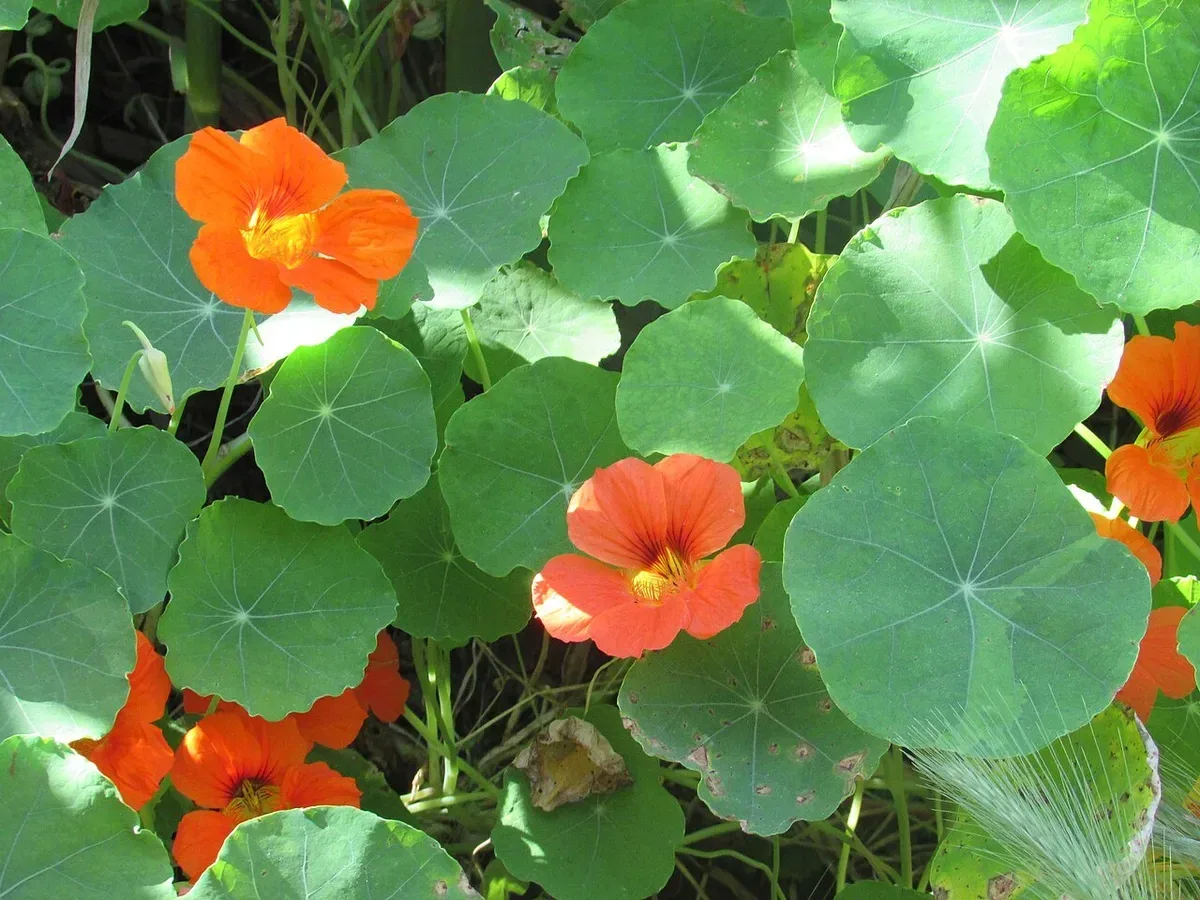
| ☀️ Light | Full sun |
|---|---|
| 💧 Water | Moderate (lightly moist) |
| 🪴 Soil | Poor to average, well-drained soil; sandy or gritty mixes work well |
| 🌡️ Temp | 0°C – 35°C |
| 🐾 Safety | Cats: non-toxic · Dogs: non-toxic |
| 📏 Mature size | 2.0 m |
Where It Grows & Climate Tolerance
Pet & Companion Animal Toxicity (How to Grow Nasturtiums in Canada)
Nasturtiums are an easy summer annual across Canada. Sow outdoors once frost has passed or start seed indoors in peat pots a few weeks earlier, and they flower from early summer until the first fall frost.
Care instructions
Care Guide & Maintenance Routine
Sow seed outdoors in late spring after the last frost, or indoors in peat pots 4 to 6 weeks before it. Grow in full sun in lean soil, water through dry spells, skip fertiliser and pick flowers. Plants die at the first hard frost.
Light & Sunlight
Wisconsin Horticulture advises full sun and notes plants grow in partial shade but do not bloom well there. NC State suggests some afternoon shade during hot summers.
Watering Schedule
Nasturtium tolerates drought, but Wisconsin Horticulture recommends regular watering through the season to keep plants blooming strongly. Let the top few centimetres dry between waterings and never leave pots standing in water.
Potting Mix & Drainage
Poor to average, well-drained soil; sandy or gritty mixes work well
Temperature & Humidity
Frost-tender; plants blacken at the first fall frost. Sow outdoors only after average last frost, which falls between 26 March in Vancouver and 1 June in St. John's (ECCC normals). In hot spells above 30°C, water well and give afternoon shade.
Nasturtiums in Canadian gardens
Nasturtiums, called capucines in Quebec, are one of the quickest ways to fill a sunny bed, basket or window box with colour in a short Canadian summer. They grow fast, ask for little and keep flowering until frost.
When to sow
Wisconsin Horticulture advises sowing outdoors in late spring or early summer once all danger of frost has passed, or starting seed indoors in peat pots 4 to 6 weeks before the last expected frost. Use peat or paper pots, as roots dislike disturbance.
Average last frost by city
From ECCC 1991-2020 normals, via GrowersGuide.ca:
- Vancouver 26 March and Victoria 14 April: sow outdoors from late April.
- Toronto 4 May, Montréal 29 April, Ottawa 7 May: sow outdoors in mid-May.
- Halifax 8 May, Fredericton 22 May, Charlottetown 18 May: sow outdoors in late May.
- Winnipeg 24 May, Regina 28 May, Edmonton 22 May, Calgary 26 May: start indoors in April, plant out in early June.
- St. John's 1 June: start indoors, plant out mid-June.
Hardiness zones
It is a frost-tender annual everywhere in Canada. Wisconsin Horticulture rates it perennial only in zone 9a, and even Victoria's 9a winters are too wet and cold for plants to survive outdoors. Self-sown seedlings may appear on the BC coast.
Containers and baskets
Trailing types such as 'Jewel of Africa' look good in hanging baskets on a deck. Use a regular potting mix without added slow-release fertiliser and water whenever the top few centimetres are dry, which can mean daily in a July heat wave.
Edible flowers
The peppery leaves and flowers are popular in summer salads, and the green seeds can be pickled.
Pests
Black aphids are the most common problem, especially in late summer in Ontario and Quebec. Imported cabbageworm caterpillars, the green larvae of the cabbage white butterfly, also feed on leaves. A strong spray of water and picking by hand usually do the job.
End of season
The first fall frost blackens plants overnight. Collect a few ripe seeds before then and store them in a cool, dry place.
Window boxes in the city
On a Montréal balcony or a Toronto condo railing, a trailing nasturtium in a window box spills down quickly. Water daily in July, as boxes dry out in the wind.
Starting with children
A seed sown in a yogurt cup on an Edmonton windowsill in early May is ready to go outside in early June.
Hummingbirds
Ruby-throated hummingbirds visit orange and red nasturtiums in Ontario, Quebec and Maritime gardens in July and August; on the BC coast, Anna's and rufous hummingbirds do the same.
Cool, wet summers
In St. John's or Prince Rupert, a cool, damp summer slows nasturtiums down. Grow them against a south-facing wall or in a dark pot that warms up in the sun.
Seasonal rhythm
Seasonal Calendar
| Month | Care Tasks | Seasonal Focus |
|---|---|---|
| Jan | protect | Plan baskets and beds; order seed. |
| Feb | protect | Check stored seed; buy peat pots. |
| Mar | sow | Coastal BC: start seed indoors late in the month. |
| Apr | sow | Start seed indoors in Ontario, Quebec, the Prairies and Atlantic Canada, 4 to 6 weeks before last frost. |
| May | sow, plant | Sow outdoors after last frost in BC, southern Ontario and Quebec; harden off indoor seedlings. |
| Jun | sow, plant | Plant out on the Prairies and in Newfoundland. Direct sow in most regions. |
| Jul | harvest | Flowers open. Pick leaves and flowers; water baskets often. |
| Aug | harvest, protect | Watch for aphids and cabbageworms. Afternoon shade in heat waves. |
| Sep | harvest | Late flowers; collect ripe seed before frost on the Prairies. |
| Oct | protect | First frosts end plants in most provinces. Compost the stems. |
| Nov | protect | Dry and store seed. |
| Dec | protect | Plan next year's varieties. |
Diagnostics
Common Problems & Troubleshooting
Lots of leaves and few flowers from rich soil or feeding; poor flowering in shade; yellowing in heat or waterlogged pots; collapse at first frost.
Pests & seasonal watch: Black aphids in mid to late summer; imported cabbageworm caterpillars; leaf miners on older leaves. Slugs on seedlings in wet coastal springs.
- Yellow leaves — Leaves fade from green to yellow, often starting at the bottom.
- Mealybugs — White cottony clumps in leaf joints, often with sticky honeydew.
- Aphids — Clusters of small soft insects on new tips, often sticky.
- Whitefly — Tiny white insects fly up in a cloud when you touch the plant.
- Overwatering — Soil stays wet, leaves yellow or droop, and the pot feels heavy.
- Cold damage — Dark, water-soaked or blackened patches after a cold night or an AC blast.
- No flowers — A flowering houseplant stays leafy and will not bloom.
Similar Botanical Matches
Grower field notes
Reader Field Notes in Canada
Share how this plant performs in your local Canada climate.