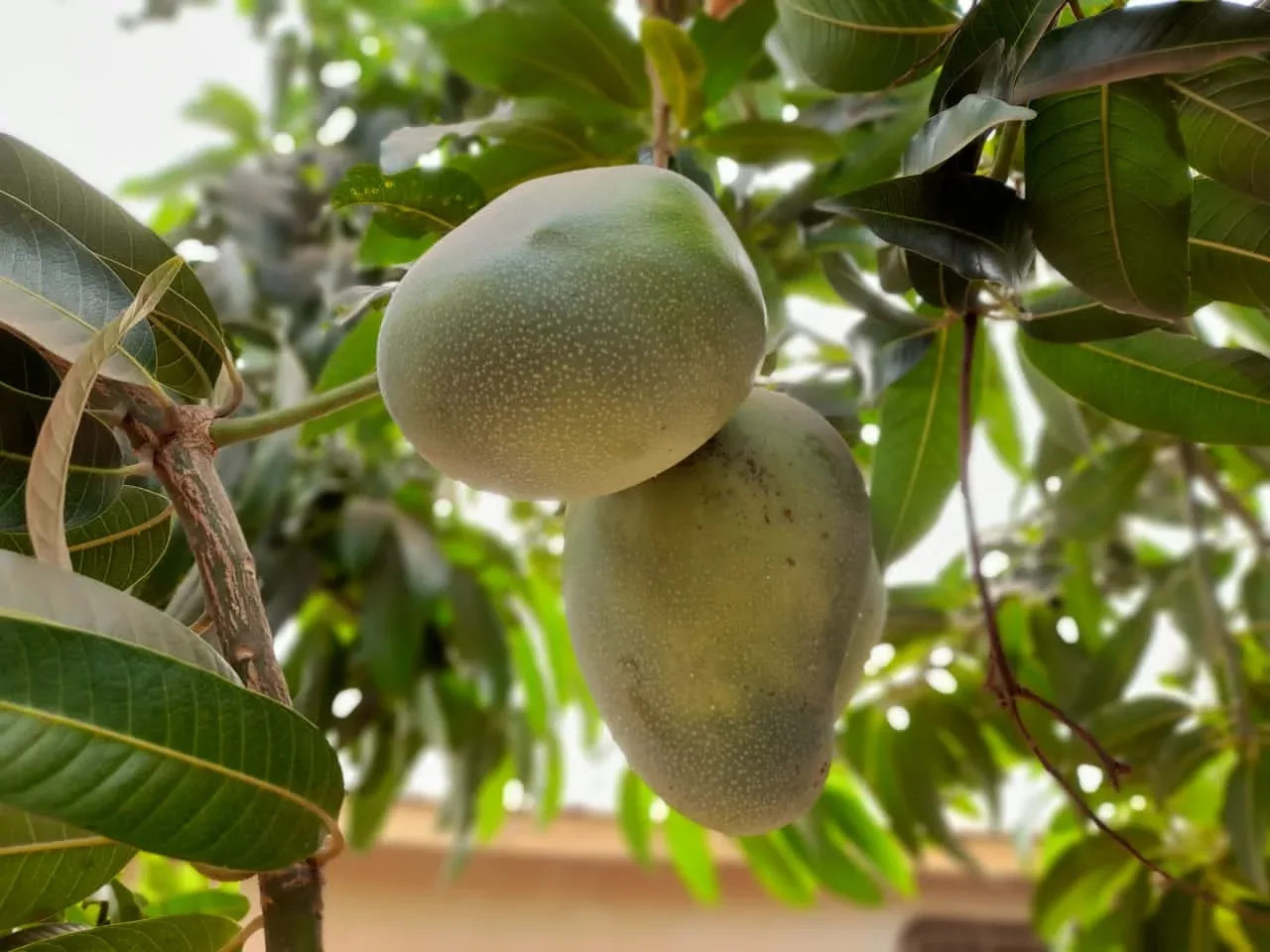
| ☀️ Light | Full sun |
|---|---|
| 💧 Water | Moderate (lightly moist) |
| 🪴 Soil | Free-draining loam or a coarse container mix for fruit trees |
| 🐾 Safety | Cats: not verified · Dogs: not verified |
Where It Grows & Climate Tolerance
Pet & Companion Animal Toxicity (Mango Tree)
Grow a potted mango in a Canadian home, set up strong winter light and move it outdoors only after nights are reliably warm.
Care instructions
Care Guide & Maintenance Routine
A mango in a Canadian home is mainly a foliage plant. Set aside the brightest warm window before buying one. A grow light can make winter maintenance easier when a condo or basement suite gets only a short period of direct sun.
Light & Sunlight
A fruiting mango needs direct sun. Acclimate young leaves gradually when moving an indoor or nursery plant outside.
Watering Schedule
Water deeply after planting and check the root ball during dry spells. Let the surface begin to dry before watering a container again.
Potting Mix & Drainage
Free-draining loam or a coarse container mix for fruit trees
Temperature & Humidity
Mango is a warm-climate tree. Protect young growth from frost and avoid cold windows or persistent cold, wet soil.
Summer outdoors
Move the pot only when nights are reliably warm. Start in shelter and increase sun in stages so a thin-leaved indoor flush can adjust. A warm wall can help, but check the pot often during heat waves.
Pots and the short winter day
Bring it inside before cold nights and check both leaf surfaces for pests. Lift the pot or feel below the surface before watering. A drafty window can keep roots wet and cold while the room itself feels warm.
Can a mango tree grow outdoors year-round in Canada?
A mango cannot safely stay outdoors through freezing Canadian winters. Keep it as a mobile container plant and move it to a warm, bright room when summer ends.
Sources
- UF/IFAS Extension • Mango in the home landscape
- University of Saskatchewan • Houseplant light and watering
Featured photo by daSupremo via Wikimedia Commons, CC BY-SA 4.0. Resized for display.

Seasonal rhythm
Seasonal Calendar
| Month | Care Tasks | Seasonal Focus |
|---|---|---|
| Jan | Add light if growth is weak or sparse. | |
| Feb | Keep the pot clear of icy glass and radiator air. | |
| Mar | Check for emerging growth and root crowding. | |
| Apr | repot | Pot up when active growth starts if roots fill the container. |
| May | Keep plants sheltered until outdoor nights warm. | |
| Jun | protect | Introduce direct sun in stages in a sheltered place. |
| Jul | Check potted trees regularly during hot spells. | |
| Aug | Look for mites or scale before the move indoors. | |
| Sep | protect | Move pots inside before cold nights. |
| Oct | Rinse leaves and give the tree its brightest winter position. | |
| Nov | Reduce watering if the pot dries more slowly. | |
| Dec | Keep foliage away from cold glass. |
Diagnostics
Common Problems & Troubleshooting
Black marks on blossoms and leaves can indicate anthracnose, especially in wet weather. Check drainage and the trunk base if a tree wilts while the soil is damp.
Similar Botanical Matches
Grower field notes
Reader Field Notes in Canada
Share how this plant performs in your local Canada climate.