| ☀️ Light | Full sun |
|---|---|
| 💧 Water | Low (allow soil to dry) |
| 🪴 Soil | Well drained; tolerates leaner sites. |
| 🐾 Safety | Cats: toxic · Dogs: toxic (ASPCA Animal Poison Control) |
Where It Grows & Climate Tolerance
Pet & Companion Animal Toxicity (Little Bluestem)
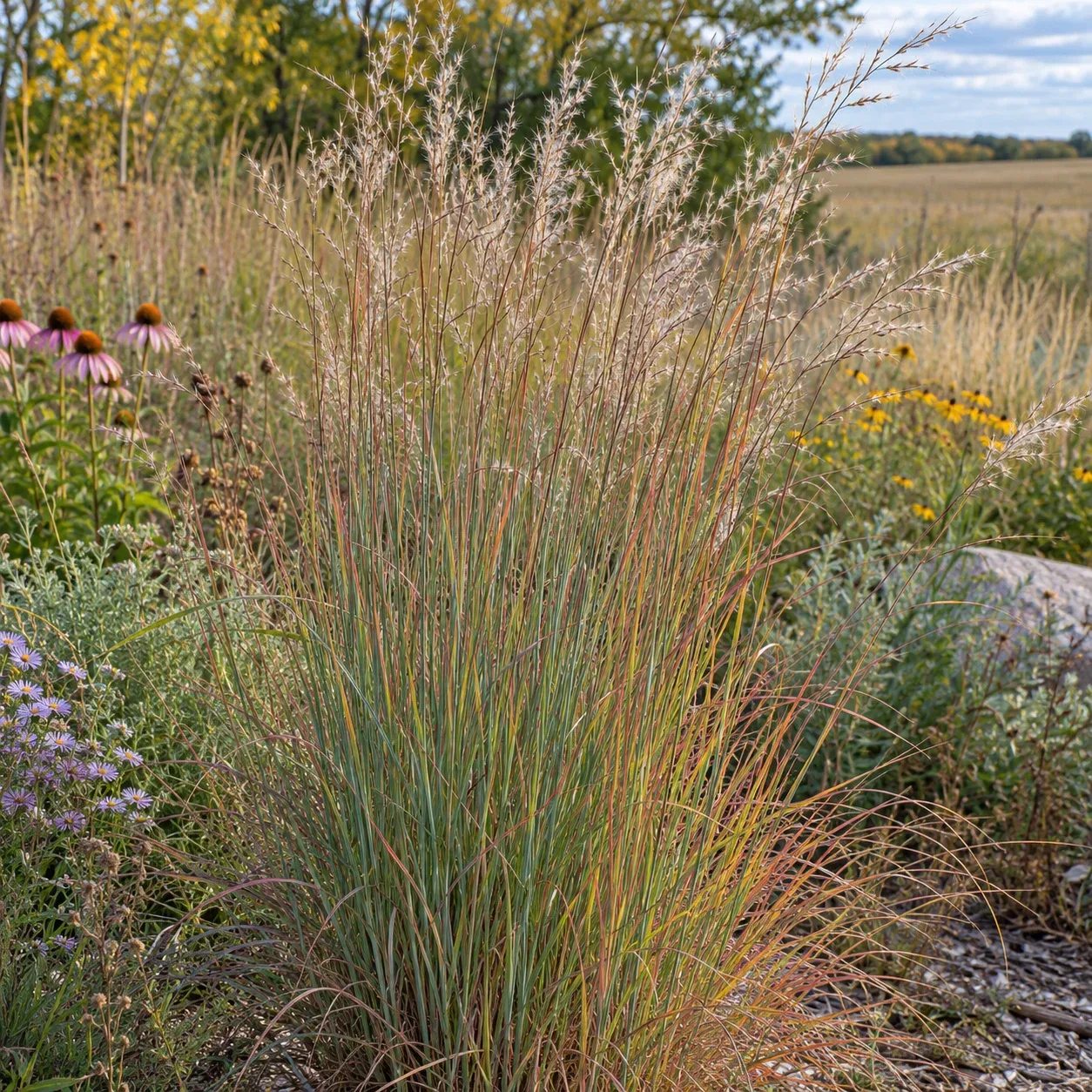
A clumping warm-season prairie grass for sunny sites, with seasonal colour and wildlife value where locally native.
Care instructions
Care Guide & Maintenance Routine
Full sun; Low once established; Well drained; tolerates leaner sites. Check local timing and cultivar suitability.
Light & Sunlight
Full sun. Check local heat and site exposure.
Watering Schedule
Low once established. Adjust to rainfall and drainage.
Potting Mix & Drainage
Well drained; tolerates leaner sites.
Temperature & Humidity
Use local frost dates and cultivar suitability; a single Canada-wide temperature range is unreliable.
A clumping warm-season prairie grass for sunny sites, with seasonal colour and wildlife value where locally native.
Care
Select seed or plants appropriate to the local region, especially for restoration work. Plant in sun and well-drained ground; heavy shade and persistently wet soil weaken the clump. Water through establishment, then avoid frequent irrigation and heavy fertilizer. Leave stems standing for winter structure where suitable and cut back in early spring before new growth. Do not assume every prairie species is native to every Canadian province. Verify local provenance and municipal guidance before large plantings.
Seasonal care
Spring—cut old stems and plant after the site is ready. Summer—water establishing plants only as needed. Autumn—allow seedheads and colour to remain. Winter—leave dry stems for structure, then cut in spring.
Source: https://www.gov.mb.ca/nrnd/fish-wildlife/wildlife/habitat-conservation/index.html https://www.gov.mb.ca/nrnd/fish-wildlife/cdc/pubs/plant_list_mbcdc_2024jan.pdf
Seasonal rhythm
Seasonal Calendar
A month-by-month calendar for Little Bluestem in Canada is coming soon. See the light, water and temperature notes above.
Diagnostics
Common Problems & Troubleshooting
Poor growth: check light, drainage and moisture. Disease or damage: identify the cause before treatment.
Pests & seasonal watch: Inspect regularly, identify problems before treatment and follow local guidance.
Q&A
Frequently Asked Questions
Does little bluestem need fertilizer?
Usually not on a suitable site.
Can it grow in shade?
It performs best in full sun.
Is it native everywhere in Canada?
No; check local distribution.
Similar Botanical Matches
Grower field notes
Reader Field Notes in Canada
Share how this plant performs in your local Canada climate.